


/file/publisher-c1a3f893382d2b2f8a9aa22a654d9c97/2025/11/d7f564d1c7453866bab645dcbd237c5d.jpg)

Bridging rare disease care across Southeast Asia
Individually rare but collectively significant, rare diseases affect over 300 million people worldwide, with nearly 70 percent of cases beginning in childhood.
This represents a vast community facing delayed diagnoses, limited awareness, scarce treatment options, and inadequate social support.
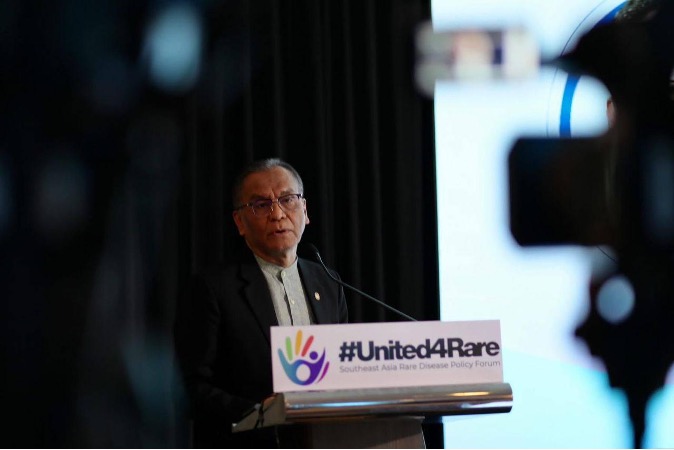
As ASEAN Chair in 2025, Malaysia took a leadership role by hosting the Southeast Asia Rare Disease Policy Forum with the Asia Pacific Alliance of Rare Disease Organisations (APARDO), Rare Diseases International (RDI), and global partners.
The forum marked one of the first major regional efforts to turn the World Health Assembly’s (WHA) Rare Disease Resolution, adopted at its 78th session in May 2025, into real-world action.
The ASEAN Rare Disease Policy Forum is among the first major regional commitments worldwide to translate the landmark resolution into tangible action.
More than 70 health leaders, clinicians, patient advocates, and industry partners from across Southeast Asia have come together to accelerate regional cooperation and build a landmark consensus for people living with rare diseases.
This collaboration is essential – it bridges global commitments from the WHA resolution to local implementation and turns policy frameworks into real patient impact for the 45 million people living with rare diseases in Southeast Asia.
The resolution recognises rare diseases as a global health priority and calls on countries to integrate them into national health plans, while tasking the World Health Organization (WHO) with developing a 10-year Global Action Plan on Rare Diseases.
How Southeast Asia is closing the rare disease gap
According to Dr Durhane Wong-Rieger, president of APARDO, implementing effective rare disease policies requires clarity and focus.
“With over 7,000 known rare diseases, no country can realistically tackle them all,” she said. “The challenge isn’t to copy what well-funded nations have done, but to focus on what’s relevant locally, setting priorities and building feasible policies around them.”
Wong-Rieger added that regional cooperation is essential: “While every country has different priorities and challenges, there’s a strong willingness to work together, share expertise, and develop regional collaboration.”

ASEAN represents a region of immense diversity – economically, geographically and structurally. Income levels, healthcare systems, and resources differ significantly between Thailand, Indonesia, Malaysia, Vietnam, the Philippines, and Singapore.
The question becomes: how do we create a pathway that leaves no one behind? And if some countries move faster, how can their progress help others accelerate?
A regional perspective ensures that collaboration becomes more than knowledge exchange, where progress in one country lifts the region as a whole.
Malaysia signals a new level of ASEAN commitment
At the policy forum, Health Minister YB Datuk Seri Dr Dzulkefly Ahmad delivered a keynote outlining the region’s next major milestone: a coordinated rare disease strategy for ASEAN.
He announced that Malaysia intends to strengthen member states’ commitment to forming a comprehensive ASEAN Declaration and Roadmap on Rare Diseases at the ASEAN Health Ministers Meeting (AHMM) in 2026.
The roadmap will set shared priorities for early detection, capacity-building, governance, and sustainable financing – moving the region from discussion to measurable collective action.
Across six participating ASEAN member states, delegates highlighted several areas that should anchor the roadmap, including:
Embedding rare diseases in ASEAN’s Post-2025 Health Development Framework, ensuring long-term policy alignment under universal health coverage, non-communicable diseases and pharmaceutical development clusters.
Strengthening early detection through expanded newborn screening, genomic testing, national registries, and improved workforce capacity in diagnostics and bioinformatics.
Improving equitable access to treatment, including telemedicine expansion, centres of excellence, AI-enabled disease mapping, and patient-centred governance that protects data and uplifts caregiver voices.
Developing sustainable and innovative financing models, from integrating rare diseases into UHC benefits to using risk-sharing or Managed Entry Agreements, for earlier temporary patient access, and blended public–private–philanthropic funds.
Enhancing national governance and multisectoral collaboration, including dedicated rare disease units, social protection integration and cross-border referral mechanisms.
Establishing a regional mechanism for policy alignment, data sharing, and advocacy.
Dzulkefly noted that ASEAN’s strength lies in acting together: fast-moving nations can help lift those facing structural or financial barriers.
A unified regional approach, he said, ensures that every person living with a rare disease, regardless of geography, has the chance for timely diagnosis, equitable access, and dignity in care.
Vietnam’s model: Detection, care, data
Vietnam offers a compelling example of how national action can strengthen the broader health system. According to Dr Nguyen Thi Thanh Huong, founder and vice-president of the Dinh Tien Hoang Institute of Medicine, the country’s Rare Disease Management Action Plan rests on three pillars:
Expanding newborn screening and diagnostic capacity
Connecting patients to multidisciplinary care and centres of excellence
Developing a national rare disease registry aligned with universal health coverage
Despite competing health priorities, including a high burden of tropical diseases, Nguyen stressed that attention to rare diseases remains crucial.
“The cost of managing rare diseases is significantly higher than for common diseases, but the burden goes beyond cost, affecting patients and their families emotionally, financially and mentally. It requires a coordinated, system-wide response,” she explained.
Early diagnosis is fundamental. Under the WHA resolution, countries are encouraged to expand newborn screening and genetic testing, making early detection a standard part of healthcare rather than a specialised service.
Nguyen noted that nearly 80 percent of rare diseases have a genetic origin. Strengthening genetic testing, training clinicians in genetic counselling, establishing national reference laboratories, and sharing data across borders all play a critical role in improving outcomes.
Building a regional ecosystem for change
Tackling the challenges faced by the 45 million people living with rare diseases in Southeast Asia demands more than isolated efforts.
With Malaysia steering regional discussions as ASEAN chair in 2025 – and soon tabling the first ASEAN Roadmap on Rare Diseases – the region is moving toward coordinated, long-term solutions.
Through ASEAN-led collaboration and strong public–private partnerships, countries can bridge gaps in diagnosis, innovation and access.
And as more nations align their strategies, the region edges closer to a future where rare disease care is no longer fragmented, but part of a reliable, region-wide ecosystem – one that gives patients and families the support they have long deserved.
The views expressed here are those of the author/contributor and do not necessarily represent the views of Malaysiakini.
Interested in having your press releases, exclusive interviews, or branded content articles on Malaysiakini? For more information, contact advertise@malaysiakini.com or advertise@fgmedia.my


Are you sure you want to delete this comment?
This action cannot be undone.