


/file/publisher-c1a3f893382d2b2f8a9aa22a654d9c97/2025/12/5359d0637373e6565511f2e8956c2652.jpg)

ASEAN Youth Summit 2025 sparks bold visions for a renewable future
A forward-looking sustainable energy breakout session took centre stage at the ASEAN Youth Summit, igniting substantive discussions on the region’s long-term energy future amid a rapidly shifting global landscape.
In this session, Tenaga Nasional Berhad (TNB) was our Topic Partner for Sustainable Energy, supporting the empowerment of ASEAN youth to champion innovative, responsible and future-ready energy solutions for the region.
With Suruhanjaya Tenaga as the Co-Partner and the German Embassy Kuala Lumpur as the Embassy Partner, the session was jointly organised by KiniEvents and MIDP Youth Institute, with support from the Ministry of Higher Education (MOHE) together with the Delegation of the European Union to Malaysia as the Collaborative Partner and Monash University Malaysia as the Academic Partner. The programme convened youth delegates, regulators, and industry leaders to collectively chart ASEAN’s transition toward a cleaner and more resilient energy future.
Designed as an interactive roundtable, the breakout session began with youth presentations from Cambodia, Indonesia, Malaysia, and Timor-Leste, each offering a grounded, country-specific view on the challenges and pathways for sustainable energy adoption across Southeast Asia.
Cambodia: A call for distributed solar and regulatory reform
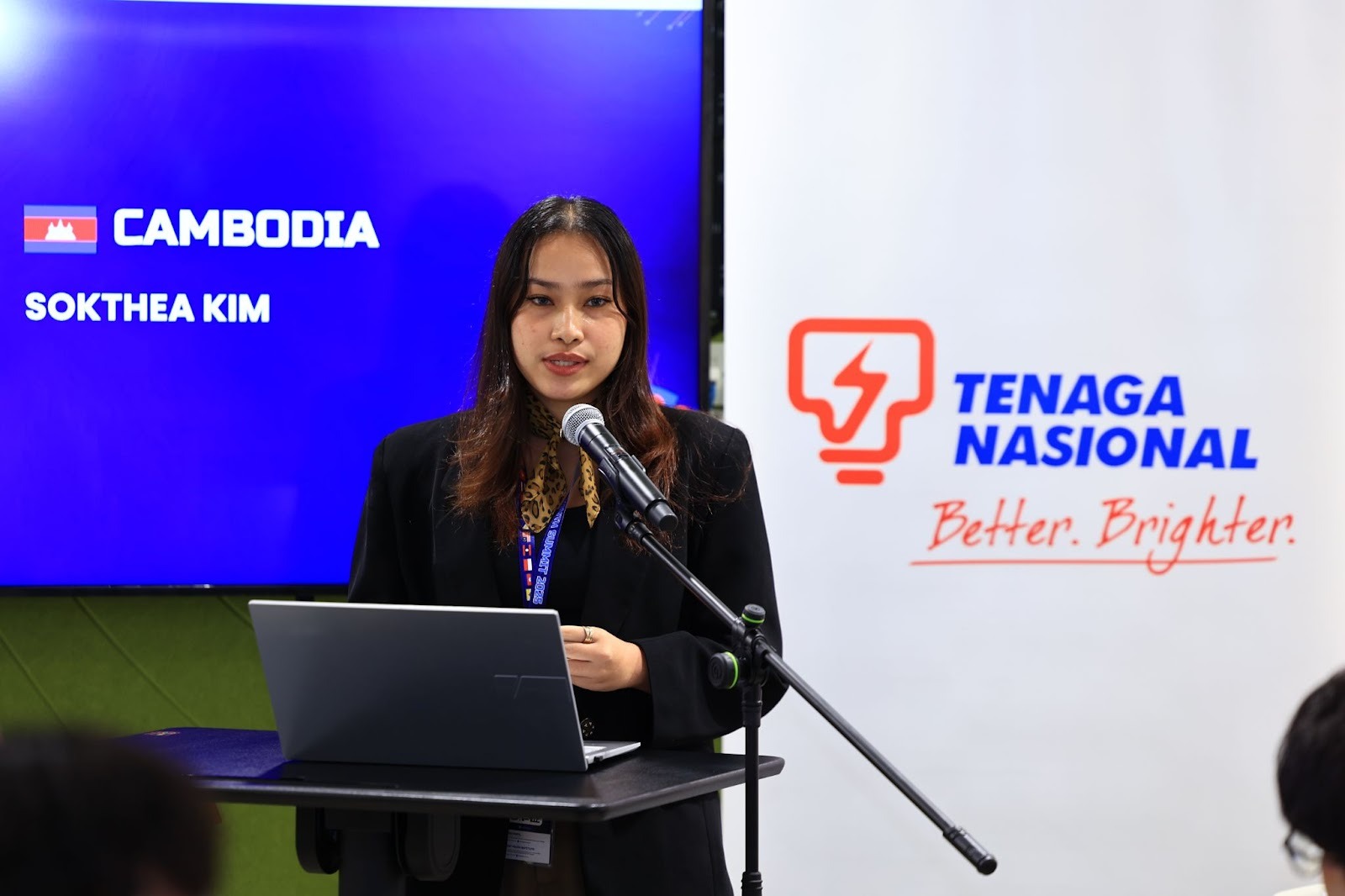
The session opened with Kim Sokthea from Cambodia, who would later take home the Best Speaker Award. Kim Sokthea delivered a compelling narrative that blended personal context with national urgency.
She described how Cambodia’s rapid development continues to outpace its energy system, with droughts and fluctuating hydropower output leading to power outages, rising electricity bills, and an increasing dependence on imported power. Despite having some of the highest solar potential in Southeast Asia, Cambodia remains constrained by regulatory and financial barriers.
In response, she proposed a three-part solution designed to remove bottlenecks in rooftop solar adoption, expand battery storage integration, and unlock blended finance for households, SMEs, and community solar projects.
Indonesia: Balancing ambition with ground realities
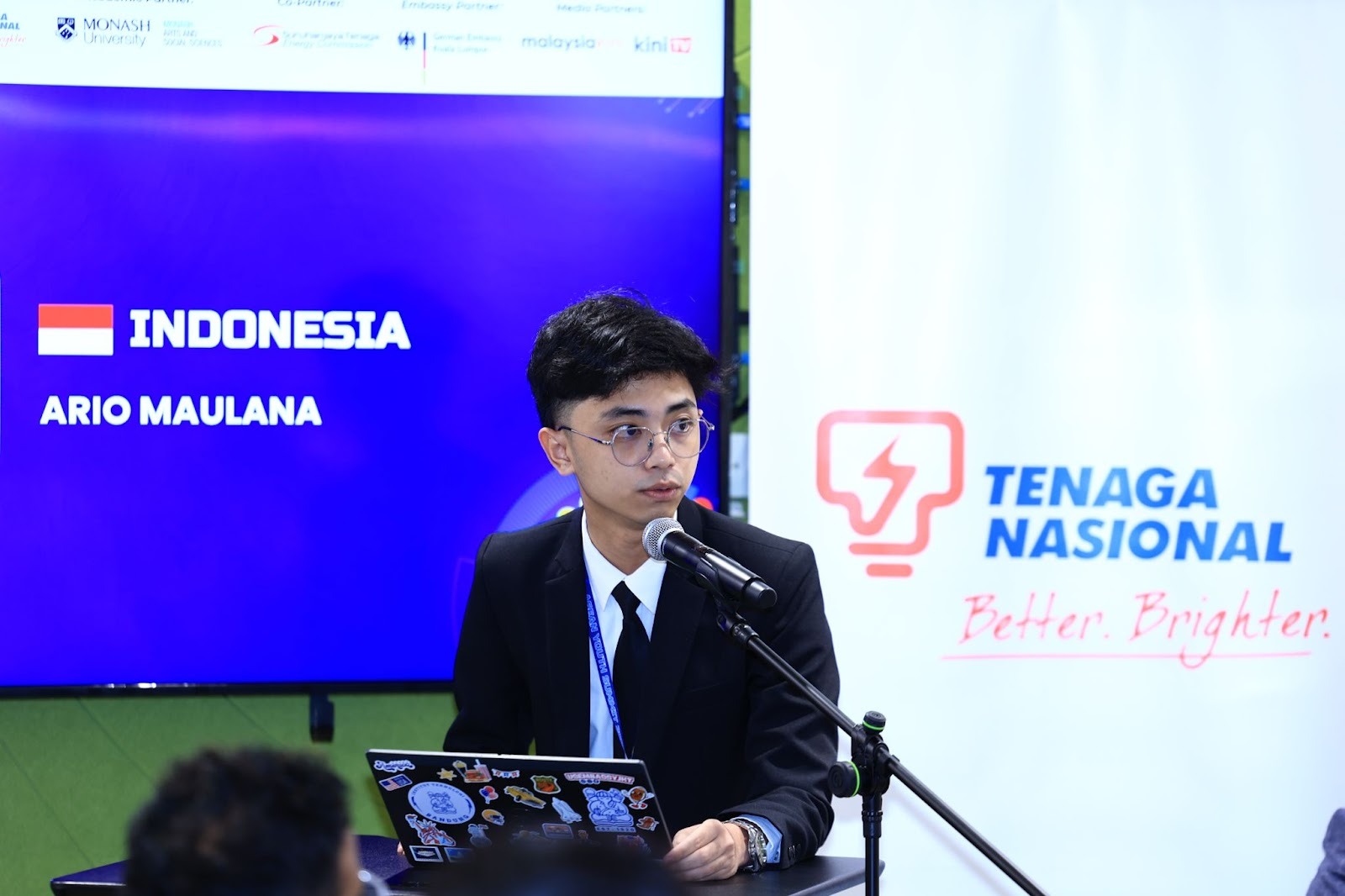
Indonesia’s representative, Ario Maulana, highlighted the paradox confronting Southeast Asia’s largest economy. As electricity demand surges, driven by industrialisation and digitalisation, more than half of the nation’s power supply still comes from coal.
Home to the world’s second-largest geothermal reserves and an electrification rate exceeding 90%, Indonesia is advancing an ambitious pathway toward its 2045 national goals. However, Ario emphasised that remote communities in Kalimantan and eastern Indonesia remain reliant on diesel, and renewable investments must reach up to USD 25 billion annually to sustain momentum.
He underscored Indonesia’s participation in global and regional frameworks and the country’s exploration of Carbon Capture, Utilisation and Storage (CCUS) as part of its transition strategy. Yet, he reminded the room that equitable energy progress depends on empowering youth and indigenous communities to shape policies.
Malaysia: Towards a unified ASEAN energy market
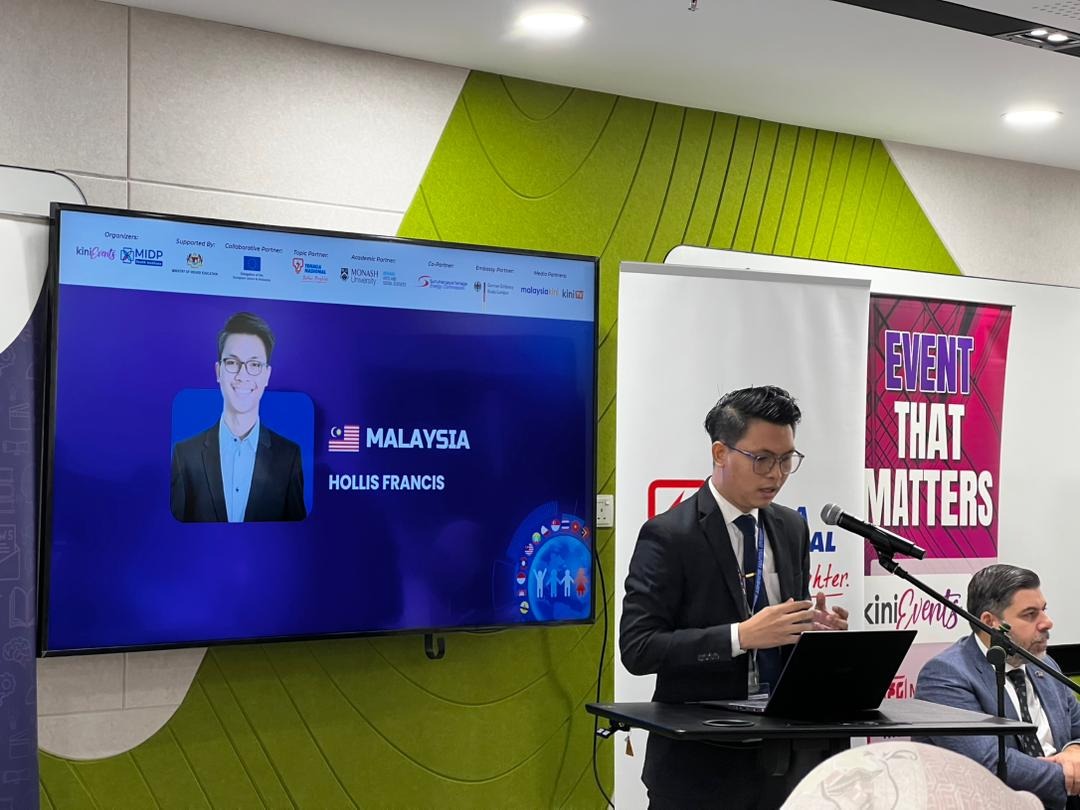
Representing Malaysia, Hollis Francis painted a vivid picture of an interconnected future—one where Malaysia’s solar power could electrify Indonesian communities, while Cambodian hydropower supports Timor-Leste’s industries.
Despite Malaysia’s strong solar potential, over 75% of its electricity still comes from coal and natural gas. With expanding solar deployment comes new challenges: variability, grid constraints, and the lack of scalable storage. Hollis argued that the biggest barrier is not scarcity of resources, but fragmentation across infrastructure, regulatory frameworks, and regional integration.
Malaysia’s proposal called for ASEAN-level agreements on shared standards for technology, grid reliability and storage and a unified regional planning body to coordinate cross-border investments and transmission.
Advancing sustainable energy, he said, is ultimately about talent, capability-building, and unlocking regional economic opportunities for youth.
Timor-Leste: Climate resilience as an energy imperative

The final youth speaker, Lilyana da Cruz, offered a deeply personal reflection as a representative from ASEAN’s newest member. Timor-Leste faces the dual burden of energy insecurity and extreme climate vulnerability—where heavy rains, flooding, and landslides routinely damage mini-grids, distribution lines, and fuel transport routes.
Citing findings from the United Nations Development Programme (UNDP), and the World Bank, she stressed that climate impacts pose the most severe threat to national energy stability. To strengthen resilience, Timor-Leste proposes integrating climate-resilient engineering into all new infrastructure, expanding rural solar systems, establishing community early-warning networks, and training youth in climate-adaptive technologies.
Experts weigh in: Clarity, feasibility, and realistic pathways
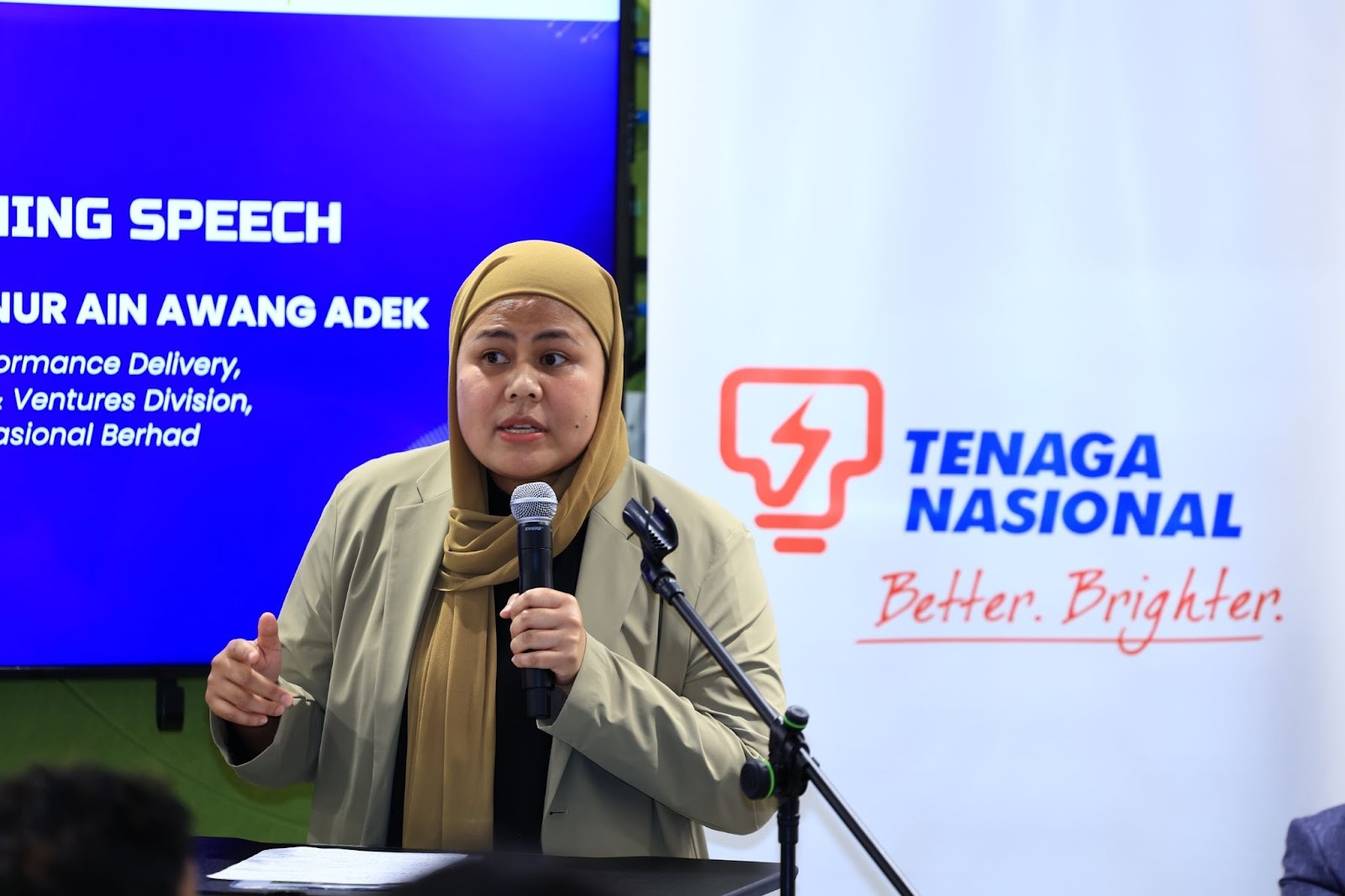
Industry experts from Tenaga Nasional Berhad (TNB), Suruhanjaya Tenaga, and the German Embassy in Kuala Lumpur provided critical feedback, encouraging youth delegates to sharpen their problem statements and ensure proposals align with national realities.
Nur Ain Awang Adek, Head Performance Delivery, Strategy & Ventures Division, Tenaga Nasional Berhad, praised the optimism reflected in the presentations but urged participants to ground solutions in clearly defined national challenges. She also stressed the importance of government-to-government agreements for regional interconnections and highlighted the complexity of technologies like CCUS, which require significant feasibility validation.
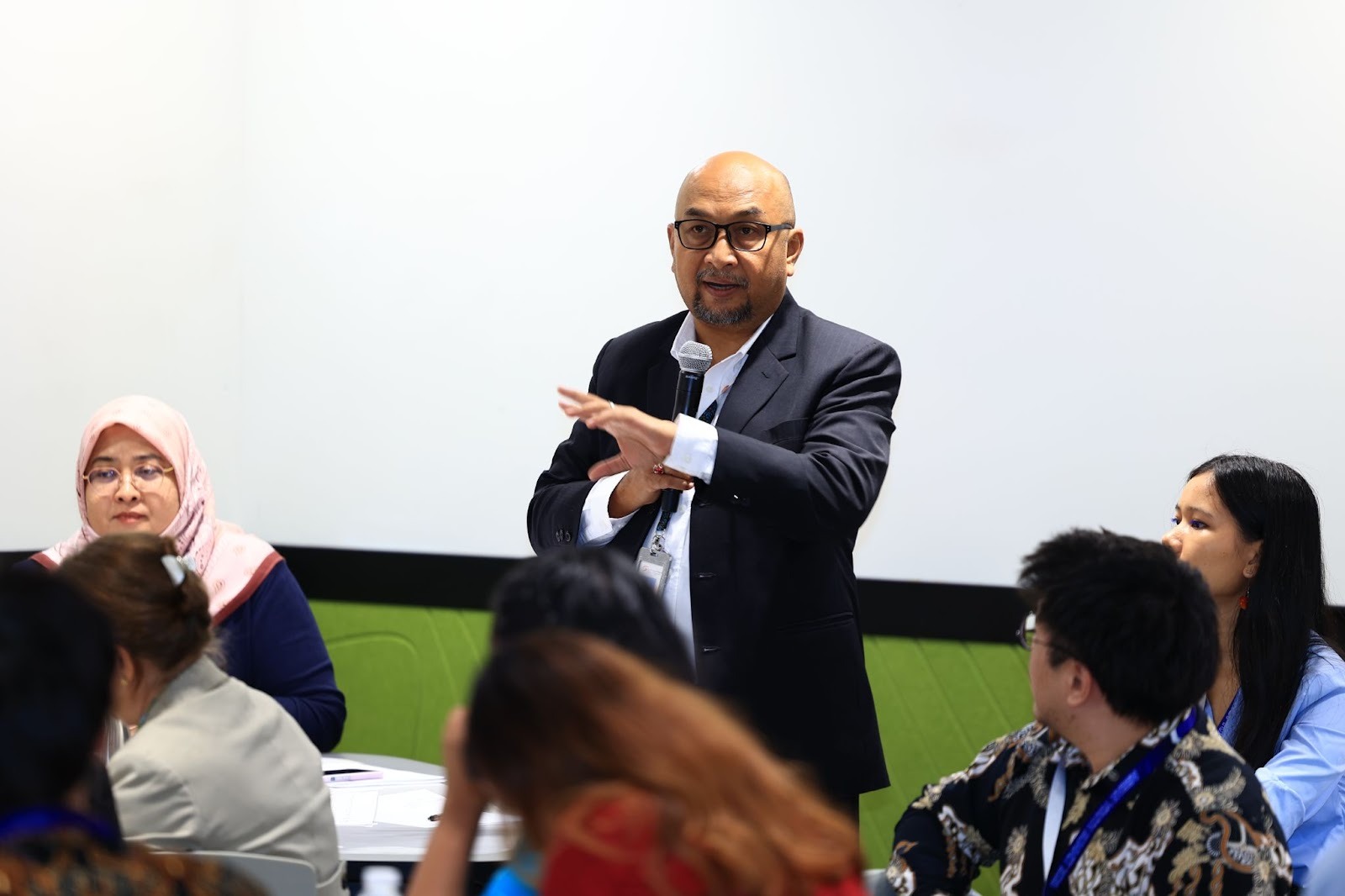
Rumaizi A Halim, Director of Strategic Planning and Communication from Suruhanjaya Tenaga, reinforced the need for diversified renewable strategies while reminding participants not to neglect a fundamental pillar of the transition: energy efficiency. Unlike large-scale infrastructure, it is a simple behavioural shift that every individual can adopt.
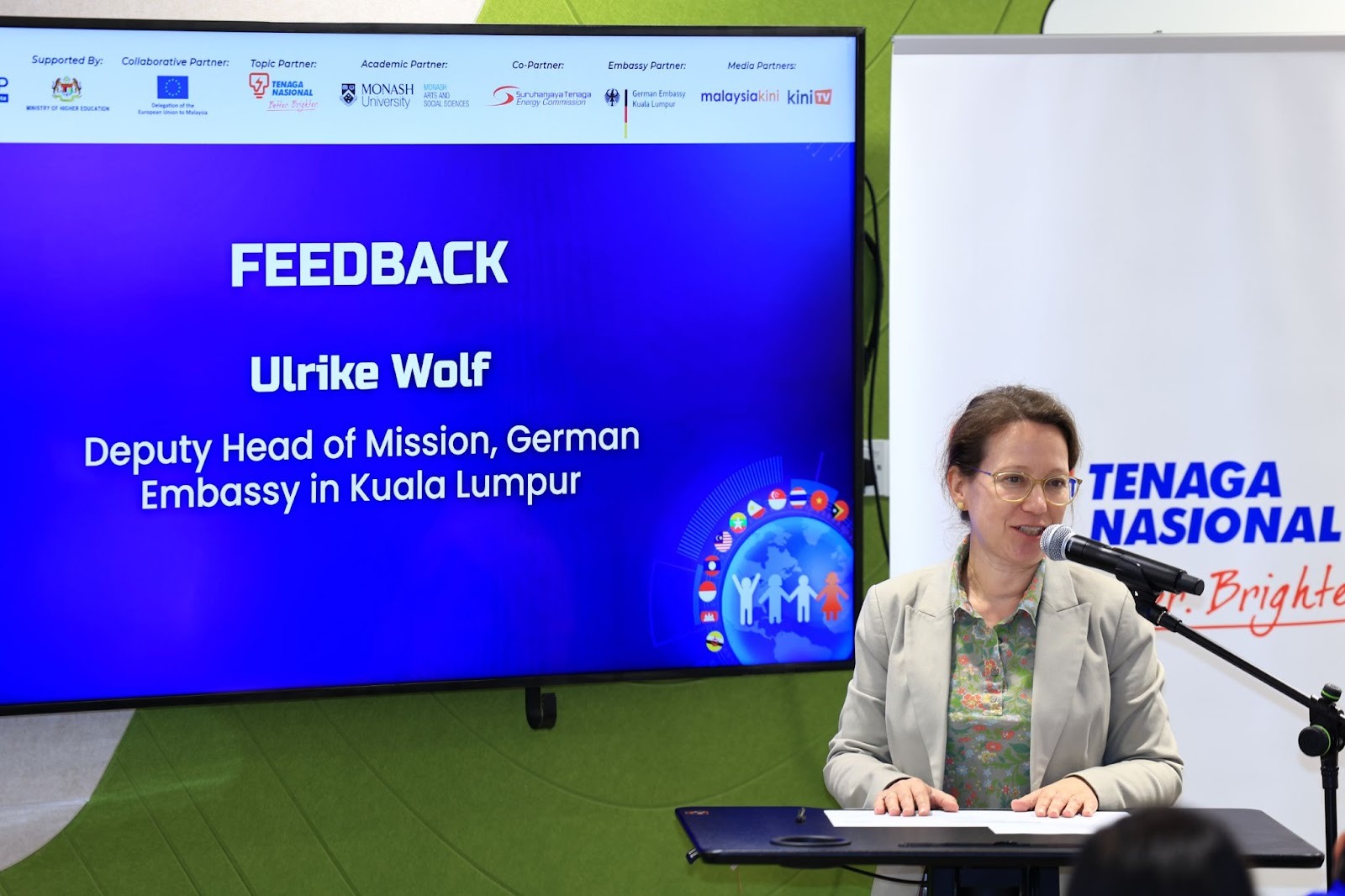
Turning to the speakers, Ulrike Wolf, Deputy Head of Mission, German Embassy in Kuala Lumpur, praised the delegates for their enthusiasm, engaging delivery, and clear structure. She then commended them for their grounding points in data and highlighting the importance of empowering young leaders, adding that although their structure could be clearer, their passion for the topic was evident and compelling.
A youth-led future takes shape
As the session closed, delegates reflected on the insights shared and prepared to integrate expert feedback into a collective resolution for ASEAN’s sustainable energy future. The room carried a renewed sense of purpose—rooted in the belief that the region’s clean energy transition must be collaborative, equitable, and driven by the next generation of leaders.
From distributed solar in Cambodia to geothermal opportunities in Indonesia, regional grid integration in Malaysia, and climate resilience in Timor-Leste, the roundtable showcased that ASEAN’s energy future is as diverse as its people, and youth are ready to lead the way.
Learn more about the ASEAN Youth Summit via the official website, or visit KiniEvents’ Instagram for a closer look at the day’s highlights.
If you missed this event, stay tuned for our next one from KiniEvents.
#AYS2025 #ASEANYouthSummit


