


/file/publisher-c1a3f893382d2b2f8a9aa22a654d9c97/2025/12/0c1cf72c311d6546f92c9bd3d5ef15f3.jpg)

Building a safer digital ASEAN
Organised by KiniEvents and the MIDP Youth Institute, with support from the Ministry of Higher Education (MOHE) and the Delegation of the European Union to Malaysia as collaborative partner, the ASEAN Youth Summit 2025 convened young leaders for a breakout session titled “Online Harms & Safe Internet: Protecting ASEAN’s Youth in the Digital Age”.
The session was held in collaboration with topic partner CelcomDigi – also the summit’s exclusive telco partner – alongside embassy partner, the Embassy of France in Malaysia, and academic partner, Monash University Malaysia.
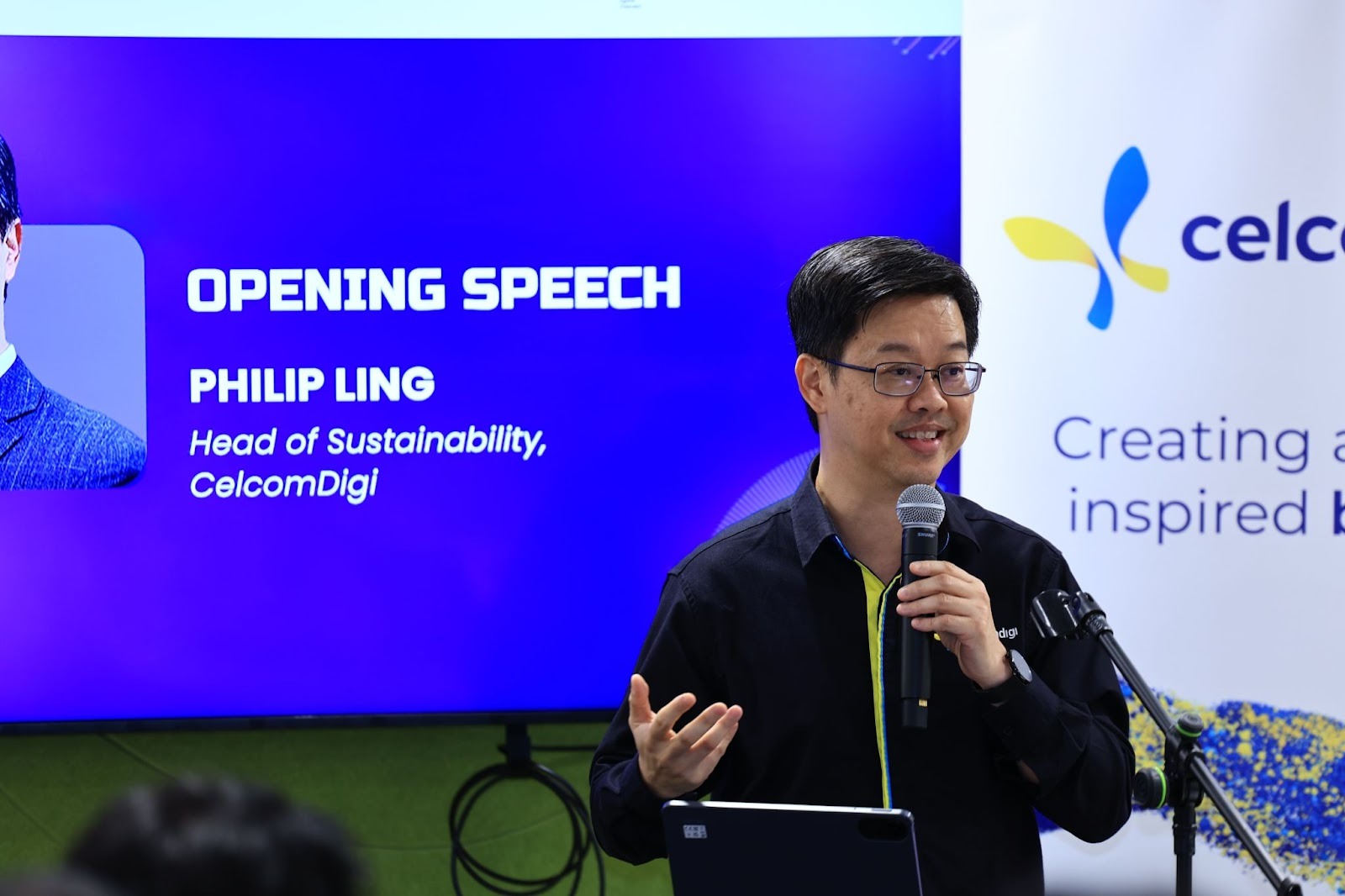
Moderated by the MIDP Youth Institute, the session began with insights from CelcomDigi’s Head of Sustainability, Philip Ling, who highlighted a striking data point: the highest number of scam victims today are aged 21 to 35 – the very demographic in the room. Youth, he said, are not targeted because they are careless, but because they are tech-savvy, digitally active, and constantly exploring new online opportunities ranging from crypto to digital side hustles.
“The scam industry knows exactly who you are and how you move,” he said. “You’re tech-savvy, you’re ambitious, and you’re online all the time — that makes you the perfect target.”
Ling went on to describe how syndicates have evolved into highly organised “industries,” complete with training modules on psychology, conversational cues, and AI-assisted engagement. He shared testimony from a rescued Filipino scammer who was taught to analyse victims by asking about lifestyle, wealth indicators and emotional vulnerabilities. “If we don’t know how to flag a scammer’s modus operandi,” Ling warned, “we will be trapped within that system.”
His message to the youth was sharp and urgent: the fight against online harms will require new thinking, sharper instincts, and bold disruption from those most at risk.
Youth voices at the centre
From Brunei, Nabilah Assyahirah Norman spoke with conviction about ensuring that technological progress reaches every community. Drawing from her work in rural areas, she described how digital literacy and sustainability workshops often remain inaccessible to remote villages.
Her organisation’s response is simple but powerful: bring the learning to the people. Inclusivity, she stressed, is not rhetoric but a practice – one built on surveys, conversations, and physically showing up in places that are otherwise overlooked.
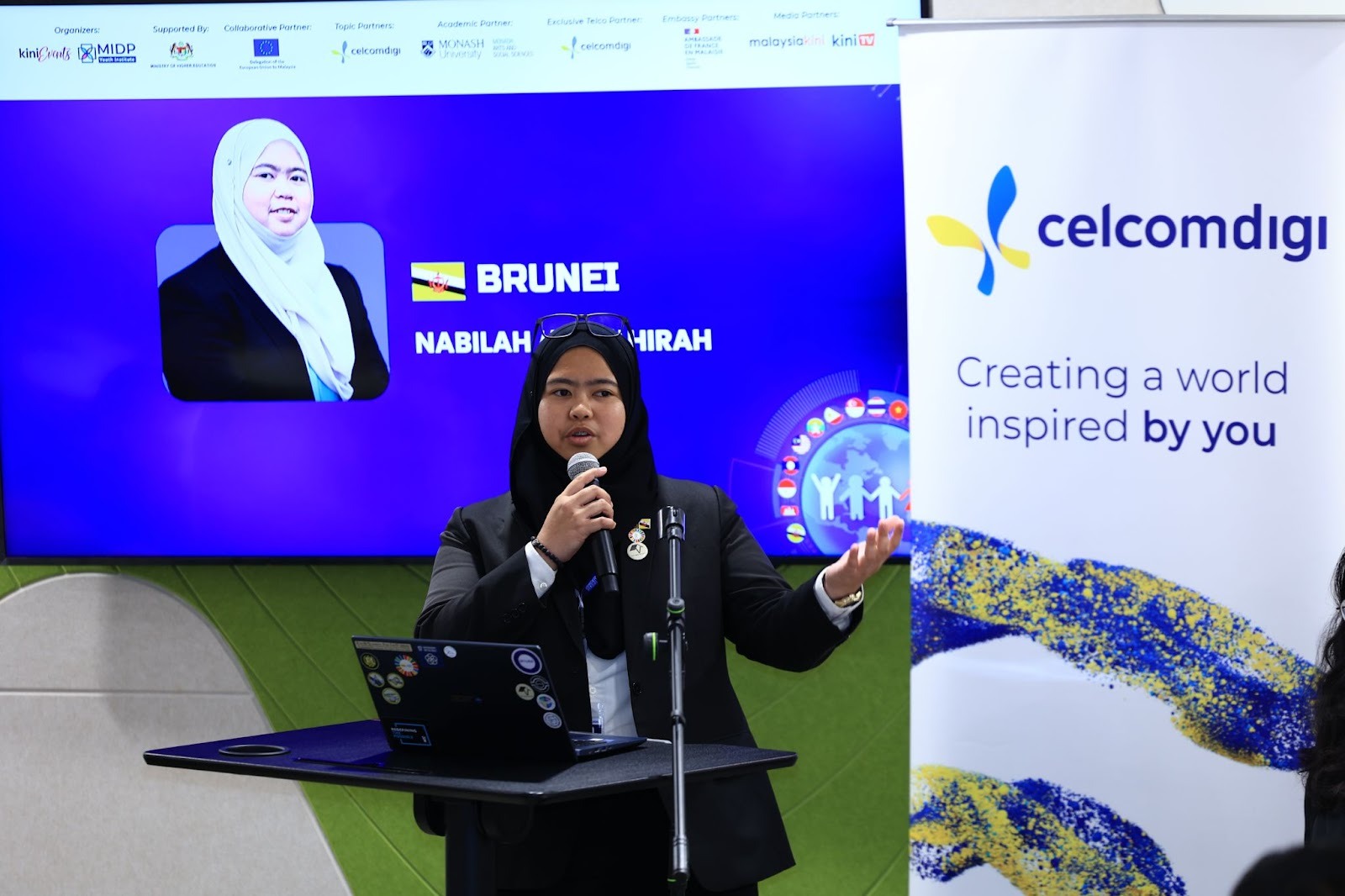
“Innovation must include every voice,” she said, urging her peers to seek out like-minded collaborators across borders.
Strengthening ASEAN’s cyber backbone
Representing the Philippines, Angelica Fernandez Anabeza highlighted a different form of vulnerability: the MSMEs that make up 90 percent of global businesses yet remain the most exposed to cyber risks.
Despite hundreds of innovation hubs in the Philippines, she noted, many remain underutilised in strengthening digital resilience. Her proposal: convert these hubs into cybersecurity resource centres where MSMEs, students, and youth can report incidents and access practical training, working in tandem with the ASEAN Computer Emergency Response Team.
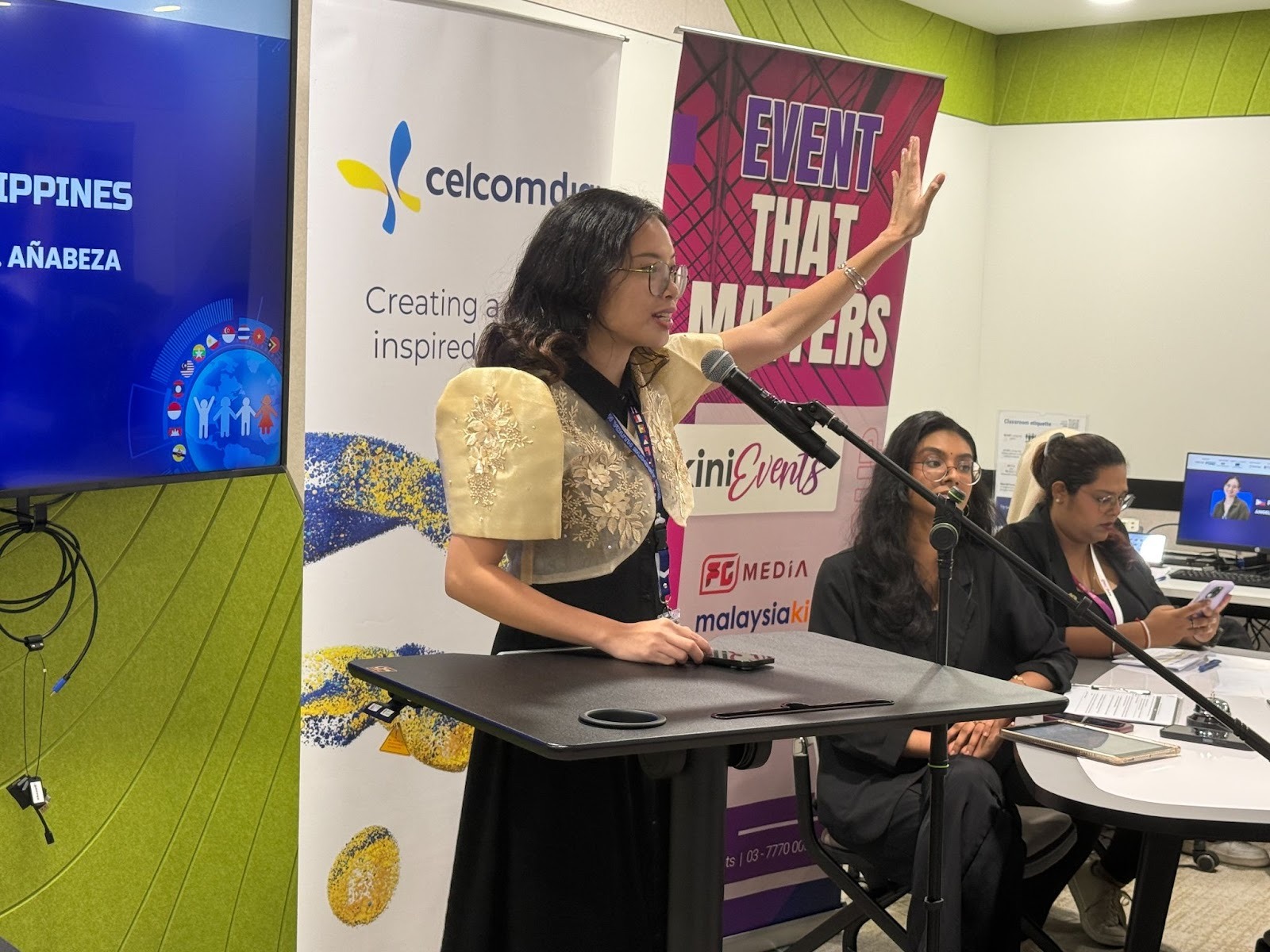
Capacity-building, she argued, is ASEAN’s greatest shared gap and existing infrastructure is its greatest untapped asset.
Mental health as digital infrastructure
From Thailand, entrepreneur and lecturer Tanakrit Sermsuksan (Kasper) offered an unexpected pivot: innovation is faltering not due to talent or resources but because youth mental health is in crisis. Despite massive government investment in startups and entrepreneurship programmes, many young innovators struggle under pressure, comparison culture, and information overload.
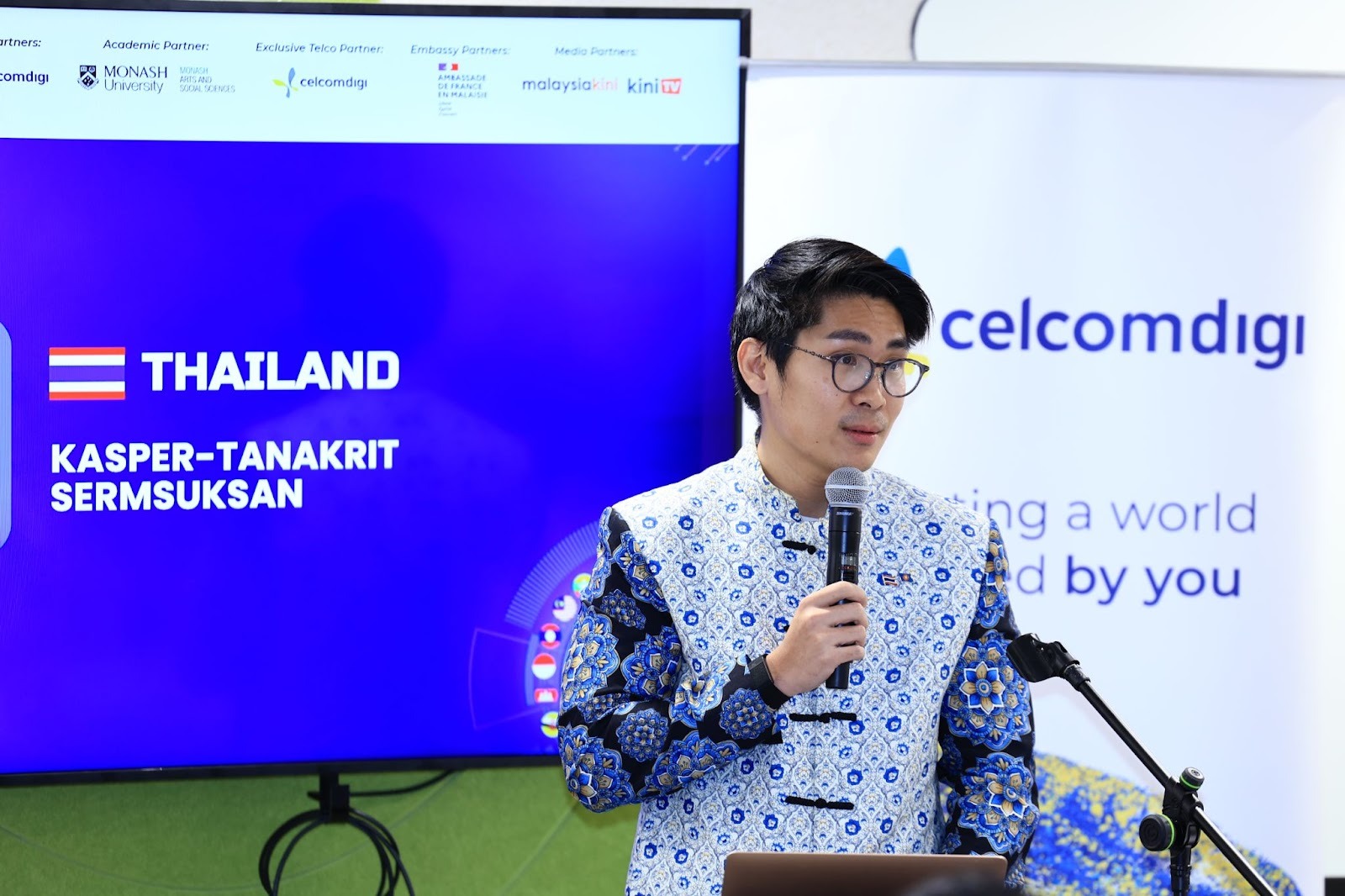
His proposal called for online mental health interventions and digital well-being education to be embedded directly into innovation ecosystems. A safe internet, he reminded the room, is not just a shield from harm but a launchpad for creativity.
Fighting misinformation for a greener future
Vietnam’s Do Thi Trang (Doris) focused on the surge of sustainability misinformation online. In a survey she conducted, more than 80 percent of Vietnamese youth said they did not trust climate-related content on social media.
As a sustainability educator herself, she has faced cyberbullying for debunking falsehoods. Her solution is a safe digital learning ecosystem for Education for Sustainable Development (ESD) – combining verified content, AI-supported misinformation detection, youth-led fact-checking, and a national Digital ESD Index to measure real behaviour change.
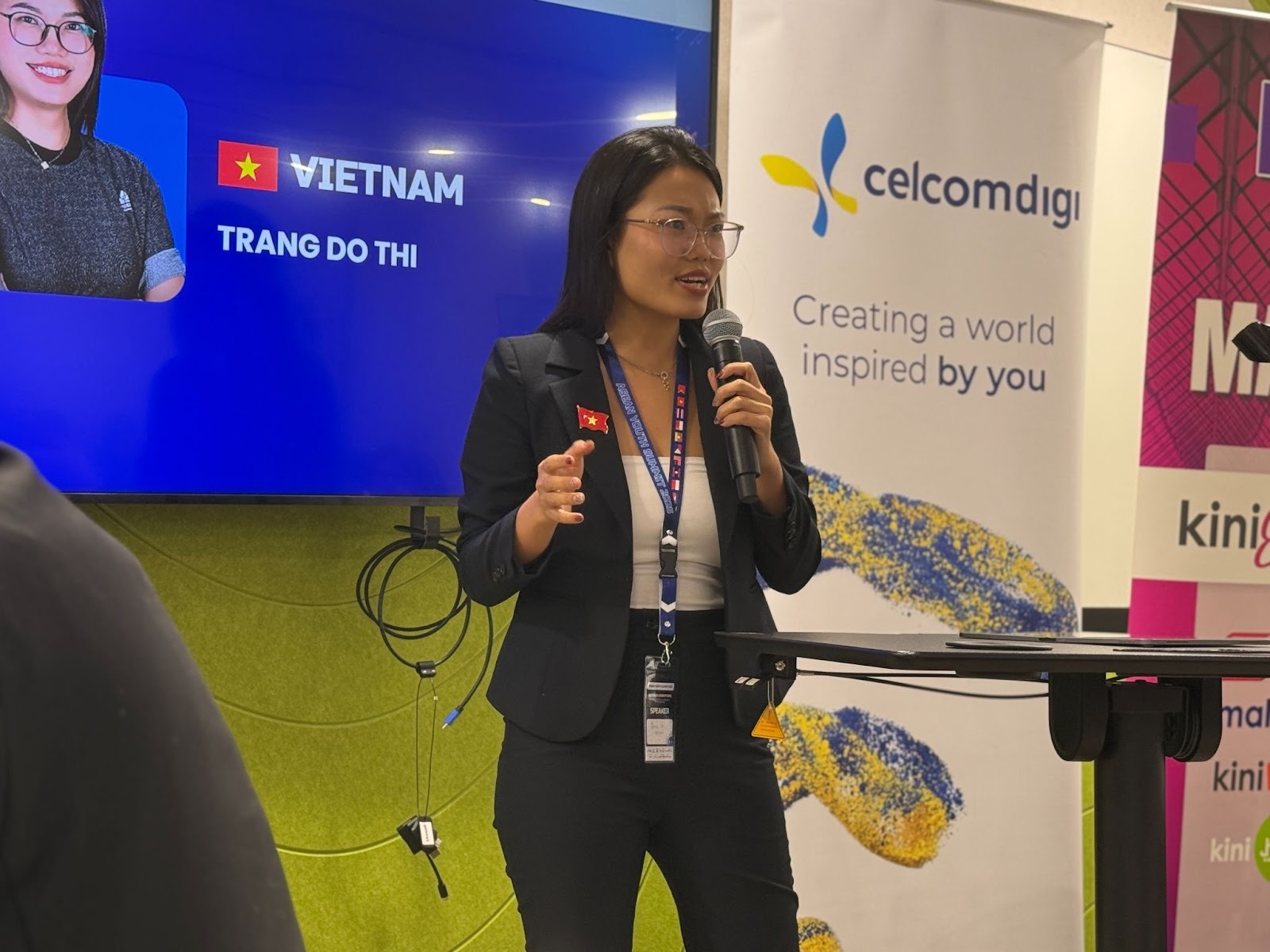
“If we want a greener ASEAN,” she said, “our youth must be not only connected, but protected and informed.”
A regional mission, shared by youth
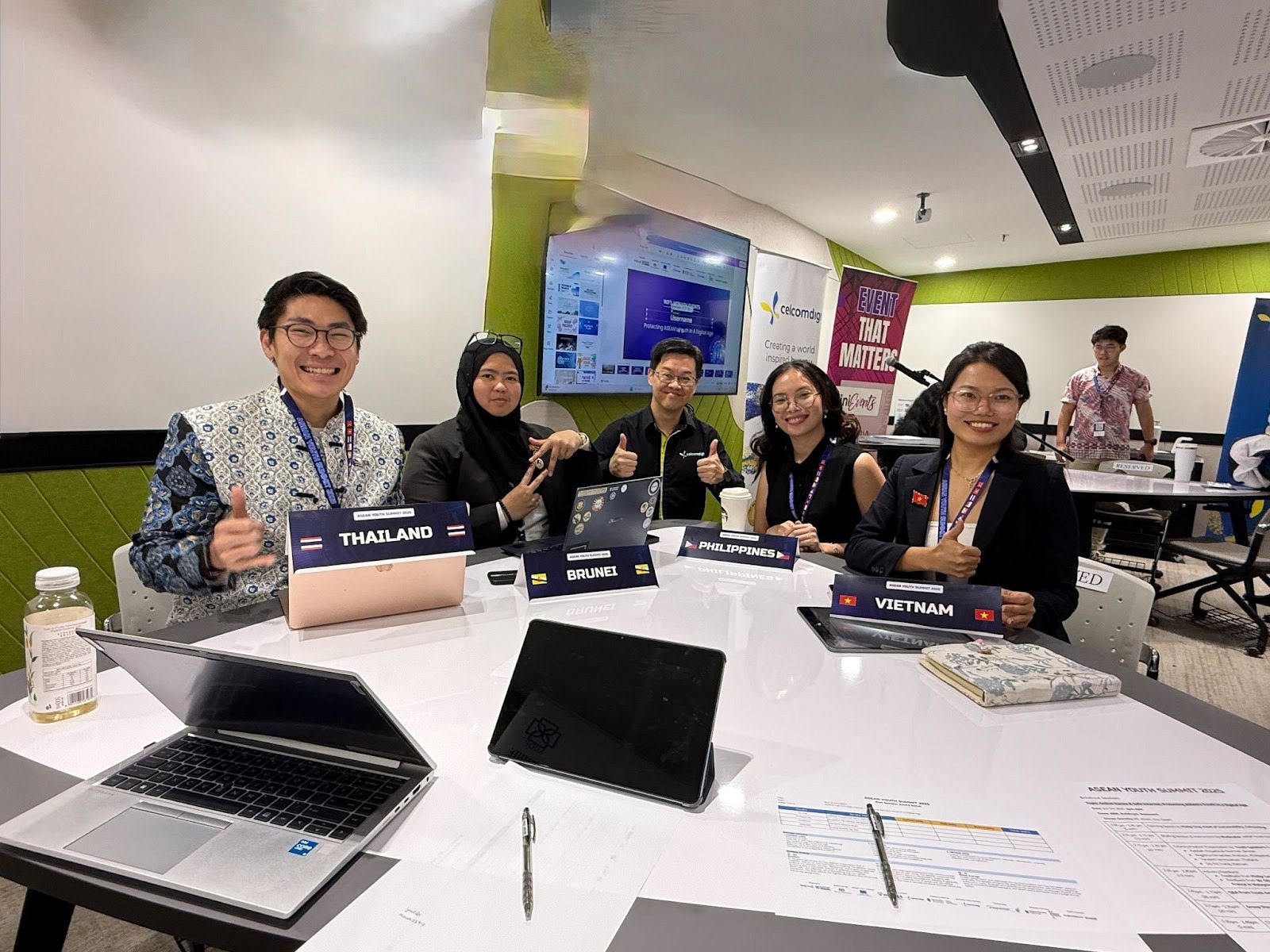
In their joint closing, the four speakers converged on shared themes: the need for flexible regional mechanisms, stronger cross-border partnerships, and sustained capacity-building tailored to each country’s realities. They emphasised that ASEAN’s diversity is an advantage, not a limitation, and that young people are not waiting to lead in the future, but already doing so today.
Expert insights
Expert feedback further sharpened the conversation. CelcomDigi’s Ling commended the youth speakers for framing online harms within broader social gaps – from access to mental health to economic vulnerability. He urged them to think in terms of collective design, not isolated ideas. “We don’t build solutions for communities,” he reminded them. “We build solutions with communities. That’s the only way they last.”
Ling encouraged the youth to deepen their human-centric approaches by seeking diverse partners – NGOs, technologists, social workers, academia – who can reveal blind spots and challenge assumptions. “You don’t know what you don’t know,” he added. “The right partners help you see the cracks before the solution breaks.”
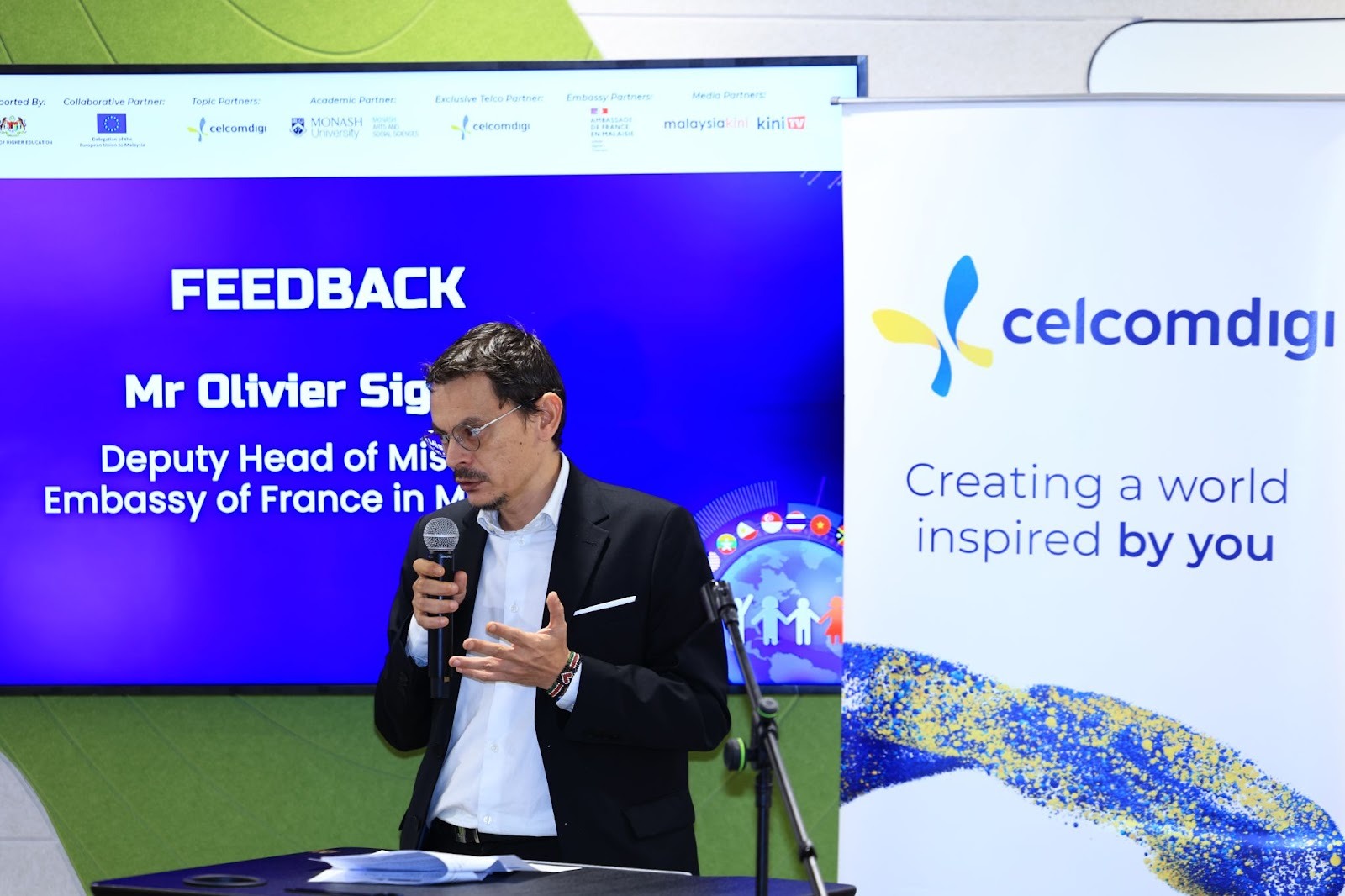
From a government lens, Olivier Sigaud, Deputy Head of Mission at the Embassy of France in Malaysia, emphasised the crucial role of regulation in shaping safe digital spaces. Drawing on the EU’s Digital Services Act (DSA), he explained how Europe now holds big platforms accountable for illegal content and harmful practices. “If you want access to our market,” he said, “you must behave responsibly.”
The DSA empowers the European Commission to impose fines of up to six percent of a platform’s global revenue – a level of pressure only possible when countries act as a bloc. Sigaud encouraged ASEAN to consider a similar regional approach. “No single country can influence Meta or TikTok alone,” he noted. “But ASEAN together has the weight to shape the rules of the game, especially to protect its youth.” He added that the EU stands ready to share experience, expertise, and technology to support a safer and more accountable digital ecosystem in the region.
Recognition for outstanding youth leadership
The session closed on a high note with Do Thi Trang announced as the Best Speaker of the breakout session – a fitting recognition for a conversation driven, and ultimately elevated, by the voices of youth determined to shape a safer digital ASEAN.
Learn more about the ASEAN Youth Summit via the official website, or visit KiniEvents’ Instagram for a closer look at the day’s highlights.
If you missed this event, stay tuned for our next one from KiniEvents.
#AYS2025 #ASEANYouthSummit


Are you sure you want to delete this comment?
This action cannot be undone.