


/file/publisher-c1a3f893382d2b2f8a9aa22a654d9c97/2025/12/82a45e94ea228590f8cab013522e2dd6.jpg)

MTCC Supports ASEAN Youth Dialogue on Timber Traceability and Forest Governance
In order to combat illegal logging prevalent in Southeast Asian countries, ASEAN youth speakers called for stronger timber traceability systems, improved enforcement, and inclusive forest governance during the Timber Sustainability breakout session at the ASEAN Youth Summit 2025 on 3 December 2025.
Organised by KiniEvents and MIDP Youth Institute, with support from the Ministry of Higher Education (MOHE), the Delegation of the European Union to Malaysia as collaborative partner, and Monash University Malaysia as academic partner, the event brought together four speakers from different countries to exchange knowledge and perspectives on timber consumption practices in their respective nations.
The session was held in collaboration with topic partner Malaysian Timber Certification Council (MTCC), Malaysia Green Building Council (malaysiaGBC) as co-partner, and Embassy of Sweden Kuala Lumpur as embassy partner. Representatives from MTCC, malaysiaGBC, and the Embassy of Sweden provided guidance during the session, helping youth speakers connect their presentations on timber traceability to broader issues of sustainable forest management, supply chains, and consumption.
Three of the four speakers, Soukthavone Doungdala from Laos, William Bawi Hein from Myanmar and Krystel Mae J. Peñaflor from the Philippines, delivered presentations under the theme Beyond Borders: Strengthening ASEAN through Sustainable Timber Harvesting, Utilisation and Consumption.
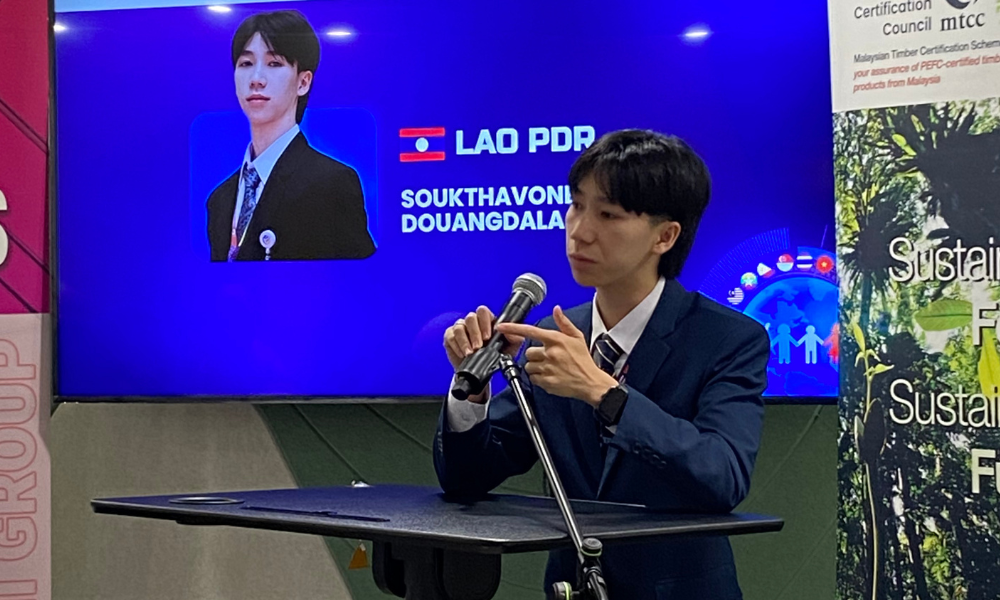
Doungdala explained that Laos previously had 70 percent of forest cover before illegal logging went rampant, causing the country to lose more than 351,000 hectares of tree cover last year with 64 percent of them situated in protected areas. The President of Laos Youth Power for Sustainability also said many rural families continued sludging and burn farming while some parties operated hydropower dam mining as well as created large infrastructure, forming waste areas without strong environmental conservation.
“As a result, Laos loses revenue and suffers from biodiversity decline alongside increasing crime rate, pushing communities who rely on the forest for survival into vulnerability,” he said.
Similarly, Hein who originated from one of the poorest parts in Myanmar, Chin State, said his country lost the equivalent of 140,000 football fields of forest every year, erasing not only resources but cultural identity for indigenous communities.
The founder of Youth InnoLab Myanmar said that despite being one of the largest natural resources in Southeast Asia, illegal logging and ongoing civil conflict in the country are rapidly degrading its forest, leaving the indigenous communities the most vulnerable.

“For them, losing a forest means losing part of their life, so one of the most practical and sustainable solutions is to strengthen indigenous and community-led forest governance,” he said.
Peñaflor carried the same sentiment, saying that decades of unsustainable logging concession and politicised resource extraction in the Philippines have left the country as one of the most deforested nations in Southeast Asia.
The co-founder and Executive Director of Youth Climate Navigators said, the Philippines’ forest cover has declined from 60 percent in the 1950s to merely 24 percent in 2025 due to 464 timber license agreements that were granted to political allies during the martial law era.
“Logging concessions were enforced by militarisation, resulting in violence such as the Sag-od Massacre in 1981 where 45 Filipinos, including women and children were killed.
“This crisis is not simply ecological, but the result of continuous deforestation in my country,” she said.
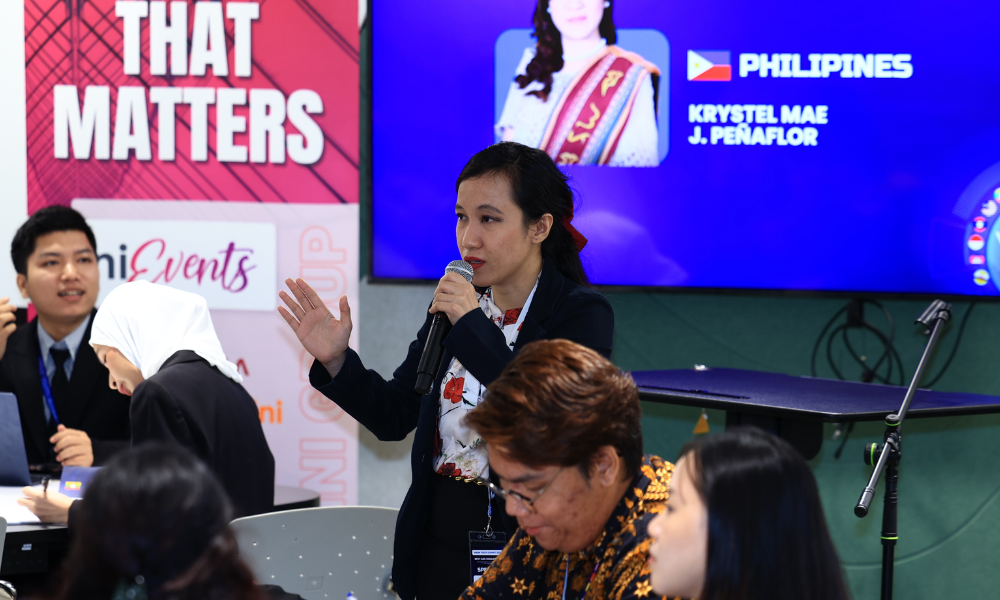
The youth speakers called for digital timber tracking systems, such as legal timber movement verification using QR codes and GPS, to trace illegal timber harvested for export. They said this initiative could reduce illegal logging, improve environmental security, and create sustainable livelihoods for youth and women, restoring ASEAN’s identity and trust in supply chains.
Meanwhile, Adrian Tang Hoaw Shiang from Malaysia focused on how thousands of tons of wood waste in timber factories could generate electricity, producing energy that is often overlooked, underutilised and wasted.
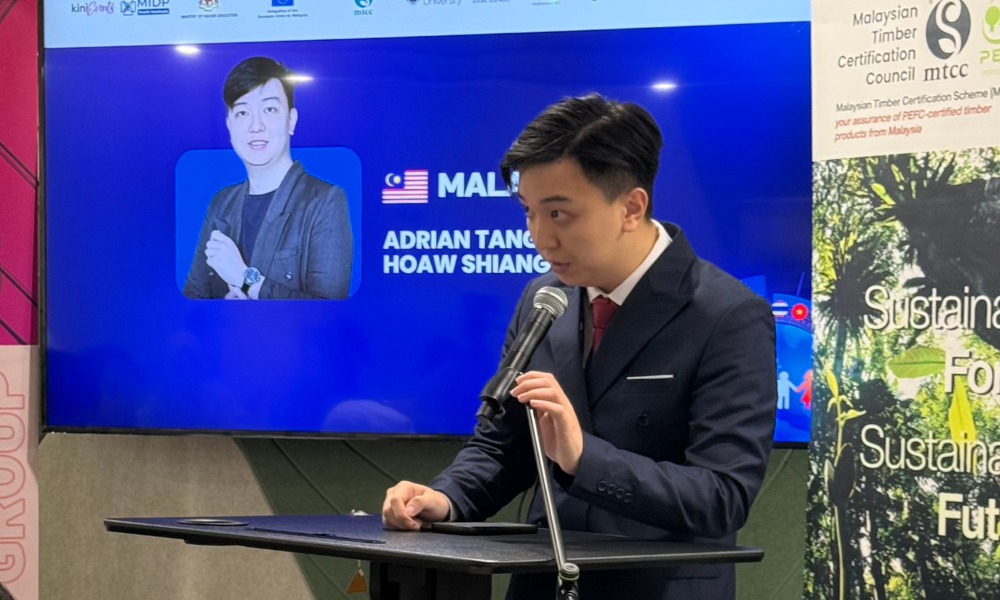
The Universiti Putra Malaysia (UPM) graduate said, the country can harness this energy by converting wood scraps, sawdust and offcuts into biomass pellets that are then turned into waste, breakouts of biofuel and biochemical materials.
The initiative will not only solve sustainability issues relating to inefficient use of energy but create business opportunities, thus encouraging the government, industry and research institutes to work collaboratively in making that opportunity viable, he said.
“Industry players can reduce operational costs by improving efficiency, create a new stream of revenue by selling bioenergy products and reduce investment risks by leveraging government incentives.
“This is a strategy that can make and save money as well as build a stronger market reputation at the same time.
“If we embrace this shift, Malaysia's timber industry stands to become more profitable, energy efficient and globally competitive, aligning with national goals of a secular and low carbon future,” he said.
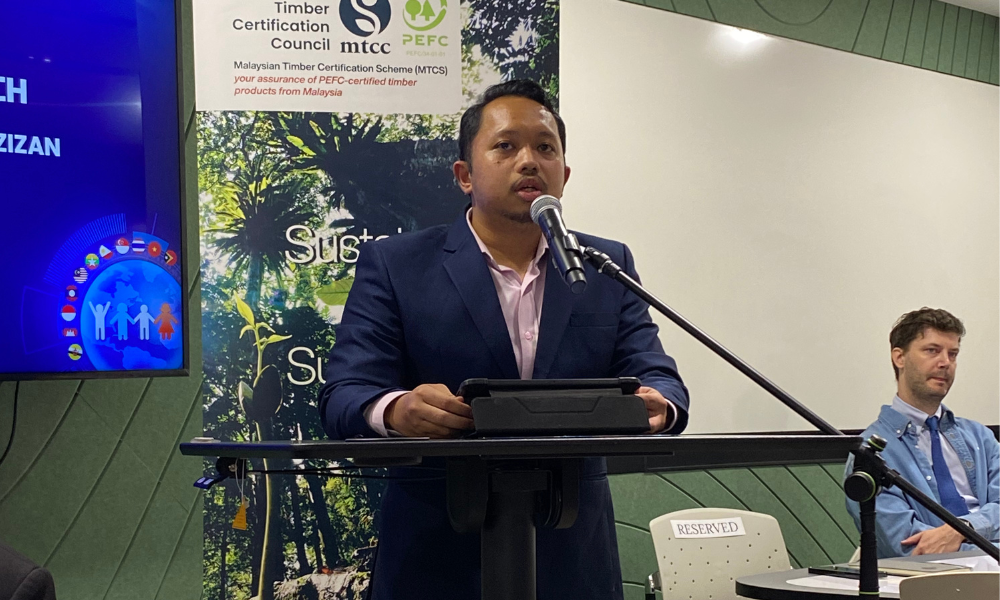
During an industry feedback session, Director of Communication and Marketing of Malaysian Timber Certification Council, Muhammad Hasif Azizan emphasised that youth presentations should clearly highlight the connections between sustainable timber production, forest management, and consumption. He explained that sustainable timber production must come from well-managed forests, making forestry and supply chains interdependent.
“When you present your points, explain the forestry part and the supply chain so your audience understands where sustainable timber comes from,” he said. “Consumption is also important because you, as consumers, create demand that drives manufacturers and companies toward sustainable practices. Make sure all these points are addressed.”
Chief Executive Officer (CEO) of malaysiaGBC, Mitch Gelber agreed with Muhammad Hasif’s statement on interconnection between forestry management and supply chain, adding that there must be a balance in both parts of the process to ensure a sustainable production.
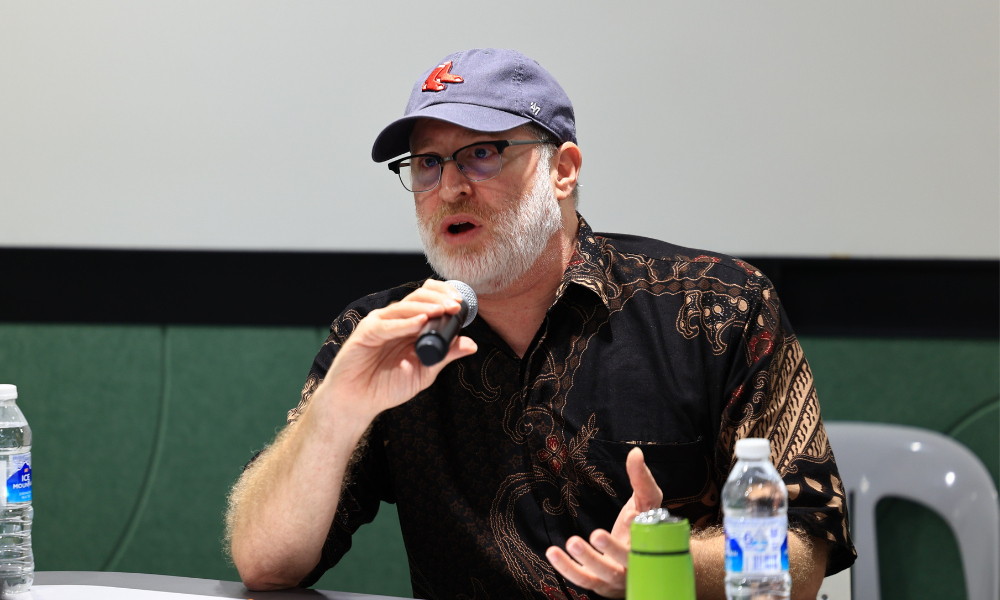
He added, “If we only solve issues on the harvesting side but ignore consumption demand, the supply chain will be thrown off balance. We need to look at forestry, production, and consumption holistically and ensure all stakeholders work together.”
Gelber also commented on Hoaw Shiang’s presentation on converting timber scraps into energy, cautioning that while bioenergy provides lucrative opportunities, it must not become the primary focus at the expense of forest conservation.
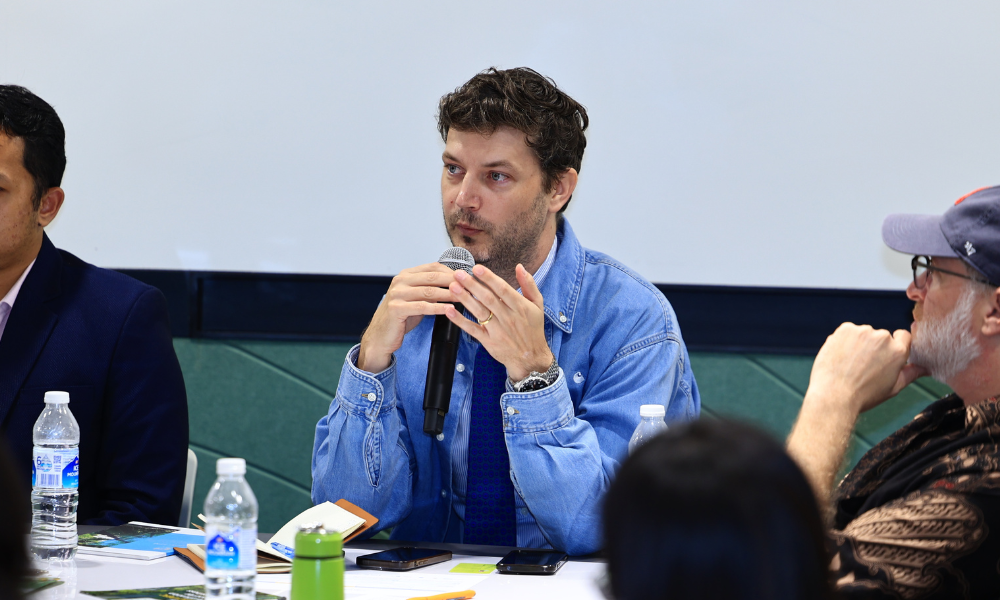
Meanwhile, Deputy Head of Mission with the Swedish Embassy in Malaysia, Robert Lejon shared lessons from Sweden’s community-based forestry, where small shareholders and cooperatives manage forests over decades, prioritising long-term sustainability. “In Sweden, it takes 80 years to grow a tree from seed to harvest. During that time, communities collectively manage, harvest, share profits, and replant the forest,” he said.
“This demonstrates the importance of long-term planning and community participation, lessons relevant for Southeast Asia’s forests,” he added.

The ASEAN Youth Summit 2025 concluded on 3rd December 2025 at Monash University Malaysia welcoming 200 delegates from 11 countries into a full day of productive dialogue and discussion between youths and industry experts, touching a variety of topics under the theme Next-Gen Disruptors: Driving Inclusivity & Sustainability in the Digital Age.
Learn more about the ASEAN Youth Summit via the official website, or visit KiniEvents’ Instagram for a closer look at the day’s highlights. If you missed this event, stay tuned for our next one from KiniEvents.
#AYS2025 #ASEANYouthSummit
About the Malaysian Timber Certification Council (MTCC)
MTCC was established to develop and operate the Malaysian Timber Certification Scheme (MTCS), a voluntary national timber certification program that provides independent audits of forest management practices to ensure sustainability. For over 25 years, MTCC has championed sustainable forest management and responsible sourcing. As the first tropical timber certification scheme in the Asia Pacific to be endorsed by the Programme for the Endorsement of Forest Certification (PEFC), MTCS plays a crucial role in promoting responsible forest management in Malaysia.
As of November 2025, the MTCS has certified a total of 35 Forest Management Units covering 5.86 million hectares, representing over 33% of Malaysia’s forest cover. Additionally, 386 certificate holders have been issued chain-of-custody certifications.
Today, MTCS is recognised by national procurement policies in Denmark, United Kingdom, Germany, Finland, Belgium, Switzerland, France, the Netherlands and New Zealand. The scheme is also accepted under the Malaysian Green Building Index and other Green Building Systems in Australia, Italy, the Netherlands, the United Kingdom, United States, Canada, Japan, and United Arab Emirates. For example, Japan’s Ministry of Agriculture, Forestry, and Fisheries includes MTCS in its guidelines for the verification of sustainable timber since 2006.
Website: https://mtcc.com.my


Are you sure you want to delete this comment?
This action cannot be undone.