


/file/publisher-c1a3f893382d2b2f8a9aa22a654d9c97/2025/12/56e897f39c8b56a999db056d25986d4e.png)

A new generation steps into ASEAN’s health policy arena
Across Southeast Asia, the younger generation is stepping forward with a new sense of confidence and purpose, reshaping conversations about the region’s health future.
That shift was unmistakable at the ASEAN Youth Summit 2025 in Subang Jaya, where participants from across the region gathered under the theme “Next-Gen Disruptors Driving Inclusivity and Sustainability in the Digital Age.”
The event, organised by KiniEvents and the MIDP Youth Institute and supported by the Ministry of Higher Education Malaysia and the Delegation of the European Union to Malaysia, with Malaysiakini and KiniTV as official media partners, effectively amplified youth voices and showcased their growing influence in regional healthcare discussions.
During the interactive roundtable session titled “Healthy Nations, Secure Futures: Strengthening ASEAN Health Systems and Emergency Response”, delegates from Cambodia, Indonesia, Malaysia, the Philippines and Singapore drew on lived experiences to challenge long-standing assumptions about how healthcare is delivered, funded and communicated.
When misinformation becomes a health emergency
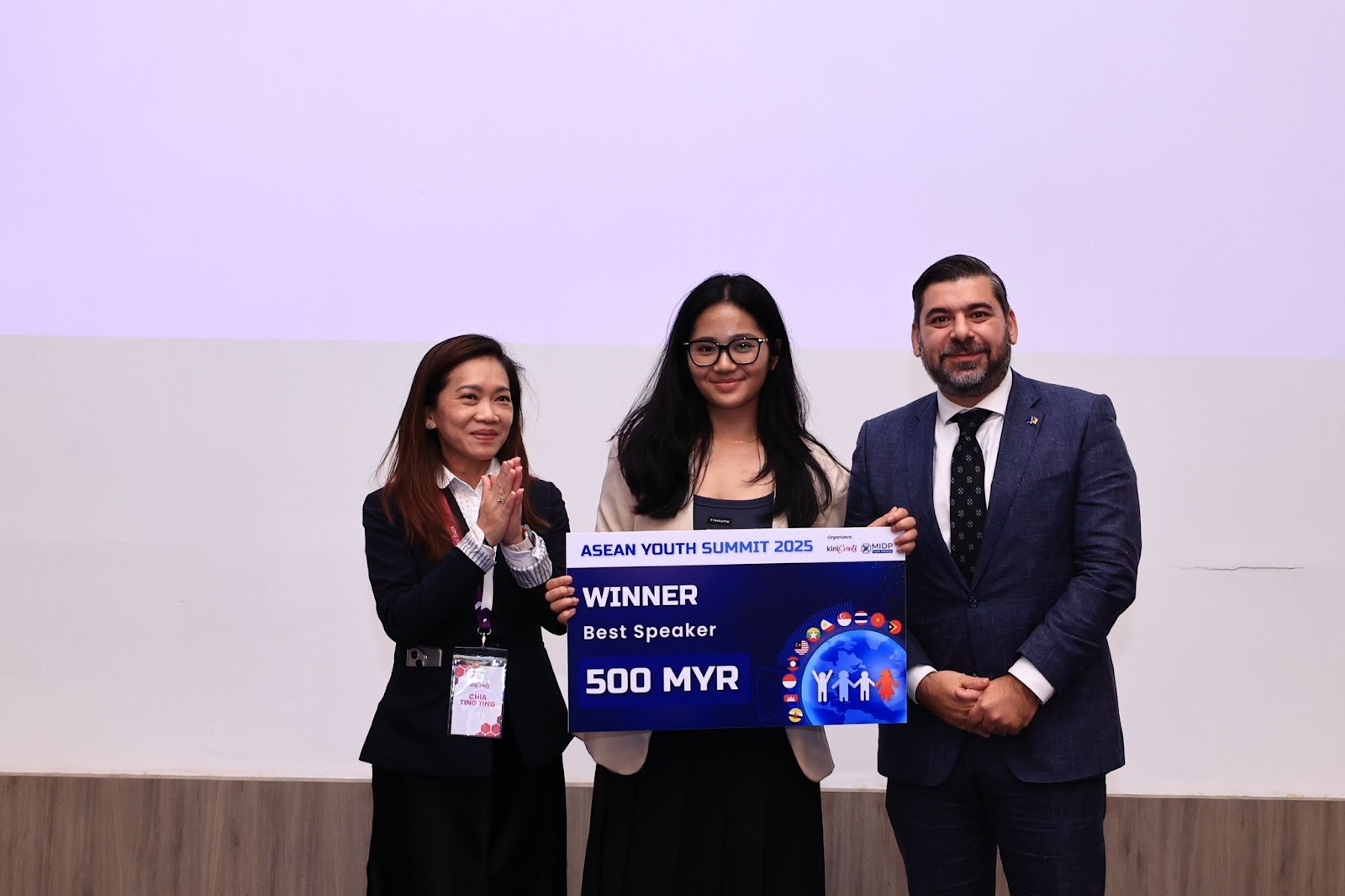
As digital platforms increasingly shape how people access health information, Indonesia’s representative Kimberly Roselind, who would later take home the Best Speaker Award, drew attention to a rising concern across ASEAN, highlighting how misinformation and online scams can directly affect public health.
During her speech, she pointed to recent misinformation cases in Indonesia, including false health products and scams impersonating national agencies, as evidence of gaps in public communication. When official updates are slow, she noted, rumours spread quickly and people turn to unreliable sources.
To address this, she called for a more proactive communication system with dedicated emergency messaging, real-time monitoring of online narratives and better support for communities with limited digital skills.
Youth leading health resilience
While Indonesia’s speech resonated strongly across the room, the interactive roundtable also showcased the diverse perspectives of other ASEAN youth, each bringing unique insights shaped by their national expertise and realities.
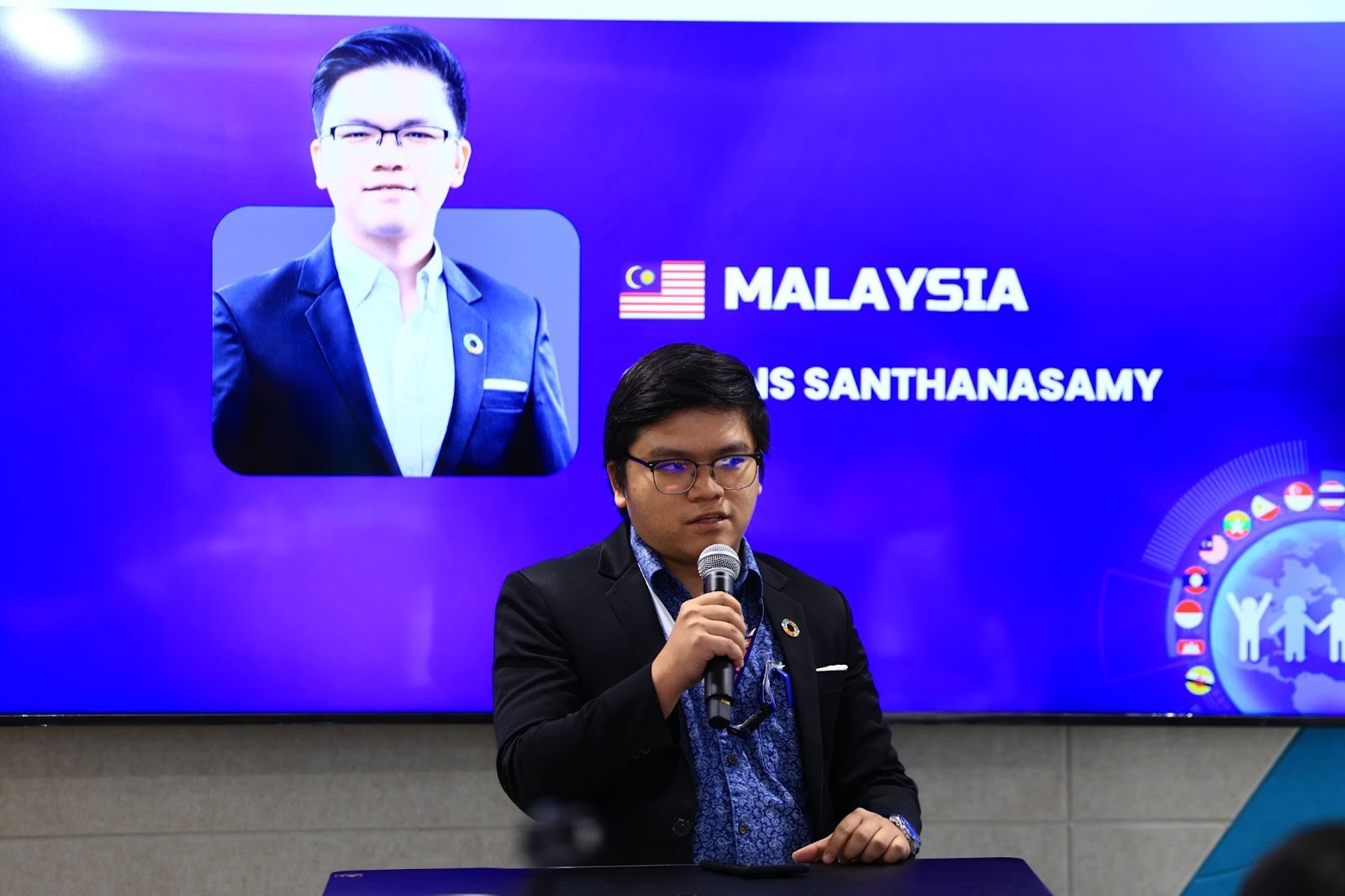
From Malaysia, Collins Santhanasamy highlighted the vital role health services play during disasters. He spoke about preparing frontline workers, improving facilities and creating supportive pathways for skilled professionals, describing these efforts as both forward-looking and fundamentally the right thing to do.
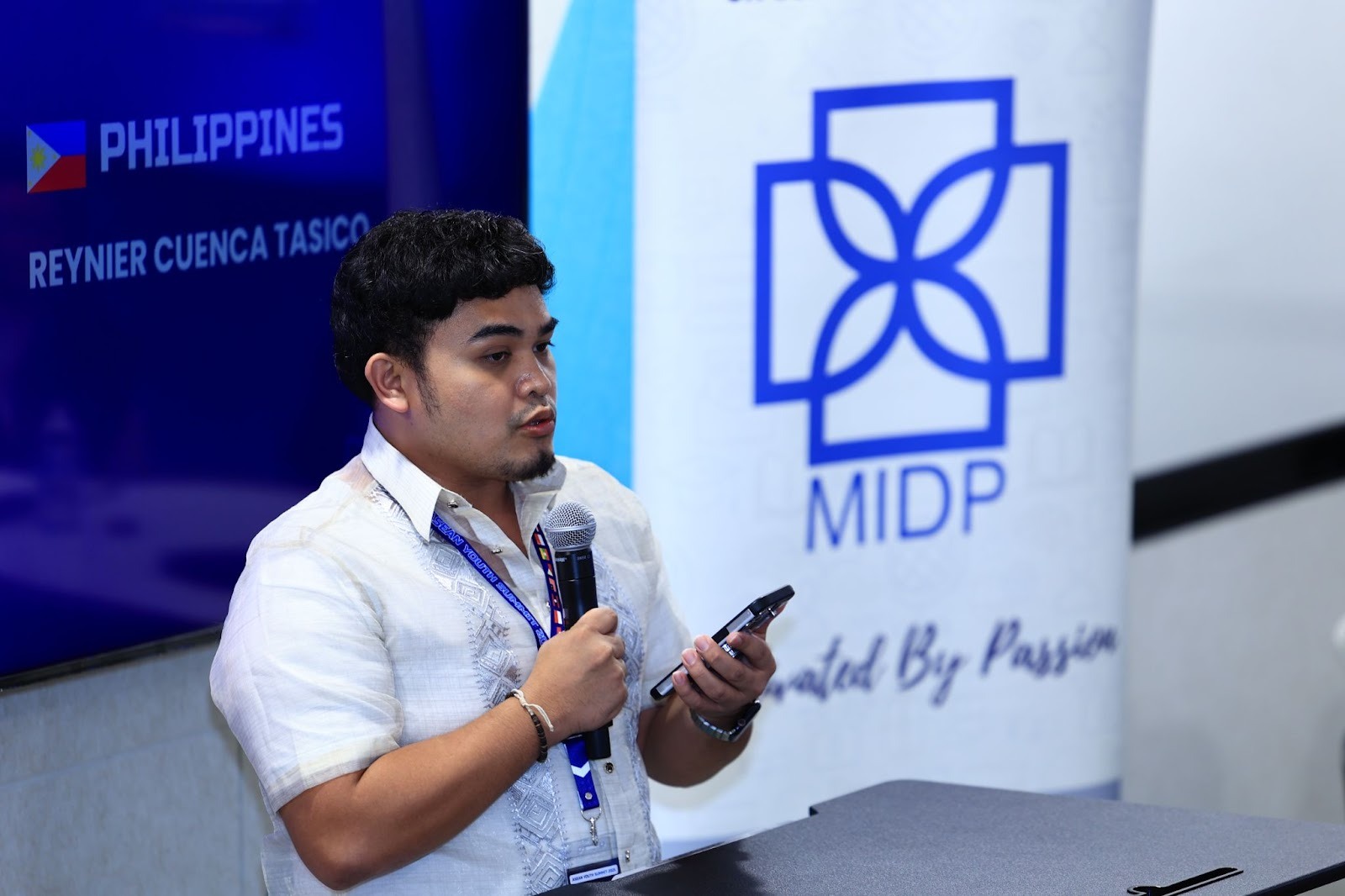
From the Philippines, Reynier C. Tasico highlighted the realities of life in a nation of more than 7,600 islands. He explained how storms and disrupted communications can quickly isolate rural communities, stressing that health, climate and food security are deeply interconnected. He urged ASEAN to treat food security as a central health priority and to ensure that displaced and remote communities are never overlooked.
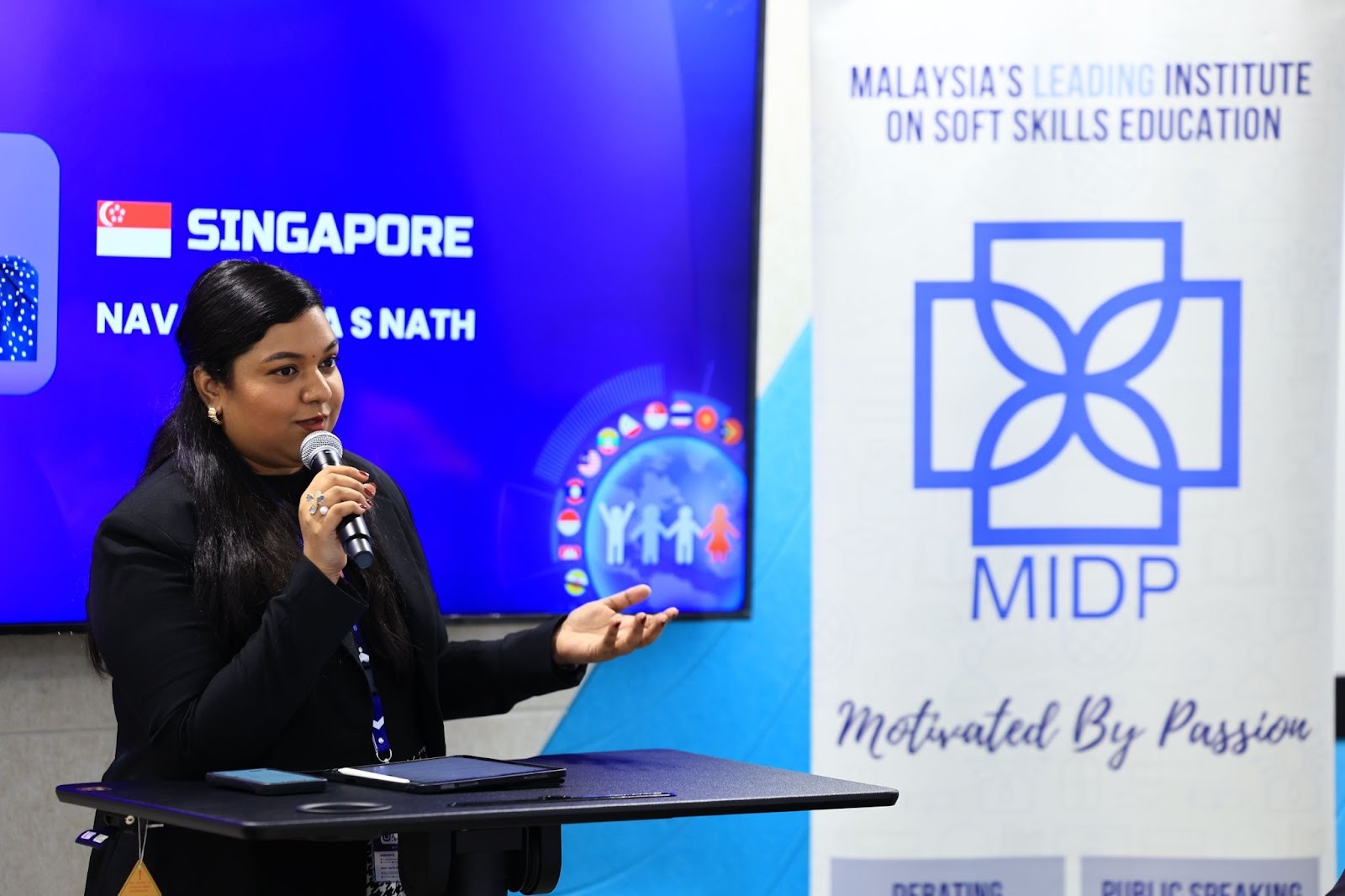
Singapore’s youth speaker, Navaneetha S Nath, shifted the conversation into the digital realm, retelling how a personal online incident deepened her commitment to digital wellness. Her message focused on empowerment — ensuring that as ASEAN modernises, people of all ages have the skills and confidence to navigate the online world safely and meaningfully.
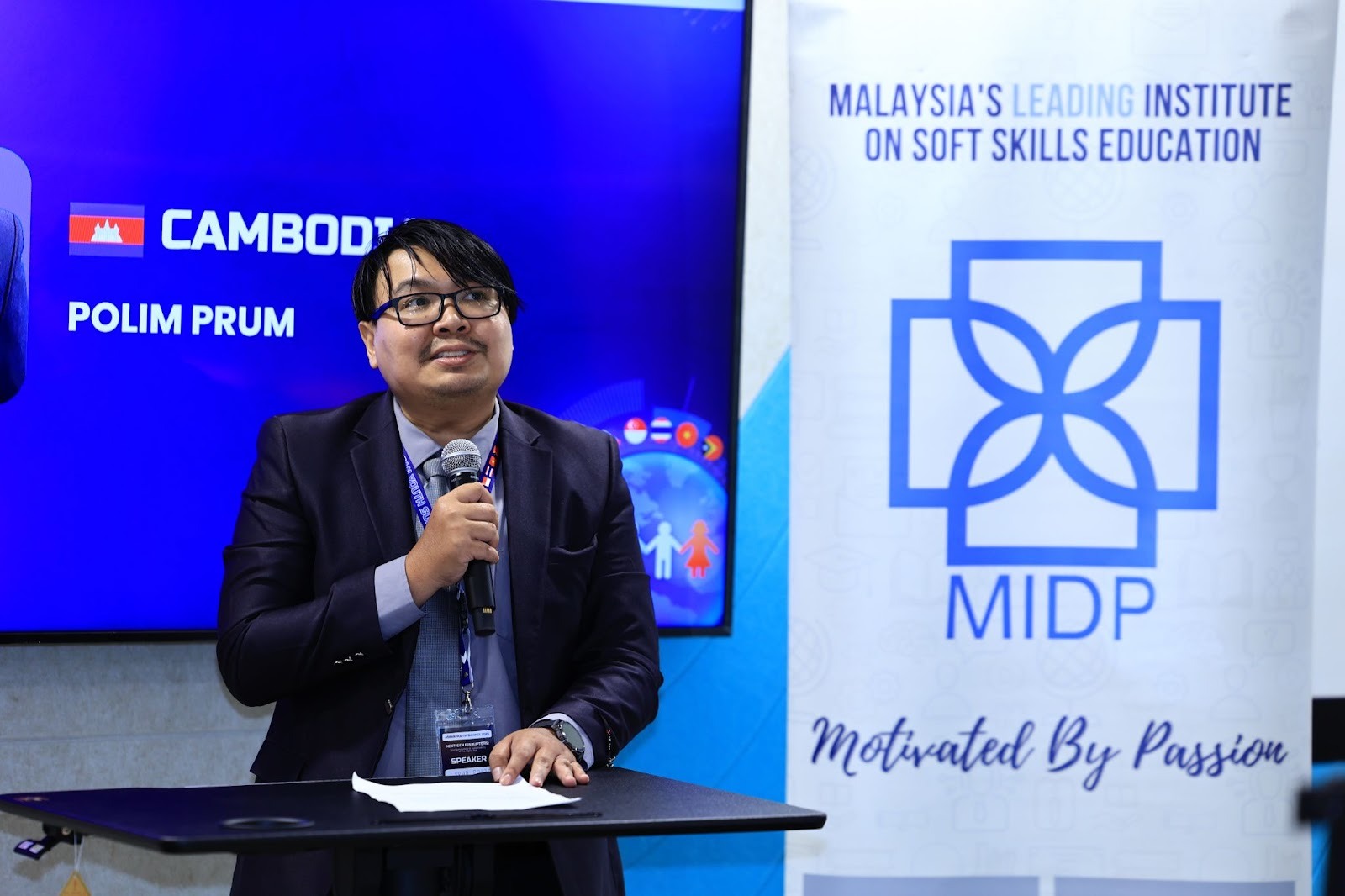
Cambodia’s youth speaker, Prum Polim, added yet another dimension, emphasising that not all health emergencies arrive suddenly. Through his work in WASH and rural development, he sees the silent rise of non-communicable diseases in ageing, remote communities. He encouraged ASEAN to pair strong policy with community education, local champions and long-term support that helps people manage their health every day.
Together, these voices painted a fuller, richer vision of regional health resilience — one shaped not only by policy, but also by lived experience, community understanding and the optimism of a generation ready to lead.
Insights driving future direction
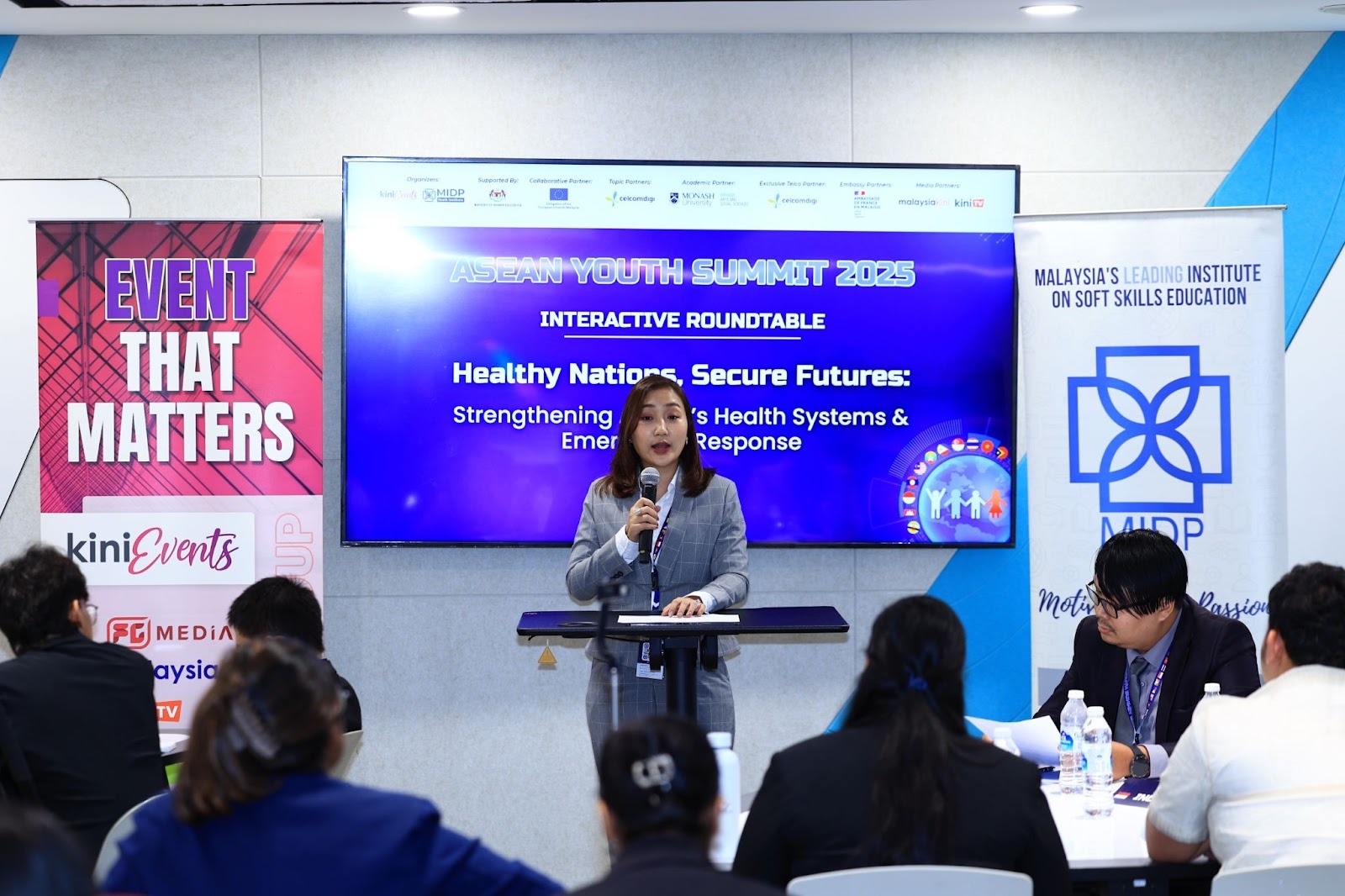
The roundtable was supported by a judging panel that included Dr Kaythri Kaw, founder of Kathryn Beauty International, Chia Ting Ting, Chief Executive Officer of KiniEvents, and Natalie Hew from MIDP Youth Institute.
According to Kaythri, the session reaffirmed the importance of youth perspectives in shaping ASEAN’s healthcare and security agenda. She noted that the speakers brought fresh, community‑focused insights and demonstrated clear commitment to the issues they raised. Reflecting on Myanmar’s recent natural events, she emphasised that disaster preparedness can never be taken for granted, adding that prevention must remain a priority for every nation.
Complimenting Roseline’s proposal, she also pointed to the confusion during the Covid‑19 pandemic as proof of how easily misinformation can spread when people are unsure which sources to trust. Stronger digital literacy, credible public messaging and safer environments in workplaces and communities, especially for women, were noted as essential to building a more secure health landscape.
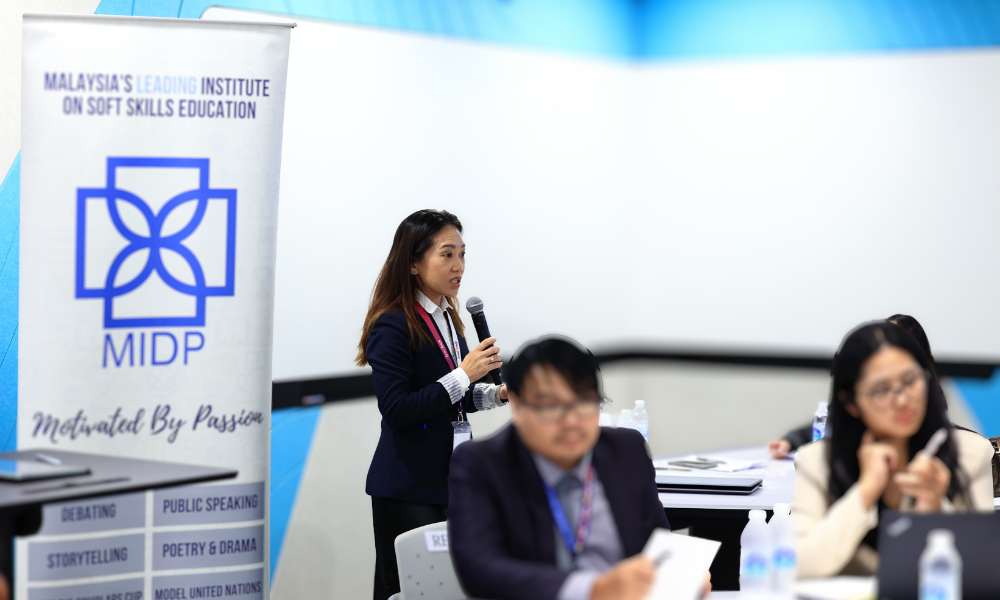
Adding to these perspectives, Ting highlighted two emerging concerns across ASEAN societies: the rising cost of medicine and the growing use of vaping among youth. She noted these trends signal the need for forward-looking policies that anticipate new risks and safeguard young people across the region.
Together, these reflections show that regional health resilience is shaped not just by policy frameworks, but by the everyday realities, priorities and lived experiences of communities across ASEAN.
A generation leading forward
As the summit concluded, the room reflected on the wide range of insights shared and discussed with a renewed sense of determination, underscoring the view that healthcare resilience must be collaborative, inclusive and anchored in the leadership of the younger generation.
The roundtable also showed how concerns ranging from reliable information and disaster readiness to food security, digital wellness and non-communicable diseases are deeply interconnected, a reminder for ASEAN to keep youth voices at the forefront of regional health planning.
Learn more about the ASEAN Youth Summit via the official website, or visit KiniEvents’ Instagram for a closer look at the day’s highlights.
If you missed this event, stay tuned for our next one from KiniEvents.
#AYS2025 #ASEANYouthSummit


Are you sure you want to delete this comment?
This action cannot be undone.