


/file/publisher-c1a3f893382d2b2f8a9aa22a654d9c97/2026/01/92171705b4bd05b258b142b47c11a9ec.png)

Wikipedia Turns 25: Celebrating a Quarter Century of Knowledge
Wikipedia, the world’s largest online information resource, marks its 25th anniversary today, celebrating a quarter century of making trustworthy, human-powered knowledge freely accessible to people around the world, including millions of readers in Malaysia.
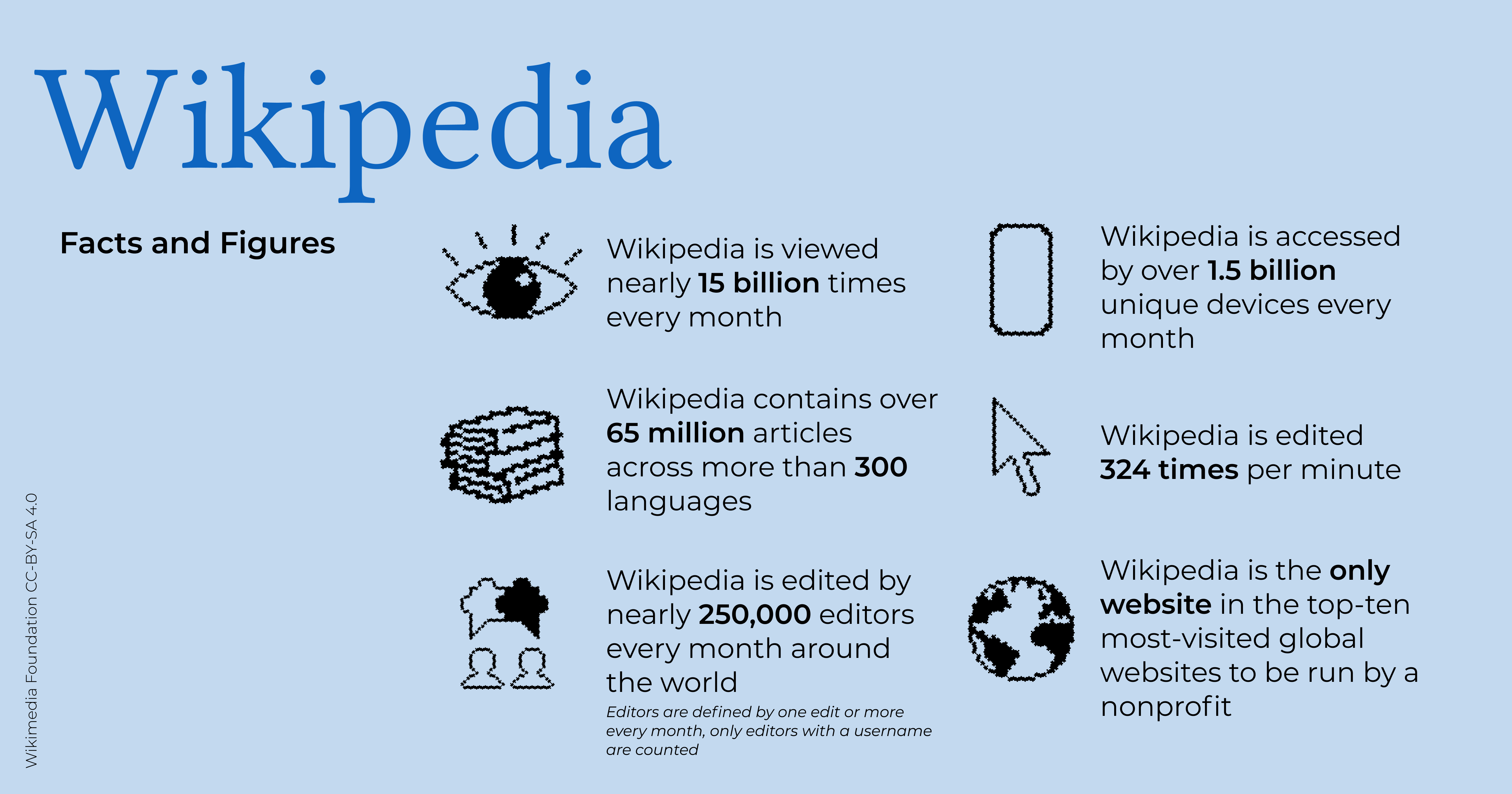
Globally, Wikipedia is among the top ten most visited websites and the only one operated by a nonprofit organisation, the Wikimedia Foundation. Its more than 65 million articles across over 300 languages reflects the scale and credibility of a platform that Malaysians rely on daily for information spanning education, health, culture, current affairs and more.
For Malaysians, Wikipedia has become an essential reference platform used daily by students, educators, journalists, healthcare professionals and the wider public. The platform supports access to reliable information in Bahasa Melayu and other local languages commonly used across the country, playing a key role in how knowledge is discovered, shared and verified in Malaysia’s increasingly digital society. Wikipedia is also available in languages of Malaysia like Malay, Chinese, Tamil, Iban, Kadazandusun and Bajau Sama.
The Malay language edition of Wikipedia comprises 435,698 articles and attracts approximately 9 million visits from unique devices each month, reflecting strong and sustained local readership. Beyond this, Wikipedia across all 300 over languages records an average of 94,531,998 million monthly views from Malaysia between January 2024 to November 2025, underscoring the platform’s broad national reach. This content ecosystem is supported by a robust and active local community, with an average of 1,276 contributors in Malaysia editing Wikimedia projects each month, including more than 400 editors dedicated to the Malay Wikipedia alone, who collectively contribute close to 53,000 edits monthly to ensure articles remain current, relevant and reflective of local contexts.
"Wikipedia is a digital wonder of the world, unlike anything else. It has overcome countless challenges and changes in its time, thanks to the people behind it and their unwavering commitment to sharing free, reliable knowledge with the world," said Maryana Iskander, Chief Executive Officer of the Wikimedia Foundation. "With billions of monthly visits and an ever-growing number of organizations relying on Wikipedia's free, verified knowledge, this platform has become integral to the architecture of the entire internet."
As part of the Wikipedia 25 campaign launched today, the Wikimedia Foundation invites Malaysians to reflect on how Wikipedia has shaped access to information locally over the last 25 years, celebrate the volunteers who make the platform possible, and take part in shaping its future.
Wikipedia and Malaysia
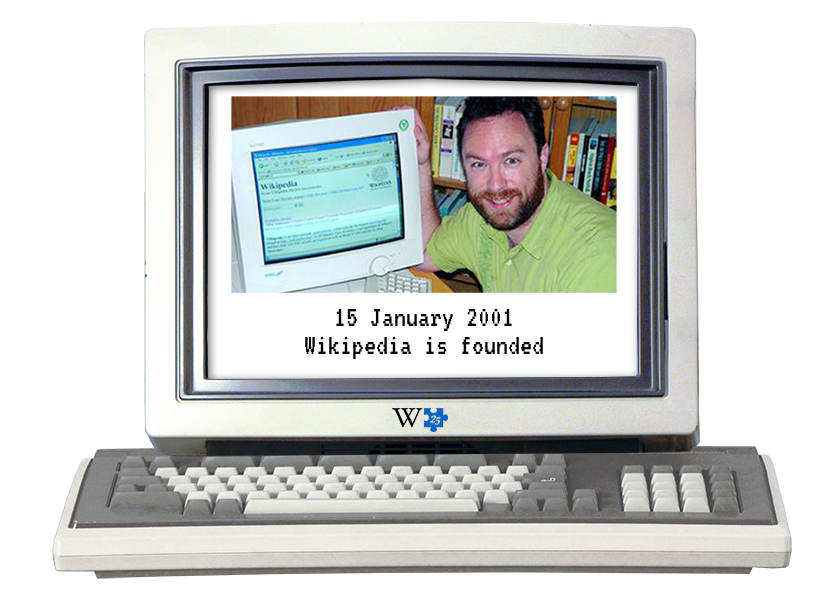
Since its launch in 2001, Wikipedia has grown alongside Malaysia’s digital landscape, becoming an integral part of how information is discovered, shared and referenced across the country. In a linguistically and culturally diverse society, Wikipedia Bahasa Melayu plays an important role in broadening access to knowledge by making reliable information available in a language familiar to many Malaysians, while complementing content available in other languages across the platform.
In recent years, local Wikimedia volunteers in Malaysia have taken their efforts further by documenting and preserving indigenous languages online. Initiatives such as the WikiKata project, which empowers minority communities to record and share endangered languages like Iban, Kadazandusun and others on Wiktionary, reflect the vital, human-led work behind safeguarding linguistic heritage in the digital age. In October 2024, this initiative was recognised internationally, winning the International Green Gown Award 2024 and gaining acknowledgement in the RCE Awards for its innovative approach to community engagement and language preservation. Through these collaborative programmes, Malaysians are contributing to sustaining their cultural identity and ensuring that indigenous languages continue to have a living presence on the internet.
“The launch of Kadazandusun Wikipedia is more than a digital milestone, it is a way for our stories, culture and language to live on in a global ecosystem of knowledge,” said Jilorisa John, contributor and trainer for the Kadazandusun Wikipedia project. “By documenting our language online, we are not only preserving it for future generations, but also celebrating it on the same platform used by millions around the world.”
Wikipedia’s content is created and maintained by a global community of nearly 250,000 volunteer editors every month, including contributors who support Malay-language and Malaysia-relevant content. These volunteers collectively write, review and fact-check articles according to strict standards of neutrality and reliability — a process that remains especially important in Malaysia amid growing concerns around misinformation and the rapid spread of unverified content online.
New Docuseries Celebrates the Humans Behind Wikipedia
To commemorate its 25th birthday, the Wikimedia Foundation has released a new video “docuseries” offering a behind-the-scenes look at the lives, motivations and experiences of Wikipedia volunteer editors from around the world.
The series features eight volunteers and highlights their unique purpose and passions for contributing to the online encyclopedia. Among them are a contributor from California who has spent more than two decades documenting hurricanes and storms; a medical doctor who shared critical COVID-19 information during the global pandemic; and an elderly librarian in Tokyo dedicated to making knowledge accessible in Japanese, among others.
Together, their stories underscore that, even and especially in the age of artificial intelligence (AI), knowledge is fundamentally human, and reliable knowledge continues to be created, curated and sustained by people around the world.
Preserving the Past, Exploring the Future
The Foundation also launched today a “25 Years of Wikipedia” digital time capsule, allowing Wikipedia fans in Malaysia and around the world to delve into the past, present and future of this treasured global resource. Users can listen to Wikipedia Founder Jimmy Wales share, in his own words, memories from Wikipedia’s origin story, including when he personally installed the site’s very first servers.
"In 2001, Wikipedia started as a dream to share knowledge with everyone, everywhere. No one, including me, knew if it would succeed," said Jimmy Wales, Wikipedia Founder and Wikimedia Foundation Trustee. "Against all odds, Wikipedia has grown to become the backbone of knowledge on the internet today. Wikipedia demonstrates 25 years of humanity at its best, proving that when people come together in the spirit of building trust and collaboration, they can make the impossible possible."
Wikipedia's Future in the Age of AI
Wikipedia has become the backbone of knowledge on the internet. Over the past 25 years, Wikipedia and its global volunteer community have navigated major technology disruptions, regulatory challenges and growing mistrust across the information landscape. Through these shifts, the platform has continued and will continue to adapt and evolve to ensure that people everywhere, including readers in Malaysia, can freely access and share reliable knowledge.
Today, Wikipedia’s content underpins search engines, voice assistants and generative AI tools worldwide, and it remains one of the highest-quality datasets used in training Large Language Models. In the AI era, Wikipedia’s human-created and human-curated knowledge has never been more valuable.
"Wikipedia shows that knowledge is human, and knowledge needs humans. Especially now, in the age of AI, we need the human-powered knowledge of Wikipedia more than ever. With continued help from readers, volunteer editors, donors, partners, and fans across the globe, Wikipedia will remain the crucial hub for human-powered knowledge and collaboration online for the next 25 years and beyond," said Selena Deckelmann, Chief Product and Technology Officer at the Wikimedia Foundation.
Wikipedia’s progress over the last 25 years highlights its increasing relevance as the backbone of the internet. These are a few of the ways it has grown and evolved over the years:
New partnerships with tech companies support Wikipedia's sustainability: Tech companies that rely on Wikipedia content must use it responsibly and help sustain Wikipedia for the future. One key way to do this is through the Wikimedia Enterprise platform. Developed by the Wikimedia Foundation, Wikimedia Enterprise is a commercial product for large-scale reusers and distributors of content from Wikimedia projects. Over the past year, several companies — including Ecosia, Microsoft, Mistral AI, Perplexity, Pleias, and ProRata — became new Wikimedia Enterprise partners, joining existing partners such as Amazon, Google, and Meta. They can access content from Wikimedia projects at a volume and speed designed specifically for their needs, while directly supporting our nonprofit mission.
Implementing an AI strategy that puts humans first: The Foundation's recent AI strategy directs future investments and developments in AI to support the human contributors at the core of Wikipedia, so that they can spend their valuable time on what they want to accomplish and not on how to technically achieve it.
Strengthening our tech infrastructure: Continuous improvements have been made to Wikipedia's tech infrastructure since 2001 to make it one of the most accessible and multilingual sites in the world. Updates to Wikipedia's desktop interface and dark mode have greatly improved user accessibility; we've opened new data centers to quicken load times; and Wikipedia apps for iOS and Android allow Wikipedia fans to access content right from their mobile devices.
Closing knowledge gaps: Knowledge on Wikipedia today has grown to be more representative and reflective of the world through dedicated efforts in language translation and community-led initiatives to increase the spectrum of volunteer editors and content on the site. Further, Abstract Wikipedia aims to make the reliable information on Wikipedia available in all languages; the project was one of five finalists of MacArthur Foundation's 100&Change grant competition last year.
Engaging the next generation of readers and contributors: Through new experiments such as online games and short content for social media, we are discovering innovative ways that Wikipedia can reach new users, respond to global trends, and meet the evolving needs of users in a changing internet landscape.
Global Wikipedia 25 Celebrations
There are many ways that people around the world can get involved in the yearlong Wikipedia 25 celebrations. Other highlights include:
People worldwide are invited to use a new feature on social media to "sign" Wikipedia's digital birthday card — helping to make it the longest birthday card ever.
A global, virtual birthday event on 15 January at 4:00 pm UTC, featuring surprise guests, games, entertainment, and more. The event will be livestreamed on Wikipedia's YouTube, TikTok and Instagram channels. Other in-person events are planned worldwide.
Baby Globe, a new birthday mascot inspired by a Wikipedia volunteer's sketches, can be found in a series of playful, visual surprises on several language versions of Wikipedia when readers turn on 'Birthday mode' next month.
A fresh, festive limited-edition collection of Wikipedia merchandise, starting with a Baby Globe plushie developed in collaboration with Makeship.
The Wikimedia Foundation, Wikipedia's global volunteer community, and Wikimedia affiliates around the world will continue activities to celebrate 25 years of Wikipedia throughout 2026. Visit this webpage and follow Wikipedia on social media to learn more about ways to get involved.
This content is provided by Impact Communications
The views expressed here are those of the author/contributor and do not necessarily represent the views of Malaysiakini.
Interested in having your press releases, exclusive interviews, or branded content articles on Malaysiakini? For more information, contact advertise@malaysiakini.com or advertise@fgmedia.my


