


/file/publisher-c1a3f893382d2b2f8a9aa22a654d9c97/2026/02/7323164f595182aa0c6e803157991cdc.png)

NIMP 2030: Rigorous R&D positions Malaysia as a potential biotechnology hub
The National Industry Master Plan (NIMP) 2030 lifts Malaysia’s position higher in the global pharmaceutical supply chain by cultivating an ecosystem centred around Research and Development (R&D), positioning it as a potential hub for biotechnology.
Global Business Development Manager at Nexus Wise, Nicholas Lim said, the policy encourages industry players to innovate beyond sourcing and consumption, therefore widening Malaysia’s role in the global market.
“Historically, Malaysia is more known for its raw materials than its capabilities to produce high-tech, so NIMP 2030 helps to address this issue and change this perception.
“We invest heavily in clinical research and international branding to prove Malaysian manufacturing and R&D capabilities are world class, hence increasing the value perception of our national exports.
“This initiative puts Malaysia on the map, and when we go out to approach international clients– Malaysia has already established its name,” he said.
According to Lim, one of the benefits underlined in NIMP 2030 is the array of incentives offered for key industry players such as the incentives for general investment, incentives for high technology projects, incentives for strategic projects and incentives for R&D.
He said these incentives reflect the government’s immense support towards industrialists in the pharmaceutical sector by eliminating financial hurdles that otherwise would hinder growth and innovation.

For example, Lim vouched that Nexus Wise was able to develop the first steroid-free, oral supplement for eczema treatment based on a natural ingredient more commonly known as Tenggek Burung after a thorough R&D by their team.
“Normally, if you have eczema, you have to take a topical cream that usually contains steroids and apply it externally.
“But our finding produced Eczefolia, the first steroid-free oral supplement to counter eczema so that you can eat it and feel your itching reduced in just 12 days.
“Thanks to NIMP 2030’s initiative, we are able to get inspired, focus more on R&D and bring Malaysia’s name up in the global market through this product,” he said.
Lim said, the breakthrough gains a lot of good reception from overseas and gives the Malaysian company an edge in the global pharmaceutical sector for providing an alternative treatment to eczema, a prevalent disease suffered by all walks of life.
It also allows them to develop their product domestically without foreign assistance, cementing Malaysia’s presence in the global pharmaceutical supply chain and empowering more local industry players to dominate the market.
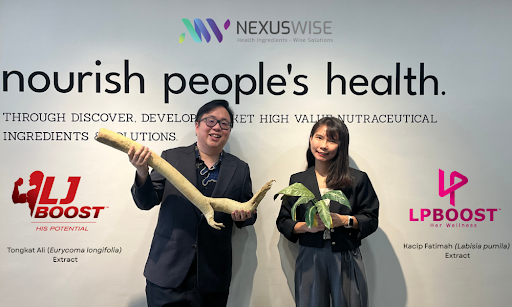
Lim elaborated, local companies are now able to compete at the same level playing field with giants like India and China - which are famous for their botanical products - by merging traditional herbs and clinically proven science.
Based on NIMP 2030, the government recognizes that Malaysia’s strength lies in its rich biodiversity with a diverse range of medicinal flora of over 15,000 vascular plants species, allowing industry players access to cost-effective extraction and manufacturing.
The policy emphasises that the country must focus on extraction activities up until production of niche botanical materials to develop traditional medicine products that are recognized and competitive globally such as Ayurvedic in India and Traditional Chinese Medicine in China.
“When we talk about the availability of herbs in the market, we always refer to China or India because they dominate the generic herbal market, so we try to differentiate Malaysia by validating our rainforest treasure with clinical data.
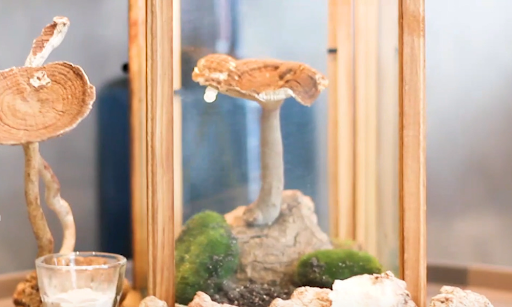
“For instance, Malaysia has a very special Tiger Milk Mushroom that we at Nexus Wise cultivated into TigerPro, which is the first clinically proven Tiger Milk Mushroom used to treat respiratory health.
“We are currently looking at this product as a way to improve sports performance and immunity, opening more doors for Malaysian herbs to stand out from other generic ingredients coming from other parts of the world,” said Lim.
The discovery is expected to lead towards higher value-added and premium generic products in the global market following NIMP 2030’s mission, benefitting the local economy by expanding supply chains and domestic linkages.
As the industry expands, the policy stated that local production helps to reduce the national pharmaceutical trade deficit and enhance self-sufficiency in the face of potential pandemics or trade disputes.
The shift from heavy reliance on foreign biologics to self-sufficient manufacturing, according to the policy, is a strategic step towards overcoming global shortage of biologic products, particularly by leveraging existing capabilities to accelerate building and minimise investment risk.
“We are a scientifically proven solution and because the government supports us through NIMP 2030, it points all industry players towards the same direction– making Malaysia a platform for global manufacturing.
“It is a platform for technology, for R&D and whenever industry players– even from different sectors – visit other countries, outsiders have a certain trust in us that since the R&D are made by Malaysians, it must be of high quality,” Lim concluded.


