


/file/publisher-c1a3f893382d2b2f8a9aa22a654d9c97/2026/05/3b7fdebc1158e405178aeae0676fcd7c.png)

Progress of TLDM’s first Littoral Combat Ship (LCS) reaches 77%, delivery remains on schedule
Defence Minister Datuk Seri Mohamed Khaled Nordin announced that the Littoral Combat Ship (LCS) programme has achieved an overall progress rate of 77.46 per cent across all five vessels as of April 2026, with delivery timeline remaining unchanged and on schedule.
He shared the update during a press conference following a working visit aboard LCS1 at Lumut Naval Shipyard (LUNAS), located at the Royal Malaysian Navy (TLDM) base in Lumut, Perak, today.
“I am pleased to report that, as of April, construction progress for each vessel has been encouraging. LCS1 has reached 84.30 per cent completion, LCS2 stands at 79.48 per cent, LCS3 at 71.22 per cent, LCS4 at 60.52 per cent, and LCS5 at 49.71 per cent.
“The differing stages of completion reflect that all five ships are being constructed concurrently at various phases of build and systems integration, reflecting a more structured and disciplined approach to the programme.”
“This progress also confirms that the delivery schedule remains intact, with LCS1 set for delivery this December, followed by LCS2 in August 2027, LCS3 in December 2027, LCS4 in August 2028, and LCS5 in April 2029,” he said.
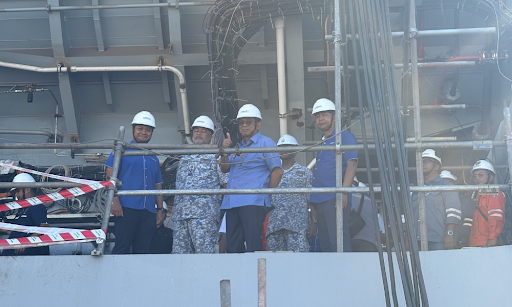
During the visit, the Defence Minister was accompanied by Defence Ministry (MINDEF) Secretary-General Datuk Lokman Hakim Ali, Royal Malaysian Navy Chief Admiral Tan Sri (Dr.) Zulhelmy Ithnain, representatives from LUNAS, and officials from various government agencies.
Khaled added that the LCS programme also aligns with the National Defence Industry Policy (DIPN), which emphasises reducing dependence on foreign technologies while strengthening local expertise and talent development.
He noted that 30 per cent of the components integrated into all five vessels are supplied by local defence industry players, reflecting Malaysia’s growing capability in developing domestic defence technologies.
According to the minister, continuous progress in this area will open up wider opportunities for MINDEF agencies, including TLDM, to strengthen collaboration with local industry partners such as LUNAS.
The effort is especially important following Norway’s recent revocation of the export license for the Naval Strike Missile (NSM) system, a move that has affected the LCS fleet as well as KD Jebat and KD Lekiu.
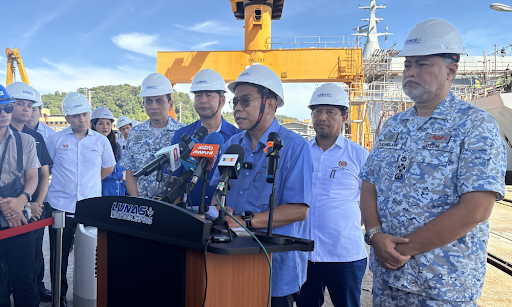
Although other three categories of weapon systems– Surface-to-Air, Surface-to-Submarine, and Electronic Warfare – remain unaffected, the absence of NSM has impacted system integration, testing, and crew training, even though the vessel is still expected to be completed on schedule.
Khaled said, the decision was made unilaterally under Norway’s new policy restricting the export of sensitive technologies to only its closest allies, such as NATO member states.
As a result, he said TLDM is now working to identify alternative missile systems to ensure the vessels are equipped as originally planned.
“The total value of the NSM procurement contract stands at RM634.7 million, of which Malaysia has already paid 95 per cent, or RM583.4 million, to the company.
“Malaysia has issued a notice of claim to the Norwegian firm covering both direct costs– the amount already paid – and indirect costs, including expenses related to reopening the existing integration works.
“The total claim is expected to exceed RM1 billion,” he said.
At the same time, he cautioned regional countries to take note of the incident and reconsider engaging Norway in future defence procurements.
He said unilateral cancellations of this nature undermine confidence in the broader framework of international agreements and contracts.
Looking ahead, he added that Malaysia would avoid purchasing defence assets from Norway in the future.
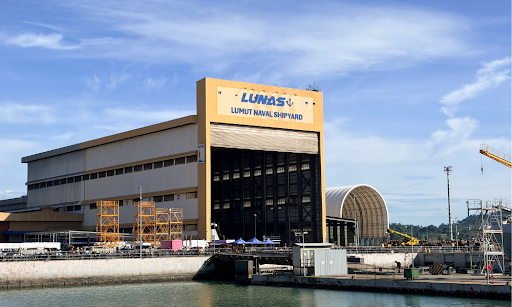
Currently, LCS1 has begun sea trials as part of the verification phase before undergoing Sea Acceptance Trials with TLDM, while LCS2 is expected to undertake its maiden voyage in the fourth quarter of this year.
On the other hand, LCS3 is currently undergoing intensive construction works, while LCS4 is scheduled for its first downslip by the end of the year.
LCS5 has also continued to show steady progress during the construction phase, with four blocks completed, all four Main Diesel Generators successfully installed, and the Combat Management System having passed its Factory Acceptance Test (FAT).
Mohamed Khaled emphasised that the LCS programme remains a key pillar of the nation’s defence landscape and involves significant procurement expenditure, making it an important matter not only for the ministry but also for the public.
In this regard, he said MINDEF will continue to closely monitor the programme’s implementation to ensure it progresses smoothly and remains on schedule, while also strengthening TLDM’s capabilities in line with national defence priorities.
LCS is a naval fleet modernisation program aimed at building stealth frigates to boost TLDM’s capabilities in national defence, at a ceiling price of RM9 billion starting from 2015.
Once delivered, the LCS is expected to be the largest and most modern surface combatants in TLDM.


Are you sure you want to delete this comment?
This action cannot be undone.