


/file/publisher-c1a3f893382d2b2f8a9aa22a654d9c97/2024/01/382ef4ab40840bb64456d9ea7db5ef64.jpg)

Deep Dive SEDA’s remarkable efforts to promote the nation’s Sustainable Energy
SEDA Malaysia is a statutory body under the Ministry of Energy Transition and Public Utilities with the mandate to develop the nation’s sustainable energy (SE) industry. Since its establishment in 2011, the Authority has implemented various programmes introduced by the Government to grow the industry further and ensuring sustainable energy is part of the solutions towards achieving energy security and autonomy.
The recent global climate crisis and the concerted push towards climate mitigation efforts put a spotlight on the importance of a just energy transition and responsible conduct in businesses. Malaysia too, actively partakes in this collective journey, affirming its commitment by pledging to achieve net-zero greenhouse gas (GHG) emissions by 2050.
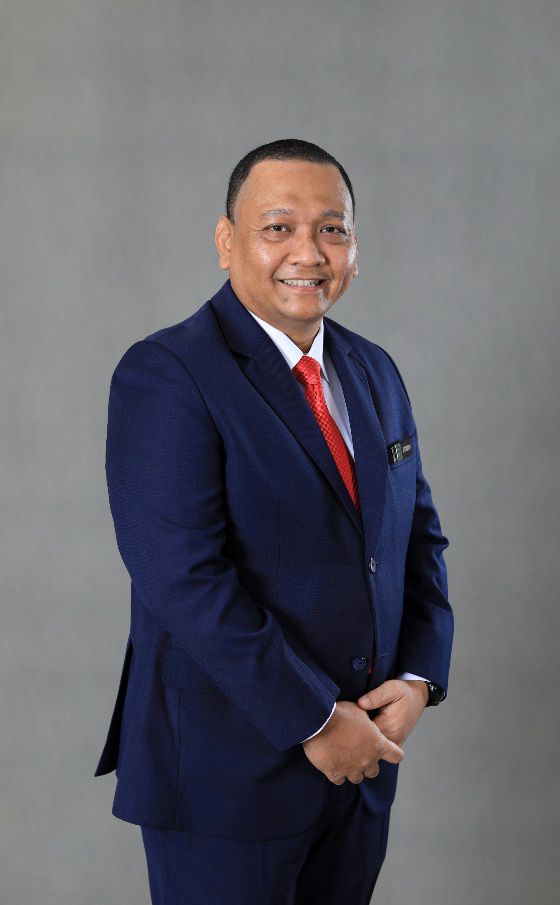
SEDA Malaysia role as the SE champion of the country is becoming more essential than ever. Malaysiakini asked five questions to Chief Executive Officer of SEDA Malaysia, Dato’ Hamzah Hussin to get his views on the Budget 2024 announcement from energy perspectives, the NETR, SEDA’s roles and achievements, and what’s next for SEDA.
1) Do you think Budget 2024 outline strategies for ensuring the long-term sustainability of ESG programmes and initiatives from the Energy perspective?
Budget 2024 demonstrates a comprehensive approach towards ensuring the long-term sustainability of Environmental, Social, and Governance (ESG) programs and initiatives, particularly from the energy perspective. There is a notable emphasis on Renewable Energy (RE)-related measures and plans, aligning with the National Energy Transition Roadmap (NETR) goals. This underlines the government's commitment to fostering sustainable practices and achieving the targets outlined in the NETR.
The allocation of a RM2 billion seed fund by the government serves as a proactive step, laying the foundation for the growth of the renewable energy sector. This financial commitment is particularly crucial, considering the significant investments planned under the NETR.
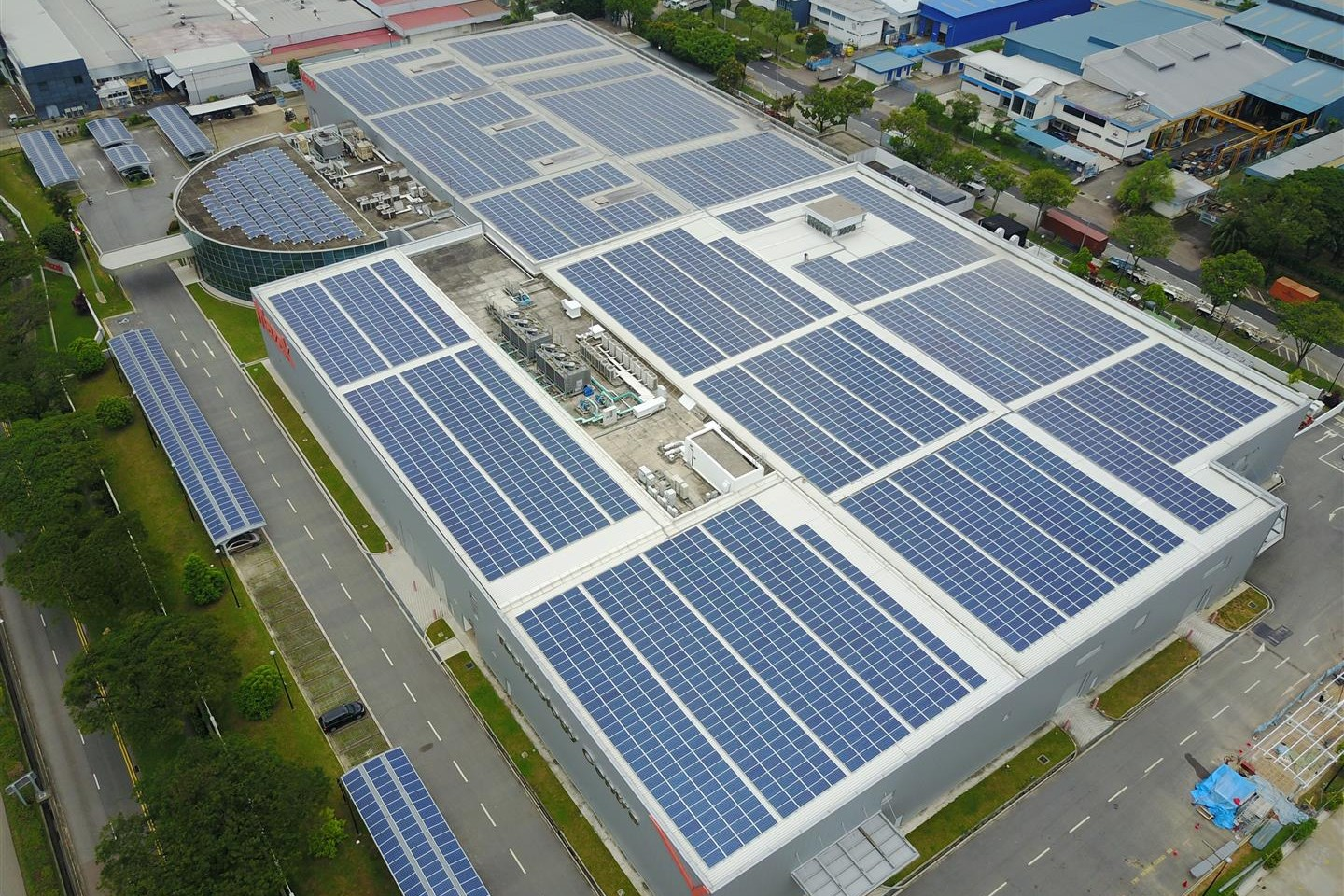
The continuation of the Net Energy Metering (NEM) programme until 31 December 2024 will directly foster more adoption of solar panel installation on rooftop and will contribute towards the RE installed capacity goal. The NEM 3.0 programme which was originally launched in 2021 saw an overwhelming response with the quota fully taken up before its closing date of 31 December 2023. The outcome clearly demonstrates the heightened public awareness towards green energy and a clean future for all.
Budget 2024 not only recognizes but also actively supports the importance of the transition to renewable energy. The document's emphasis on RE-related measures indicates a strategic alignment with sustainable energy practices, and it positions the government as a key driver of growth in the sector. This commitment is integral to ensuring the long-term success and sustainability of ESG programs and initiatives within the energy landscape.
2) What is SEDA Malaysia’s role in the National Energy Transition Roadmap (NETR)?
Being a statutory body under Ministry of Energy Transition and Public Utilities, SEDA is tasked to implement programmes related to sustainable energy, including increasing public awareness.
The Authority is a member of the Project Team of the NETR development. We offer our expertise in ensuring NETR’s strategies and plans meet the needs of the broader stakeholders. The Malaysia Renewable Energy Roadmap (MyRER), developed by SEDA, was also used as a reference in the development of NETR.
Together with other agencies, SEDA champions some of the key initiatives in NETR, including:
Establish green building codes for energy-intensive residential and commercial buildings
Establish solar parks for accelerated deployment of utility-scale solar
Promote floating solar and agrivoltaic technology
Expand virtual aggregation model for rooftop solar
Catalyse local demand for bioenergy
SEDA will also champion a modality in one of the NETR's identified flagship catalyst projects and initiatives to showcase our unique approach in supporting Malaysia's energy transition advancement.
The flagship project is Biomass Demand Creation, and the modality is called Biomass Clustering. This entails the development of biomass clusters with a centralised plant that utilises aggregated feedstock from multiple neighbouring mills. Biomass clustering is expected to enhance economies of scale and secure a more significant, more reliable feedstock.
3) What are some of the impressive initiatives done by The Authority for this year as well as for the past 12 years since its establishment to promote sustainable energy?
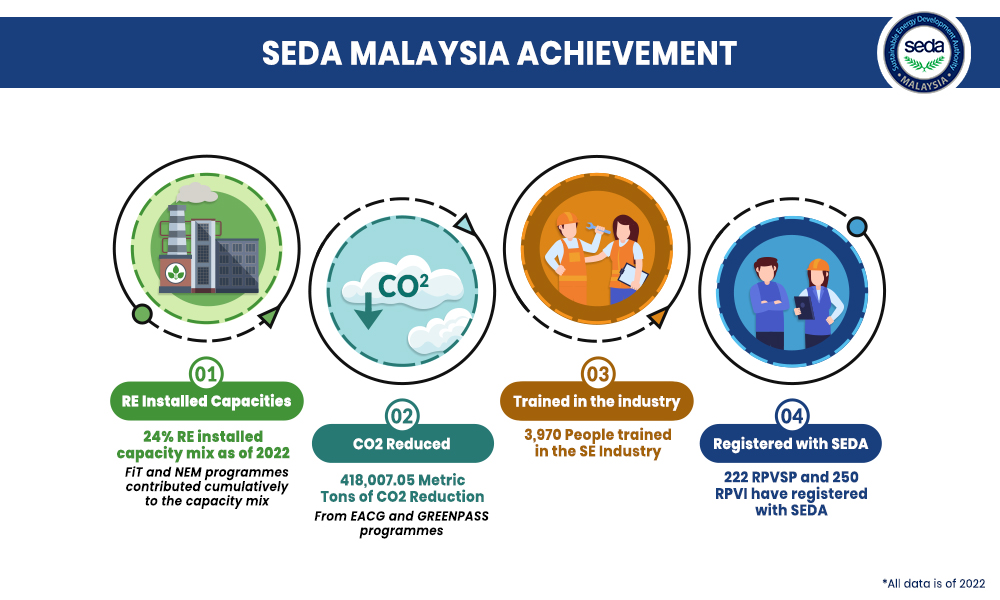
In carrying out our role mandated by the Government, SEDA Malaysia has implemented several SE programmes for both the Renewable Energy (RE) and Energy Efficient (EE) aspects. The recent Energy Transition Index by the World Economy Forum (WEF) saw Malaysia ranked 39th, the highest amongst all the Southeast Asian countries, with system performance and transition readiness at 69% and 60% respectively. This is indeed good news which shows Malaysia is in the right track in managing a safe, affordable and just energy transition. The success indicates strong collaborations between the Ministry, SEDA Malaysia, and various stakeholders in realising the nation’s goal towards a sustainable country.
4) In your opinion, what is the importance of incorporating ESG considerations in an organisation?
The incorporation of Environmental, Social, and Governance (ESG) considerations in an organization holds paramount significance. Amidst the contemporary challenges faced by businesses, the imperative of ensuring both the continuity of operations and contributing to the long-term sustainability of our planet cannot be overstated.
ESG serves as a guiding framework for organizations, compelling them to operate with a heightened sense of responsibility, all the while delivering favourable returns to stakeholders. In today's global landscape, where there is a discernible shift towards stringent sustainability requirements, businesses that actively adhere to and transparently report on ESG aspects find themselves positively positioned for consideration by both local and international investors.
As a Government agency responsible for growing the nation’s SE industry, SEDA Malaysia sees the incorporation of ESG by businesses as a significant contribution in progressing the industry further. We wholeheartedly commend this proactive initiative and aspire to witness an increasing number of companies aligning themselves with ESG standards, as not only it contributes positively to the well-being of society and the environment but it also fortifies their financial standing, creating a harmonious synergy between corporate responsibility and profitability.
5) How does SEDA incorporate technology and innovation in their commitment to sustainability?
SEDA's engagement with industry players reflects a keen understanding of the pivotal role that technological advancements play in driving sustainability. By fostering partnerships and dialogue with key players in the energy sector, SEDA not only stays abreast of the latest industry trends but also contributes to — shaping the trajectory of sustainable energy practices.
Further demonstrating SEDA’s commitment towards technology and innovation in sustainability, the Authority’s biennial summit, the International Sustainable Energy Summit (ISES) 2024 is themed "Accelerating Sustainable Energy Through Innovation". This choice reflects SEDA’s commitment to expedite the transition to sustainable energy through innovative approaches.
We strongly believe that innovation plays a crucial role in accelerating this important energy transition. We believe the theme will set the conversations at the summit in design to benefit the audience towards a net-zero carbon future and highlight the transformative capacity of innovative solutions.
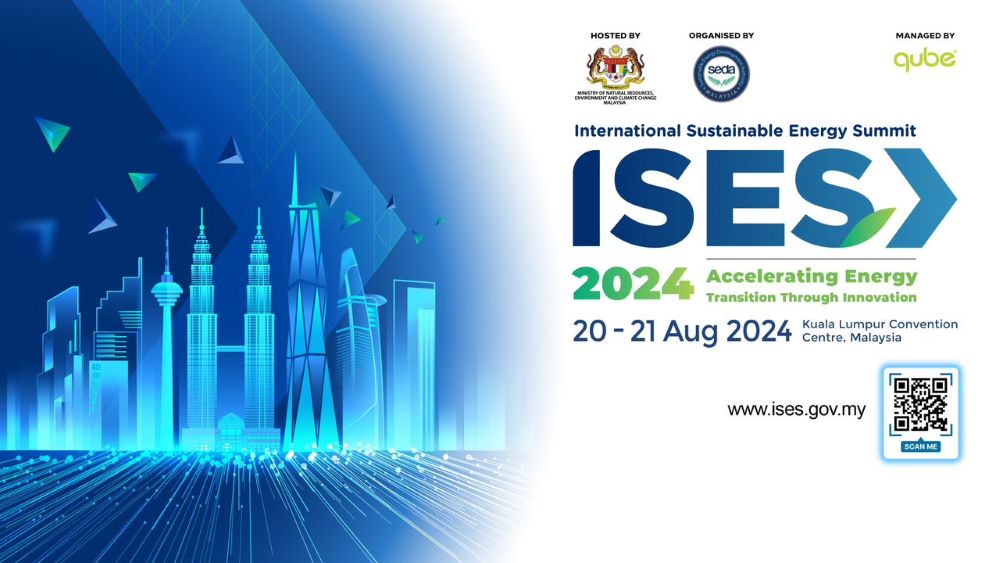
The 6th ISES is organised by SEDA Malaysia and is mooted in partial of Strategic Thrust 5 of the National Renewable Energy Policy and Action Plan (NREPAP), which encompasses promotional and awareness building on sustainable energy. It is a knowledge-exchange platform that brings together energy experts and thought leaders to discuss pressing issues and solutions to accelerate the country's energy transition.
The summit has established itself as a premier and must-attend gathering in the field of sustainable energy over the past years, successfully facilitating industry players in this sector.
The event will take place on August 20th and 21st at the Kuala Lumpur Convention Centre. More information on ISES 2024 is available on www.ises.gov.my.
The views expressed here are those of the author/contributor and do not necessarily represent the views of Malaysiakini.


