


/file/publisher-c1a3f893382d2b2f8a9aa22a654d9c97/2025/02/31815a8a9e92b4239b1006a3fbe5396c.jpg)

2025 Malaysia Technology Expo: Uniting Global Innovators for a Brighter Future
The 2025 Malaysia Technology Expo (MTE), held from 20 to 22 February in World Trade Centre, Kuala Lumpur, saw 86 exhibitors from 12 countries gathered in the city centre to show and demonstrate their latest innovations and inventions.
The expo featured government agencies from Malaysia, local and foreign universities and even primary and secondary school students and their inventions from local and other countries, to present and put their invented products to use, highlighting their best innovative designs, further pushing the boundaries of how technology can be used to better the Science, Technology, Engineering and Mathematics (STEM) fields.
Deputy Minister of Science, Technology and Innovation Dato Mohammad Yusof Apdal said the 2025 MTE is a testament to Malaysia’s unwavering commitment to fostering a vibrant and dynamic innovation ecosystem.
He said the event showcases the ingenuity, creativity and resilience that propel the nation forward, as this event is where the seeds of groundbreaking ideas are sown, and where they blossom into solutions that redefine industries and improve lives.
“Malaysia’s innovation landscape is vibrant and dynamic, driven by a combination of government support, private sector investment, and the incredible talent of our researchers, entrepreneurs and innovators. We are making remarkable strides in key technological areas, such as having Malaysia as a data centre hub, and also to position Malaysia as a regional AI (artificial intelligence) hub,” he said in his opening speech on 21 February.
The event also saw a signing ceremony between MTE organiser PROTEMP Group and Lens.org, appointing PROTEMP Group as the Malaysia’s Office for Open Patent and Scholarly Search Engine.
The Public Service Innovation Asia Awards, presented by Deputy Sarawak State Secretary (Operation) Datu Hii Chang Kee, were also being given out to government agencies that have innovative technologies that enhance their services. Many government agencies from the state of Sarawak bagged awards for their methods of using technology to further enhance their public services. The Asian Youth Innovation Awards, presented by Dr Ivan Velimir Starčević, ambassador of Croatia, specifically the junior and youth category, announced later in the afternoon on 21 February, saw several local and foreign universities and schools vying for the awards for their innovative inventions.
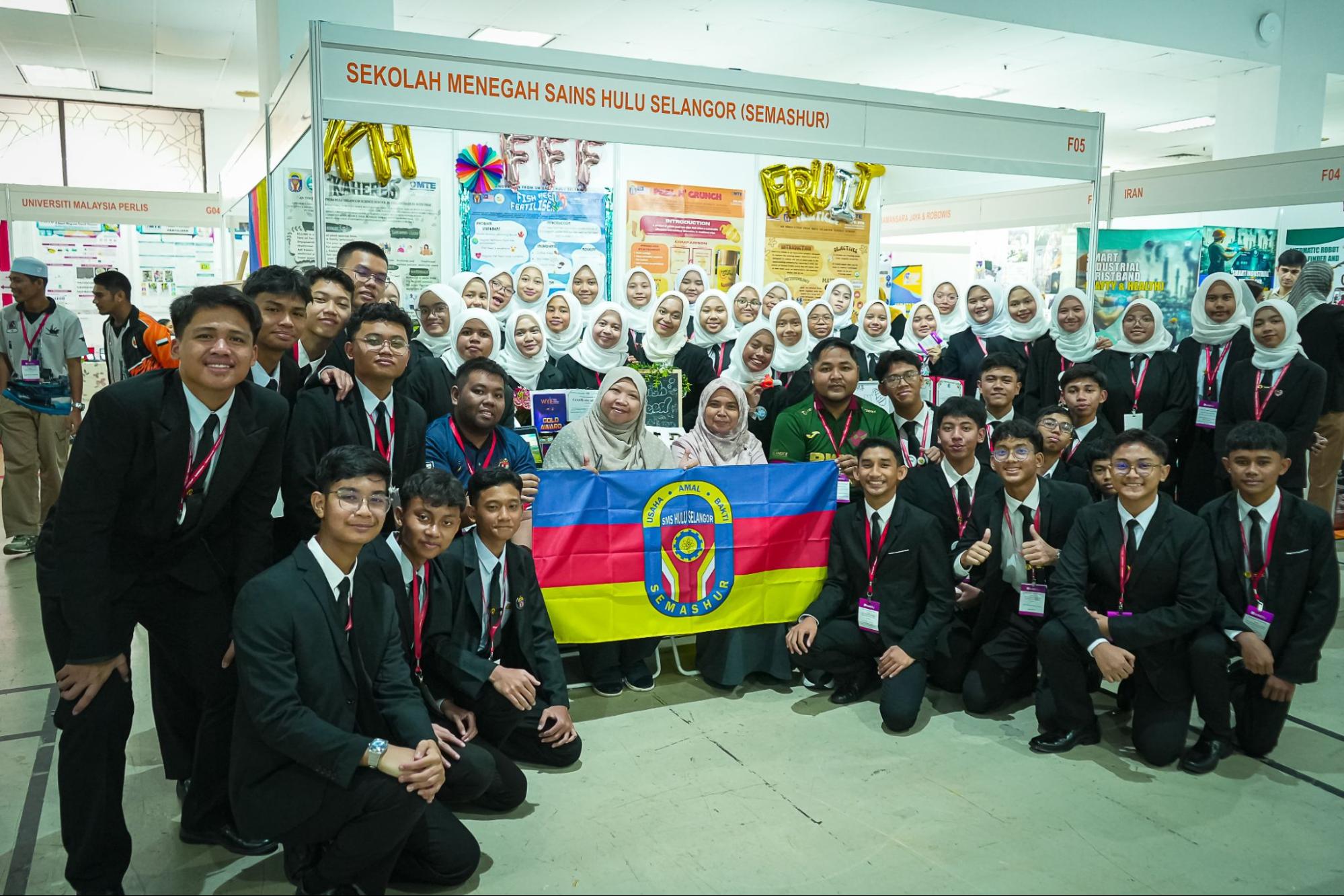
The atmosphere was electric as many who exhibited their innovations were enthusiastic about their products and prototypes, showcasing how their innovations could potentially change the way people think about existing products and designs.
One such innovation is the creation of recycled paper made up of old newspapers and fruit peels by Sekolah Menengah Sains Hulu Selangor (SEMASHUR). The team, made up of 11 students, named their innovation as Fruiticle Paper, which is mostly recyclable, eco friendly and safe for the environment.
“We started the process by submerging the fruit peels and newspapers into hot water to get rid of the extra ink and follicles that may still stick to the paper and fruit peels. Then we use a blender to blend them into a fine paste, and then we dry them under the sun, thus creating the Fruiticle Paper,” said Fruiticle Paper spokesperson Adriana Fatihah binti Mohd Fauzi, 17.
She said that they were able to create the Fruiticle Paper out of most types of fruits, especially mangoes, apples and oranges. The only exception was the durian skin.
“We have received an offer from a paper company who is interested in our Fruiticle Paper, and we are also selling the paper at our school Koperasi. Moving forward, we will attempt to continue innovating the product, by improving on the texture, size and quality of these recycled papers,” she said.
The Fruiticle paper won the 2025 Asian Youth Innovation Awards, Bronze in the Youth Category.
Meanwhile, students Muhammad Yardan, 17 and Rania Mahany, 15, from Sekolah Menengah Atas Negeri 1 Lawang, Indonesia, introduced their invention, the J&R urban aquaponics with IoT (Internet of Things) system. The aquaponic system is to integrate the plants with sensors so that the plants can automatically receive water from a water source when they are becoming dry.
“It has a moisture sensor to detect if the plant is in need of more water, in which the hose connected to the system will then be alerted to dispense the water automatically. It also runs on an app, to see if the plant is healthy just by checking its pH value and also moisture value,” said Muhammad.
He also said the aquaponics system is already being implemented in the school on a large scale, and the app can help to monitor the plants through a long distance.
Muhammad added that he and Rania were inspired to come up with this invention because the Lawang district is filled with agricultural products such as paddy and vegetation. They developed the aquaponic system and had it on display by October 2024.
“Currently, we use a lot of wires to integrate the system, but soon, we hope to upgrade again to make it wireless,” he said.
When asked about their experience participating in the 2025 MTE, Rania said that it is a good platform to show their continuous innovations, furthering their cause and passion to pursue their interest in the STEM field.
“It has been a very interesting experience so far! We are happy to have been able to participate in the 2025 MTE and give our inventions a spotlight,” she said.
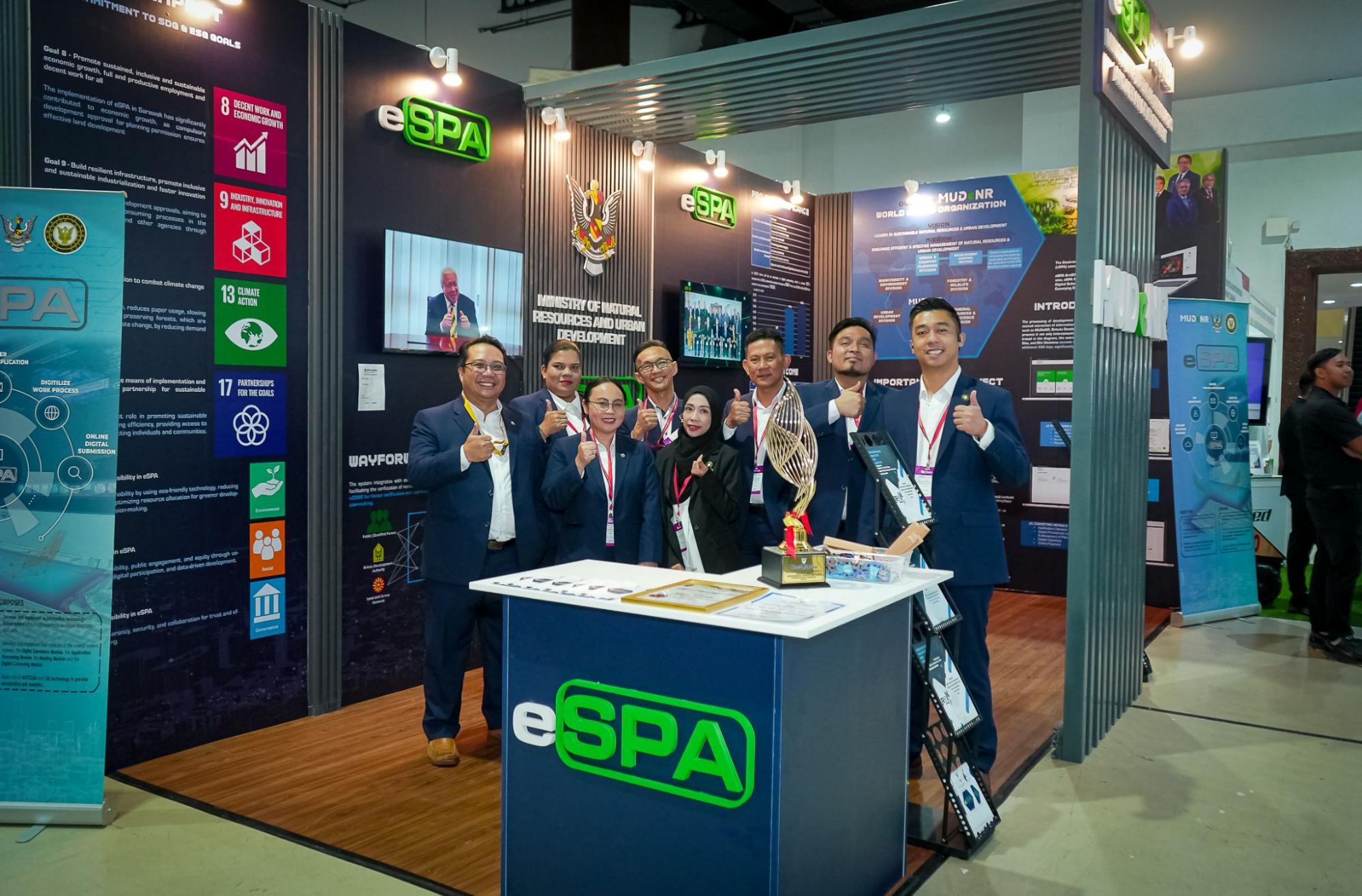
Planning officer Haziq Sallam, who is from the Sarawak Ministry of Natural Resources and Urban Development, also unveiled the latest innovative offering from the state of Sarawak. Named the eSPA (electronic state planning authority) and developed under the Sarawak Development Planning Management System, the eSPA system has been in place since the year 2021, to digitise all urban planning processes.
“We opened this eSPA system to town planners, architects and private developers to submit their building plans to us via this system. It is more efficient as candidates will know of their results in less than 6 months, compared to before, as previously, everything was done manually and it can take up to one year to complete the planning and approval processes,” he said.
He also said candidates who submitted their building plans can also track their application status online, and upon approval or rejection, will receive an email notification about their processes.
He also said that the implementation of the eSPA system was quite challenging, as the system was implemented all throughout the state of Sarawak.
“We had to conduct roadshows to bring more awareness for users to use our eSPA system. At the same time, we also have to implement the same workflow in six agencies within our ministry, so thankfully, the implementation of the eSPA is successful,” he said.
Haziq added that Phase 1 of the eSPA is almost complete, with the system entering into Phase 2, which aims to integrate with the whole Sarawak eZONE in the near future. This aim is in line with Sarawak premier Tan Sri Abang Johari Openg’s ambition to be a digitally developed state by 2030.
The MTE is an annual event that showcases cutting-edge innovations, technologies, and solutions from local and global innovators. It serves as a platform for businesses, researchers, and entrepreneurs to network, collaborate, and explore opportunities in various sectors such as engineering, IT, green technology, and manufacturing. The expo highlights advancements driving economic growth and sustainability, while fostering knowledge exchange and partnerships to propel Malaysia's position as a hub for innovation and technology in the region.


