


/file/publisher-c1a3f893382d2b2f8a9aa22a654d9c97/2025/10/8e4800da28ff877287c5fb22e8022279.jpg)

Open, Scalable, Malaysian
Jim Keller, the veteran American microprocessor engineer behind several of the world’s most influential chip designs, has called on Malaysia to take a more active role in the global semiconductor and artificial intelligence (AI) ecosystem by building, not just buying, the technology of the future.
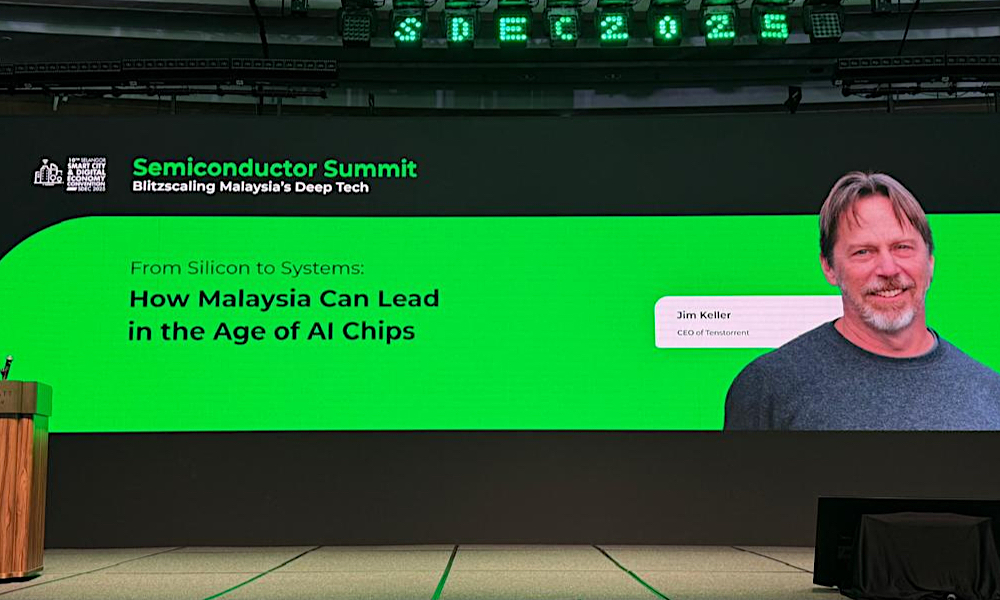
Speaking at the 10th Selangor Smart City and Digital Economy Convention (SDEC) 2025, he said the country was well-positioned to “own its silicon future” by developing an end-to-end AI hardware stack that encompasses chip design, manufacturing, systems integration and software.
From consumers to creators
Keller (above), who is CEO of Tenstorrent, a Canada- and US-based AI hardware company, said his message was simple: countries that want to lead in the age of AI must control their technology stack instead of relying on imported systems.
“If you can’t train your own models, you don’t own your AI,” he said during his keynote, titled “Own Your Silicon: Yes, in the AI Age in Malaysia”.
He cautioned that many nations are limiting their role in AI to deploying models and data centres developed elsewhere. True digital sovereignty, he emphasised, comes from being able to design and train one’s own hardware and software systems.
Keller is widely regarded as one of the world’s foremost chip architects, having worked on major designs at AMD, Apple, Tesla and Intel before joining Tenstorrent. His latest venture is developing open, modular AI processors built around the RISC-V open-source instruction set architecture.
Making AI hardware accessible
Keller explained that Tenstorrent’s goal is to make AI and new silicon “cheaper, scalable and open”. Its products include the Tensix AI processor, which is based on RISC-V cores; the Blackhole chip, which integrates 140 Tensix processors and 16 RISC-V CPUs; and Galaxy servers capable of training AI models at scale.
Unlike traditional high-end systems that depend on proprietary components, Tenstorrent’s hardware uses standard Ethernet and memory interfaces to reduce costs. The company has also open-sourced its full software stack on GitHub, including its AI compiler Forge and runtime environments such as TTNN and Metalium.
“Technology always gets cheaper, if you design it that way,” Keller said, emphasising that open architectures allow universities, start-ups and smaller companies to participate directly in AI hardware development.
He added that AI progress depends not just on powerful hardware but also on ownership of the training process. “Almost all the models people are running were built by somebody else,” he noted. “For Malaysia to build its AI future, it has to start training its own.”
A seven-step roadmap
Keller outlined a detailed framework for Malaysia to develop its own AI chip and systems ecosystem.
Chip design and design services
Malaysia already produces more than 20,000 electrical and electronics (E&E) graduates a year and has a strong base in chip verification, physical design and testing. These skills form a solid foundation for design-service industries.Design new chiplets
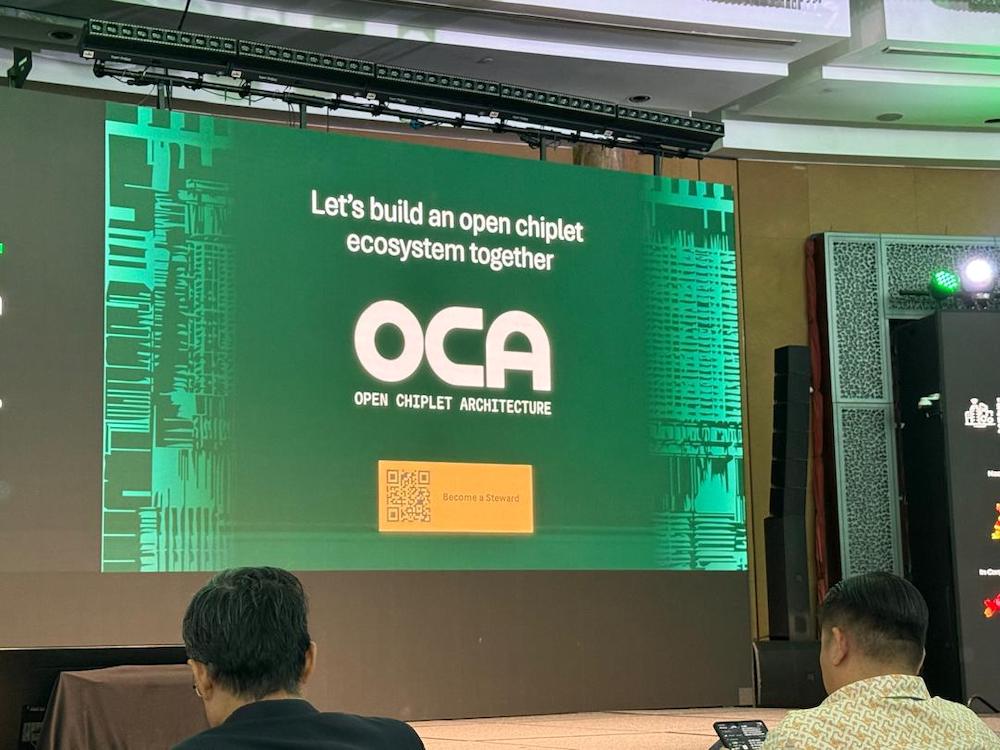
Through Tenstorrent’s Open Chiplet Architecture (OCA), Malaysian engineers can design modular “chiplets” - smaller, interoperable units that can be combined to form new processors. “Each chiplet can evolve independently,” Keller said, lowering both cost and risk.Package and test
Building assembly and packaging capabilities locally is a realistic next step, he added. “If you own chiplet technology, you’re already capable,” Keller said, noting that Malaysia could develop packaging without expensive silicon interposers.Build boards
Keller highlighted opportunities to produce Peripheral Component Interconnect Express (PCIe) and server boards, as well as form factors for embedded, automotive and robotics applications.
Build systems
Once boards and chiplets are ready, local manufacturers can assemble servers such as Tenstorrent’s QuietBox and Galaxy systems. Keller said Tenstorrent plans to begin manufacturing boards in Malaysia in 2026.Build data centres
Malaysia’s existing power infrastructure and shorter construction times give it an edge. “In California, it takes three years to get three megawatts,” he said. “Here, six to 12 months is possible. That’s a good number.”Open software
Finally, Keller urged Malaysian developers to participate in open-source AI software projects - deploying, fine-tuning and training their own models to complete the full technology stack.
Each stage, he stressed, is achievable with existing national capabilities and industrial partnerships. “You start with what you’re already good at, then partner with experts to fill out the rest,” he said.
Building on Malaysia’s semiconductor base
Keller’s roadmap aligns closely with the nation’s broader ambitions to move up the global semiconductor value chain. Malaysia is already a major player in assembly, testing and packaging, accounting for about 13 percent of global back-end manufacturing.
By expanding into chip design, systems integration, and AI compute, Keller suggested that Malaysia could shift from being an efficient subcontractor to becoming an active participant in next-generation computing.
He added that modular, open designs such as the OCA would enable regional firms and research institutions to collaborate on new processors without having to reinvent the entire chip manufacturing process.

An invitation to collaborate
Keller concluded his talk by inviting Malaysian companies and universities to join the Open Chiplet Architecture initiative.
Malaysia’s advantage lies in its existing industrial depth and technical talent. With the right partnerships and focus on open collaboration, he said, the country could play a much larger role in shaping the hardware behind the global AI economy.


