


/file/publisher-c1a3f893382d2b2f8a9aa22a654d9c97/2026/04/cbf9f5f2ee25596330e370e90500daa2.jpg)

Press start in APU’s Game Development Programme
By: Associate Professor Ts Dr Tan Chin Ike
From Malaysia to the World - Levelling Up in Game Development
What do The Last of Us Part II, Street Fighter V, Call of Duty, Final Fantasy XV, and Baldur’s Gate 3 have in common? Aside from their global success and millions of fans, each of these iconic titles has seen contributions from Malaysian game developers. Yes, you read that right!
Welcome to the world of Game Development, one of the most exciting, fast-evolving, and creatively rewarding industries in the digital age. And if you’re wondering where to begin your journey into this dynamic space, look no further than the Asia Pacific University of Technology and Innovation (APU).
What Exactly Is Game Development?
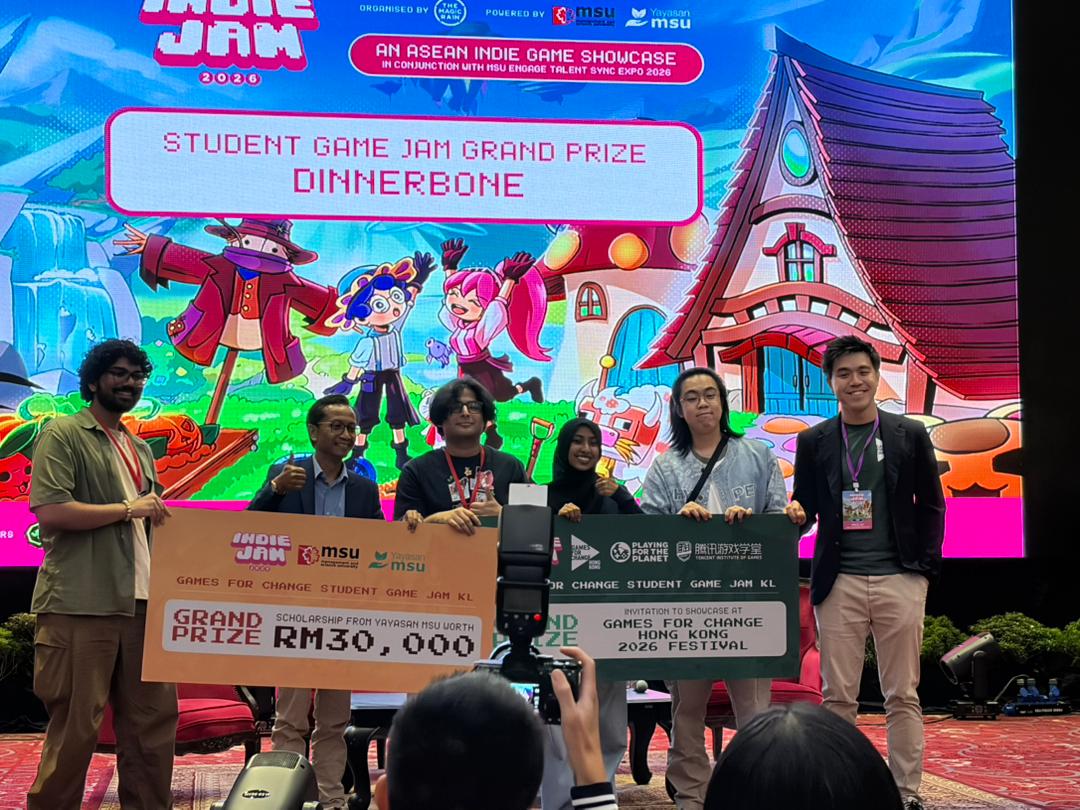
Game development isn’t just about playing games; it’s about building them from scratch. It’s where storytelling meets coding, where art blends with logic, and where creative dreams turn into playable realities.
Whether it’s crafting immersive environments, programming game mechanics, or designing characters that players love (or love to hate), game development is a multidisciplinary field that combines passion with precision.
The term ‘Game Development’ is used to describe the processes, techniques, theories and practices related to the creation of video games.
At its heart, game development brings together three pillars:
Game Technology – The technical backbone of game development, encompassing the code and systems that power the game. This includes game engines, gameplay programming, artificial intelligence, physics simulations, networking (multiplayer systems), and procedural generation, all working together to bring the game to life.
Game Design – The creative architecture behind player experience. Game design defines the rules, mechanics, systems, progression, narrative flow, user interaction, and overall gameplay balance. It shapes how players engage, explore, and find meaning in the game world.
Game Art – The visual and aesthetic expression of the game. This includes concept art, 2D/3D modelling, character and environment design, textures, lighting, visual effects, UI/UX design, and cinematics – all combining to create an immersive visual identity and mood.
Together, these elements form the DNA of any video game, from simple mobile puzzle apps to sprawling open-world, hyper-realistic and dynamic game worlds.
A Programme Built for the Industry, by the Industry
At APU, the Bachelor of Science (Hons) in Computer Games Development isn’t just another computing degree. It’s a hands-on, industry-focused launchpad engineered to produce next-gen professionals ready for real-world studios.
Our curriculum was developed with direct input from major industry players, including Larian Studios (Belgium), Virtuos Kuala Lumpur (China), Codemasters Studios (A UK studio now under Electronic Arts), and Passion Republic, to ensure our graduate talents are not only employable but are in high demand. This close collaboration ensures our teaching reflects actual studio expectations, workflows, practices and emerging trends.
Unlike many programmes, we don’t produce generalists. From the second semester onwards, students choose between two focused streams – Game Art or Game Technology; coupled with some modules in Game Design, allowing them to dive deep into their preferred discipline while still understanding the broader development pipeline.
Learning by Doing: Real Projects, Real Clients, Real Skills
Each semester, students are challenged with team-based projects that mirror professional production environments. These are not mere classroom assignments but rather fully playable video games, or in industry terminology, a vertical slice, a minimum viable product or playable prototypes – with some projects developed for external clients. Through this process, students gain hands-on experience in team dynamics, version control, pipeline management, and iterative design.
Crucially, they learn what it’s like to work in multidisciplinary teams with aspiring game artists, designers, and programmers collaborating just like in actual game studios. It’s this practical exposure that gives APU graduates a competitive edge.
Teaching from the Frontlines of Industry
Our lecturers aren’t just mere academics; some of them are seasoned industry practitioners. Many continue to work actively in the field while teaching at APU. These are developers and creatives who have contributed to International game titles and indie gems alike. They teach not only what’s in the textbooks, but also the invaluable lessons they have learned in production crunches, client negotiations, and post-launch reviews.
This hybrid of academic rigour and industry relevance ensures students are taught both how to think and how to create.
Malaysia: A Growing Powerhouse in Global Game Development
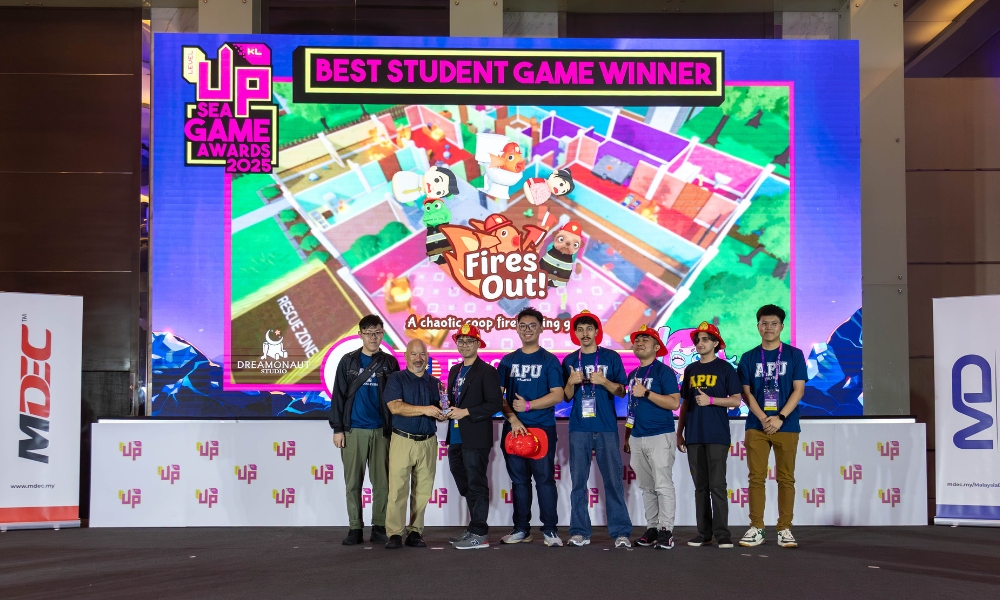
You may not realise it, but Malaysia has been steadily building a reputation in global game development since the early 1990s. Today, our nation hosts more than 80 local studios ranging from small 2-man teams to sprawling 300-man studios, and over a dozen international ones, including global titans such as Electronic Arts (US), Larian Studios (Belgium), Bandai Namco (Japan), Double Eleven (UK), and Sony PlayStation Studios (Japan).
“What we're doing at APU is building an industry-centric programme that allows students to not just make games but to encourage entrepreneurship through creating their own startups and developing their own game IP,” said Yee I-Van, Games Ecosystem Manager at APU, who is also the former Head of Incubation at MDEC and coordinator of GamesHQ Malaysia, Malaysia largest online Game Development Community.
“Our incubation approach guides students from idea to product in line with Malaysia’s digital economy. In other words, our students don’t just enter the industry – they help shape it.”
APU has placed students and our graduate talents in major international studios like Electronic Arts (EA), Double Eleven, and even Ubisoft Singapore. Our strong industry ties mean students aren’t just prepared, they’re connected.
This is a golden opportunity. The Southeast Asian region is facing a shortage of specialised talent in game development, making now the perfect time for aspiring developers to step in and shine.
The Launch of the Game Development Lab & Studio and Video Games Mini Museum
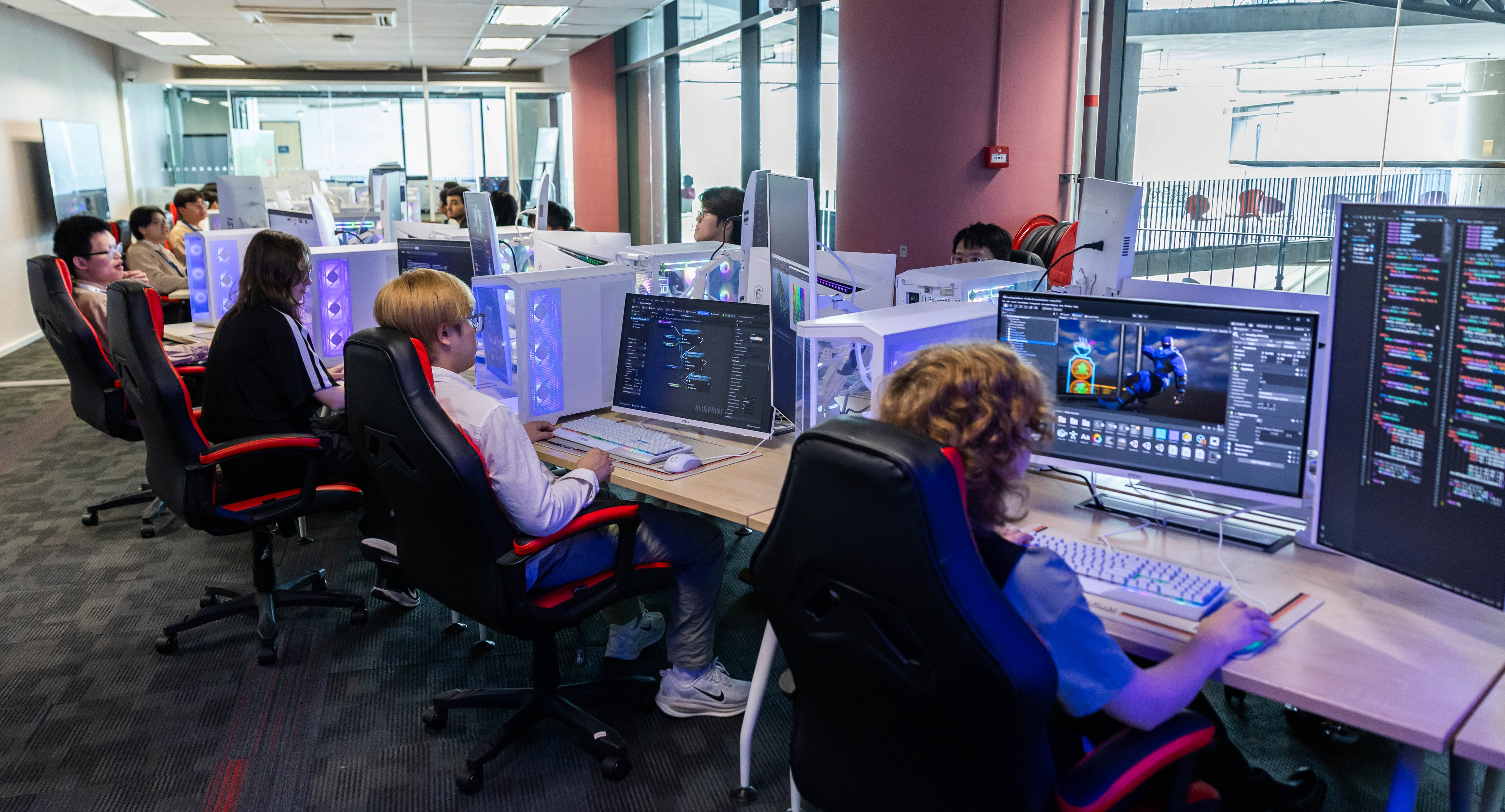
In 2026, APU further strengthened its game development ecosystem with the launch of its most advanced Game Development Lab & Studio. Equipped with high-performance RTX 5070 GPUs and Intel Core Ultra CPUs, the facility enables students to gain hands-on experience in game development, interactive media, simulation, and immersive technologies, using the same tools and workflows adopted by industry professionals.
Complementing this is Malaysia’s first university-curated, publicly accessible Video Games Mini Museum, located alongside the state-of-the-art games lab. This mini museum traces the evolution and history of video games home consoles and handhelds, exhibiting significant artifacts such as the 1972 Magnavox Odyssey, the world’s first commercially released home video game console; as well as the iconic 1977 Atari 2600 home systems and all its various iterations; and also a lineup of Nintendo and Sega consoles across generations from 1977 to the 2000s.
Together, the lab and museum create a unique environment where innovation meets inspiration—bridging past, present, and future in game development. The Video Games Mini Museum is open for public viewing and visits, offering old school gamers and video game enthusiasts an opportunity to experience the history of video games first-hand at APU.
Your Journey Begins Here
So, if you’re passionate about games, eager to create worlds, tell stories, or engineer compelling gameplay systems – this is your moment. Whether your dream is to work at a global studio or to launch your own indie title, the skills you learn at APU Game Development can take you there. Apply now for the Bachelor of Science (Honours) in Computer Games Development at APU.
Where passion becomes a profession.
Where your imagination becomes someone else’s next obsession.
Where the future is played, not just imagined.
Join APU’s Open Day on 11 & 12 April 2026 at its Technology Park Malaysia campus in Bukit Jalil. To learn more, visit apu.edu.my.
Introduction of Contributing Writer

Associate Professor Ts Dr Tan Chin Ike, a prominent advocate of Malaysia’s game development talent ecosystem and policies, currently leads the School of Computing at the Asia Pacific University of Technology and Innovation (APU).
A driving force behind national initiatives such as MYGAMEDEV (EPP14) and the Game Development Council of Malaysia (GDCOM), Dr Ike also serves as the Kuala Lumpur Chapter Chair of the Association for Computing Machinery’s Special Interest Group on Computer Graphics and Interactive Techniques (ACM SIGGRAPH), the Games Chair for the ACM SIGGRAPH Asia Conference 2026, and an active voice in shaping Malaysia’s game development policy.
With extensive academic and industry experience, he has dedicated his career to elevating Malaysia’s digital entertainment talent ecosystem. In the message below, he shares his passion and vision for game development as both a profession and a platform for global impact.
This article is provided by Asia Pacific University (APU).
The views expressed here are those of the author/contributor and do not necessarily represent the views of Malaysiakini.
Interested in having your press releases, exclusive interviews, or branded content articles on Malaysiakini? For more information, contact advertise@malaysiakini.com or advertise@fgmedia.my


