




Zainah's work not for faint-hearted
Zainah Anwar’s great grandfather, an Islamic scholar who divided his time between Saudi Arabia and Malaysia, married an Abyssinian slave girl he bought in Mecca. Her grandfather had a total of seven wives (not all at the same time).
She says her mother waited on her father hand and foot, and her brother never did a lick of housework - not the kind of family history one might expect to produce an Islamic feminist activist.
Zainah Anwar’s great grandfather, an Islamic scholar who divided his time between Saudi Arabia and Malaysia, married an Abyssinian slave girl he bought in Mecca. Her grandfather had a total of seven wives (not all at the same time).
She says her mother waited on her father hand and foot, and her brother never did a lick of housework - not the kind of family history one might expect to produce an Islamic feminist activist.
Or perhaps it is. Amazing women flourish in all kinds of interesting environments.
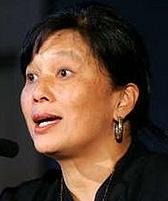 One thing is certain, Zainah has strong views on how Muslim women should be treated in the context of Muslim communities, and the religion that dictates how they function.
The way she sees it, things must change significantly to address a whole slew of issues (such as polygamy, domestic violence and freedom of expression), that she believes create inequalities between men and women in Islam.
Her views, which may Muslims might find controversial, don’t endear her to some of the Islamic powers-that-be. But that doesn’t faze her in the least.
“This work is not for the faint-hearted. If you can’t handle controversy and you get depressed because people are attacking you, then you can’t do this kind of work. You must expect to be attacked, to be criticised, and to be called anti-God and anti-Islam.”
She says it’s natural for men to resist the kinds of changes she feels are required.
“Men have been privileged for thousands of years. Why would they want to lose that privilege without a fight? Using religion to sanctify that privilege is a powerful tool in a society where religion matters.”
For justice and equality
Zainah worked as researcher and journalist in her twenties and early thirties before becoming a mostly full-time feminist and human rights activist in an Islamic context.
She is one of eight founding members of Sisters in Islam, a Kuala Lumpur-based organisation dedicated to studying women’s rights in Islam, and to stopping the use of Islam to discriminate against women.
The group started meeting in 1987 and became a public voice in a ‘letter to the editor’ forum in 1990. Supported by funding from around the world, Sisters in Islam has since become a significant voice for Muslim women in Malaysia.
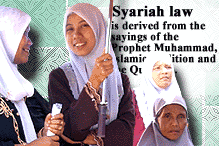 It provides services such as public education and training in women’s rights in Islam. It has a research unit that is currently conducting a four-year study, including a major national survey, on polygamy and the family, and provides support and advice with respect to legal issues to 700-800 women each year.
Zainah recently retired as executive director of Sisters in Islam, and is spearheading a new project called ‘Musawah’, which began with an idea to bring together women’s groups in Muslim countries. It seems to be turning into an international movement for justice and equality in Muslim families.
Just last month, Musawah welcomed more than 200 women from 47 countries at its first five-day international conference in Kuala Lumpur.
The goal of the conference was to bring Muslim women together to develop an international voice to resist the potential return to more conservative laws and policies in some Muslim countries, and to generate some momentum for more law reform internationally.
According to Zainah, the tremendous energy, optimism, spirit, and response generated by the conference is testament to the fact that re-evaluating the nature of women’s rights in Islam is an idea whose time has come.
SUSAN MACAULAY is founder of Amazing Women Rock .


