




Torture in detention: Guantanamo to Malaysia
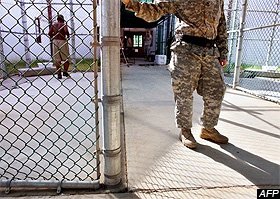
In December 2005, the Bush government agreed to outlaw the use of torture on prisoners detained under anti-terrorism law. The legislation was sponsored by Senator John McCain with a view to repairing the international image of the United States in the wake of the appalling human rights violations at Abu Ghraib in Iraq and at Guantanamo Bay, Cuba.
In pushing for the legislation, McCain argued vehemently that torture would most likely not make a diehard supporter of terror confess to the actual crime, who might instead furnish the US authorities with false information that could prove detrimental to the war on terror.
In December 2005, the Bush government agreed to outlaw the use of torture on prisoners detained under anti-terrorism law. The legislation was sponsored by Senator John McCain with a view to repairing the international image of the United States in the wake of the appalling human rights violations at Abu Ghraib in Iraq and at Guantanamo Bay, Cuba.
In pushing for the legislation, McCain argued vehemently that torture would most likely not make a diehard supporter of terror confess to the actual crime, who might instead furnish the US authorities with false information that could prove detrimental to the war on terror.
 In signing the law, President George W Bush stated that the world’s most powerful nation was now ready to comply with the principles laid down in the United Nations
Convention
against Torture and Other Cruel, Inhuman or Degrading Treatment or Punishment*, although the White House had attempted to exempt CIA officials from being implicated in the amendments, to no avail.
In signing the law, President George W Bush stated that the world’s most powerful nation was now ready to comply with the principles laid down in the United Nations
Convention
against Torture and Other Cruel, Inhuman or Degrading Treatment or Punishment*, although the White House had attempted to exempt CIA officials from being implicated in the amendments, to no avail.
Furthermore, Bush promised there would be no more incidents of torture by American officials, both within the US and elsewhere in the world.
But the Bush administration failed to live up to its word, and quite miserably so.
Monitoring torture
In February 2007, the International Committee of the Red Cross (ICRC) came up with a “strictly confidential” report on the detention programme, detailing the torture methods used to extract information from detainees at Guantanamo.
Would it not make one shriek at hearing terms like “suffocation by water”, “prolonged stress standing”, “beatings by use of a collar”, “prolonged nudity”, “prolonged use of handcuffs and shackles” etc.? These were precisely the cruel techniques employed by CIA officials during interrogation of terror suspects.
More shocking was the finding by the ICRC that medical staff were recruited to monitor the process of torture to ensure that the suspects did not drown while being subjected to “waterboarding”, during which water is poured over a cloth placed over a person’s nose and mouth.
According to the ICRC, “the alleged participation of health personnel in the interrogation process and, either directly or indirectly, in the infliction of ill-treatment constituted a gross breach of medical ethics and, in some cases, amounted to participation in torture and/or cruel, inhuman or degrading treatment”.
A total of 14 “high value” detainees were interviewed by the ICRC, including Mohammed Farik bin Amin and Mohammed Nazir bin Lep, the two Malaysian terror suspects arrested in Bangkok, Thailand.
Among the ICRC informants, Khaled Sheik Mohammed, a Pakistani national who had confessed to being a mastermind behind the September 11 attacks in 2001, admitted he provided false information during interrogation in order to stop the torture.
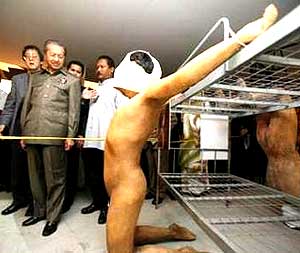 Khaled Sheik also surprised his interrogators by managing to withstand the suffocation by water for up to 2½ minutes. On average, one would be lucky to hold for 14 seconds.
Meanwhile, Encep Nuraman, an Indonesian better known as Hambali, was saved by a medical person on one occasion, only to be told that it was because “we need you for information”. In other words, the officials could not care less if Hambali survived or died had he not been of “high value”.
But waterboarding as a torture technique is nothing new. According to Wikipedia , it was widely used during the Spanish Inquisition and other wars. Despite the gleeful voice of the Chinese authorities on hearing of its being employed by the CIA, I personally know of Falun Gong practitioners who had been through similar ordeal prior to their fleeing persecution in China.
What moral authority?
In early 2008, Tony Fratto, a White House spokesman, defended the use of waterboarding as being “legal” and that it could be employed again “under certain circumstances”. I am still wondering if Fratto was aware of the legal amendments banning the use of torture both within and without the US.
The ICRC report remained confidential until Mark Danner of the New York Review of Books ok Review obtained it recently. Why this important document should have been kept from international scrutiny is everyone’s guess. One reason could be that a good number of countries have also been involved in facilitating the exercise and later covering it up.
For instance, a British court recently accused the US of suppressing powerful evidence of torture, with the connivance of British ministers, while Washington in early March admitted for the first time to the existence of a secret jail in Thailand where waterboarding was used on suspected al-Qaeda operatives during interrogation.
The ICRC report does not specify whether or not the two Malaysian detainees were subjected to similar torture at Guantanamo. However, given the lack of human rights protection and the oft-repeated justification of the draconian laws in Malaysia, it is most unlikely that Putrajaya will raise the issue with Washington.
Since our record on torture in detention is as appalling as that of the US, if not more, what moral authority would the government have to condemn Guantanamo? It is therefore incumbent on Malaysian human rights bodies such as Suhakam, Suaram and JUST to take up the cause.


Are you sure you want to delete this comment?
This action cannot be undone.