




What's new on the Eastern front? (Pt 1)
It was thought provoking that in the past week or so, Gordon Brown and Barack Obama were hounded to explain the apparent debacle of the Shia family law in Afghanistan. Is there anyone out there who cringed at reports of the international media lamenting that troops were sent to ‘liberate' Afghanistan in vain?
On the morning of April 16, one such agency had a White female human rights activist on board saying among others that the ‘Afghan culture' - a euphemism I believe for an interpretation of the law indigenous to that region - was ‘made up as they go along'. What an unfortunate turn of phrase!
It was thought provoking that in the past week or so, Gordon Brown and Barack Obama were hounded to explain the apparent debacle of the Shia family law in Afghanistan. Is there anyone out there who cringed at reports of the international media lamenting that troops were sent to ‘liberate' Afghanistan in vain?
On the morning of April 16, one such agency had a White female human rights activist on board saying among others that the ‘Afghan culture' - a euphemism I believe for an interpretation of the law indigenous to that region - was ‘made up as they go along'. What an unfortunate turn of phrase!
 Islamists and liberals bristle, I would imagine, at the nonchalant manner in which the work of the master jurists, the great imams and their students are dismissed. The media interest seemed to wane by Friday, April 17.
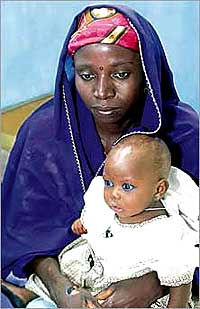
I am reminded of the case of Amina Lawal ( right ) of Nigeria. Amina was convicted of illicit sexual intercourse under an Islamic offence legislation in one of the states in the federation of Nigeria. She was pregnant and was unmarried. The sentence was death by stoning.
The international media attention on the case reached a point where it proved unhelpful to the work of women human rights defenders and lawyers. An appeal had to be made by a Nigerian- based women's group, to end the coverage and speculation to allow the local groups to deal with the situation. I have that appeal saved.
Efficient trial lawyers, level-headed sharia appeal judges and a support network managed by Nigerians themselves saved the day. Amina was acquitted on appeal. The Islamic law that was applied was not ‘made up as they go along'. The decision was based on interpretations of historical ‘fiqh' attributed to the master jurists and their students.
These principles were developed from the seventh to the ninth century of Muslim history and have been used in the legal system of Muslim majority states which implement Islamic law. The appeal judges selected the ‘fiqh' principles that were relevant to the facts and to what the court considered as constituents of justice and mercy.
Essentialising culture
We might just wonder how much of the international press coverage on the Afghan Shia family law, had contributed to the agitation of male clerics and Muslim males, the latter venturing to assault Afghan women who protested the rolling back of women's rights. How much had divided Afghan women themselves and the population at large?
If we have learned anything of reformation in the Muslim world, it is important, in fact, crucial for in-country efforts in reforming interpretations to Islamic law or local gender-transformational projects, to be seen as ‘culturally authentic'.
A Third World post-colonial feminist analysis helps us understand that essentialising the plight of Muslim women to one of culture reinforces the impression that cultural pathologies are rife in these Muslim majority lands.
It ignores history, economics and politics and contributes to the ‘othering' of a group in question. Thus the imagined community in Afghanistan is the opposite of the enlightened and supposedly non-cultural ‘modern West'.
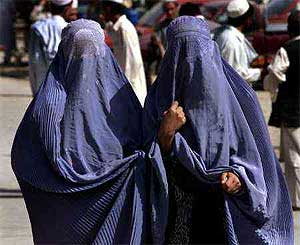 Commentaries on the war on terror have pointed to the fact that the post-Sept 11 attack on Afghanistan was facilitated in part by particular representations of the ‘Afghan women' overlooking the complexities in global power relations.
Political observers maintain that the plight of Muslim women in Afghanistan, Iraq or even the Swat valley in Pakistan may have a lot more to do with neo-liberal capitalist interests and realpolitik of ‘the West'.
Also the support of authoritarian regimes which align themselves with tribal factions, the whole process being disguised as good governance and peaceful processes of negotiation.
Regimes remain in power for as long as they support the foreign and economic policies of particular Western states. For the political elites representing Western interests, it is stability rather than democracy that is sought.
State authoritarianism promotes military spending which reduces the potential on spending on human welfare; it controls and represses demands for political accountability, representation and a fair distribution of wealth.
Modern patriarchies
This is not to say that reformers are not looking critically at Islamic law. ‘Fiqh' formulations in the socio-historical period of the seventh to ninth century Arabia should be revisited. The patriarchal gender system is not unique to Muslim societies.
The culture in place from North Africa, across the Middle East (including Turkey and Iran) to South and East Asia (including Pakistan, Afghanistan, Northern India and rural China) at the time of Muslim conquests have shaped the foundations of ‘fiqh' and social practices developed in the first centuries of Islam.
And I would probably have to address the ‘condonation of rape' critique in the ‘fiqh' formulation of the Shia family law in Afghanistan at some point.
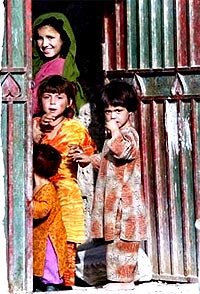 The point to be made here is, too often the ‘plight of Muslim women', has been perceived to be caused by ‘culture, custom, tradition'. And tradition and backwardness is associated with religiosity. Studies in colonialism for example, have shown that states, elites and friendly powers have used and co-produced modern patriarchies.
In recent examples in the frontier countries in the war on terror, friendly powers have constituted and empowered tribal structures in order to contain resistance. This is seen to be an example of a modern patriarchal method of installing a government or leadership amenable to friendly powers.
A current concern in the post-colonial feminist analysis is the treatment of women as a global category (‘transnational feminist governmentality').
This is seen as a ‘hegemonic development discourse'. In this global framework, all women are seen as subjects of male victimisation and violence.
Third World women are seen to be additionally victmimised by their cultures. Gender as the axis of identity and location imagines alliances with scant analysis of economic, labour, ideological, religious, ethnic, political and other divisions and differences among women.
Reductionist views
In some analyses, feminist approaches that reinforce reductionist views of Islam as a peculiarly sexist religion as part of a broader enterprise to discredit and misrepresent Islam, are coined as imperial feminism.
A reductionist view forecloses any serious engagement with aspects of Islam that are potentially or actually liberating for Muslim women.
Being Muslim is a choice that implies a particular constellation of theological, spiritual, and religious beliefs.
A Muslim woman may see her religious identity as a primary identity which is then mediated by other identities, including gender, ethnicity, nationality and class.
Reformers are thinking through the so-called central paradox: particular values that would be core to the enjoyment of human rights while at the same moment, recognising and respecting cultural differences and local contexts.
References:
Leila Ahmed. 1992. Women and Gender in Islam: Historical Roots of a Modern Debate. Yale University Press.
Abdullahi A. An-Naim. 2003. ‘Area Expressions' and the Universality of Human Rights: Mediating a Contingent Relationship. In Human Rights and Diversity: Areas Studies Revisited. eds. David Forsythe. et al. University of Nebraska Press.
Frances S. Hasso. 2009. Empowering Governmentalities Rather Than Women: The Arab Human Development Report 2005 and Western Development Logics. Int. J. Middle East Studies. vol. 41.
Gina Naheed Aaftaab. 2005. ‘(Re)defining Public Spaces through Developmental Education for Afghan Women. In Geographies of Muslim Women: Gender, Religion and Space. eds. Ghazi-Walid Falah et.al. Guilford Press.
Sadiyya Shaik. 2003. Transforming Feminisms: Islam, Women and Gender Justice. In Progressive Muslims. ed. Omid Safi. One World Publications.


