




How to make a depression great
The world economy is in severe recession and trade is deteriorating every day. Political pressures demand import restrictions to protect employment: this is what makes a depression great and this is what G20 countries are already flirting with.
The Group of 20 biggest economies met in London on Thursday in an attempt to kick-start the world economy, promising some US$250 billion for trade finance in the next two years. But this won't unleash the power of free trade unless G20 members themselves remove recent import tariffs, subsidies and hidden barriers.
The world economy is in severe recession and trade is deteriorating every day. Political pressures demand import restrictions to protect employment: this is what makes a depression great and this is what G20 countries are already flirting with.
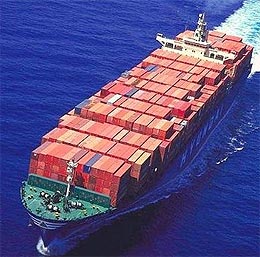 The Group of 20 biggest economies met in London on Thursday in an attempt to kick-start the world economy, promising some US$250 billion for trade finance in the next two years.
But this won't unleash the power of free trade unless G20 members themselves remove recent import tariffs, subsidies and hidden barriers.
They all claim to recognise that trade can pull the world out of recession - but usually on their own terms. Last November, the G20 leaders signed a pledge against protectionism, yet in the second half of 2008, 17 out of the G20 implemented 47 measures that restrict trade, the World Bank says.
Such protectionism will push the world economy further into prolonged contraction.
If all countries went the same way, the global rate of import duty would double and ultimately shrink global trade by 7.7 percent, according to the International Food Policy Research Institute in Washington DC. Already, exports from Chile, South Korea and Taiwan have dropped by about 20 percent and Africa's by over 30 percent.
Free trade delivers all-round gains but protectionists claim to be acting in the national interest and strengthening the state by collecting import taxes.
Vested interests and cronies
Although this can show apparent short-term success, protectionism quickly gets hijacked by vested interests and cronies while increasing prices for everyone, reducing choice and inviting retaliation from other nations - as Africa has demonstrated so disastrously for decades.
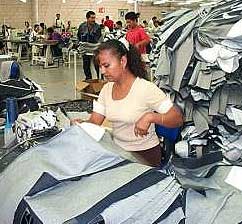 Apostles of import restrictions like the pressure group Oxfam claim they will increase exports, minimise imports and yield a trade surplus. They also favour the protection of infant industries, claiming this will create industrialisation.
This is because they believe that one nation can only gain at the expense of other nations: in real life, trade requires a willing buyer and willing seller who both benefit.
Many African countries have used protectionism since independence, creating inefficient and expensive fledgling industries that became a drain on the national purse - we Nigerians are still paying for our vain and glorious cement factories.
The sad reality is that protectionism doesn’t even protect domestic jobs or industries: it destroys them, by harming competition and companies that rely on imports. This is why most sub-Saharan Africans are still poor while other people have lifted themselves out of poverty in the last 50 years.
'British jobs for British workers'
But other countries are joining in. Tariffs comprise only about half the restrictions introduced so far among the G20. The US government is propping up its auto industry, blocking efficient competitors and raising prices for Americans.
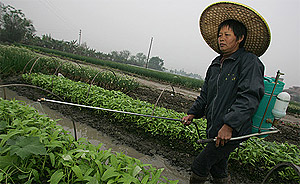 China is considering subsidies and higher export rebates for its steel. India has banned Chinese toys, China has banned Irish pork, the EU has new export subsidies for butter, cheese and milk powder. In Britain, jingoists, unions and the Prime Minister call for “British jobs for British workers”.
Many countries will quietly take less obvious protectionist measures such as health and safety, technical, licensing and certification requirements.
This is do-it-yourself economics, devoid of economic analysis or real-world evidence. As ever, the poor suffer most.
Between 1986 and 2007, tariffs on goods fell worldwide from 26 percent to 8.8 percent, boosting the world economy with global trade. Developing countries have nearly doubled their share of world exports since 2000, to 37 percent in 2007.
Protectionism can stifle internal and international recovery just when jobs and wages are most at risk. The G20 must follow their own free trade recommendations - singly or collectively - and persuade their trading partners to do the same. Free trade has worked before, it works now and it will work even better if we let it.
Thompson Ayodele, contributing author to WauBebas , is the executive director of Initiative for Public Policy Analysis, a public policy think-tank in Lagos, Nigeria.


Are you sure you want to delete this comment?
This action cannot be undone.