




Khomeini, the man who changed the Muslim world
Much has been written by Muslim and non-Muslim commentators alike about political Islam, whose impact on domestic politics of Muslim-majority countries, as well as global politics and international relations, has been profound. Yet, it was not until the early 1980s that political Islam became a huge factor in the modern Muslim world, and indeed in the relations between the Muslim world and the West.
Surely, such a thrusting into the world arena did not happen overnight, yet like the September 11 attacks on the World Trade Centre and the Pentagon in 2001, there was a spark which transformed the future of relations between Islam and the West, and redrew the map of the Muslim world in a way no other recent event had done.
Much has been written by Muslim and non-Muslim commentators alike about political Islam, whose impact on domestic politics of Muslim-majority countries, as well as global politics and international relations, has been profound. Yet, it was not until the early 1980s that political Islam became a huge factor in the modern Muslim world, and indeed in the relations between the Muslim world and the West.
Surely, such a thrusting into the world arena did not happen overnight, yet like the September 11 attacks on the World Trade Centre and the Pentagon in 2001, there was a spark which transformed the future of relations between Islam and the West, and redrew the map of the Muslim world in a way no other recent event had done.
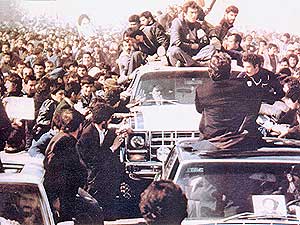 The Islamic Revolution of Iran in 1979, which toppled one of the most ruthless monarchs in recent history, is one such event which will be forever cited as a time mark of modern history. To understand political Islam and the Muslim world, or even to understand one's domestic Islamic political trends - such as the oft-repeated mantra about the so-called rift between the ulama and professionals in Islamist political parties - it is vital that one has some knowledge of the Iranian revolution and the circumstances in which it evolved, and later affected Islamic groups and Muslim political thought from Morocco to Indonesia.
Who was the man responsible for this third great revolution of the twentieth century?
Deep influence despite exile
Its leader and founder, Ayatullah Khomeini, or Imam Khomeini as he is known in Iran and among millions of Muslims around the world, was a man whose life and charisma reached a stage that few leaders in history had attained. Yet, Khomeini was more than the political leader and revolutionary that the world has come to know of.
He was a reformer who was deeply entrenched into the scholarly tradition of Shi‘a Islam, yet whose writings, lectures and ideas have defied the ulama in Iran who had shied away from political activity, one result of which the country headed for social and economic decay under the powerful Shah of Iran.
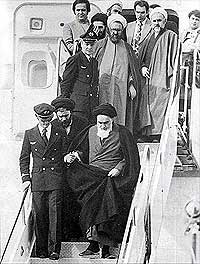 Khomeini's influence, despite fifteen years exile from Iran, is so deep among Iranians that the American-backed monarch had to flee the country even before Khomeini made his triumphant return from exile in Paris, a return greeted by what the Western media described as "nine million people lining up the streets of Tehran to celebrate".
Ten years later, on June 3 1989, a similarly huge crowd gathered in the country's capital for him, this time to mourn his death, making it perhaps the largest funeral in history.
Some may, and with some valid arguments, attempt to compare Khomeini to present day Muslim personalities hated by the West. One such comparison is to Osama Bin Laden, mostly because the two have got almost exactly the same treatment in the Western media, and Khomeini's name was also taboo to be mentioned sympathetically in Western media and by Muslim leaders of that time.
Yet, the fact is that both personalities are worlds apart from each other despite the similar treatment meted out on them. And this is not because one comes from the Shi'i-Islamic tradition while the other from its legendary nemesis, the Wahhabi sect (which has an aversion to Iran's Islamic revolution and Khomeini solely due to sectarian sentiments).
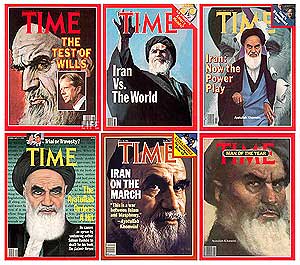 Ayatullah Khomeini was the architect of the modern world's first Islamic state and leader of the revolution which brought down one of the most ruthless monarchs in the history of the Muslim world. But unlike many other "radical" and reactionary clerics and Muslim icons of recent times, which have adorned front covers of Western magazines to fuel propaganda wars fought from Western capitals, Khomeini is perhaps the only one whose achievements are bound to be repeated elsewhere in the Muslim world. On the condition, of course, that someone like him emerges out of the rubbles of corruption and tyranny that Muslim countries are currently in.
Shariah must be relevant to modern society
Despite firmly entrenched in the Shi'i theological tradition, Khomeini reached out to the Sunni Muslim world, many whose leaders were hostile to the Islamic Revolution due to the heavily-financed propaganda against Iran by the Saudis in the eighties. For example, he ordered the weekly Friday prayers hitherto not observed by Shi'i Muslims, to be held in mosques in Iran, and reached out to Sunni ulama with the message of unity by recognising the different dates for the Prophet's birthday as observed by both Sunnis and Shi'is, calling the one-week gap between the two dates as ‘unity week'.
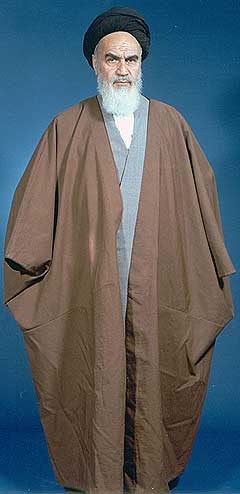 Yet the most important aspect of Khomeini's political thought is his idea on the compatibility between the Shariah and modern society. He had faced opposition from the ulama in Qum, the centre of Islamic further education in Iran, for distancing from the traditional Shariah to which they were accustomed. However, Khomeini insisted that Shariah must be applicable to a modern society; otherwise Islam could not be claimed to be the ultimate religion.
He put forth a solution to this seeming incompatibility in the form of a new ‘ijtihad' (finding innovative solutions to difficult problems) and introduced the theory known as ‘vilayat-i faqih' (authority of the jurist), which is actually very similar to the Sunni world's reference to the first four caliphs for guidance in matters on which the Prophet was silent.
The theory of ‘vilayat-i faqih' has been condemned by both the West which brands it undemocratic, and by extremist elements among Sunni ulama, who brand it un-Islamic because it does not conform to their narrow understanding of Quran and Sunnah.
This theory had two aspects: the political and the legal, the former often focused by his detractors. But the legal aspect was even more important. It stated that the authority of the jurist should be ‘absolute', by which he meant that whenever the Shariah in its current form cannot be applied to a modern setting or society, the jurist should have the authority to think about new ways, for the Shariah should, in one way or another, be applicable at all times. It should solve problems, not create them; its laws and rules were intended to solve problems.
This part of the debate on Islamic state almost always reaches a stalemate and is mishandled by most Islam-based politicians and intellectuals, who either argue for an Islamic state without proper knowledge on its concepts vis-à-vis modern understanding of politics and nationhood, or who cast it aside in order to portray their ‘moderate' image.
 It is therefore perplexing that many in the Muslim world fail to recognise the lessons from the Islamic Revolution in Iran, considering the success of the Islamic Republic and its ideological stability as a modern Islamic state in spite of its geographical and political pressure over the years.
The fact is, by overthrowing an authoritarian and pro-Western regime of the Shah, and replacing it with an attempt to develop institutions of state and government based on Islamic principles appropriate to a modern society, Khomeini has achieved precisely what Islamic movements elsewhere have been striving to do for decades. Far from collapsing in a few months, which saw the attack on a militarily-weak Iran by Iraq, aided by Western powers and financed by their Arab allies, the Iran he founded has survived for three decades.
In contrast, Islamic movements who failed to take heed of the lessons he offered, have failed to achieve their respective goals, such as the disastrous consequences of failure of the Muslim Brotherhood in Egypt and the FIS in Algeria, or the more peaceful type of failure by the Hasan Turabi faction in Sudan and PAS/ABIM in Malaysia.
The Iran that Khomeini founded has many weaknesses and is far from perfect. But thirty years after reaching its lowest ebb militarily, economically, socially and politically, it now has the most vibrant and stable political environment of any country in the Middle East and beyond, despite repeated stories about the Iranians' disillusion with the Islamic system.
Khomeini's influence in history was destined to be of epic proportions even during his lifetime, and brought hope that a repetition of the Iranian revolution will occur in other Muslim countries faced with tyrannical monarchies and regimes armed to the teeth. Sadly, twenty years after millions of people braved the summer heat in Tehran to attend his funeral, no leader of Khomeini's stature and charisma has emerged in any part of the Muslim world to take up the role.
ABDAR RAHMAN KOYA is attached to the Islamic Book Trust, Petaling Jaya. He recently edited the book ‘Imam Khomeini: Life, Thought and Legacy' which is a compilation of essays and observations about the late leader from an Islamic perspective, available at major bookshops or here.


Are you sure you want to delete this comment?
This action cannot be undone.