




Christmas story: A case of misplaced giving
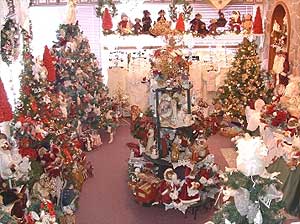
It is snowing in Malaysia’s shopping malls. Gigantic plastic bauble-strung Christmas trees, sounds of jingle bells, santas and santarinas and a multitude of shoppers add to the festive spirit in December.
Giving and receiving are in the minds of many, the Scrooges and Oliver Twists of our society alike. Receiving party invitations, gifts and new clothes are very much on the minds of the staff and children at some shelter homes for children.
It is snowing in Malaysia’s shopping malls. Gigantic plastic bauble-strung Christmas trees, sounds of jingle bells, santas and santarinas and a multitude of shoppers add to the festive spirit in December.
 Giving and receiving are in the minds of many, the Scrooges and Oliver Twists of our society alike. Receiving party invitations, gifts and new clothes are very much on the minds of the staff and children at some shelter homes for children.
This is the time of the year they are feted at luxury hotels and presents galore arrive at the homes, which struggle to meet their day-to-day needs. Some staff have recently raised concerns about what they term as the “ excessive generosity” of corporations and individuals, particularly during festivals.
“Malaysians are very good….The kids often get sponsored for meals at (five-star hotels). But how often can they eat at (fast-food outlets)? Sometimes two or three times a week, until they get fed up of it,” says Alex, who works in a shelter home.
Misplaced patterns of charitable giving to children during festivals are raising alarm bells. Some incidents indicate that they may not be able to appreciate what they have and receive, due to excesses.
“There was an interesting incident in 2007. At Christmas, the kids got so many presents that we actually found some in the garbage bin. They threw out things they did not like, the ordinary things,” observes Alex.
This happened at the height of the global financial crisis. A different Christmas tale unfolded in the US, the world’s largest economy, which was experiencing job losses, bank collapses and home foreclosures then.
Santa Claus asked a child in a department store: “What would you like for Christmas?”
The reply: “Please give my daddy back his job.”
This tugged at many hearts globally when it was captured on TV.
Is there something fundamentally wrong with how corporations exercise their corporate social responsibility (CSR) in Malaysia? Most non-governmental homes for children and women depend on CSR contributions to meet the cost of managing the shelters, and face challenges in raising the money.
The children who threw away their Christmas gifts are in a non-governmental shelter home that depends primarily on philanthropic resources. Government grants for NGO-run homes are based on about RM8 per child per day.
The annual government grant only lasts a few months. It is an endless struggle for these shelters to raise funds to meet the basic needs of those in their care. Government welfare homes are fully funded.
Deal with root causes
Do givers, particularly corporations, question why there are so many shelters and welfare homes for children in this country? We are not a nation at war, a situation that can increase the number of orphans. Traditionally, orphans were sent to shelters.
The role of children’s homes have evolved. Today, shelter homes accept children who are victims of neglect, abuse or whose parents are in prison. Sometimes children may be taken to shelters by local authorities who conduct operations to rid the streets of vagrants and loiterers.
Child abuse and neglect have occurred throughout human history. ‘Oliver Twist’ , the great 19th century English classic by Charles Dickens, graphically relates the situation of child abuse 200 ago. Sadly, the tragedy continues .
But we need not place children who are victims of child abuse in institutions. The Malaysian government and corporations are in a position to address the root causes of child abuse.
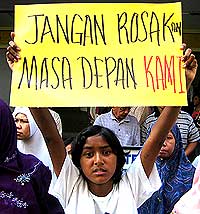 The clinical psychologist LA Fontes points out that the problem of child neglect and abuse cannot be separated from issues of child poverty and hunger, inadequate housing and healthcare, family dysfunction, overcrowded and underfunded schools, social stress and child prostitution (‘Child Abuse and Culture’, 2008).
Corporations must go beyond the surface notion of merely contributing back to the community. They should not see CSR as a public relations exercise that provides photo opportunities during disasters or festivals.
The European Commission defines CSR as ‘a concept whereby companies integrate social and environmental concerns in their business operations’, and child abuse is a social concern.
Corporations can support effective and comprehensive long-term programmes, such as reducing poverty by improving working conditions and salaries of parents; provide for training of caregivers; and helping to increase family-support intervention activities such as parenting skills. After all, stable families create sustainable consumers who support businesses.
Support for research for effective CSR investments is a neglected area of corporate funding. Corporate Malaysia must move away from charity to more strategic philanthropic giving, while Malaysia should put in place a comprehensive set of CSR standards.
Season’s Greetings to All!
JOSIE M FERNANDEZ is currently an Asian Public Intellectual Fellow, director of Philanthropy Asia, and a researcher. She engages with Transparency International Malaysia in anti-corruption measures.
An educationist, Josie moved on to citizen's advocacy as founder president of ERA Consumers and regional director (Asia Pacific) of Consumers International. She holds a masters degree in development management from the Asian Institute of Management, Philippines. Working on sustainability, philanthropy and anti-corruption actions are some of her current passions, in addition to writing.
She was also a consultant editor for a book on child abuse based on three university studies and published by the Health Ministry this year.


