




'1' is a wretched number
The decline in the moral values of our society is laid bare with the increased reports of dumped babies and abandoned old people. The case of a newborn baby, burned and deposited in a waste disposal bin in Kuala Krai is despicable.
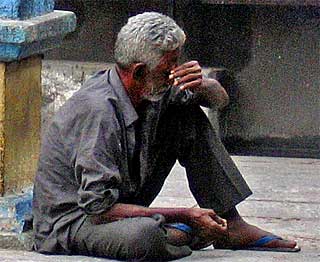
The decline in the moral values of our society is laid bare with the increased reports of dumped babies and abandoned old people. The case of a newborn baby, burned and deposited in a waste disposal bin in Kuala Krai is despicable. In January, a man callously dumped his father at a bus-stop near Kangar. It seems that the old and the very young are most vulnerable.
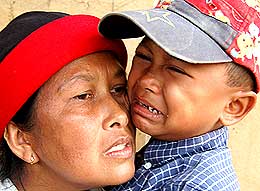 ‘One’ is a wretched number associated with loneliness and isolation. Nothing can compare with the pain of an older person, neglected by his family. Or the unmarried mother, vilified for having a child out of wedlock. These people are rejected and scared, with no one to turn to for help.
Baby-dumping is alarming. The statistics are grim; for 100 babies abandoned annually, several go unreported. In the Klang valley, an abandoned baby is found every 10 days and the Dewan Negara was told that 304 babies were abandoned between 2004 and 2006. The trend of illegitimate babies is rising. Between 1999 and 2003, about 70,430 babies were registered without their fathers’ names. Between 2000 and July 2008, the figure was 257,000.
When asked about the dumped baby in Kelantan, Menteri Besar Nik Adbul Aziz said that, ‘young people were irresponsible and lacked moral values and thus resorted to cruel acts to cover their mistakes’. He linked this behavior with dressing: “In Islam, women are not allowed to show their aurat”. He also maintained that “Cases of babies being abandoned are the result of too much freedom among the youth”. His assertion was that babies were dumped because people neglected to practice their religious obligations in their daily lives.
Women blamed
It is convenient to blame women for social ills. In the recent headline-making whippings, three women, but not the men, were condemned for having babies out of wedlock. Furthermore, Nik Aziz’s explanation linking women and their way of dressing is too simplistic. Women are ‘covered’ in Pakistan, Afghanistan and Saudi Arabia but it has not prevented illicit sex in these Islamic countries.
Moreover, it is wrong to imagine that sex happens only between two young adults. A man from Kelantan had this to say when I asked about the high rates of incest in his state: “The men cannot afford prostitutes and in this close-knit community, there are probably none (prostitutes). So the most convenient release for their sexual appetite is to have incestuous relationships with their daughters.
 These people are poor, have limited interaction with the wider community and little exposure to the outside world. An innocent young girl who is abused is either threatened into silence or think that this is a normal expression of a father’s love. If and when she gets pregnant, infanticide is common.”
Another presumption is that these unwanted births are from the young having sex before marriage. Detailed data, if available, will establish whether these unwed mothers are teenagers or not. A village head I knew told me, that he was often ‘offered’ for adoption, unwanted babies by middle-aged mothers. He failed to establish if these were unplanned pregnancies or because family-planning was never consciously practised. The women were wives of rubber tappers or occasional labourers on small-holdings, were destitute and had large families.
Our children are exposed to influences of sex and violence via films, computer games and on-line. Many older men prey on girls via the Internet and many secondary students (13-19 years) have sex with boys they know. But the steep rise in young girls of 12-14 having sex is worrying. Even if it is consensual sex, it is still statutory rape.
Too much freedom
Nik Aziz asserts that our youth have too much freedom. On the contrary, it is lack of freedom that has given rise to these social ills.
 The youth are denied the most important freedom; the freedom of information that gives them adequate information about sex-education. They are also denied the freedom to keep their own children because of the stigma attached to unmarried mothers. And the last freedom they lack is literally freedom of movement - they are imprisoned when they become pregnant from illicit sex.
Apart from the three women who were jailed recently, it was alleged that one young mother from Malacca was jailed after delivering her baby. This young couple had hurriedly got married to escape prosecution but the authorities still jailed her anyway, for having sex before marriage. This approach is wrong. Separating both mother and baby who need to bond, is cruel.
The key is sex-education in our schools. It is a sensitive subject and many will misconstrue this as promoting promiscuity. Religious authorities must not be in denial, as they were about AIDs in the 1980s. Parents are reluctant, or don’t know how to, talk about sex. Teachers, trained to deliver sex-education, must engage the students in dialogue. It is not just about the mechanics of sex but also values and morals, what is right and wrong, peer pressure, relationships, sexually-transmitted-diseases and society’s expectation. Attitudes to sex can change with information.
We also need to offer counseling and contraception, to all women, single and married, at family planning clinics. Medical help and confidentiality are vital, without fear of prosecution. Otherwise, unwed mothers may seek back -street abortions which could endanger her life.
Another important consideration is to make boys responsible for their deeds and for politicians and religious leaders to stop demonizing the women. We don’t just fail the unmarried mothers, we let their children down, too. Illegitimate children are denied schooling because the father’s name is missing from their birth certificates. So, that is two generations we are failing.
The key is education and the reduction of poverty - sorting out deprived areas and socio-economic problems within our community. It is pointless for more laws, or even stricter laws, with whippings and public humiliation. Our youth cannot be cocooned from sex. If they want to, they’ll do it anyway. Armed with a good sex-education, they are at least aware and can take precautions.
MARIAM MOKHTAR is a non-conformist traditionalist from Perak, a bucket chemist and an armchair eco-warrior. In ‘real–speak’, this translates into that she comes from Ipoh, values change but respects culture, is a petroleum chemist and also an environmental pollution-control scientist.


Are you sure you want to delete this comment?
This action cannot be undone.