




Should political parties own media?
The advantages of incumbency and media ownership by political parties create an uneven playing field for a political competition such as the forthcoming Hulu Selangor by-election.
The advantages of incumbency and media ownership by political parties create an uneven playing field for a political competition such as the forthcoming Hulu Selangor by-election.
Most articles on Hulu Selangor in the mainstream print and electronic media in the last one week emphasize the benefits of electing a Barisan National candidate. The articles are clearly intended to persuade and encourage voters to support the BN candidate.
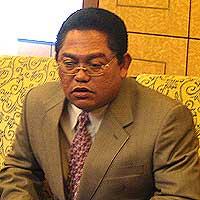 The BN politicians know the power of incumbency and how to use and/or abuse it. Datuk Seri Noh Omar
(right)
, Minister for Agriculture and Agro-Based Industries recently warned that the Hulu Selangor by-election "is very risky as we are against a state government which will use all its
The BN politicians know the power of incumbency and how to use and/or abuse it. Datuk Seri Noh Omar
(right)
, Minister for Agriculture and Agro-Based Industries recently warned that the Hulu Selangor by-election "is very risky as we are against a state government which will use all its
resources."
Since the first General Election in 1957, the abuse of state resources by electoral candidates from BN has been widespread and rampant as the incumbent assumes the role of caretaker government. This position is used to announce development projects, give donations, provide "ang pow" and goody bags for senior citizens , lay foundation for buildings and even lucky draws.
All these abuses have not been seen as vote-buying under the law.
The use of the media for political ends is not a recent phenomenon in Malaysia. We compromise democracy and media freedom when we continue to allow political parties, politicians and interest groups to own and gain control of the media.
Political parties and incumbent governments understand the influence and power of the media on voters. In Malaysia, political parties and politicians or their proxies own mainstream media.
Umno's first business venture was the takeover of the Malay daily , Utusan Melayu , in 1961.The paper is read widely in the Malay heartlands. Umno acquired a controlling stake in The New Straits Times in 1972.
The MCA owns The Star , the largest selling English daily.The Tamil dailies, Tamil Nesan and Makal Osai are linked to politicians from the Malaysian Indian Congress.
All these political parties spend vast amounts of money on media advertising during elections.
Growth of satellite tv
During the period between January and March 2008, BN spent a total of RM12,950,859 followed by DAP at RM304,096 and PKR at RM56,669.
It is well -known that the mainstream media increase the pages for advertising during periods of elections. According to media monitoring groups, BN parties increased the number of advertisements on March 7, 2008, the eve of the 12th General Election.
The opposition parties were virtually absent in the advertisements.
 Many countries have recognized the need for media reforms to correct the unequal access of olitical parties to the print and electronic media. The growth of satellite TV channels owned by politicians and political parties has given rise to more uneven playing fields to reach voters during election campaign periods.
For example, Silvio Berlusconi, the Prime Minister of Italy has a near monopoly of three commercial TV channels through his media company, Mediasat . Political analysts have pointed out that the use of the media has been a major factor facilitating Berluscino's political success.
In Italy political advertisements are now banned for 30 days before elections .
Permitting political parties to own media creates the risk of a party backed by wealthy interests to gain power. Wealth and incumbency can give access to political communication . Political messages is a tool that can help the wealthy and powerful maintain their grip on power.
Such situations undermine democracy, good governance, the integrity of a political system and the institutions of governance in any country. The protests and storming of a television station recently in Bangkok is a case in point. Whose millions sustain these protests and who controls the TV station?
Due to public pressure, South Korea has banned the ownership of media by political parties to reduce political corruption and create a level playing field for political competition.
Public concern
The Kuomintang (KMT) party in Taiwan owned several media including TV stations until recently. Public concern over political corruption arising from its ownership of media and other businesses contributed to KMT losing the presidential elections in 2000 and 2004. As a result of public pressure, the party is divesting its media and other businesses. The cash from the sale of these assets is returned to the Treasury.
 Currently, there are no laws in Malaysia to prohibit the ownership of the media by political parties. To ensure a level playing field during elections, Transparency International Malaysia is proposing various reforms to media ownership by political parties in its forthcoming book on
Reforming Political Financing in Malaysia
. The reforms include equal and free access to the public media as well.
Currently, there are no laws in Malaysia to prohibit the ownership of the media by political parties. To ensure a level playing field during elections, Transparency International Malaysia is proposing various reforms to media ownership by political parties in its forthcoming book on
Reforming Political Financing in Malaysia
. The reforms include equal and free access to the public media as well.
Many countries have procedures and mechanisms in place to ensure all political parties have free access to the print and broadcast media during elections.
For a start, all tax-payer supported media should act impartially during elections and give all competing parties in elections equal weight-age. Some participants at a Roundtable on political financing organized by TI-M in Feb 2010 suggested a violation of such a requirement should amount to corrupt practice.
The Election Commission has proposed that all political parties be allocated airtime during the general election based on the number of candidates fielded by the political parties.
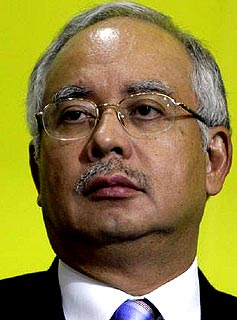
Prime Minister Najib Abdul Razak (above) would face many challenges in implementing TI-M's proposed reforms on media ownership by political parties. As he strives to bring Malaysia to a developed and high income nation, he must demonstrate the political will to reform the media environment as South Korea and Taiwan have done. Is PM Najib up to the task?
JOSIE M FERNANDEZ is currently an Asian Public Intellectual Fellow, director of Philanthropy Asia, researcher and engages with Transparency International Malaysia in anti-corruption measures. An educationist, Josie moved on to citizen's advocacy working with national/international NGOs. She holds a masters degree in development management from the Asian Institute of Management, Philippines. Working on sustainability, philanthropy and anti-corruption actions are some of her current passions besides writing.


Are you sure you want to delete this comment?
This action cannot be undone.