




A volcano and a case for localism
Seth Stevenson. the author of Grounded : A Down to Earth Journey Around the World in a recent article pointed out the Iceland volcanic eruptions "have forced upon us a visceral awareness of the interconnectedness of a world woven together by the criss-crossing of airline routes".
Seth Stevenson. the author of Grounded : A Down to Earth Journey Around the World in a recent article pointed out the Iceland volcanic eruptions "have forced upon us a visceral awareness of the interconnectedness of a world woven together by the criss-crossing of airline routes".
A volcano, not terrorism held the aviation industry hostage for almost a week. Ash from the eruption of the Iceland volcano, the unpronounceable Eyjallajokull, brought air travel to northern Europe to a stop.
The 24 hour global satellite networks and social networks Twitter and Facebook focus on millions of travellers still stranded in airports around the world.
The woes of stranded travellers -haven't slept on a bed for three days, no shower, no place to wash clothes, taking taxis across Scandinavia, lining up for hours and days to board ferries, coaches and ships are highlighted continuously. Governments are being scrutinized for what they did or did not for their stranded citizens.
To stop threats of body bombs, airports introduced full body scanners. But if scientists and experts are reluctant to predict when the eruption will subside, then applying the precautionary principle to stop flying applies. In 1982, all the four engines of BA009-747 flight from KL to Perth stopped at 37,000 feet as it flew into an ash cloud from Galunggung volcano in Western Java. The pilot of that flight recently gave TV interviews on how the plane miraculously managed an emergency landing.
Since that incident, the aviation industry has adopted safety rules of not flying in the path of volcanic ash. But regulators and operators of airlines are now in disagreeing on the shut down of European air space.
In June of 1991, I was living in the Philippines (as a student) and saw some of the devastation caused when Mount Pinatubo erupted. More than 800 people died, the volcanic ash caused roofs to collapse, crops were damaged and weather patterns were affected. For days even Manila experienced the lingering effects of volcanic ash.
Volcanic eruptions affecting populations
As then and now, there is very little discussion on how volcanic eruptions affect populations, workers and their families both in the vicinity of the volcanoes and thousands of miles away from the eruptions.
Take the case of the Iceland eruption on Kenya's horticultural industry which is the country's biggest hard currency earner exports 80 percent of its fresh flowers, Kenyan beans, asparagus and broccoli to the United Kingdom and other European cities.
The roses, lilies and carnations have wilted and the vegetables have perished as the European airports shut down.
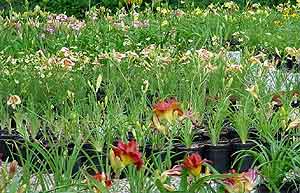 Wilting flowers and rotten vegetables translate into thousands of job losses. There are reports that more than 5,000 workers have been laid off in Kenya alone. Many more jobs may be lost and firms may collapse. When there are no social safety nets for workers, there is no food on the table for the families of those who lose their jobs.
The Icelandic eruption, a local event has global consequences. We live in a globalised, interlinked world where free trade and competition supposedly brings at least trickle down benefits. But as the Kenyan horticultural industry workers are learning that a natural disaster thousands of miles can impact their livelihoods.
European consumers can live without exotic Kenyan beans or freshly flown in roses.There are local alternatives like peas and carrots to replace Kenyan beans or daffodils and tulips instead of roses and carnations for bouquets and gifts.
But do governments make contingency plans to assist workers whose jobs are dependent on events beyond their control such as an economic crisis or a catastrophic natural disaster?
One contingency plan would be to focus on measures that promote localism, sustainability and good governance. These measures will promote social policies and protect a nation's resources like land and water and the environment.
The saga of the Kenyan horticultural workers who are affected economically by the eruption of an Icelandic volcano underscores the adverse effects of liberalisation, privatisation and the rollback of the rights to resources like land.These workers do not own the land they work on. Most of the flower and vegetable farms are the property of foreign investors.
When a nation state is unable to provide its people access to resources and sustainable jobs, marginalisation and poverty increase.
Globalisation has its benefits but localism fosters sustainable production and consumption for example in food sufficiency, promotion of local tourism and manufacturing of indigenous products.
Providing land for growing food including in urban areas, training farmers and reviving traditional crops are sustainable forms of localism which will balance the market economy.
More addicts than farmers
Like most of Asia, Malaysian farmers are in their sixties. Perhaps there are more drug addicts and prisoners than farmers in Malaysia. To encourage the young to venture into farming, the country needs to reinvigorate its agriculture, reform agricultural policies, include space for growing food in urban planning, provide financial incentives and training for sustainable agricultural farming systems including arable land for livestock.
 There are risks when communities depend on foreign tourism for jobs and income particularly during an economic crisis or when natural disasters strike. Promoting affordable local tourism helps to sustain the tourism industry. In this country, white sandy beaches and blue waters seem to given to entrepreneurs who build expensive hotels and high-end beach front homes, displacing fishing communities.
Incentives such as special hotel rates for Malaysians would encourage them to spend holidays in the country.
The Iceland volcanic eruption brings to mind the vulnerability of air travel, the need to keep oil reserves, the social and environmental costs of the current levels of flying.
Living sustainably in a nation state and in a globalised world is a challenge.
JOSIE M FERNANDEZ is currently an Asian Public Intellectual Fellow, director of Philanthropy Asia, researcher and engages with Transparency International Malaysia in anti-corruption measures. An educationist, Josie moved on to citizen's advocacy leading national and international consumer organizations. She holds a masters degree in development management from the Asian Institute of Management, Philippines. Working on sustainability, philanthropy and anti-corruption actions are some of her current passions besides writing.


Are you sure you want to delete this comment?
This action cannot be undone.