




Establish a food security fund
Food security is the most important issue of the of the 21st century. Without food, people go hungry and turn angry. The Roman philosopher Seneca warned long ago, “A hungry people listens not to reason, nor cares for justice, nor is bent by any prayers.”
Food security is the most important issue of the of the 21st century. Without food, people go hungry and turn angry. The Roman philosopher Seneca warned long ago, “A hungry people listens not to reason, nor cares for justice, nor is bent by any prayers.”
Recognising the growing food crisis, in November 1996, leaders of 186 countries committed at the World Food Summit in Rome to step up the goal of food for all.
The Rome Declaration on World Food Security defines Food Security as: “Food that is available at all times, to which all persons have means of access, that is nutritionally adequate in terms of quantity, quality and variety, and is acceptable within the given culture”.
Like the Alma Ata declaration of 'Health For All by 2000', the progress has been very slow on the 1996 World Food Summit commitment. As a result, we see food insecurity in Asia, Africa and Latin America.
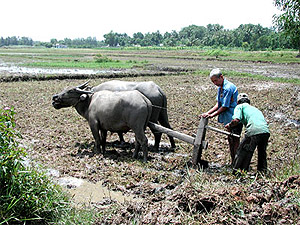 Food insecurity is a concept adopted at the Food and Agriculture Organisation World Food Conference in 1974. There are two kinds of food insecurity, namely transitory and chronic.
Transitory food insecurity results from instability in food prices, food production and household incomes. The consequence is famine in its worst form. Chronic food insecurity is continuously living on an inadequate diet due to poverty.
We are now witnessing the beginnings of food insecurity in many developing countries. But for many countries including Malaysia, agriculture did not matter for a long time. Policymakers must take responsibility for the current state of food insecurity.
‘Statistics do not bleed’
Blaming the current food crisis on high fuel prices, lower yields, increasing food consumption etc is not addressing the food crisis. We need to find short term and long term solutions to this problem.
In Asia alone, 40 million people go hungry to bed every night. Novelist Arthur Koestler once said, “The statistics do not bleed“. And that is probably the reason why policy makers fail to take measures to avert a food crisis that will condemn millions to a life of hunger and misery.
I have spent some time working on food security, first with rice farmers in Sungai Buaya Perak and later at a regional level. I remember the farmers in Sungai Buaya telling me that they were forced to eat even tapioca skins when their rice crops were destroyed by drought and pests.
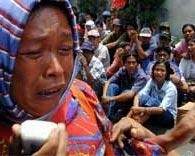 In 2007, I spent several months with villagers and farmers in Indonesia, who taught me how government failures have brought hunger and poverty to them. Villagers at the Eco-Pesantren in Bandung, Indonesia, described how politics, corruption and economic policies have destroyed their food security.
”Once these lands were rice fields. The introduction of large scale animal farming destroyed the rice fields. We were told to plant oranges but a serious pest attack destroyed the orange trees. We did not have money to buy rice,” they told me.
“We were asked to replace the oranges with cloves which fetched good prices. But clove trees took seven years to fruit. Middlemen controlled the clove trade.
“But soon Tommy Suharto, son of President Suharto obtained monopoly of the clove trade and farm prices dropped significantly.”
The farmers learnt some important lessons from this experience. So instead of complaining, farmers and civil society are taking innovative measures for community and household food security.
As inflation increases and food subsidies are removed, low income families will need food assistance. Recent reports in the media have highlighted that the incidence of malnutrition is high among Orang Asli children.
As children make up 30 percent of the population and are the nation’s future – their food security is a critical concern. Children need a proper diet to sustain health, normal activities, growth and development.
To ensure that food aid and programmes reach those who need them, the government should identify which groups are likely to go hungry and suffer malnutrition when prices of essential foods soar.
Funding food
An important step the government could take is to establish a permanent Food Security Trust Fund. The government, philanthropists and citizens could contribute to this trust fund to be used during periods of transitory food insecurity.
For example, when food prices soar, food shortages occur due to natural disasters or when families do not have the income to purchase food – as is the case of the Orang Asli. This fund should also support small farmers during difficult periods.
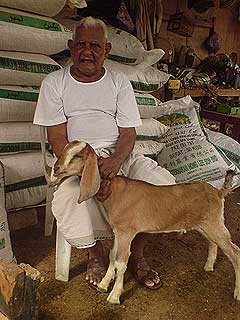 The fund should be managed by an independent commission to ensure transparency and accountability in the management of the funds. Contributions to this fund should be tax exempt and ongoing and not just during emergencies and crises.
The fund could also be utilised to invest in sustainable agricultural practices. Hi-tech, agrochemical-dependent, corporate-style, mono-cropping farming systems have failed to feed the hungry and the land available for agriculture is limited.
Therefore, opening up large scale plantations for rice are risky remedies for food insecurity. Malaysia should instead invest in sustainable practices that are pro-farmer, preserves soil and protects the environment.
Grain stores and water stores are vital for food security. Techniques for water harvesting was developed in Jordan and Palestine more than 3,000 years ago, and many small farmers here harvest water for their agricultural activities.
Their techniques should be enhanced so that water stores become a feature of the agricultural landscape. The fund could be utilised to assist farmers develop water harvesting systems.
The government has a moral obligation and political interest to ensure the nation’s food security and has to muster the political will and resources to ensure that no one in this country suffers from the pangs of hunger.
JOSIE M FERNANDEZ is currently an Asian Public Intellectual Fellow, director of Philanthropy Asia, researcher and engages with Transparency International Malaysia in anti-corruption measures. She holds a masters degree in development management from the Asian Institute of Management, Philippines. Working on sustainability, philanthropy and anti-corruption actions are some of her current passions besides writing.


Are you sure you want to delete this comment?
This action cannot be undone.