




Debt - a Chinese god
Tick, tock, tick, tock
So went the clock
Round and round
Chasing its arms
The jury’s in the dock.
No, this is not a column of fable, though it may as well have been one. On the eve of the Group of 20 (G20) summit in Toronto from June 26-27, the Chinese communist regime put out word that it was now ready to ditch its two-year yuan-to-the-greenback peg in a bid to allow the renminbi, the yuan’s other name, greater flexibility in international currency market trading.
Tick, tock, tick, tock
So went the clock
Round and round
Chasing its arms
The jury’s in the dock.
No, this is not a column of fable, though it may as well have been one. On the eve of the Group of 20 (G20) summit in Toronto from June 26-27, the Chinese communist regime put out word that it was now ready to ditch its two-year yuan-to-the-greenback peg in a bid to allow the renminbi, the yuan’s other name, greater flexibility in international currency market trading.
Almost immediately economists - bless their hallowed cotton souls - hailed the move positively. China, they said, can now redeem its world power status after incurring the international currency pariah state tag. It has come to its senses. The free market is the best way for Beijing to find the ‘real’ value of its currency. At the same time, they argued that China’s move would give longstanding global imbalances a chance to correct themselves, too.
Maybe.
Time will tell because, as it has been a longstanding problem, solutions to global imbalances will likely take a long time to root. But realigning the yuan itself will not do the trick. The Chinese have a habit of playing geopolitics with its currency, simply because it has become the world’s one-stop global factory.
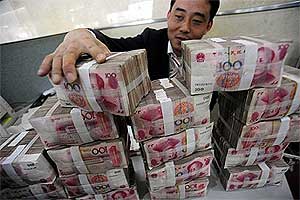 More, by holding the world’s largest foreign reserves, and with its 1.3-plus billion population, the Chinese domestic economy, with enough pump priming, could sustain itself - at least in the short term - without having to sell to the global economy as onerously as it has been doing since the 1980s.
This does not mean that Asia at large, even if their economies were to grow moderately at an average of 5% annually, would be enough to sustain Chinese economic growth. That’s because many of Asia’s economies have hitched their economies to China’s growth trajectory. In fact most of their largest firms have set up shop throughout China, just as most Western global companies.
All have been taking advantage of China’s cheap, oppressive, centrally controlled labour costs. And they’ve shielded themselves behind the yuan, accorded state protection against currency hedging.
Meanwhile, Beijing consistently manipulated the currency. Its producers were exhorted to sell to the Chinese domestic market, helped through expansionary fiscal and monetary policies. And to ensure it continued to earn hard currency, China used its most favored nation trading status granted by Washington to sell to the rest of the world. In this sense global economic recovery was well placed after the carnage of 2008-09.
Downturn a distinct possibility
But if China’s economy suffers a downturn? This is now a distinct possibility, given the growing risks to sovereign debt in the eurozone economies and the debt-fuelled US economy. The rest of Asia will feel the brunt, too. As will Australia, which is entirely dependent on selling mineral resources to the likes of China, primarily, and Japan and India to a lesser extent.
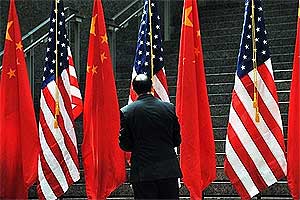 If the American and European economies should tank, China will feel double the pain, and the rest of Asia will be lashed by China’s downturn by more than a thousand cuts. This is the problem that stems from this latest economic crisis as it was also from the Asian crisis in the late 1990s.
Not a single politician in Asia, Europe and the United States has had the guts to undertake real structural reforms to their economies. All that has been heard since the late 1990s financial crisis, and even as latterly as the G20 Summit in Toronto last week, are the same old promises that end up as hyperbole.
If anyone takes the newest Chinese bravado to flexibilise its currency in international markets as gospel, they should have their heads read. US treasury secretary Tim Geithner may have rubbed his hands in glee, thinking that the pressure he has mounted on Beijing to un-peg the yuan is finally paying off. He may think that at last Washington’s longstanding and worsening trade deficit with China and the rest of the world now stands a real chance of repair.
At US$40 billion in April, the re-escalation of the US trade deficit with China may cause Geithner’s celebrations to move towards circumspection instead. He should not foolishly believe China’s latest offering is genuine.
China released its statement on the weekend of June 19-20 through the government-controlled People’s Bank of China, the country’s central bank. It said that “late-scale appreciation” of the yuan, fixed at 6.8 to the US dollar since 2008, was out of the question. It added that the Chinese central bank would allow the market to play a greater role in setting the exchange rate but it would be done “at an adaptive and equilibrium level”.
Another Orwellian moment
Bollocks. This is another of China’s Orwellian moments. It is double-speak for one step forward and two steps backwards or sideways. Sideways, probably. Meaning the yuan will continue to be ‘managed’ by Beijing according to its ‘national interest’ - a term akin to an empty bowl that allows politicians to fill it with or remove from it anything they want, whenever they want, including hubris.
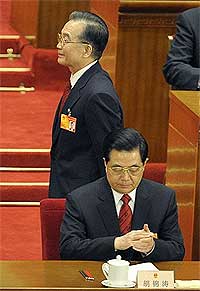 Ahead of the Toronto summit, US President Barack Obama, facing pressure from Congress and powerful American business lobby groups, had penned letters to world leaders, including China’s President Hu Jintao, emphasising that “market-determined exchange rates are essential to global economic vitality”.
One wonders if Obama sometimes knows if he is Arthur or Martha. He juggles between a god-like Adam Smithian free-market omniscience and an omniscience of paradox when he speaks with a tongue laced with Keynesianism, one that espouses a greater role of the state in regulating the economy.
Obama is looking every bit a one-term presidential wonder. He’s all talk. He hasn’t the guts. He will roll with whatever the big end of town presses him to do. He may have harassed BHP into forking out US$20 billion for its oil spill mess in the Gulf of Mexico.
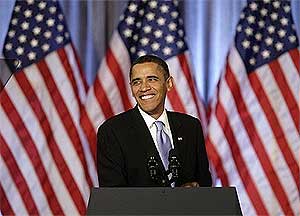 But the mess is still there. And he hasn’t said with any conviction what he would do about that. Those Americans affected by the oil spill now see in Obama the ghost of the blindingly dumb George W. Bush walking in their midst.
Seeing Obama being hugely distracted, Beijing released its then-weekend currency statement. It added: “The central bank has decided to proceed further with the reform of the renminbi” and that the “decision was made in view of the recent economic situation and financial market developments at home and abroad” whilst also avowing “continued emphasis … to reflect market supply and demand with reference to a basket of currencies”.
China is buying time
Two things need to be said. One, the statement was utterly devoid of details. Typical of Beijing, it gives the overwhelming impression that China is playing games, especially in its attempt to blunt US and European criticisms of the yuan’s continued manipulation. Two, precisely because of the dearth of details of the “renminbi’s reforms”, none have been taken and none likely to be taken since no details have been released to this day. It’s the iron lettuce rhetoric from Beijing yet again.
China is buying time. It’s waiting for the world economy to pick up. It hopes the US and European economies will pick up sooner rather than later. It further suggests that China cannot and dopes not want to depend on Asia’s anemic growth cycles to keep its own economy afloat, especially in earning its vital foreign currency reserves, and in particular US dollars and euros. That’s despite Beijing holding the world’s largest reserves.
 Until then China may slow down the economy, or at least be seen to do so. No real reforms will be taken to the real economy. If you believe otherwise, you’d believe in the existence of god. All Beijing will play with, and even this on its margins only, is that it will take some air out of the financial economy that has given rise to a manic speculative property bubble.
So, what are the signs of Chinese “realism”, in respect of its genuineness in hollowing out its currency peg, can the world expect? Watch the yields on US Treasury bonds. They could be hit hard if the yuan’s value rises. And that’ll spurn Chinese appetite for US assets.
Then again, given domestic economic and political pressures, China has to maintain 10 percent-plus GDP growth to quash the possibility of political and social revolt of its masses. Which means China will have to continue buying big time from the rest of the world, especially mineral resources, including oil and machinery, to turn out steel and heavy industrial products which - wait for it - it cannot sell at home unless Beijing continues pump priming the economy.
Here’s the rub, though. The Europeans are engaged in an exercise of retrenching blind fiscal spending as the euro threatens to turn south. This will further worry American companies whose export share the Europeans will happily take from their cross-Atlantic competitors, if it hasn’t already begun. But this is not what China wants. The Europeans are conservative spenders, unlike the Americans, who will spend like there’s no tomorrow. Debt, as China sees it, is good. A necessary evil? No. Debt is a Chinese god.
MANJIT BHATIA, an academic and writer, is also research director of AsiaRisk, a political, economic and risk analysis consultancy in Australia. He specialises in international economics and politics, with a focus on the Asia-Pacific.


Are you sure you want to delete this comment?
This action cannot be undone.