




Street children: Child protection system woeful
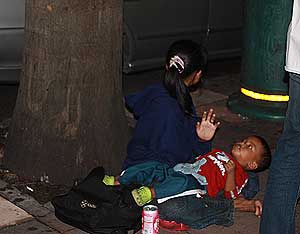
More children suffer from neglect than any other form of abuse. The plight of children abandoned and living in the streets make media headlines now and then such as the recent reports that several hundred children live in the streets of Kuala Lumpur alone.
More children suffer from neglect than any other form of abuse. The plight of children abandoned and living in the streets make media headlines now and then such as the recent reports that several hundred children live in the streets of Kuala Lumpur alone.
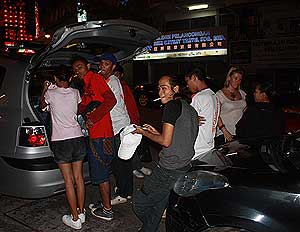 They highlighted that these children spend their time roaming the streets trying to survive by robbing and even selling themselves.
Jill McWilliams, a foreigner living in Malaysia, has found hundreds of these children in the last two years and has found safe homes for some of them.
But she says the numbers are increasing and that the authorities are not helping the street children.
The existence of so many homeless children in the capital is indicative of a failed child protection system. Malaysia ratified the UN Convention on the Rights of the Child (UNCRC) in 1995 with several reservations such as the nationality, right to expression, freedom of thought, conscience and religion etc. These reservations were seen as "incompatible with Malaysia's laws."
The UNCRC provides children with access to rights to survival, development, protection education, health etc. When a country ratifies the UNCRC, it has to reform laws to enhance the rights of children and improve the quality of life of children.
Among the measures Malaysia has taken are the Child Act 2001 which provides for the care, protection and rehabilitation of children. Under this Act, more than 100 child protection teams were established throughout the country in 2006. Are these teams operational? No one knows.
Additionally, under the Child Act 2001, the Department of Welfare is to establish child activity centres to serve children and families at risk of social problems.
In 2009 a National Child Protection Policy was adopted.
However, the existence of hundreds of street children in Kuala Lumpur implies Malaysia is delinquent and has not complied with some of the provisions of the UNCRC. If adequate child protection measures had been implemented, our streets would not be survival grounds for children who are victims of poverty and neglect.
No comprehensive evaluation
Millions of ringgit have been spent on programmes and services for children through various government agencies. For example the Violence and Injury Prevention Unit (Vipu) of the Ministry of Health undertakes programmes related to prevention and injury to children.
 However, a study by a local university in 2008 shows that there is no comprehensive evaluation and monitoring of the activities of Vipu.
The Department of Social Welfare (DSW) in the Family, Women and Community Development Ministry has a special child division to undertake programmes for the well-being of children. The DSW is mandated by the Child Act 2001 to be the main agency in child protection.
The escalating cases of child abuse and neglect in the country clearly shows that the Family, Women and Community Ministry has not been effective in enhancing child protection in the country and in its primary responsibility to protect children at risk such as street children.
The officials of the DSW have highlighted in a number of interviews that there are not enough officers to cope with the increasing number of child neglect and injury cases. The officers are not only responsible for child protection and safety, but their responsibilities include attending to senior citizens too.
Training neglected
The training of social workers has also been neglected. A survey commissioned by the DSW in 2005 revealed that 90 percent of social workers are not trained to handle the many responsibilities involved in child protection matters. It appears the programmes of the DSW are often reactive and there are no comprehensive evaluation of programmes and the money spent on them.
The Ministries of Youth/ Sports and Education too carry out programmes either directly or indirectly for the protection of children at risk. Weekend programmes such as holiday camps are not a solution for addressing problems related to child protection.
Shelter homes are not the solution to address the problems of street children. In fact, many of them are overcrowded and do not have enough staff to care for the children.
In an interview in 2008, Puan Esah, the principal of a children's home (Tengku Budriah ) pointed out," The capacity of the home is only 100. We now have 262 children."
Several NGOS and corporations too support shelter homes for children at risk. But philanthropic endeavours and efforts do not provide long term solutions to problems of child protection.
 The lack of planning, coordination, systematic implementation and comprehensive evaluation of the child protection systems has resulted in an ineffective child protection system.
No one knows the exact amount of money spent on child protection measures including money spent on research related to children.
Certainly, there are weaknesses in the current child protection systems and infrastructure as media reports and various research projects show. Perhaps the Department of Welfare may not be the best agency for child protection.
Should child protection programmes and measures shift to the Ministry of Health as some countries have done?
Comprehensive review needed
The Department of Welfare is perhaps not relevant in the Ministry of Women, Family and Development. A researcher once said, "Children are not voters. Women are. That's why there are so many gender-based programmes and less for children."
The magnitude of the problems of child neglect and abuse require a comprehensive review of legislation and programmes. Child abuse is a complex phenomenon rooted in socio-economic, cultural, behavioural, institutional and other dimensions.
There is an urgent need to move from ad hoc approaches and philanthropic efforts to address the multi-dimensional issues of children at risk.
Like what Australia and the UK did, a national commission of inquiry into child protection in Malaysia is urgently needed for a comprehensive and holistic review of the child protection regime in this country.
Josie was one of the editors of a book on child abuse published by the Ministry of Health in 2009 and had the opportunity to interview officials involved in child protection and examine various studies on child maltreatment and government/NGO programmes and services.


Are you sure you want to delete this comment?
This action cannot be undone.