




Exodus to family, land, and reality
The exodus, balik kampung or mudit in Indonesian has begun as millions of Muslims in Southeast Asia return home to be with their families to celebrate Hari Raya or Aidilfitri signifying the end of Ramadan, the month of fasting from dawn to dusk.
The exodus, balik kampung or mudit in Indonesian has begun as millions of Muslims in Southeast Asia return home to be with their families to celebrate Hari Raya or Aidilfitri signifying the end of Ramadan, the month of fasting from dawn to dusk.
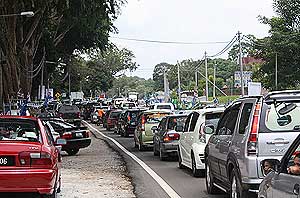 Families will leave major cities in cars, on motorcycles or board buses, trains, ferries and planes to return to villages and communities where they grew up.
The mass homecoming is a reminder of family life, disappearing lands, environmental destruction, uneven economic development and the enormous challenges of managing the exodus during festivals littered with gridlocks and road accidents.
A few days ago my friends Yarina and Aida dropped by to share some lovely traditional Hari Raya cakes before they joined the exodus. Yarina is returning to her village in Balik Pulau, Penang, and Aida to Pasir Mas in Kelantan.
Yarina has just returned from Australia where she is pursuing her doctoral studies. Last year, Yarina celebrated Hari Raya in Australia with friends from several countries.
I ask them about what they look forward to about this balik kampong exodus annually. Yarina says since her father passed away several years ago, the family returns to celebrate Aidifitri with their mother.
Yarina adds it's a reminder of how peaceful the kampung was, where there was enough land for grazing of cows and goats, the sea full of fish and the village an oasis of tranquillity.
Aida adds she does not mind making the long journey home to be with her parents, walking in the orchard filled with durian, duku langsat, salak trees and the numerous herbal plants that were so much part of her life.
Doubts creeping in
But both young women point out they are not sure how long they would continue to make this annual exodus.
Families have sold their lands particularly after their parents have passed on. The temptation to sell the land is great as land prices have skyrocketed in Penang.
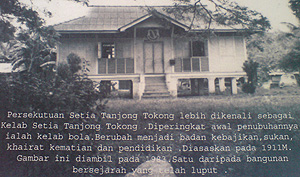 The Malay kampung house which is the most suitable form of dwelling for the Malaysian climate will soon be a thing of the past in Balik Pulau, Penang.
The villagers of Balik Pulau will face most likely a similar fate like the fishermen of Tanjung Tokong in Penang, too.
The Tanjung Tokong fishermen were forced to move into tiny flats when their land was taken away for "development." The loss of land was devastating to the fishermen who lost their space to dry their fishing nets, cultivate vegetables and plant an areca nut tree or a coconut palm at the birth ofach child. They lost the utilitarian and symbolic elements of village lifestyles. The flats have changed the landscape of Penang too.
Both Yarina and Aida have observed each time they return to their villages that the number of fruit trees are less. Some of the herbal plants have become extinct. The loss of biological diversity - the web of life - in the the rural areas is serious and disturbing.
Butterflies, grasshoppers and other insects are sights of the past for city dwellers who return to their villages. The environment has been rapidly altered and destroyed. The rivers and streams have dried. Fishing and swimming remain only as memories.
The loss of biological diversity impacts adversely on weather patterns, quality of soil and water, food insecurity and affects the sources for pharmaceutical products or medicine. Many prescriptive drugs are derived from natural resources. The wild plants in villages and forests have been the foundation for agriculture and genetic material for crop use. Biodiversity is vital for watershed protection.
The annual homecoming for Aidilfitri as well as other festivals in Malaysia is a reminder of the skewed and unsustainable economic development model the country has pursued since independence, 53 years ago.
Unabated urbanisation
Yearly, the exodus has grown, indicative of the unabated urbanisation in capital cities like Kuala Lumpur. Young people are forced to leave their villages and small towns to seek employment opportunities in Kuala Lumpur and other major urban centres.
While the rural areas and forest villages and communities have been exploited and destroyed for their natural resources, very little money has been returned to these areas for sustainable economic activities.
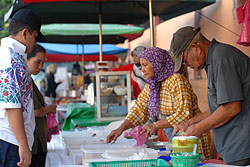 Indeed, villagers experience more of the trickle down effect during the festive exodus. The
kenduri
and feasts bring extra income to the shops in the villagers, the food caterers, taxi drivers and those who run small businesses. City dwellers from villages who are wealthy contribute significantly during
Aidilfitri
to the communities that raised them.
Indeed, villagers experience more of the trickle down effect during the festive exodus. The
kenduri
and feasts bring extra income to the shops in the villagers, the food caterers, taxi drivers and those who run small businesses. City dwellers from villages who are wealthy contribute significantly during
Aidilfitri
to the communities that raised them.
Politicians become prominent during festivals in Malaysia, even more than during debates in Parliament or state assemblies. The mainstream media will not spare column inches for news of open houses hosted by politicians during festivals in cities, towns and villages.
Like in many developing countries, the villages are the vote banks of the ruling elite. Feasts are an important component of the political finance expenditure of politicians, particularly if a general election is close. Politicians will add to the increasing numbers in this year's Aidilfitri exodus with all the signs and rumours of a general election not too far away.
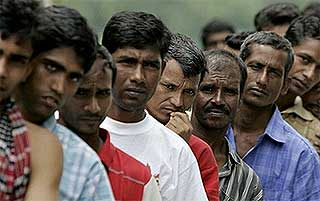 Parts of Kuala Lumpur will see another side of the exodus during
Aidilfitri
. Many migrant workers, away from their families, will converge in the capital city for a respite from their work and memories of families on whose lives depend on their income.
Parts of Kuala Lumpur will see another side of the exodus during
Aidilfitri
. Many migrant workers, away from their families, will converge in the capital city for a respite from their work and memories of families on whose lives depend on their income.
This is another reminder of the economic model that depends on migrant labour.
While those who return to the villages are reminded of family bonding, parents, land and environmental changes, city dwellers will enjoy a less hazy environment for a few days.
The festive exodus is a reminder that current lifestyles are based on unsustainable economic models that have depleted natural resources and destroyed many positive and rich communal forms of lifestyles.
Selamat Aidilfitri.
JOSIE M FERNANDEZ is currently an Asian Public Intellectual Fellow, director of Philanthropy Asia, a researcher and consultant.Working on sustainability, philanthropy and anti-corruption actions are some of her current passions besides writing.


