




Rediscovering one's mother-tongue
As Malaysia has been effectively a multi-ethnic, multi-religious and multi-cultural society since the 19th century, it follows that it has also been a multi-lingual one, although both English and Malay have been successively made the official languages.
Now, while almost all Malaysians of different ethnic, religious, cultural and linguistic backgrounds have long accepted and respected Malay as the official language as enshrined in the Federal Constitution and also use it voluntarily as a lingua franca for inter-ethnic communication, other languages such as English, Chinese and its various dialects as well as Tamil, Hindi, Urdu, Malayalam and Hindi, are studied, practised and used widely in society.
However, at the individual level, there are still the continuing reflections and introspections on the question of the relationship between language and ethno-cultural identity. There is also the consideration of utility in a globalising world.
All these reflections, introspections and considerations are, of course, premised on the assumption that one can only learn or master one language. Removing this assumption often opens up a vista.
To explore these individual reflections, introspections and considerations, this writer interviewed, via email, Dr Kua Kia Soong who is the trilingual principal of the privately-funded New Era College in Kajang.
As Malaysia has been effectively a multi-ethnic, multi-religious and multi-cultural society since the 19th century, it follows that it has also been a multi-lingual one, although both English and Malay have been successively made the official languages.
Now, while almost all Malaysians of different ethnic, religious, cultural and linguistic backgrounds have long accepted and respected Malay as the official language as enshrined in the Federal Constitution and also use it voluntarily as a lingua franca for inter-ethnic communication, other languages such as English, Chinese and its various dialects as well as Tamil, Hindi, Urdu, Malayalam and Hindi, are studied, practised and used widely in society.
However, at the individual level, there are still the continuing reflections and introspections on the question of the relationship between language and ethno-cultural identity. There is also the consideration of utility in a globalising world.
All these reflections, introspections and considerations are, of course, premised on the assumption that one can only learn or master one language. Removing this assumption often opens up a vista.
To explore these individual reflections, introspections and considerations, this writer interviewed, via email, Dr Kua Kia Soong who is the trilingual principal of the privately-funded New Era College in Kajang.
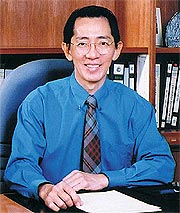 The originally English-educated Kua is now also widely known as a passionate defender of the mother-tongue education system in Malaysia.
The British-trained social scientist is a former DAP Member of Parliament for Petaling Jaya (1990-1995) as well as the director of local human rights organisation Suaram and has written and edited several books on Malaysian politics.
He was also a political detainee under the Internal Security Act (ISA) during the 1987-1988 Operation Lalang.
Reproduced below is a two-part interview where Kua shares his personal experience of rediscovering and learning his mother tongue, as well as reflections and introspections on the relationship between language and cultural identity:
Malaysiakini: You were educated from primary to tertiary level of education only in English, but you are widely known in the Chinese Malaysian community as one of the main personalities of the Chinese education movement and you have also been interviewed on Chinese language TV programmes in Malaysia.
What motivated you first to learn Chinese and become a defender of the Chinese language education system in Malaysia?
Kua: Most English educated Malaysian Chinese live in a make-believe world in which the English language is paramount and our local languages are subordinate.
I used to live in that world until I went to the motherland of the English language. If I had mixed with Anglo-centric red-neck Britons, they would have counted me as one of their own and prided me on my command of the English language.
Instead, I made friends with British people who were more interested in me as a Malaysian Chinese. They would ask me why we spoke English among ourselves when Africans and Latin Americans and Chinese from China all spoke their own languages.
Then when I was in university, many of my social science lecturers and professors were interested in learning Chinese and it was the ultimate embarassment when I couldn't read Chinese. As my friend used to joke: "But all the Chinese characters recognise you ... only you can't recognise them!"
Something more personal hit me when I left home for Britain - I couldn't write to my mother and father who could only read Chinese and I had to write indirectly through my brothers and sisters.
That regret really brought home to me the need to learn my mother language. At home, we could only communicate with our parents in Teochew.
Were your parents also English educated? If not, then why did they send you to English schools and university in Britain and also allow you to marry a British woman?
My parents were both Chinese educated. My eldest sister went to Chinese school, but she was transferred to an English secondary school during the emergency because many of her peers were involved in the anti-colonial struggle.
My family background had something to do with this decision. My grandfather was a banker (founder of the Batu Pahat Bank) and President of the Batu Pahat Chinese Chamber of Commerce.
Our family had just lost a cousin in the civil war in China (Kua Kia Si @ Ke Guotai has been commemorated as a 'revolutionary martyr' at the monument in West Lake park of Teochew Prefecture).
They were not prepared to lose any more children to the political struggle and sent the rest to English schools.
Would I have been sent to an English school if I had come from a poor family? Probably not.
While my brothers and sisters went to night school to study Chinese, by the time it came to me, there was no one to accompany me to night school for we lived some way from town. Still, I remember the attempts by my parents to teach me Mandarin to no avail.
After my HSC (Higher School Certificate), I made the decision to go to the UK. I worked as a teacher in my old school and saved a few months salary and flew to the UK. I decided I would not depend on my father anymore. I worked at all sorts of labouring jobs and went to university on a local education authority grant. My postgraduate studies were paid for by the university.
My independence was the result of the turn in our family fortunes - after my grandfather passed away, the wealth was divided up in the proverbial Chinese family and asking for school fees was never a very pleasant experience.
Thus, after I left home for the UK in 1969, I was pretty much on my own. I didn't depend on my father and he was not in a position to object to my British wife.
However, both my mother and father had met my wife when we came home in 1973. Although they couldn't communicate in English, they got on famously and were very fond of my wife Anne. Like Bruce Lee's life story, love of one's grandchildren conquers all, even racial prejudice and cultural ignorance.
Is it difficult for a Chinese to learn and master English?
It is not difficult for anyone to learn any language. It's a matter of will, love for the language and finding the environment to learn it and practice it. To learn anything you need GAS (Goal, Attitude, Strategy)
From your own experience, is it difficult for completely and fully English-educated Chinese adults to learn Chinese after they have graduated from university and embarked on a career ?
Certainly not. I found that the standardisation of the hanyu pinyin romanised system was the millenial breakthrough in the learning of Mandarin. It was a terrible task in the old days when the British and the Americans had their own romanised system for the Chinese language.
With the hanyu pinyin system, you can learn to speak proper mandarin and speak it better than many Chinese. More importantly, you can self-study. There are some fantastic dictionaries produced by the PRC (People's Republic of China).
(Part 2 to follow on Nov 22)


Are you sure you want to delete this comment?
This action cannot be undone.