




Special report: Inside Pakistans madrasahs
 In the wake of September 11, the world has awoken to a number of new terms and ideas that have crept into the popular imaginary and international political discourse: jihad, al-Qaeda, Taliban, and madrasah are now household words, but more often than not for all the wrong reasons. The largely passive audience of the world have been fed all manner of lurid accounts of the alleged goings-on in the madrasahs of Pakistan. One account, written by Elisia Yeo of
Singapore's Today
, for instance, referred to them as the 'schools of terror'. (
Today
, Dec 19, 2003)
In the wake of September 11, the world has awoken to a number of new terms and ideas that have crept into the popular imaginary and international political discourse: jihad, al-Qaeda, Taliban, and madrasah are now household words, but more often than not for all the wrong reasons. The largely passive audience of the world have been fed all manner of lurid accounts of the alleged goings-on in the madrasahs of Pakistan. One account, written by Elisia Yeo of
Singapore's Today
, for instance, referred to them as the 'schools of terror'. (
Today
, Dec 19, 2003)
Since September 11, and most notably after the Bali bombings that followed, Southeast Asia has become the host to a league of self-proclaimed 'experts' on Islamic terrorism, a phenomenon that is invariably linked to and blamed on Pakistan. I have even come across some of these characters who have openly claimed that in excess of 10,000 Southeast Asian students are hiding amidst the nooks and crannies of the religious schools in that far away and unfortunate country; adding more misery and disrepute to Pakistan, a nation that has already been much maligned in the mainstream international media.
Yet thus far, what have these so-called experts managed to prove? How many of them have even been to Pakistan? How many have made the attempt to contact these madrasahs; talk to the students and teachers; live there among them and experienced life in the madrasahs for themselves?
Notwithstanding the hysteria and hyperbole that have overcome the redoubt of common sense and rational thinking, it remains a fact that the madrasahs of Pakistan have been turned into some dark metaphor for all that is wrong about that country, and by extension Islam and the Muslim world. The static image of the madrasah now stands before the timid cameras of the Western media as some final frontier, an impregnable bastion of unknowing and mystery, whose threshold has yet to be crossed.
 In the wake of September 11, the world has awoken to a number of new terms and ideas that have crept into the popular imaginary and international political discourse: jihad, al-Qaeda, Taliban, and madrasah are now household words, but more often than not for all the wrong reasons. The largely passive audience of the world have been fed all manner of lurid accounts of the alleged goings-on in the madrasahs of Pakistan. One account, written by Elisia Yeo of
Singapore's Today
, for instance, referred to them as the 'schools of terror'. (
Today
, Dec 19, 2003)
In the wake of September 11, the world has awoken to a number of new terms and ideas that have crept into the popular imaginary and international political discourse: jihad, al-Qaeda, Taliban, and madrasah are now household words, but more often than not for all the wrong reasons. The largely passive audience of the world have been fed all manner of lurid accounts of the alleged goings-on in the madrasahs of Pakistan. One account, written by Elisia Yeo of
Singapore's Today
, for instance, referred to them as the 'schools of terror'. (
Today
, Dec 19, 2003)
Since September 11, and most notably after the Bali bombings that followed, Southeast Asia has become the host to a league of self-proclaimed 'experts' on Islamic terrorism, a phenomenon that is invariably linked to and blamed on Pakistan. I have even come across some of these characters who have openly claimed that in excess of 10,000 Southeast Asian students are hiding amidst the nooks and crannies of the religious schools in that far away and unfortunate country; adding more misery and disrepute to Pakistan, a nation that has already been much maligned in the mainstream international media.
Yet thus far, what have these so-called experts managed to prove? How many of them have even been to Pakistan? How many have made the attempt to contact these madrasahs; talk to the students and teachers; live there among them and experienced life in the madrasahs for themselves?
Notwithstanding the hysteria and hyperbole that have overcome the redoubt of common sense and rational thinking, it remains a fact that the madrasahs of Pakistan have been turned into some dark metaphor for all that is wrong about that country, and by extension Islam and the Muslim world. The static image of the madrasah now stands before the timid cameras of the Western media as some final frontier, an impregnable bastion of unknowing and mystery, whose threshold has yet to be crossed.
So much has been written and said about these madrasahs that they have come into the common currency of words and ideas; yet seldom has a singular concept been traded and circulated so widely by so many people who know nothing of it - save the students and teachers themselves.
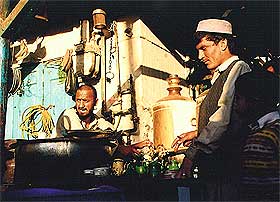 Yet irony of ironies, it is the students of the madrasahs who have been silenced of late. Thousands have been arrested and detained, questioned and deported by Pakistani authorities as they too join in the chorus of Washington's 'war against terror'. One such instance being the arrest and subsequent deportation of Malaysian and Indonesian students on Sept 20 and 23 last year - who were sent back to their home countries to an unknown fate. Arrested on arrival and detained under anti-terror laws, they have yet to be given an open trial, and the public has yet to learn what there is to learn from the whole episode.
Summarily branded as potential murderers and homicidal fanatics hateful of all that is alien to them, the entire madrasah student community - be it in Pakistan or elsewhere - are now treated as potential suspects; their status and identity as ordinary citizens held back on a probationary basis, as if they have to pass the acid test of public acceptability. Thanks to the incessant media onslaught on the madrasahs of Pakistan and other parts of the Muslim world, millions of ordinary students are now cast beyond the pale of humanity and civilisation; branded instead the offsprings of modernity's discontent.
To realise the profound injustice and sheer irrationality of this situation, consider if you will, what would happen if every single engineer in the world was deemed a potential terrorist. Why not? After all, were there not engineers among those alleged suicide bombers who attacked the United States in 2001? Madness has consumed us all, a collective amnesia and paranoia combined that has allowed us to turn a blind eye to the more painful realities of the times we live in, the age of the American Empire.
Mindful of this malady and wanting to find its cure, I spent my time during my fieldwork in Pakistan earlier this year visiting, meeting, living and even lecturing in some of the madrasahs that I have come to know over the past few years. I wanted to answer the questions that have consumed my attention for the past few years: How did it come to this? Why are the madrasahs of Pakistan being targeted? Why are these students being victimised? And who, in the final analysis, are the ones who are really responsible?
The great game revisited
Writing objectively about Pakistan is a task that challenges the will and capabilities of even the most seasoned traveller and academic.
For a start, Pakistan is a country that is immersed in its own mythology that has been the wellspring of many a legend. This is the land that inspired Kipling and Lawrence, and one glance at the mountains of the Kyber Pass or the sullen, dour features of the regal and imperious Pathan tribesmen of the north is enough to unfetter one's imagination.
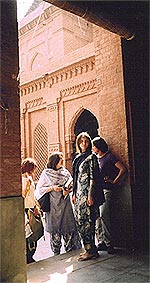 Added to that is the culture of violence, fear and paranoia that has soaked deeply into the national consciousness - its seeds were sown after the bloody murder of Pakistan's early leader Liaqat Ali Khan, tended and cultivated by a succession of unscrupulous leaders and military despots from Zulfikar Ali Bhutto to General Zia 'ul Haq.
Post-September 11, fear and suspicion have become even more deeply entrenched in the country: I was photographed at the airport on arrival; stopped by the police more than once (and even asked if I was a Taliban because of my beard, no less); and on the bus from Lahore to Rawalpindi the vehicle was stopped in the middle of the highway at midnight, so that a plain-clothed security agent could come on board and photograph every single passenger.
The same day another bus was attacked by tribal militia and 17 people were killed as they made their way home. Two days earlier more than 40 people were killed and 150 wounded in sectarian violence during Ashura celebrations in Quetta, and the attack was blamed on the hardcore anti-Shia jihadi group Lashkar-e Jhangvi. Three days later a member of the provincial assembly (MPA) of Sindh, Abdullah Murad Baloch of the PPP party, was machine-gunned right in front of his house by masked assassins on a motorbike.
In the midst of this routinised violence and surveillance, a new power has arrived to the land: the United States. Pakistan is undoubtedly America's most important ally in the 'war against terror' that has been orchestrated by the hawkish neo-cons of Washington. Today the country is host to American agents and security personnel who busy themselves with the task of helping to create a Big Brother state where the movements, transactions and words of Pakistanis and foreigners alike are recorded and fed into a vast policing apparatus.
It goes without saying that much of the information gained by the Pakistani authorities are also 'shared' with their erstwhile American 'allies', whose conduct towards Pakistan can only be described as mercenary and Machiavellian at best. (It should be remembered that America has used Pakistan time and again, during the Cold War, as a frontline state during the Soviet invasion of Afghanistan; as go-between in its relation with China; and as the state that has absorbed more refugees that any country in the West. Despite this, America has never come out in support of Pakistan when the latter needed it.)
Amidst such intrigue and subterfuge, it comes as no surprise that the thin line between fact and fiction gets blurred. The case of the arrested Malaysian, Indonesian and Burmese students comes to mind: during the initial wave of arrests that took place in September 2003 at the Jamiat Abu Bakar and Jamiat Darasat-ul Islamia madrasahs in Karachi, Pakistan's President Gen Pervez Musharraf was abroad (on a trip to Washington, incidentally).
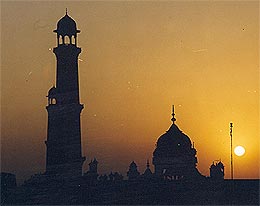 Up till then Washington had put more than a considerable amount of pressure on Islamabad to comply with its demands to crack down on the madrasahs. This demand was promptly followed suit with the arrest of the Indonesians and Malaysians, whom they accused of being part of some clandestine cell belonging to the nebulous Jemaah Islamiah group operating in Indonesia, Singapore and Malaysia.
Selective arrests?
But from the moment the operation began, it was blighted by a host of inconsistencies and contradictions: a deliberate leak was offered by the Pakistani authorities to the press, claiming that the arrests were done at the request of the home countries of the students themselves, bolstered by the claim that the students were wanted by their own governments. As soon as this made the headlines, official complaints were lodged by the Indonesian embassy. Jakarta stated that the students were clean and that they were not wanted by the Indonesian government. Jakarta also stated that it had not requested the students to be apprehended. Thus the first spanner was thrown into the works of the infernal demonisation machine.
It then turned out that Gun Gun Rusman Gunawan, the 27-year-old brother of alleged JI leader Hambali, had been arrested before the weekend of the main arrests, and then lumped in with the other 'suspects'. (Syed Saleem Shahzad, Asia Times , Sept 11-12, 2003). Pakistan's daily The News (Sept 23, 2003) went further by claiming that Gun Gun was already in custody one month before the arrests took place. (1) Most revealing of all was the testimony of the registrar of Gun Gun's madrasah, who provided the press with records showing that the boy had been studying legally in Pakistan since 1999 on a scholarship awarded by none other than the Pakistani government itself.
To cloud an already murky picture, it later turned out that on the day that the arrests took place at the Jamiat Darasat-ul Islamia madrasah, the madrasah's 'guest of honour' was none other than Hafeez Muhammad Saeed, leader of the Jamaat-ul Dawa that is linked to the militant jihadi group Lashkar-e Taiba. The Lashkar-e Taiba has been officially banned by presidential decree since 2002 and Hafeez Saeed is a wanted man in Pakistan. Yet no attempts were made to track him down or arrest him - instead the Pakistani authorities swooped on the Malaysian and Indonesian students there. The obvious question arises: why this discrepancy?
On top of that most, if not all, of the local and foreign media reports thus far have drawn the link between the two Karachi madrasahs and the outlawed Lashkar-e Taiba and its civilian front the Jamaat-ul Dawa. But the spokesman of the Jamaat-ul Dawa himself denies any involvement in the affair and claim that they have stopped hosting foreign students in their madrasahs long ago. (See interview with Yayha Mujahid, below)
With both Islamabad and Jakarta issuing contradictory statements, denials were flying across the Indian Ocean at an alarming rate. Pakistani authorities then shifted their story, claiming that the students had no proper visas, and in some cases claiming that they were acting in a manner prejudicial to Pakistan's interests. Jakarta replied that proper documentation had been given by the Indonesian government and Pakistan embassy, and that the students did not have any dubious criminal records.
The debacle brought to the surface simmering tensions that have been on the boil for decades between the various security organisations in Pakistan. Technically the investigation should have been within the purview of Pakistan's Federal Investigations Agency (FIA), which deals with matters of security and internal terrorism. But the FIA has had its wings clipped by the Inter-Services Intelligence (ISI) unit, which is closely linked to the army and is seen by many Pakistani analysts as one of the key supporters of the jihad movement and jihadi organisations that have been used in places like Kashmir. (2)
With its back to the wall, Pakistan intelligence and security personnel began to close ranks and the matter was brought to a head with the intervention of Brigadier Javed Iqbal Cheema, chief of Pakistan's Interior Ministry Crisis Management Cell. Javed claimed that Indonesian student Gun Gun had maintained communication with his brother, the wanted Hambali. Arguing that this was enough to warrant his arrest and interrogation, Javed tried to close the matter by claiming that the madrasah networks in Karachi had been 'penetrated' by underground Islamist groups. (An ironic statement to say the least, considering that groups like the Lashkar-e Taiba were hosting students and openly recruiting them up till not too long ago, often in full public view.)
Right on cue came the Inter-Services Intelligence (ISI) of Pakistan and the Central Intelligence Agency (CIA) of the US, who argued that Karachi had always served as the conduit for the al-Qaeda and their supporters. Back in Southeast Asia the spin was put on the story, particularly by the so-called 'security' and 'terror' experts based in Singapore. But despite these claims, Asia Times managed to get access to Gun Gun's personal data file that was held by the Pakistani Federal Intelligence Agency (FIA); and the file clearly showed that Gun Gun had been studying in Karachi since 1999 and that he had not been suspected of any illegal activities in Pakistan.
Who, then, were the guilty ones? Who requested the arrests of these students, and to what ends? Whose interests were really being served here?
Guilty parties
The 'Great Game' thus continues. Since the 19th century Pakistan (then Northern India) and Afghanistan have been the pawns in the battle of the superpowers. Britain and Russia had once fought over the region, eyeing it as the ultimate prize in the struggle for regional hegemony. Up to the Soviet invasion of Afghanistan, Russian leaders viewed control of the region as vital to their own economic and strategic interests (to protect the so-called 'soft underbelly of the USSR made up of the Muslim states of Tajikistan, Uzbekistan, Kyrzygstan and Kazakhstan, as well as to find a land route to the Arabian sea and Indian ocean).
During this period Pakistan was under the thumb of General Zia 'ul Haq, a military dictator whose own appalling disregard for human rights and democracy was conveniently disregarded by his American allies. Washington, via agencies like the CIA and through its allies (notably Saudi Arabia) poured in millions of dollars to help create hundreds of madrasahs along the Afghan-Pakistani border, that soaked up the thousands of traumatised young boys of Afghanistan as well as foreign recruits from the Arab states to Southeast Asia. These were the madrasahs that became the jihad factories that bothers the liberal conscience of America so much these days.
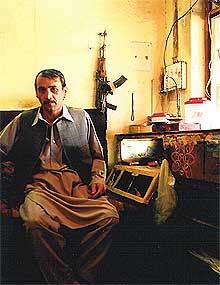 In the wake of the Soviet pullout, Afghanistan fell into the hands of the numerous mujahideen militias that were divided against each other on a tribal basis. (The Americans and their Pakistani allies made no attempts to introduce the structures of civil society or democratic values among their mujahideen fighters.) Civil war ensued, and this in turn opened the way for the rise of the notorious Taliban - bankrolled, trained, armed and protected by none other that the United States, Saudi Arabia, other Arab states and elements of the Pakistani political elite, army and intelligence: ironically the very same actors that are playing the lead roles in the drama called the 'war on terror' today.
The death of General Zia (which the Islamists still blame on the Americans) led to the rise of civilian rulers like Benazir Bhutto and Nawaz Sharif, but the trend continued. Rather than curb the excesses of the militant madrasahs, both Benazir and Nawaz cultivated the support of the more conservative wing of the Islamists, in an attempt to gain their votes. Benazir Bhutto made Fazlur Rehman, leader of the hardline Jamiat'ul Ulema-e Islam (JUI) party her cabinet minister, allowing him to travel abroad (to Saudi Arabia for a start) to solicit funds for the creation of the Taliban.
In the meantime the restless recruits of the madrasahs were directed to Kashmir instead, where they were used as part of the 'unconventional force' by elements within the army and intelligence elite who sought to maintain a state of tension with India, which in turn provided further justification for the perpetuation of the Pakistani arms race and its military-industrial complex that has crippled and deformed the Pakistani economy as well as its society. The rest, as they say, is history - but what a bloody, shadowy history it is.
Today, Pakistan is being blackballed and castigated on the global stage. Dubbed an international pariah state and further maligned by the sordid 'nukes-for-sale' affair that threatens to bring down the entire political and military elite of the country, Pakistan's leaders are on the lookout for scapegoats to blame for their own problems.
Having created a host of violent, intolerant and exclusivist religious militias to fight their proxy wars in Afghanistan and Kashmir, neither Pakistan nor the US can keep them under control. Like Frankenstein's monster, the jihadi war machine that was cobbled together by the Pakistani and American intelligence services now proves to have a will of its own, and any attempt to curb its excesses will incur a devastating human cost.
Reform or cover-up?
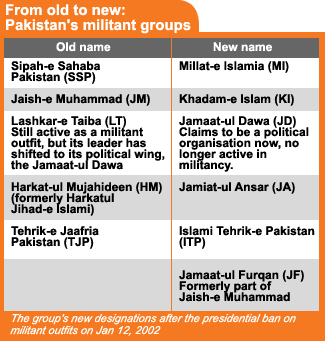
Since he took power via a bloodless coup d'etat, General Pervez Musharraf has tried to improve his international image and standing by wearing his 'moderate' credentials on his sleeves. On Jan12, 2002 the president banned six of the major jihadi militant organisations based in Pakistan, including the Lashkar-e Taiba (LT), Sipah-e Sahaba Pakistan (SSP), Lashkar-e Jhangvi (LJ), Jaish-e Muhammad (JM), Tehrik-e Jafaria Pakistan (TJP) and Jamaat-ul Furqan. But these groups remain under the protection of elements of the army and ISI, and many of them have simply changed their names and fragmented into smaller bodies.
 Neither has President Musharaff been able to hold back the more bellicose elements of his own army: on Dec 28, 2003, retired Major Amir Afzal wrote in the Urdu newspaper
Daily Nawa-e Waqt
that the entire Pakistan army should 'apologise' for their failure to uphold Islam and the Shariah, and that the entire armed forces (paidal fauj, foot-soldiers) should be converted into kafan-posh (mujahideen) and that the entire population of Pakistan should be turned into a national Hizbullah (party of God). He also argued that every able citizen of Pakistan should be given a weapon and taught to use it, so that the entire Pakistani nation would be an army for Islam. He also advocated jihad against Pakistan's enemies and argued for a jihad against India.
Neither has President Musharaff been able to hold back the more bellicose elements of his own army: on Dec 28, 2003, retired Major Amir Afzal wrote in the Urdu newspaper
Daily Nawa-e Waqt
that the entire Pakistan army should 'apologise' for their failure to uphold Islam and the Shariah, and that the entire armed forces (paidal fauj, foot-soldiers) should be converted into kafan-posh (mujahideen) and that the entire population of Pakistan should be turned into a national Hizbullah (party of God). He also argued that every able citizen of Pakistan should be given a weapon and taught to use it, so that the entire Pakistani nation would be an army for Islam. He also advocated jihad against Pakistan's enemies and argued for a jihad against India.
Nor have the banned militant movements been quiet. During my stay in Pakistan earlier this year the leader of the Lashkar-e Taiba openly defied the order for his arrest and led a demonstration against the Pakistan-India peace process on the main mall of Lahore, followed by thousands of his followers. Despite the ban on his organisation and the warrant issued for his arrest and detention, he is still operating at large and under the protection of key government and Pakistan intelligence personnel.
Local analysts argue that the reason for this continued activity on the part of the Lashkar-e Taiba/ Jamaat-ul Dawa is the close connection between the Pakistani ISI, army and political elite (like retired ISI chief Hameed Gul) with the Lashkar-e Taiba/Jamaat-ul Dawa, which they have used and relied upon as their 'unconventional force' to destabilise Indian Kashmir, as well as the close personal links and ties between senior army and intelligence personnel with the leaders of LT/Jamaat-ul Dawa.
Analysts argue that this also explains the relatively placid and quiet stance taken by the leaders of the Lashkar-e Taiba/Jamaat-ul Dawa at the moment, who have been muted in their criticism of the Musharraf government: "Hafeez Saeed's silence was expressed requested by his mentors in the Pakistani security apparatus, against guarantees that no action will be taken against the Jamaat-ul Dawa or its militant wing, the Lashkar-e Taiba He was also ensured that there will be no restrictions on the activities of the two outfits, be it the collection of funds, holding of public rallies, or recruitment and training of militant cadres." ( Herald , Feb 2004)
As more and more diplomatic pressure is brought to bear of the Musharraf administration, the president is caught between a rock and a hard place. Forced to placate the demands of Washington on the one hand and the radical Islamists supported by religious hardliners and elements of the army and intelligence on another, sacrifices have had to be made. Thus the arrest and deportation of the Indonesian and Malaysian students have to be read in this political context. They are, in the words of one Pakistani security analyst, "victims of superpower realpolitik, though many of them are really the only innocent ones in this whole scenario."
Monday: Are madrasahs 'jihadi' factories?
Endnotes
1) Gun Gun Rusman Gunawan was studying at the Jamiat Abu Bakar madrasah located at the Gulsham-e Iqbal neighbourhood in Karachi. The madrasah was set up in 1978, and was then run by the Jamaat-ul Dawa, the civilian front of the militant group Lashkar-e Taiba (banned since 2002). From the madrasah he was taken to the main police station at Gulsham-e Iqbal for interrogation by Pakistani police, and then taken away again to an undisclosed location for further interrogation.
It is clear that Gun Gun was apprehended before the arrests on Sept 20 and 23, 2003. But local analysts have also argued that it would be impossible for the Pakistani authorities not to know of the madrasah in question as its affiliation to the Jamaat-ul Dawa and Lashkar-e Taiba was openly declared.
The fact that the boy was studying there with the help of a sponsorship grant given by the Pakistani government also suggests that his presence was known to both the Pakistani and Indonesian governments, for foreign students are not allowed to study in Pakistan without a 'no objection certificate' (NOC) issued by the Pakistani embassy in their home country, with approval of their own governments. During the time of the crackdown the Jamiat Abu Bakar madrasah was home to 62 Afghan, 68 Thai, 15 Malaysian, nine Indonesian, 17 Ugandan and seven Somalian students.
2) Keeping track of the internal manoeuvrings of the Pakistani military and intelligence community is difficult to say the least. Since the time of Zulfikar Ali Bhutto the relationship between the civilian authorities, government and the army has been a convoluted one. Zulfikar complicated things even further by creating his own Federal Reserve Force (FRF) that was ostensibly meant to serve public peace, but was in fact his own irregular armed militia that was meant to protect him and PPP party leaders. The RFR was notorious for its role in political harassment and killing of political opponents.
During the time of General Zia 'ul Haq the army was propelled to the fore once again and the Inter-Services Intelligence (ISI) of the armed forces was given free rein to direct matters related to espionage, counter-espionage and counter-terrorism. The rise of the ISI marginalised the more 'civilian' security outfits like the Federal Investigation Agency (FIA) that was meant to handle matters of internal security, including counter-terrorist operations.
The ISI in turn - led by key army personnel like (ret) Gen Aslam Beg and (ret) Gen Hameed Gul, promoted and protected the various jihadi movements that were first used in the anti-Soviet campaign in Afghanistan and later in Kashmir. According to B Raman, "After September 11 the US, distrustful of the ISI, pressured Gen Musharraf to make the FIA once again the head of anti-terrorism and a sizeable portion of US assistance to strengthening Pakistan's counter-terrorism capacity is now going to the FIA and not the ISI." ( Asia Times )
Dr FARISH A NOOR is a Malaysian political scientist and human rights activist. He is presently an academic researcher at the Zentrum Moderner Orient (ZMO) in Berlin, and is the author of 'New Voices of Islam' (ISIM, 2002), 'The Other Malaysia' (Silverfish, 2002) and 'Islam Embedded: The Historical Development of PAS 1951-2003' (MSRI, 2004). He is also a radio essayist for the BBC World Service. His column 'The Other Malaysia' is an attempt to write a deconstructive account of Malaysian history, seen from the point of view of the Other and the subaltern.


Are you sure you want to delete this comment?
This action cannot be undone.