




Special report: Is 'sepak takraw' a form of 'terrorist training' too?
There are madrasahs and there are madrasahs.
 Living as we do in a time of fear and loathing, ignorance and prejudice have come to the fore and objectivity is seen as a troublesome impediment. Talk of the 'danger' posed by the unregulated madrasahs in Pakistan has served to tarnish the image of the country even further, and of late the madrasahs of Pakistan have been the target of much media speculation and diplomatic pressure.
 While in Peshawar in early March, the author witnessed the visit of British Foreign Secretary Jack Straw to the Jamia Imdadul Uloom madrasah, said to be one of the notorious 'jihad universities' of the Northwest Frontier Province (NWFP) and home of the infamous Taliban.
The Secretary's visit to Peshawar practically paralysed the city as entire blocks had to be closed off to the public, but at least he had made the effort to visit the place and make his own assessment of the situation on the ground. If Jack Straw could walk into the madrasah (albeit surrounded by an army of bodyguards), then surely others could pay a virtual visit to this institution that has been demonised to semi-legendary status of late?
One could also add the interesting observation that while Western politicians have called for the reform and modernisation of madrasahs, they have also made the effort to learn more about how these institutions work. Few, if any, Muslim leaders have made similar efforts.
There are madrasahs and there are madrasahs.
 Living as we do in a time of fear and loathing, ignorance and prejudice have come to the fore and objectivity is seen as a troublesome impediment. Talk of the 'danger' posed by the unregulated madrasahs in Pakistan has served to tarnish the image of the country even further, and of late the madrasahs of Pakistan have been the target of much media speculation and diplomatic pressure.
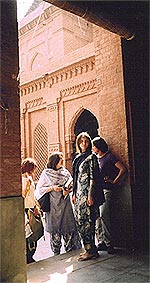 While in Peshawar in early March, the author witnessed the visit of British Foreign Secretary Jack Straw to the Jamia Imdadul Uloom madrasah, said to be one of the notorious 'jihad universities' of the Northwest Frontier Province (NWFP) and home of the infamous Taliban.
The Secretary's visit to Peshawar practically paralysed the city as entire blocks had to be closed off to the public, but at least he had made the effort to visit the place and make his own assessment of the situation on the ground. If Jack Straw could walk into the madrasah (albeit surrounded by an army of bodyguards), then surely others could pay a virtual visit to this institution that has been demonised to semi-legendary status of late?
One could also add the interesting observation that while Western politicians have called for the reform and modernisation of madrasahs, they have also made the effort to learn more about how these institutions work. Few, if any, Muslim leaders have made similar efforts.
There are, however, practical considerations to be borne as well. For a start it is hard to know where to begin. It is difficult, if not impossible, to tally the figure for the total number of madrasahs currently operating in Pakistan. In the province of Sindh, there are said to be 1,248 madrasahs, with 869 located in the bustling and overcrowded provincial capital Karachi alone.
The Karachi madrasahs are said to teach and accommodate more than 200,000 students, of whom around 10,000 are foreigners from all over the world. In Hyderabad region, there are around 260 madrasahs with 30,000 students; and in Sukkur region, 115 madrasahs teaching 9,000 students.
An official figure does not exist and the final figure cannot be reached as many of these institutions may also double as mosques, refugee camps, welfare aid centres, imambarghas, Sufi shrines and so on. The Wifaq-ul Madaris (Pakistani Central Board of Religious Seminaries) estimates that 10,000 are already registered on their lists while there may be around 10,000-15,000 more operating outside their control. The magazine Newsline estimated that around 700,000 students may be enrolled in the madrasahs of Pakistan at any time, with around 15,000 of them made up of foreign students from all over the world. (Newsline, October 2003)
In the wake of September 11 and the US-led invasion of Afghanistan, the Americans have placed their stamp firmly on the country and US intelligence agencies have been working closely with Pakistani authorities to identify and monitor these madrasahs and the foreigners studying in them in particular. As a result, "Pakistan is no longer a safe place for foreign students studying in our madrasahs," according to Mufti Muhammad Jamil of the Wifaq-ul Madaris. Thousands of foreign students have fled back to their homes or gone to continue their studies in places like India, South Africa or the Arab states. Many have also simply gone underground, while a few have been arrested and detained.
Allow me, at this point, to lay my cards on the table, so to speak. As a political scientist studying the phenomenon of political Islam, I find it hard to conduct objective research and fieldwork in a climate of fear and apprehension, where rumours and popular myths have come to serve as pedestrian morsels of 'factual reporting' or 'truthful data' that are in turn used to substantiate claims made by the so-called 'security experts' who now number in the legions and whose influence on governmental policy is both profound and far-reaching.
Political Islam is a complex phenomenon with its own logic, internal dynamics and systems that need to be studied seriously and objectively, and this can only be done via direct encounters and fieldwork in the area itself. One cannot pontificate about the so-called 'threat' of 'holy terror' emanating from the madrasahs of far-away countries from the comfort and security of a coffee-lounge in Kuala Lumpur, Singapore or Jakarta.
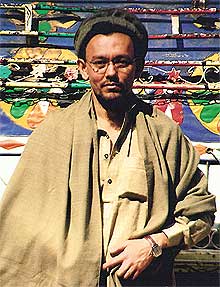 It was with this consideration in mind that I decided to divide some of my time otherwise spent on historical research at the archives of Lahore to the thorny subject of madrasahs in Pakistan, and so I made my way to the Syed Maudoodi International Islamic Educational Institute (SMII) based at the Mansoora complex of the Jamaat-e Islami in Lahore.
Why are they targeting us?
"Welcome, welcome, Brother Doctor Sahib Farish Ahmaad al-Nur, welcome to our Ouch! Who did that?"
Before he could finish his welcoming remarks, the head of poor Prof Omar Farooq Dogar became the unlikely target of a rattan ball that had been launched by the deft foot of a Malaysian student playing sepak takraw in the playing field of the SMII institute. The guilty miscreant was seen rushing off in the opposite direction, breaking several speed records in the process, all the while yelling at the top of his voice: "Sorry, sorry, sorry, professor!"
The boys laughed aloud, and the professor and I joined in too. It was hard to keep up a stiff appearance for it was sports hour at the madrasah and the term was drawing close to the annual sports meet, where prizes would be awarded for the teams.
"You see, now our students play what you call 'say-phak tak-ge-raw' in Malaysia and Indonesia. It is something we have never seen in Pakistan. Thanks to them now it has become a sport in our madrasah and its part of our sporting curriculum. They have brought something new to our country," noted the professor.
"Do the Malaysians play cricket?" I asked the professor. "Not yet. Some of them try but they seem scared to catch the ball when it comes hard and fast at them." "Damn," I thought. No wonder, we never make it to the global tournaments, and what a lovely game it is to watch, too.
Professor Omar is a retired brigadier though he hardly comes across as a martinet. In fact the boys in the madrasah look up to him as a father figure, themselves being temporary orphans in this foreign land that they knew nothing about prior to their arrival here years ago. We walk to his office and he asks me how I am, how things are in other parts of the world and how I like living in the guest house. (I was staying temporarily at the guesthouse in the Mansoora complex nearby, headquarters of the Jamaat-e Islami party.)
Prof Omar is keen to tell me about the situation for the students, and he is worried about what will happen to them. "Why are they targeting us?" he asks, and "why are they no longer sending boys to study at our madrasah? Since the 2003/2004 intake we have had no students at all from Malaysia or Indonesia. Not a single one. It is so, so sad."
The Syed Maudoodi International Islamic Educational Institute was established in 1982, and it is named after the founder of the Jamaat-e Islami party, Maulana Syed Abul Alaa Maudoodi, who migrated from India to Pakistan after the partition of 1947. Maudoodi was then awarded the King Faisal award by Saudi Arabia and the institute was set up from the proceeds that came with that award.
Its first chairman was Maulana Khalid Ahmed Hamdi and at that time the SMII was based within the compound of the Mansoora complex itself, where the political offices of the Jamaat-e Islami are located. It was moved to its present location on Wahdad road (literally just around the corner from Mansoora) in 1986 and was inaugurated by Mian Tufayl Muhammad who was the Emir of the Jamaat-e Islami then.
From the outset, it was known that the SMII had produced cadres for the Jamaat-e Islami, for the party has always been a cadre-based organisation (which in turn explains why it has not developed a mass following, as Syed Vali Nasr's study of the Jamaat has argued). But one would be hard pressed to find dark rooms and tattered old religious manuals here, for the SMII is a thoroughly modern madrasah equipped with modern facilities including a language lab and computer lab. It also has sports facilities where the students (all boys) are made to take up sports as part of their syllabus.
"There is so much falsehood in the reports we read these days," argues Prof Omar. "They keep giving the impression that all madrasahs are backward, and that we teach a narrow range of subjects. This is not true for all of them. Some madrasahs are poor and so cannot afford such facilities, but others like ours are even more modern and better-equipped than the state schools" - an observation I would concur with, having visited various types of schools and madrasahs in the country.
The SMII teaches students from O levels up to B.A level, and Prof Omar proudly shows me the certificate of acknowledgment issued by the Pakistani Ministry of Education. "You see? Even the Pakistani government recognises that we are a proper educational establishment, so why are all the madrasahs being targeted this way?"
Prof Omar then insists that the SMII is free from any kind of religious sectarianism: "We accept all schools of thought. Here it does not matter which legal school of thought you may belong to: Shafie, Hanbali, Hanafi or Maliki. It makes no difference to us; we just want our boys to be given sound education and learning techniques."
But he does not disguise the SMII's political and ideological goals either: "We want to prepare our boys for leadership roles in Islamic movements all over the world. Is there anything wrong with that?" Nothing, in my opinion - for some of the most modernist, liberal and progressive Islamic educational institutions like Syed Ahmad Khan's Aligarh university (which produced thinkers like Dr Burhanuddin al-Helmy) were intended for the same purpose as well.
The subjects that are on offer at the SMII are quite impressive. A key emphasis is on language training (hence the language labs with audio equipment). Students are expected to master both English and Arabic to the point where they can translate, debate and speak fluently in both languages. Apart from that the students are taught Economics, Sociology, Political Science, Psychology, Geography (of the Muslim world), History (of the Muslim world), current affairs, comparative religion and computer skills. These subjects conform to the syllabus of the Punjab university, and interestingly they are all taught in English.
Then there are the religious subjects that include Quran and Hadith, Tafsir (textual exegesis of the Quran), Fiqh (Islamic jurisprudence), Usul'uddin (fundamentals of faith), Aqidah, and Islamic ethics. These subjects follow the traditional curriculum and pattern set by the Dars-i Nizami madrasah system of the classical era, and are taught in Arabic.
The SMII employs 15 teaching staff (three of whom are professors in physics, Arabic and Islamic studies respectively) and all regular lecturers have at least two M.As in various fields. An irregular flow of visiting lecturers also supplements the crew, and guest lecturers from abroad are also welcomed. Prof Omar asks me to give a lecture to the Asian students, and I agree to talk on the subject of 'Globalisation and its impact on the developing world'. "That would be wonderful" he notes, "we encourage them to debate all the time (debates and quizzes are compulsory in fact) and we want them to think of such issues. Please do."
Wandering academic
The life of a wandering academic can be a lonely one. I have found myself passing long hours in awkward silence, staring at interviewees who can only offer an embarrassed smile in return, the difference in language proving to be a gulf too wide to cross. I have travelled to refugee camps and carried the burden of guilt with me long after, feeling like a trespasser whose camera and tape recorder are like instruments of violation, breaking into the privacy of the quiet suffering of others while I know that what awaits me upon my return is a steady job and a roof above my head.
Yet there are times when the sound of a voice, the tone of a familiar accent, grabs one's attention and reminds one of home. Meeting the boys at SMII reminded me of who and what I was, and perhaps it had the same effect on them too.
I had met them before on my last trip to Pakistan a couple of years ago, but now their numbers are drastically diminished. "Macam mana doctor? Buku sejarah PAS tu dah siap ke?" they ask, smiling. Soon, soon, I promise them.
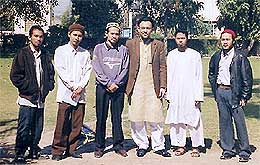 I gave my lecture to the students and they sat there giving me their full attention. I began with a whimsical remark about how living in Pakistan they must have had their fill of tea by now. (Tea is drunk practically ever hour in the country. One gets the impression that plain water simply does not exist as a concept at times.) I noted that it as not always like this: Tea was hardly consumed in the Indian subcontinent prior to the 19th century, for the Indians drank lassi and other milk-based refreshments instead, their diet being influenced by Moghul and Central Asian cuisine.
Tea was brought to India by the British who secured the trading monopoly from China, while China's economy was in turn broken into by the British who sought access to its local markets in order to sell opium, the product they secured from India. Thus it came to pass that the trade of tea and opium was globalised by Britain, the first truly global superpower the world has seen. Then I asked them about what is happening in Iraq and Afghanistan; the parallels between the past and the present, and whether or not all this was proof that 'globalisation' is nothing more than a politically-correct term for economic imperialism. They agree, and we debate for another hour on the subject of globalisation, uneven development, imperialism and hegemony.
It was a wonderful lecture, not because I had said anything original, but because I sensed the keen interest of the students themselves. For an academic, there is nothing more rewarding that being able to get students to think for themselves and to employ their rational faculty towards addressing a complex problem. And who said rote learning was the norm in all madrasahs? Do the schools in Malaysia or Indonesia discuss such subjects? (One can only hope so, provided there is more academic freedom on the campuses.)
"Hampa dok tinggai kat sini, hampa tak bosan ka?" I ask them, my Kedah-Penang accent coming out in the bargain. "Tinggal di sini okey-lah, tapi tak tahan makan chapatti tiap-tiap hari! Mereka berikan kita nasi, chapatti, lauk mereka; tapi selalunya kita masak sendiri" was the reply I received.
Who did the cooking, I asked them. They take turns doing it, and it is inevitably a risky adventure every time as cooking is obviously not part of the syllabus and not every student is a master at this particular skill. Grins all round as they point to the best and worst cook among them.
We talk about their extra-curricula activities and what they do in their free time. Sports seems to be the most prominent distraction on offer. Football, cricket, netball, chess, badminton and sepak takraw are all played, the latter being the unique contribution of the Southeast Asians to the SMII campus. The Malaysians are the best at badminton, and last year the SMII team won second place in the all-Punjab football tournament. They proudly show me the cup, too.
Twice a year they are taken out for visits, a local visit to a prominent place in Lahore and another visit to somewhere in Pakistan. Last year it was the Muree hills, close to Islamabad. They can watch TV in the evening, but mostly the news at 9pm and in English or Arabic. Movies and clubs are no-go areas, but most have their own radios (and handphones, I noticed). Suddenly they appeared to me more like nuns in a convent. If they were girls embroidery would be part of their activities too, I mused.
But inevitably the subject turns to their own condition and their current unknown status. Needless to say the Southeast Asian student community was petrified after the arrests in Karachi last September. "Will they come for us?" they ask. "We hear so many rumours, we don't know what is true and what is not." I find it hard to explain to them that they are presently in the grip of a complex geo-political struggle where they are just pawns in a game none of us can really fully comprehend, the outcome of which is still hanging in the balance. Once again I feel like the trespassing witness, unable to help or do anything.
The students, however, are not entirely unaware of what is going on in the world and how they, like the students of all madrasahs elsewhere, have become the subjects of the unwanted attention of foreign security agencies. Their main concern, however, is not for themselves but for their families at home. Their parents are worried, they point out, and they try their best to keep in contact with them and let them know they are all right - for now.
In the words of one of them, Mohd Amin: "Kok Malaysia demo ashik menonton TV. Tapi apa yang digambarkan di kaca TV di Malaysia itu tak seburuk dengan apa yang berlaku di Pakistan. Apa yang ambo dengar di Malaysia ialah tiap-tiap kali ada gambor Taliban, dikaitkan pulo dengan gambor madrasah. Tiap-tiap kali ada gambor Taliban, ada pulo gambor madrasah. Jadi ibubapa pun takut hantar anak demo ke Pakistan, hingga sekarang tidak ada lagi pelajar dari sana. Jadi selepas 11 September mereka tak datang ke sini lagi."
Complexities of the madrasah
My own stand on the whole madrasah issue has been made clear all along. I am not nave enough to think that all madrasahs are immune to politics, or that none of them are entirely free of connections to militant groups and radical organisations. But it would equally wrong to conclude that all the madrasahs are involved in this shadowy affair between states, intelligence services and the underground movements they patronise and protect.
From my own experience travelling and working in Pakistan, I have come to the conclusion that most of the boys who come to the country knew little of its domestic politics, or what they were getting themselves into. Did the Southeast Asian boys who were caught in Karachi even know what the Ahle-Hadith, Sipah-e Sahaba, Lashkar-e Jhangvi or Jamaat-ul Dawa stand for, or the latter's links to the Lashkar-e Taiba? And in any case, who allowed them to go to such places, if not their own governments and Pakistani authorities?
Madrasahs, it has to be remembered, are an age-old phenomenon that goes back to the time of the Caliph Harun al-Rashid of Baghdad and the Abbasid Caliphate. The earliest madrasahs were places of comprehensive learning, intended to produce not only religious scholars but also statesmen, scientists, historians, philosophers as well as skilled craftsmen, artists and poets. The true 'alim' is a man of comprehensive knowledge, and one should master all the known fields of the arts and sciences before one can have this honorific title bestowed on oneself. (These days you just join an organisation calling itself "Persatuan Ulama so-and-so" and bingo: you are upgraded from middling mediocrity to overnight genius in an instant. How standards have fallen!)
In the context of Southeast Asia, the madrasah system was actually a distinct improvement over the traditional pondok and pesantren schools where rote learning was the order of the day and where the textbooks were of the kitab kuning (literally 'yellow books', so called due to the discoloration of their worn pages) variety.
The great reformist Muslim alim and intellectual Syed Sheikh al-Hadi built a string of madrasahs in Singapore, Malacca and Penang in his attempt to upgrade and modernise Islamic teaching there. Likewise in Indonesia, the modernist Muhamadijjah movement pioneered the formation of madrasahs which they hoped would improve the quality of education offered by the more traditional pesantrens.
 Over the course of centuries, madrasahs have evolved in a variety of ways. Some have aligned themselves to the more conservative stream of Salafi and neo-Salafiyya purist thought, which have spawned a host of hybrid entities such as the Ahle-Hadith, Tablighi Jamaat, Deobandis and Taliban.
But other madrasahs have moved in the direction of a progressive modernist Islam that is reformist and activist in its orientation: During the anti-colonial era, some of the leading freedom fighters and anti-colonial leaders of the Muslim world were also products of madrasah education. So impressed was Pakistan's founding father Muhammad Ali Jinnah with the Aligah Muslim College that upon his death he requested that one-fifth of his estate be donated to it. Thus to lump all these institutions together would be both wrong as well as factually incorrect.
As for the problem of the so-called 'militant madrasahs', I have discussed elsewhere the complex geo-political and strategic factors that led to the rise of the new jihadi madrasahs in Pakistan and Afghanistan. These so-called centres of Islamic learning were nothing more than recruitment and training camps disguised behind the veneer of Islamic respectability and exploited to the full by both security forces in Pakistan as well as their western allies, notably the United States of America.
How then, can Washington take the moral high ground to condemn all these institutions in toto? If the madrasah system in Pakistan today has been politicised and warped beyond recognition, blame has to be put on the heads of various Pakistani security agencies and their allies in Washington and the Pentagon who used such institutions to breed sectarian hatred and religious fervour, so that thousands of poor innocent boys from all over the world could be sacrificed at the altar of realpolitik.
As my stay drew to its close and I prepared to leave again, Prof Omar was keen to remind me that he was worried about the fate of the Southeast Asian students who have come under his care: "Of course, I feel responsible for them, like I do for all my students. The Malaysian and Indonesian boys are among our best students; they work hard and are good at computers and languages. In all the 20 years I have been teaching here, I have not had a single case of misdemeanour or ill discipline from these boys. But now they are scared, and we are too. They are really very good boys, they just don't understand what is happening; none of us do."
I said goodbye and boarded my rickshaw. My feeling of guilt and helplessness, overwhelming. Thus far I had managed to speak to the teachers and students of the madrasahs themselves, Pakistani academics and political analysts as well as journalists. But I was still unable to get to the bottom of the original question I had put before myself: What actually happened at those madrasahs in Karachi, and why were those madrasahs targeted in particular?
Most of the reports, I had read claimed that the smoking gun was in the hands of the Jamaat-ul Dawa, the civilian front of the banned Lashkar-e Taiba organisation. There was only one way I could get to the facts, whatever they were: I had to speak to the leaders of the jihadis themselves.
Part 1: Inside Pakistan's madrasahs
Part 2: Are madrasahs 'jihadi' factories?
Tomorrow: Interview with a jihadi leader
Dr FARISH A NOOR is a Malaysian political scientist and human rights activist. He is presently an academic researcher at the Zentrum Moderner Orient (ZMO) in Berlin, and is the author of 'New Voices of Islam' (ISIM, 2002), 'The Other Malaysia' (Silverfish, 2002) and 'Islam Embedded: The Historical Development of PAS 1951-2003' (MSRI, 2004). He is also a radio essayist for the BBC World Service. His column 'The Other Malaysia' is an attempt to write a deconstructive account of Malaysian history, seen from the point of view of the Other and the subaltern.


Are you sure you want to delete this comment?
This action cannot be undone.