




A ray of hope for the voiceless
"We only live once. That is why life is precious for each one of us. Life is nurtured, protected, secured. But for more and more people, life is being threatened. As globalisation grips us, inequalities sharpen and the divide between the north and south increases. Poverty is one major factor that threatens life".
 Tenaganita director Irene Fernandez's solidarity message during the organisation's annual dinner in Petaling Jaya last Saturday could not have been more apt in view of the massive crackdown on illegal immigrants in Malaysia since March 1.
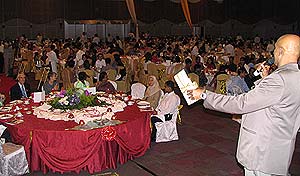
Attended by about 1,000 participants, who included embassy officials and migrant workers, the dinner also marked the launch of Tenaganita's music album 'Silenced Voices' and documentary film 'Breaking Labor'.
"We only live once. That is why life is precious for each one of us. Life is nurtured, protected, secured. But for more and more people, life is being threatened. As globalisation grips us, inequalities sharpen and the divide between the north and south increases. Poverty is one major factor that threatens life".
 Tenaganita director Irene Fernandez's solidarity message during the organisation's annual dinner in Petaling Jaya last Saturday could not have been more apt in view of the massive crackdown on illegal immigrants in Malaysia since March 1.
Attended by about 1,000 participants, who included embassy officials and migrant workers, the dinner also marked the launch of Tenaganita's music album 'Silenced Voices' and documentary film 'Breaking Labor'.
Directed by Elnora Ebillo from the Philippines, the 55-minute documentary traces the migrant workers who suffered in detention camps in the country. It tells the story of those who are still struggling, seeking the sometimes illusive dream called 'justice'. Also revealed in the film are stories about potential migrant workers and their hopes for a better life.
Apart from the 41-second trailer of the documentary, the three-hour programme included songs and dance performances by migrant workers, Akademi Seni Kebangsaan and Aseana Percussion Unit.
 Also present was migrant worker and domestic helper Nirmala Bonat from Indonesia who was allegedly physically abused by her employer. Her case before the court in Malaysia.
At the event, Tenaganita honoured her with an ice carving and later in the night, there was even a song in Bahasa Indonesia, entitled 'Nirmala', dedicated to her.
When a group of young men on stage sang her song, Nirmala was seen sobbing at her table.
Labour a 'commodity'
In her message, Fernandez said that, in Asia alone, more than 600 million people go to bed hungry each night.
"Labour too is being commodified and workers are seen as commodities and not human beings. It is no wonder that millions of people are becoming migrant workers but this journey in migration for work threatens life in more ways than one," she noted.
Over the last 14 years, Tenaganita has worked to save the lives of women trafficked into prostitution, of migrants in detention camps, domestic workers violently abused or raped and women pesticide sprayers.
For her courage in standing up for migrants abused and exposed to appalling conditions in detention camps, Fernandez was convicted of spreading 'false news' and sentenced to one year in jail. She has been granted bail pending disposal of her appeal by the High Court.
In spite of her conviction and impending jail sentence, Fernandez was optimistic and appreciative of the fact that many friends and well-wishers had turned up for the function.
She said she was warned that if no ministers attended the event, there would be no support from the corporate sector. So ministers were invited, including Prime Minister Abdullah Ahmad Badawi, who all turned down the invitation.
 But several non-governmental organisations rallied behind Tenaganita's achievements, urging the organisation and its hard-working staff to carry on the struggle of seeking justice for women workers and migrants.
Coordination of Action Research on Aids and Mobility (Caram) Asia regional co-ordinator Sharuna Verghis said migrant workers are unsung heroes who have made a huge sacrifice by leaving home to seek employment in other countries.
Verghis said they contribute towards a large percentage of forex remittance which have become an essential component of global and national development.
"However, under most circumstances they fall victim to human rights violations, which often has serious consequences for their physical, mental, psychological, sexual, reproductive and occupational health," she said.
'Uphold human rights'
The Bangkok-based Global Alliance Against Traffic in Women International secretariat condemned the ongoing crackdown on migrants by the Malaysian government, saying they were well aware of the human rights violations that occured during the last deportation exercise in 2002.
"While protecting their political interest and asserting their sovereignty, nation-states should not forget their commitment to the Universal Declaration of Human Rights," it said in a message.
"Many human rights activists and working groups have witnessed and protested the worst scenarios of the previous crackdown".
Based in Chiangmai, the Asia Pacific Forum on Women, Law and Development lauded Tenaganita for making continued efforts to ensure that 'silenced workers' have a voice and their work no longer invisible.
The Asia Pacific Mission for Migrants based in Hong Kong said that the situation for migrants, from the issue of wage, employment condition to outright abuse, has not improved.
 "In this situation, it has become more imperative for migrant workers to organise and advance the struggle for rights and justice," it said.
"As migrants continue to strengthen their national mass organisations, the call for international solidarity and action becomes even louder as migrants realise the commonality of their situation and aspirations."
The Penang-based Pesticide Action Network Asia and the Pacific commended Tenaganita for spearheading the work on women and pesticides.
Executive director Sarojeni V Rengam said that one of Tenaganita's most significant contributions was in August 2002 when the Malaysian government announced its intention to ban paraquat, a toxic herbicide frequently used in oil palm plantations.
Sarojeni said Malaysia became the first Asian country to ban the pesticide, which was a victory for some 30,000 plantation sprayers, mainly women.
Photos by Gilbert Sape (PANAP)


