




Preserving a national and community heritage
Political promises are made but in the process of implementation, which often is over time, the delivery agencies forget them and operate on an administrative framework. This I believe is what has happened in the case of the Arumugam Pillai Institute in Nibong Tebal.
The government made a firm commitment in 1999 that they would dissolve the South Indian Labour Fund, transfer the assets and enlarge it into an Institute for Industrial training which will also benefit plantation workers and their children.
 Over the years some aspects of this promise has been fulfilled namely the building of the Institute with a government allocation of RM60 million under the 8th Malaysia Plan. The building is up and the first batch of 60 has enrolled but none among them is an Indian. This means that in the initial implementation no plantation worker, or his children have benefited.
The critical question is, was it a failure to have dissolved the fund, transferred the assets? (about RM2.5million and 14 areas land donated by Arumugam Pillai). Isn't there any hope of redemption?
As we drove back after a recent visit to Nibong Tebal, I struggled with this question of why the Indian community now feel alienated from the Institute? Why do they not feel that they are going into their institute? Why do they not say that this is part of their heritage?
While the government spent a lot of time during the initial period with leaders of the community before the fund was dissolved, they failed to introduce a participatory process of working with the community in developing the place, in formulating the courses and in running the institute. There was no partnership other than seeking the initial consent.
There were many who accused the Indian political leaders in government that they have sold out the community. Yet at that point there were assurances from the government that this was not so and that the government would do far more by pumping in RM60 million to develop the land.
Political promises are made but in the process of implementation, which often is over time, the delivery agencies forget them and operate on an administrative framework. This I believe is what has happened in the case of the Arumugam Pillai Institute in Nibong Tebal.
The government made a firm commitment in 1999 that they would dissolve the South Indian Labour Fund, transfer the assets and enlarge it into an Institute for Industrial training which will also benefit plantation workers and their children.
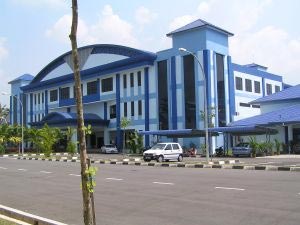 Over the years some aspects of this promise has been fulfilled namely the building of the Institute with a government allocation of RM60 million under the 8th Malaysia Plan. The building is up and the first batch of 60 has enrolled but none among them is an Indian. This means that in the initial implementation no plantation worker, or his children have benefited.
The critical question is, was it a failure to have dissolved the fund, transferred the assets? (about RM2.5million and 14 areas land donated by Arumugam Pillai). Isn't there any hope of redemption?
As we drove back after a recent visit to Nibong Tebal, I struggled with this question of why the Indian community now feel alienated from the Institute? Why do they not feel that they are going into their institute? Why do they not say that this is part of their heritage?
While the government spent a lot of time during the initial period with leaders of the community before the fund was dissolved, they failed to introduce a participatory process of working with the community in developing the place, in formulating the courses and in running the institute. There was no partnership other than seeking the initial consent.
There were many who accused the Indian political leaders in government that they have sold out the community. Yet at that point there were assurances from the government that this was not so and that the government would do far more by pumping in RM60 million to develop the land.
Undo past mistakes
Recently Navamukanthan of the NUPW introduced me to the concept of 'social dialogue process'. This process is a continuous process involving planning, implementation, monitoring and evaluation where there is continuous consultation and involvement of all the stakeholders. This is what government must introduce into all projects and ensure people's partnership and involvement.
In this project of building the Institute and formulating the programme the stakeholders were ignored and left out. There were no dialogues, discussions nor involvement of the plantation and wider Indian community. The Ministry of Human Resources over time took over this project like one of its many institutes, failing to remember that there is a history and background to this programme. It is therefore time now for both the political leaders and administrators to review the project and undo the mistakes of the past and honor the commitment made in 1999.
The Arumugam Pillai Institute is a national heritage. It is a symbolic identity for the Indian community and their contributions to national economy. It is the toil of plantation workers and they laid the foundations for the modern, progressive Malaysia.
There is a need for the Ministry of Human Resources to re-look at the original promises and concerns. This institute is a renewed attempt to provide a service to a displaced community. One critical aspect is, the Ministry of Human Resources has forgotten the target group that this institute should cater for. Based on training needs and requirements the ministry should formulate short courses both weekends and weeklong courses in addition to the certificate based courses. Retraining of displaced plantation workers or rural workers for industry could be another focus.
The Ministry of Human Resources did not study the target group, which required the training; their level of education and how they could be retrained including enabling a mind set change. The courses as arranged now are not relevant to the original target group, as majority of them would not have reached SPM level of studies.
Furthermore, the institute must capture the history, legacy and heritage of the past. The institution today does not have a soul or history. It is just any another institution built. The South Indian Labour Fund, the land, the estate workers welfare home, which was there, had character and meaning. It is now lost and the future generations will not know what was it in the beginning.
Preserve legacy
Modernization and industrial development has robbed the history and this could possibly be another reason why Indian youths and others do not have a sense of belonging. We modern Malaysians place very little emphasis on history and therefore forget the stories of the past. In so doing we lose a part of us till someone comes along and rediscovers it.
The Director at the Nibong Tebal Institute is open to suggestions to have a historical wall of records concerning the South Indian Labour Fund, a write up and pictures of plantation workers and some information on Arumugam Pillai (who is he, why did he give the land and what was his role in society then).
There is an urgent need for the Ministry of Human Resources to establish an advisory or management board comprising all the stakeholders including representatives of plantation workers. Furthermore the staff composition must include more Indian staff at least 50% of the staff team. Currently there is only one Indian staff. There must be stronger cultural and linguistic Indian expressions including food served at the institute
It is unthinkable that the government will not permit variation and expressions. This institute must not be like all others. It must have its own character, identity and symbolism. Only then will it be able to honour the contributions made by plantation workers to this land. The Indian community must work hard to ensure that this legacy is preserved and remembered.
Dr DENISON JAYASOORIA is the executive director of Yayasan Strategik Sosial (YSS).


