




History determines politics in Northeast Asia?
For some years now, the nuclear ambition and seemingly unintelligible behaviour of North Korea has dominated the international headlines, making it seem as if the North Korean 'problem' is the only historical baggage left over from the early years of the last century.
However, the outbreak of widespread and sometimes violent anti-Japan demonstrations not only in China but also in South Korea, suggests that the historical dimension in the regional and international politics of the Northeast Asia is still deeply embedded in the popular psyche.
It is also evidenced in the almost simultaneous high-profile and highly emotional visit to China by Lien Chan, the chairperson of Taiwan's mainstream opposition party China Kuomintang (KMT, Chinese Nationalist Party).
He reaffirmed his party's opposition to Taiwan's independence. The symbolic significance of his visit was underlined by the fact that it was an invitation extended by the Chinese Communist Party (CCP).
How does history intervene in the contemporary political, diplomatic and military decision-making process in Northeast Asia? How much of the apparently historical dimension is genuine?
 To explore these questions,
malaysiakini
recently conducted an email interview with Professor Wang Gungwu (
photo
), the director of the East Asian Institute at the National University of Singapore since 1996.
To explore these questions,
malaysiakini
recently conducted an email interview with Professor Wang Gungwu (
photo
), the director of the East Asian Institute at the National University of Singapore since 1996.
Wang, 74, obtained his first degree from the University of Malaya then located in Singapore, and his doctorate from the School of Oriental and African Studies, University of London.
He taught at the University of Malaya (in Singapore, 1957-59; in Kuala Lumpur, 1959-1968), where he was Dean of Arts (1962-63), and Professor of History (1963-68). From 1968 to 1986, he was Professor of Far Eastern History in the Research School of Pacific Studies, Australian National University. During that period, he was also Director of the Research School for five years. In 1986, he was appointed Vice-Chancellor of the University of Hong Kong, a post he held until the end of 1995.
Malaysiakini: What are the causes of the recent outbreak of widespread and sometimes violent anti-Japan sentiments and activities in mainland China and the Korean Peninsula?
Wang Gungwu: There are many Koreans and Chinese (and Japanese as well) who are alarmed by the rise of nationalist hardliners in the ruling party in Japan. They feel that conservative Japanese leaders, for all their general apologies and expressions of regrets, have never been sincerely sorry for the terrible things the Japanese military did in the war and throughout their occupation of territories around Asia during the first half of the 20th century. Matters like revising history textbooks regularly to minimise Japanese atrocities and highlighting the importance of the Yasukuni shrine provide many with a measure of the steady return to power of such groups.
In addition, 2005 is an anniversary year, the 60th since the end of World War II, that stirs memories, and the recent Japanese assertions about their claims to offshore islands are reminders that Japanese power could well be exerted again beyond the shores of their four main islands. For others, the thought of seeing Japan elevated to the UN Security Council as a permanent member was also unthinkable. Taken together, they have aroused strong feelings, and there is no reason to doubt that the expressions of such feelings would have been spontaneous.
For some years now, the nuclear ambition and seemingly unintelligible behaviour of North Korea has dominated the international headlines, making it seem as if the North Korean 'problem' is the only historical baggage left over from the early years of the last century.
However, the outbreak of widespread and sometimes violent anti-Japan demonstrations not only in China but also in South Korea, suggests that the historical dimension in the regional and international politics of the Northeast Asia is still deeply embedded in the popular psyche.
It is also evidenced in the almost simultaneous high-profile and highly emotional visit to China by Lien Chan, the chairperson of Taiwan's mainstream opposition party China Kuomintang (KMT, Chinese Nationalist Party).
He reaffirmed his party's opposition to Taiwan's independence. The symbolic significance of his visit was underlined by the fact that it was an invitation extended by the Chinese Communist Party (CCP).
How does history intervene in the contemporary political, diplomatic and military decision-making process in Northeast Asia? How much of the apparently historical dimension is genuine?
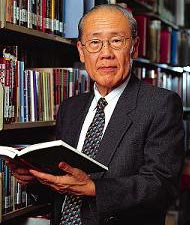 To explore these questions,
malaysiakini
recently conducted an email interview with Professor Wang Gungwu (
photo
), the director of the East Asian Institute at the National University of Singapore since 1996.
To explore these questions,
malaysiakini
recently conducted an email interview with Professor Wang Gungwu (
photo
), the director of the East Asian Institute at the National University of Singapore since 1996.
Wang, 74, obtained his first degree from the University of Malaya then located in Singapore, and his doctorate from the School of Oriental and African Studies, University of London.
He taught at the University of Malaya (in Singapore, 1957-59; in Kuala Lumpur, 1959-1968), where he was Dean of Arts (1962-63), and Professor of History (1963-68). From 1968 to 1986, he was Professor of Far Eastern History in the Research School of Pacific Studies, Australian National University. During that period, he was also Director of the Research School for five years. In 1986, he was appointed Vice-Chancellor of the University of Hong Kong, a post he held until the end of 1995.
Malaysiakini: What are the causes of the recent outbreak of widespread and sometimes violent anti-Japan sentiments and activities in mainland China and the Korean Peninsula?
Wang Gungwu: There are many Koreans and Chinese (and Japanese as well) who are alarmed by the rise of nationalist hardliners in the ruling party in Japan. They feel that conservative Japanese leaders, for all their general apologies and expressions of regrets, have never been sincerely sorry for the terrible things the Japanese military did in the war and throughout their occupation of territories around Asia during the first half of the 20th century. Matters like revising history textbooks regularly to minimise Japanese atrocities and highlighting the importance of the Yasukuni shrine provide many with a measure of the steady return to power of such groups.
In addition, 2005 is an anniversary year, the 60th since the end of World War II, that stirs memories, and the recent Japanese assertions about their claims to offshore islands are reminders that Japanese power could well be exerted again beyond the shores of their four main islands. For others, the thought of seeing Japan elevated to the UN Security Council as a permanent member was also unthinkable. Taken together, they have aroused strong feelings, and there is no reason to doubt that the expressions of such feelings would have been spontaneous.
Like it or not, there is a suggestion that the outbreak of the massive and widespread anti-Japan demonstrations in China was approved, if not engineered by the Chinese authorities to divert popular anger away from domestic problems (although there is no such suggestion in the case of South Korea). Some allegedly violent demonstrators were arrested, and the official media in China has also been calling for calm and law and order. What are your observations?
There is no evidence that the demonstrations were officially engineered. There is understandable suspicion, however, that the Chinese leaders did not try very hard to restrain the demonstrations at the beginning, being content to allow some people to let off steam. The fact that there are strong controls over demonstrations when they concern serious domestic issues may have influenced the decision not to try to stop altogether something that is relatively popular. Some of the leaders themselves may share the sentiments that were displayed.
But, whatever the reason and whoever decided on the degree of control needed, they had reason to regret the extent to which the demonstrators went and the damage that was inflicted not only on property and people in China but, more seriously, on the image of China as a responsible rising power that wants to play a peaceful role in the region. Any kind of violence in China against foreigners (whoever they may be) that goes unpunished reflects poorly on China's claims to respect law and order. When the leaders woke up to this, they spared no effort to send top diplomats and trade officials around to persuade the Chinese people that such anti-Japanese displays are not really patriotic because they are not helpful to national interests.
On the one hand, Japan demanded an apology from China for the anti-Japan demonstrations in China but China refused to accede to it; on the other hand, Japanese Prime Minister Junichiro Koizumi later expressed Japan's "deep remorse" and "heartfelt apology" to Asian countries for its past aggressions. Do you think this was a moral victory for China and the Korean Peninsula?
Nobody won. The leaders said what they had to say. Diplomats on both sides worked hard to minimise the damage while appearing to hold firm to their respective positions. But the region, all of East Asia, may have lost a little at least, lost the confidence that East Asia is moving towards real co-operation and understanding, and also the assurance the region once had hoped for, that good economic relations can overcome other sensitive concerns.
There could still be, however, one good result: it is possible that some now see how important it is for large and potentially powerful countries to have visionary leaders who tell their people about a greater truth: that is, to ensure that future generations will live in the kind of peace that all their neighbours and, ultimately, the world as a whole, would willingly share requires careful nurturing for the long haul. Violent outbursts for short-term gains are more likely to damage that cause.
China and also both North and South Korea seem to be genuinely worried about the rightward shift of Japan's domestic politics as well as signs of revival of militarism. Do you think the worry is justified or justifiable?
Probably not yet, but the likelihood is there that the actions of these three countries (if they should be seen to agree on essentials) would feed the right-wing and militarily inclined in Japan. The many Japanese who are peace-loving and have sought to move Japan away from the path to militarism are under great pressure from their nationalistic compatriots. Fear of a China that will one day be more powerful than Japan is already growing and the hawks will look for every excuse to marginalise those they consider to be doves.
I realise that it would be difficult now for Chinese leaders to curb popular Chinese feelings about Japan, ranging from deep suspicion to overt hostility, but everyone in our region would want the political leaders in both China and Japan to work out together how best to avoid making the current situation worse. It would be regrettable if the Chinese should think that they too should be as nationalistic as the South Koreans. The circumstances are not the same. Korea is a small country that had been Japan's colony and Koreans feel that they have greater justification for being unforgiving about Japanese actions in the past.
It would also be a pity if the Chinese fail to help bring about a peaceful resolution to the 'nuclear crisis' in North Korea. To help here is not a question of helping a strong United States nor of protecting a weak North Korea. It is really one of preventing decades of poisoned relations from becoming even more dangerous confrontations in the region and pushing more countries towards an arms race from which all would eventually lose.
China itself seems to premise its diplomatic activities in recent years on the assumption that a US-Japan containment and encirclement regime is going to be instituted against it in Southeast, South and Central Asia. Do you think the Chinese assumption is right?
China seems to be acting like any country with long overland and coastal borders facing all four directions would do, that is, to keenly examine its defence needs in every direction. The Chinese know from their long history that unstable overland polities had always threatened the country's borders and they will always be attentive there. For the last 150 years or so, they have also learnt the hard way that neglecting China's maritime neighbours had produced the costliest consequences ever for the country. The new enemies who came by sea via Southeast Asia virtually destroyed their ancient civilisation and the Chinese are still struggling to regain the sense of relative safety that they had once had.
No responsible Chinese leader today would want China ever to be left in that helpless and defenceless state that it was in from at least 1895 till the 1950s. My understanding is that China is building its border defences in normal ways, but has speeded up its preparations where the Straits of Taiwan is concerned because its leaders are genuinely afraid that some foreign interests are trying to prevent China's eventual reunification and are prepared to help detach Taiwan from China and make Taiwan their special dependency.
The high-profile visit of KMT chairperson Lien Chan is said to signify a historic reconciliation between the CCP and KMT. How do you read the meaning of the visit?
It certainly was an historic meeting of the leaders of two erstwhile hostile parties. To call it reconciliation may be overstating it. The fact is that, for the first time in decades, the two parties need each other. Lien Chan lost two elections and may be about to retire from the party leadership. This is a great moment for him and he has every reason to respond happily to the gestures offered by Hu Jintao. He cannot make agreements in opposition nor carry through any new policies, but the symbolic visit gives his party a chance to re-position itself as ultimately caring for Taiwan's future and bringing a better chance for peace across the straits. How it can really do so, of course, is far from clear.
Hu, on the other hand, has had to face a really tough year in 2004 when Chen Shui-bien surprised Beijing by winning the presidential elections. The strategy of inviting first Lien Chan and then James Soong is a strong reply to the many small moves that Chen has been making towards the kind of independence that would give Taiwan full membership of the community of nations. This new strategy has also been useful to counter the negative effects that China's 'Anti-secession Act' has had because of the poor timing of this unusual legislation and the inadequacy of the explanations offered when the act was allowed to be interpreted as a sign of fresh belligerency. So far, the new strategy has been handled with finesse.
Lien Chan's reaffirmation of the KMT's 'One-China' policy seems to have dealt a severe blow to the pro-independence movement in Taiwan and also downsize President Chen Shui Bien's legitimacy and credibility. How would Chen and his pro-independence supporters neutralise the impact of Lien Chan's visit and reaffirmation of the 'One-China' policy?
I am not sure how severe a blow that will be, although it may look severe now. The reality is that, under the present circumstances, most people in Taiwan prefer to keep the status quo and Lien Chan's affirmation of China's 'One-China' policy is open to question. The pro-independence leaders have tried to persuade the people to be bolder and push for independence while there is support coming from some sections of the leadership in the US and Japan, and before China becomes much stronger. But so far most people have not wanted to take what is widely seen as a dangerous step.
Chen, like Li Teng-hui before him, has often benefitted from China's miscalculations and he has shown himself to be a wily politician always quick to take advantage of any mistakes his opponents might make. This time, something more like high statesmanship may be called for. But he is probably counting on the fact that the KMT is not united and he may still hope to use James Soong's visit as a counter against the KMT mainstream. We shall have to wait and see.
The pro-independence movement in Taiwan has always been felt or perceived in China as being inspired and supported by Japan or some rightwing elements in Japan to split the unity of the Chinese people. How true is this feeling or perception? What is the basis?
The pro-independence movement is not necessarily inspired by right-wing elements in Japan, but certainly supported by such groups who are in turn further encouraged by their belief that it is not only in Japan's interest, but also in the US interest, to keep Taiwan out of China. And not just 'to split the unity of the Chinese people'.
The strategic interest in the Taiwan Straits may be a far more important factor. This was the main reason why Japan had been interested in taking Taiwan in the 19th century, in part to keep it out of the hands of other imperialist powers, and why they tried hard to win over the Taiwanese to accept their rule indefinitely. During the Cold War, all anti-communist groups sided with the KMT's Republic of China against the Chinese Communist Party in Beijing, and this has helped to build up serious doubts among most Taiwanese about being administered by the government of the People's Republic of China.
Although the CCP and KMT had moments of conflict in the past as in the 1927 bloody split in Shanghai and the 1945-1949 Civil War, there were also periods of co-operation such as during the early and mid-1920s as well as the 1937-1945 war against Japanese invasion. Do you foresee a future when the two historic and organic parties of modern China forming a two-party democratic system for a re-unified country which includes Taiwan?
This is too speculative. The conditions of the 1920s and 1936-1945 are unlikely to recur. The gap in the political systems of Taiwan and the Mainland today is very wide and it will need a lot of work before any kind of bridging can even begin to occur. I see no signs of the two systems moving towards one another in the foreseeable future.
JAMES WONG WING ON is chief analyst of Strategic Analysis Malaysia. He is a former DAP member of parliament for Kampar (1990-1995) and a former columnist for the Sin Chew Jit Poh Chinese daily (now Sin Chew Daily ). He read political science and economics at Monash University in Melbourne, Australia.


