



You could have been born a Rohingya
COMMENT | In the 1900s, my great grandfather Shahul Hamid travelled to Penang all the way from Tamil Nadu, India with his father and siblings when he was just a little boy. The decision to abandon their home in Tamil Nadu was a painful one to make, but necessary due to poverty and hardship.
When my great grandfather was growing up, his mother sold spices while his father did odd jobs to make a living for their family. They knew no one in this foreign land, but they had each other and they had faith.
In his 20s, my great grandfather who did not want to end up being an odd job worker like his father, decided to open up a stationery shop in Hutton Lane, Penang. His small shop did quite well, so much so he became known as ‘pena kaare’ which means ‘the pen man’ in his neighbourhood.
Years passed and my great grandfather got married and fathered nine children. My grandpa Othman was his eldest. As the helper in his father’s shop, one of the skills my grandpa learned was typing – this skill later became his rice bowl.
As a young man, my grandpa used to sit outside the Penang courthouse and the Oaths Commission with his typewriter. For a small fee, he’d type documents and letters in Tamil, English and Malay. In the evening and in the weekend, he accepted invitations to recite prayers for religious events and also taught youngsters to recite the holy book for a token.
After his father’s passing, my grandpa had to take care of his younger siblings. With money being tight, my grandma started selling thosai and appam from her kitchen in Halfway Road. And to make ends meet, my aunts sold ‘masala’ or pounded spices at local markets.
During the Japanese invasion in December 1941, my grandpa was at a barber shop along Transfer Road, getting his moustache trimmed. Hearing loud explosions, people were shocked and ran out to the street. Upon seeing everyone running for their lives, the barber began running with his scissors and my grandpa also ran with half a moustache on his face....
COMMENT | In the 1900s, my great grandfather Shahul Hamid travelled to Penang all the way from Tamil Nadu, India with his father and siblings when he was just a little boy. The decision to abandon their home in Tamil Nadu was a painful one to make, but necessary due to poverty and hardship.
When my great grandfather was growing up, his mother sold spices while his father did odd jobs to make a living for their family. They knew no one in this foreign land, but they had each other and they had faith.
In his 20s, my great grandfather who did not want to end up being an odd job worker like his father, decided to open up a stationery shop in Hutton Lane, Penang. His small shop did quite well, so much so he became known as ‘pena kaare’ which means ‘the pen man’ in his neighbourhood.
Years passed and my great grandfather got married and fathered nine children. My grandpa Othman was his eldest. As the helper in his father’s shop, one of the skills my grandpa learned was typing – this skill later became his rice bowl.
As a young man, my grandpa used to sit outside the Penang courthouse and the Oaths Commission with his typewriter. For a small fee, he’d type documents and letters in Tamil, English and Malay. In the evening and in the weekend, he accepted invitations to recite prayers for religious events and also taught youngsters to recite the holy book for a token.
After his father’s passing, my grandpa had to take care of his younger siblings. With money being tight, my grandma started selling thosai and appam from her kitchen in Halfway Road. And to make ends meet, my aunts sold ‘masala’ or pounded spices at local markets.
During the Japanese invasion in December 1941, my grandpa was at a barber shop along Transfer Road, getting his moustache trimmed. Hearing loud explosions, people were shocked and ran out to the street. Upon seeing everyone running for their lives, the barber began running with his scissors and my grandpa also ran with half a moustache on his face.
Throughout the Japanese occupation, grandpa and his family had to live in a hideout and were only able to eat tapioca for weeks. Even when they returned home later on, food was always scarce and they had to get used to sleeping with hungry tummies. However, they persevered and survived to watch the British’ return to Malaya.
A few years before independence, my mother was born. She was the third child to my grandpa after a disabled daughter, and a son who passed away in the cradle due to sickness. My mother was the first in the family to go to school. That was where she found her first love – books. Sadly, poverty did not allow her to pursue her dreams as she was forcefully taken off school at a tender age of twelve.
At sixteen, my mother, who was still in love with books, was married off to my father who was ten years her senior. However, luck was on her side as her matrimony rescued her from a life of poverty like those of the others in the family. Not only was my mother given the education she so much yearned for, she also learned a lifestyle she was never accustomed to since birth.
And three years later, I was born.
Similar histories
I often wonder what life would have been for me had my great grandfather decided to stay on in Tamil Nadu, India; or if my grandfather was somehow or for some reason forced to return to India with his family; or even worse, what if something bad had happened to him during the Japanese Occupation.
Although I could never find answers to those questions, I remain thankful for being blessed to be able to call this country my home.
Today when I look at the Rohingya on the streets of Malaysia, I am reminded of my ancestors who once upon a time roamed the streets of Penang. While the Rohingya fled their home fearing for their safety, my ancestors fled ours fearing poverty. Both were destined to find hope in this country.
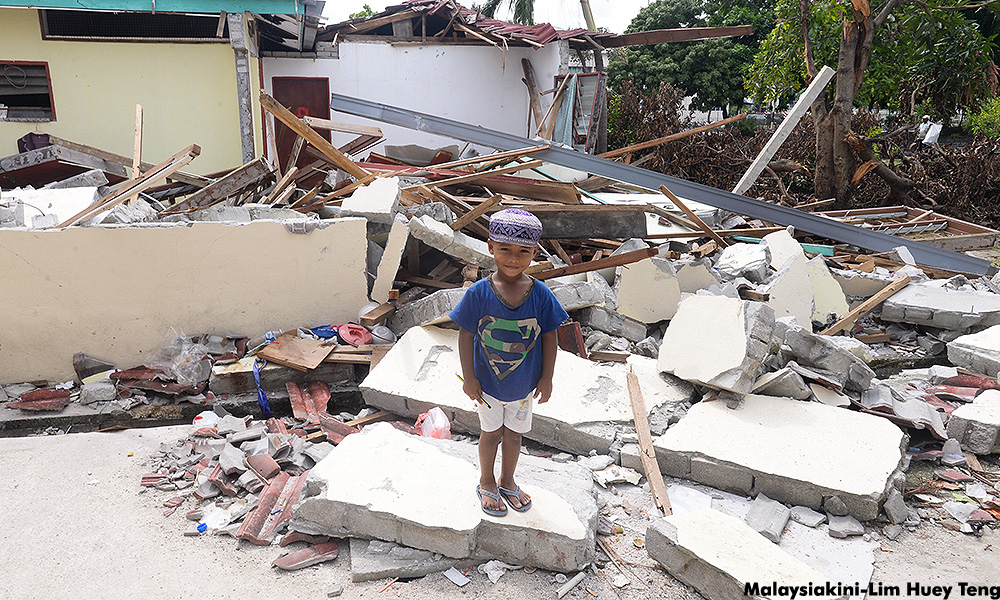
I have met many Rohingya children in the course of my work; I have visited their schools made out of wrecked, old, abandoned buildings; I have been in their little homes which are shared with many others; I have joined them for their daily instant noodle meal; and I have seen their faces when they talk about their past and their future – and I realise that their present is no different from my past.
The majority of Malaysians are no different from the Rohingya. Like my ancestors, your ancestors too came from elsewhere with hope for a better future. They struggled and fought to build everything we so proudly claim is ours today.
Lucky for them, people back in those days accepted our ancestors with open arms and allowed them to build a home in this country – unlike many today, who are despicable enough to deny the Rohingya rights to show their frustrations towards those who slit the throats of their children, rape their women and burn their homes.
How bloody cruel we have become!
What goes around...
Today we have become a nation that sits comfortably in our air-conditioned car while listening to music and sipping our franchised iced latte, yet call for the Rohingya to be chased out, or worse, shot dead, for protesting in the middle of the road and causing traffic jams.
We demand they respect our laws for tarnishing our Independence Day eve with unlawful street protests, when we ourselves don’t even give a hoot about our Independence Day – many of us do not even bother to raise our flag during the auspicious day, yet have the nerve to criticise others for ‘disrespecting’ the commemoration.
Armed with citizenship, we’ve declared ourselves masters as we look down on the stateless ones in a revolting manner. We have become inhumane and cruel.
Reminiscing the past and the present, I understand now why we are where we are. Perhaps the reason we Malaysians struggle with our fundamental rights and liberties that have been snatched away in our own country today, is because we deserve it.
As long as we are capable of forgetting our past and treating a fellow human beings with so much hate, we deserve to sink deeper.
FA ABDUL is a passionate storyteller, a growing media trainer, an aspiring playwright, a regular director, a struggling producer, a self-acclaimed photographer, an expert Facebooker, a lazy blogger, a part-time queen and a full-time vainpot.
The views expressed here are those of the author/contributor and do not necessarily represent the views of Malaysiakini.


Are you sure you want to delete this comment?
This action cannot be undone.