



Why abstaining from voting in GE14 is not an option
Young people are not voting.
When he walks out of the graduation hall, he finds a pile of student loan debt papers waiting for him. So he takes up his laptop and sends out 70 applications for jobs, to which eight reply with an invitation for an interview. Luckily, he receives two offers, but the pay is barely sufficient for even the most modest lifestyle. He accepts one anyway.
He eats only one full meal a day, like in his college days. No money for a car or house, he lives from hand to mouth. After a few years, he still can’t afford to start a family. Irate, he reads the news to see if anyone is interested in solving his predicaments. No one. Politicians are just fighting among themselves.
Then one day he is asked whether he will vote. He stares in disbelief and mutters: No.
I understand this. But in this article, I will attempt to refute the three broad arguments for voting abstention: abstention as a form of protest; all candidates are horrible; and voting makes no difference. The problem with the main arguments for abstention is that they do not achieve their desired aims.
1. Abstention as a form of protest
First, abstention as a form of protest. The underlying justification here is that since there is thorough dissatisfaction with all the candidates on offer, abstaining from voting would translate that dissatisfaction into a protest.
As a result, the protest will encourage politics to clean itself of the mess, offer better candidates, and then the disgruntled voters will start voting again.
However, the assumption behind this argument deserves reconsideration. The argument assumes that abstention does register as a form of protest and that the protest is visible to those in power.
This view is misguided, because the ones who abstain from voting as a form of protest cannot be differentiated from those who have other reasons for not voting.
In other words, people who choose not to vote as a form of protest are mixed into a bundle of non-voters with other reasons, such as voters who choose not to vote because they are lazy, forgetful, out of touch, apathetic, indifferent, and many more.
Our voting system does not have a “none of the above” option on the ballot paper, and thus abstention will not send out a message of protest.
In comparison, a street protest is effective because its message is clearer and its strength lies in its mass physical presence, which voting abstention lacks. Abstention is ineffective; it does not achieve the aim it desires.
Furthermore, the party that wins the election will govern as though the ones who abstained were non-existent. The system will carry on without them.
Abstention will not reduce the legitimacy of the winning party since the winning party will always base their legitimacy on those who voted for them, and not those who abstained.
Abstention as protest is futile.
Young people are not voting.
When he walks out of the graduation hall, he finds a pile of student loan debt papers waiting for him. So he takes up his laptop and sends out 70 applications for jobs, to which eight reply with an invitation for an interview. Luckily, he receives two offers, but the pay is barely sufficient for even the most modest lifestyle. He accepts one anyway.
He eats only one full meal a day, like in his college days. No money for a car or house, he lives from hand to mouth. After a few years, he still can’t afford to start a family. Irate, he reads the news to see if anyone is interested in solving his predicaments. No one. Politicians are just fighting among themselves.
Then one day he is asked whether he will vote. He stares in disbelief and mutters: No.
I understand this. But in this article, I will attempt to refute the three broad arguments for voting abstention: abstention as a form of protest; all candidates are horrible; and voting makes no difference. The problem with the main arguments for abstention is that they do not achieve their desired aims.
1. Abstention as a form of protest
First, abstention as a form of protest. The underlying justification here is that since there is thorough dissatisfaction with all the candidates on offer, abstaining from voting would translate that dissatisfaction into a protest.
As a result, the protest will encourage politics to clean itself of the mess, offer better candidates, and then the disgruntled voters will start voting again.
However, the assumption behind this argument deserves reconsideration. The argument assumes that abstention does register as a form of protest and that the protest is visible to those in power.
This view is misguided, because the ones who abstain from voting as a form of protest cannot be differentiated from those who have other reasons for not voting.
In other words, people who choose not to vote as a form of protest are mixed into a bundle of non-voters with other reasons, such as voters who choose not to vote because they are lazy, forgetful, out of touch, apathetic, indifferent, and many more.
Our voting system does not have a “none of the above” option on the ballot paper, and thus abstention will not send out a message of protest.
In comparison, a street protest is effective because its message is clearer and its strength lies in its mass physical presence, which voting abstention lacks. Abstention is ineffective; it does not achieve the aim it desires.
Furthermore, the party that wins the election will govern as though the ones who abstained were non-existent. The system will carry on without them.
Abstention will not reduce the legitimacy of the winning party since the winning party will always base their legitimacy on those who voted for them, and not those who abstained.
Abstention as protest is futile.
2. No one deserves my vote
Second, the argument that abstaining from voting is justified because neither side deserves my vote. It follows that since all candidates offered to me are equally horrible and they do not accord with my idealism, I will choose not to vote.
There are two counter-arguments that are worth deliberating here. One, to have a candidate or political party that accords with your idealism is a near impossibility. The choice of who to vote for is not to find a candidate or party that accords with your idealism perfectly and entirely, but simply the one who is closest to your idealism.
I vote for Party X not because they are a replica or reflection of my ideology and ideals, but simply because I am making an active choice as to who I can trust to make progress, however small.
It is reckless, as a voter, to choose to abstain from voting when you do not agree with a few things proposed by a candidate or party. While it is laudable that a high standard is imposed on our politicians, we must also infuse a sense of realism into our rational calculus as a voter.
Two, to suggest that all politicians from all sides are equally horrible is to fail to be careful in our observations. On this front, it is normally suggested that politicians from Barisan Nasional and Pakatan Harapan are equally corrupt and equally racist.
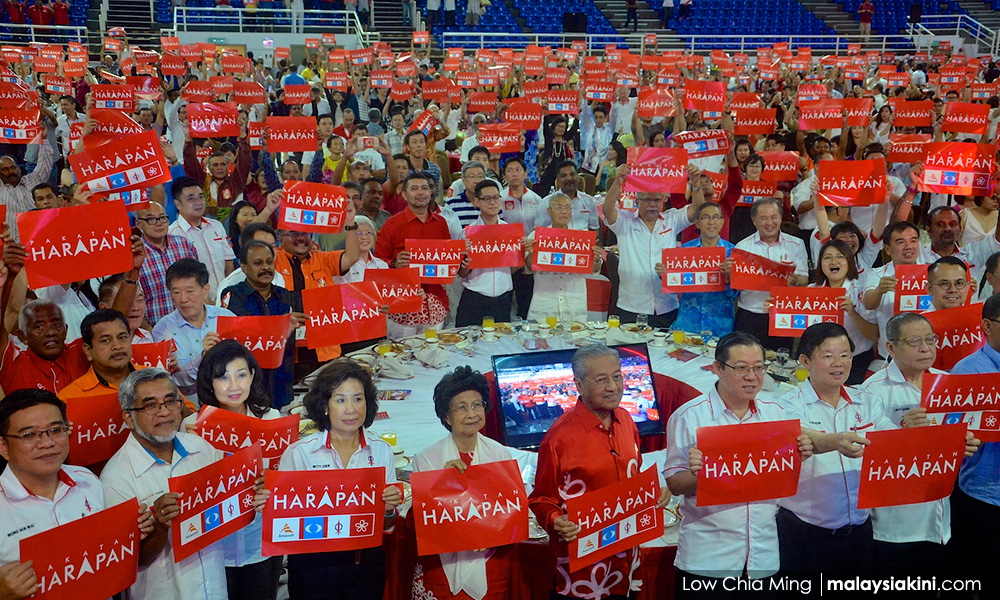
We must be more astute in making such suggestions, because surely there are differences between the mere discovery of corruption, and a systemic and entrenched culture of corruption.
Of course, none of this is to regard corruption as any less detestable than what it is when trust of the people is betrayed. But further questions must be asked: how rampant is corruption in this party, and if it is, how is it dealt with?
Democracy opens its door to everyone to join politics, and this includes opportunistic crooks who are only interested in power and money.
The tragedy is that they exist in every political party like they exist in every community or organisation across the country. It is always a question about the extent of corruption and the methods of minimising it. The presence of imperfection shouldn’t justify voting abstention.
A sense of history must also be had. Once again, while it is laudable that we envision a country that is free of the shackles of racial identity and everyone being treated fairly for the content of their character, the consequence of history cannot be ignored.
It would be unrealistic to erase the effects of racial politics in Malaysia within a few years. Racial identity has been manufactured and given credence through effective rhetoric and ensconced policies over many generations.
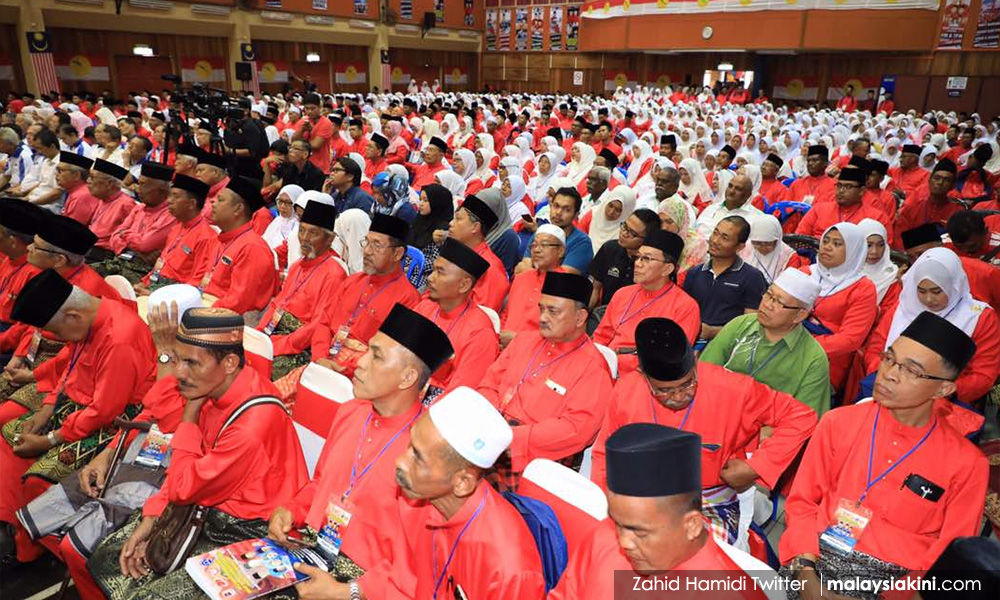
Even the most progressive politician would have to recognise this reality and offer accommodative solutions, instead of immediately radical ones. Small progress that is accepted by the masses is more desirable than huge progress that is rejected outright. The key is to move the ball forward.
Just because you were born less than 30 years ago doesn’t mean that the country has only started less than 30 years ago. History matters in deciding what kind of politics is best for progress. Abstention from voting because “all politicians are equally horrible” spells short-sightedness.
3. Voting makes no difference
Third, the argument that abstention is justified because voting makes no difference. The logic follows that one vote will not alter the fate of the nation, and thus abstention is justified.
This is not true. Every single vote matters, especially in marginal seats. A seat that is won by an incumbent by less than 1,000 votes would be determined decisively by vote or abstention.
Indeed, the decision to vote or abstain always makes a difference. The assumption that an abstention is neutral - that the abstention will have an equal effect on distributing the power 50-50 to two competing candidates - has been disproven by many political scientists. In fact, much academic research has shown that low voter turnout entrenches the incumbents.
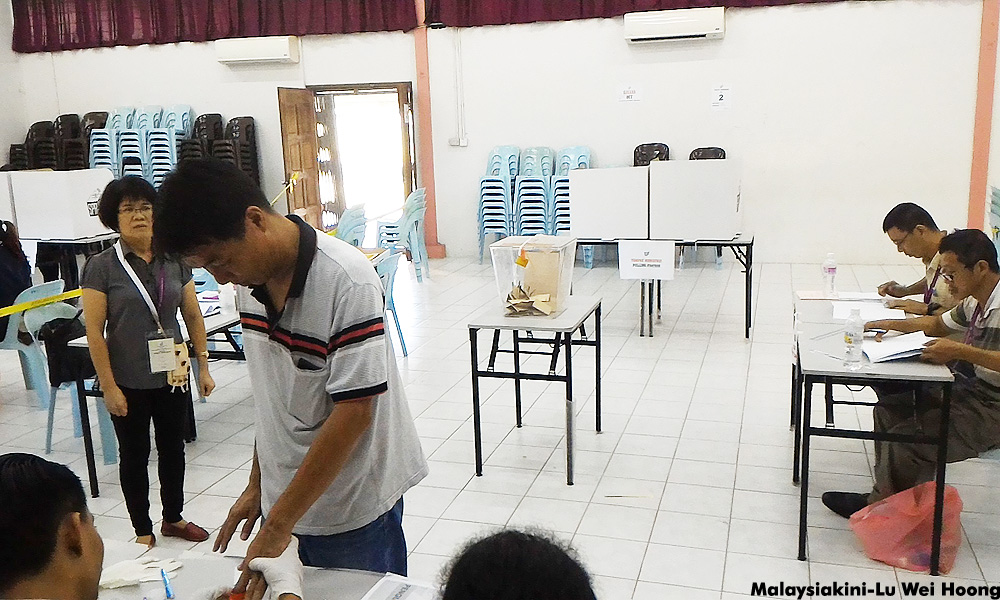
What this means is that even the choice of choosing not to vote has indirectly placed more advantage on the incumbents. Voting and abstention make a difference.
Moreover, it must be reasserted here that democracy is not a spectator sport - it requires everyone’s participation. If we have agreed to live under a common system of democracy, then we cannot only take the good parts of enunciating the notions of people’s powers and not accept its difficult and heavy parts of participation.
The cost of voting is small - all you need is an ear for what is going on from the news, consider individually or as a group, and take a short trip to the polling booth on voting day and vote for the candidate of your choice.
This is our investment as citizens in a collective. Even if progress is not guaranteed upon our voting, the cost we pay for voting is still practically small. It is not too much to ask.
Conclusion
Personally, I choose to vote because I am wholly dissatisfied with systemic corruption accumulated from the past: corruption of money, corruption of values, corruption of the past and future. Uprooting this seems possible only from the outside.
While I certainly do not think the candidates I vote for are the best people for the job, I believe change represents an opportunity for moving in the right direction. And it is that opportunity that my optimism and civic duty appeal to.
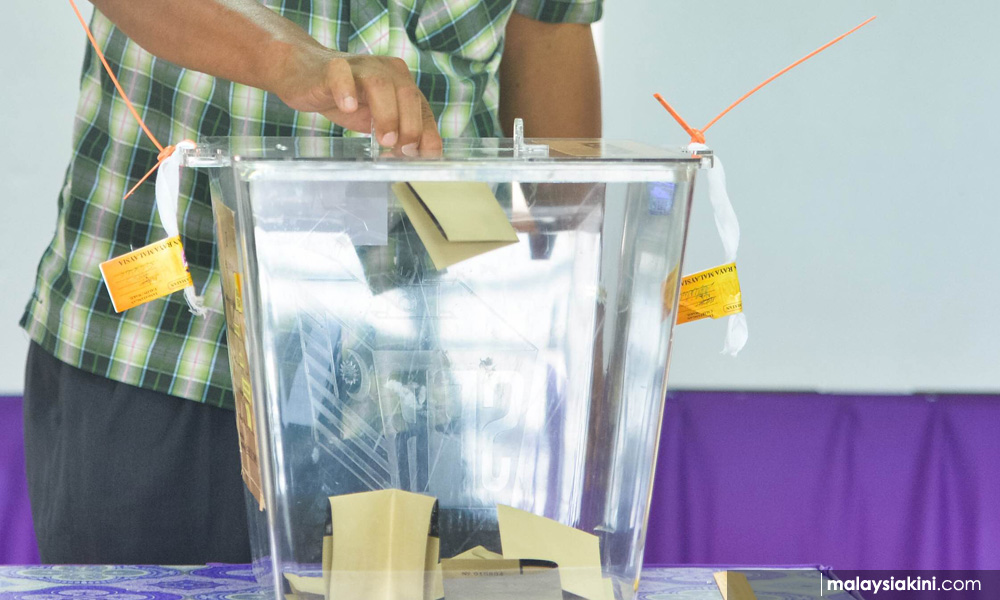
Abstention does not achieve the aims it desires. So young people should vote.
JAMES CHAI works at a law firm. His voyage in life is made less lonely with a family of deep love, friends of good humour and teachers of selfless givings. This affirms his conviction in the common goodness of people: the better angels of our nature. He tweets at @JamesJSChai.
The views expressed here are those of the author/contributor and do not necessarily represent the views of Malaysiakini.


