



We need more women in positions of power
COMMENT | Last Sunday, Prime Minister Najib Abdul Razak pointed out that the success and effectiveness of a political leader depended on the role played by his wife.
"If a wife becomes a true friend, be able to make him happy and understand his duties, heart and mind, than I am confident that every BN elected representative will be more successful,” Najib said at a banquet and closing of a programme with the Wives of Barisan Nasional Elected Representatives in Bandar Hilir, Malacca.
While Najib may be referring to the wives of BN lawmakers and advising them, the same is true for all politicians.
It is understandable for many to react negatively at everything a prime minister who is perceived as unpopular has said or done, but we must also be fair. If what he said makes sense, then it’s only right and proper that we say as much.
But I’m not focusing on wives of politicians here. Since the subject of women was brought up, let’s take a good look at our women politicians.
It must be acknowledged that there is a greater percentage of men being elected as legislators and women are under-represented in the political arena in many countries. So it is in Malaysia as well.
But that is slowly changing. Several political parties are now ready to field 30 percent female candidates in the 14th general election (GE14), an indication of the important role and effectiveness of women in politics.
I am of the opinion that there are many Malaysian female politicians, both past and present, who have done the nation proud.
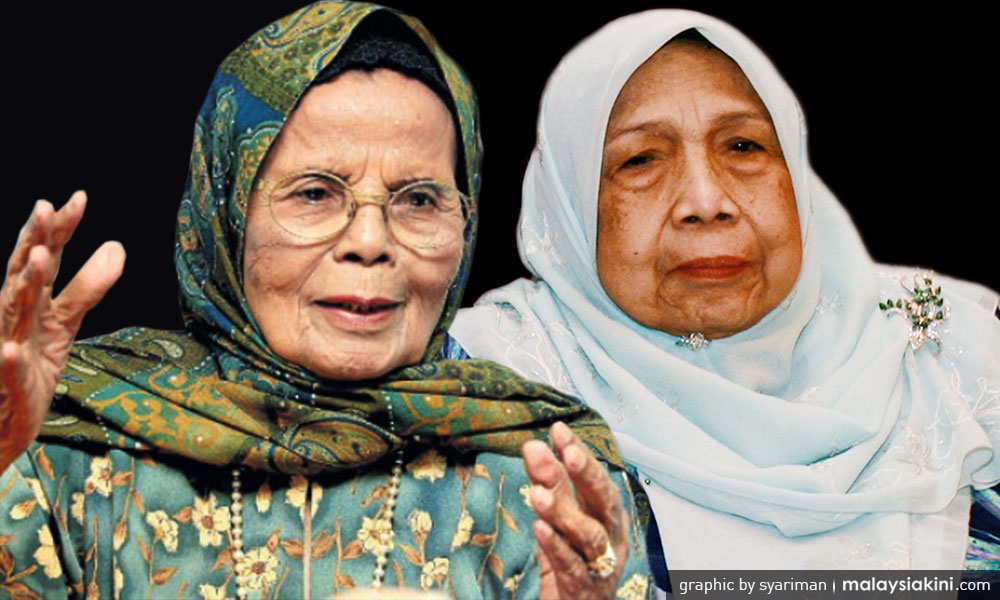
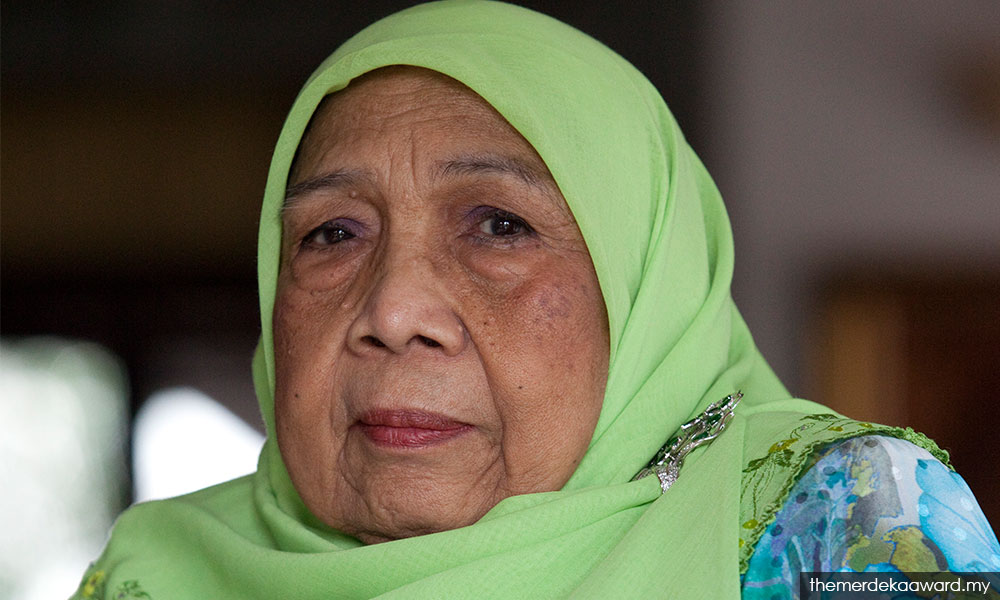
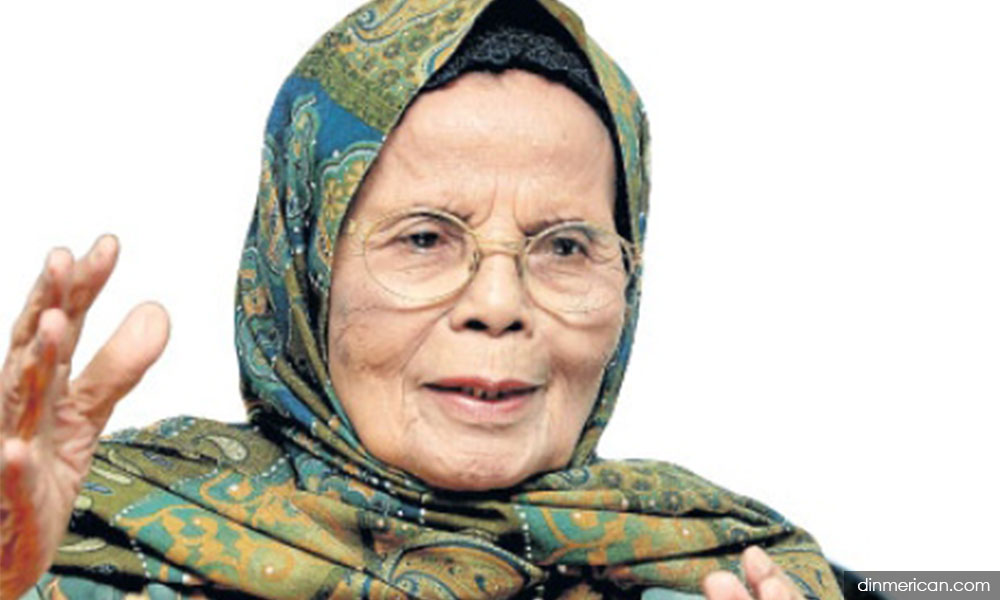
Our first woman minister, Fatimah Hashim (photo), was a much-loved figure not only within Umno, but the whole nation.
She was followed by Aishah Ghani, arguably the most effective welfare minister ever, implementing meaningful policies targeted at the hardcore rural poor while not forgetting the needs of the downtrodden in the cities. She also encouraged girls to reach for the highest level academically.
For these first two Malay women leaders, greed, wealth and power were never in their vocabulary. All they desired was to be of service to the nation and people.
Even in their time, we did not see such traits among their male counterparts, whose lust for power was already obvious.
I doubt I’d be way off in saying that no prominent woman politician was involved in the May 13, 1969, racial riots, one of the darkest chapters in our nation’s history.
I see a semblance of Fatimah Hashim and Aishah Ghani in Sarawak’s Ajibah Abol and Sabah’s Rahimah Stephens. They were caring and humble women, and when given the opportunity to help look after the welfare of the people in their respective states, they did so with love and affection...
COMMENT | Last Sunday, Prime Minister Najib Abdul Razak pointed out that the success and effectiveness of a political leader depended on the role played by his wife.
"If a wife becomes a true friend, be able to make him happy and understand his duties, heart and mind, than I am confident that every BN elected representative will be more successful,” Najib said at a banquet and closing of a programme with the Wives of Barisan Nasional Elected Representatives in Bandar Hilir, Malacca.
While Najib may be referring to the wives of BN lawmakers and advising them, the same is true for all politicians.
It is understandable for many to react negatively at everything a prime minister who is perceived as unpopular has said or done, but we must also be fair. If what he said makes sense, then it’s only right and proper that we say as much.
But I’m not focusing on wives of politicians here. Since the subject of women was brought up, let’s take a good look at our women politicians.
It must be acknowledged that there is a greater percentage of men being elected as legislators and women are under-represented in the political arena in many countries. So it is in Malaysia as well.
But that is slowly changing. Several political parties are now ready to field 30 percent female candidates in the 14th general election (GE14), an indication of the important role and effectiveness of women in politics.
I am of the opinion that there are many Malaysian female politicians, both past and present, who have done the nation proud.
Our first woman minister, Fatimah Hashim (photo), was a much-loved figure not only within Umno, but the whole nation.
She was followed by Aishah Ghani, arguably the most effective welfare minister ever, implementing meaningful policies targeted at the hardcore rural poor while not forgetting the needs of the downtrodden in the cities. She also encouraged girls to reach for the highest level academically.
For these first two Malay women leaders, greed, wealth and power were never in their vocabulary. All they desired was to be of service to the nation and people.
Even in their time, we did not see such traits among their male counterparts, whose lust for power was already obvious.
I doubt I’d be way off in saying that no prominent woman politician was involved in the May 13, 1969, racial riots, one of the darkest chapters in our nation’s history.
I see a semblance of Fatimah Hashim and Aishah Ghani in Sarawak’s Ajibah Abol and Sabah’s Rahimah Stephens. They were caring and humble women, and when given the opportunity to help look after the welfare of the people in their respective states, they did so with love and affection.
Asia’s Iron Lady
After Aishah Ghani came Rafidah Aziz (photo), a Malaysian woman minister noted for her presence on the world stage. She was a respected figure internationally while serving as international trade and industry minister.
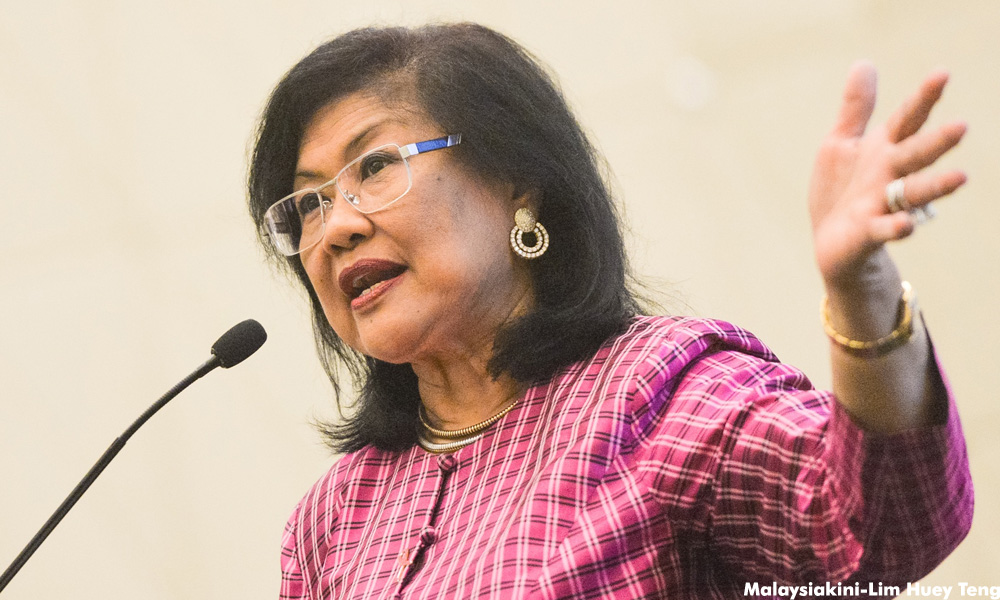
Rafidah had also been called Asia’s Iron Lady for her vigour and strength of character, not forgetting her spitfire tongue.
Somehow, I think that Malaysians have forgiven Rafidah for her alleged involvement in the AP (approved permits) controversy. At least, that has not been raised again since she left the political scene.
However, the “cow and condo” scandal allegedly involving a certain Umno minister tainted, for a time, the glorious past and good name of the party’s female leaders. Let’s hope the scandal remains an isolated case.
Although outshone by Umno women, MCA’s Rosemary Chow and Teng Gaik Kwan had been no less effective in speaking up for the Chinese community, particularly on education, during their time in the cabinet. However, many had few kind words for Ng Yen Yen for some reason.
On the opposition side, Hannah Yeoh, Nurul Izzah Anwar, Fuziah Salleh, Teresa Kok, Teo Nie Ching and Kasthuri Patto are among the more prominent women politicians. They have been effective and responsible legislators and should go far in their political careers.
Harapan’s recognition of women
Lest we forget, a woman is also the current opposition leader in Parliament. That Lim Kit Siang gave way to Dr Wan Azizah Wan Ismail (photo) to lead is perhaps an indication of Pakatan Harapan’s recognition of the role of women in politics.
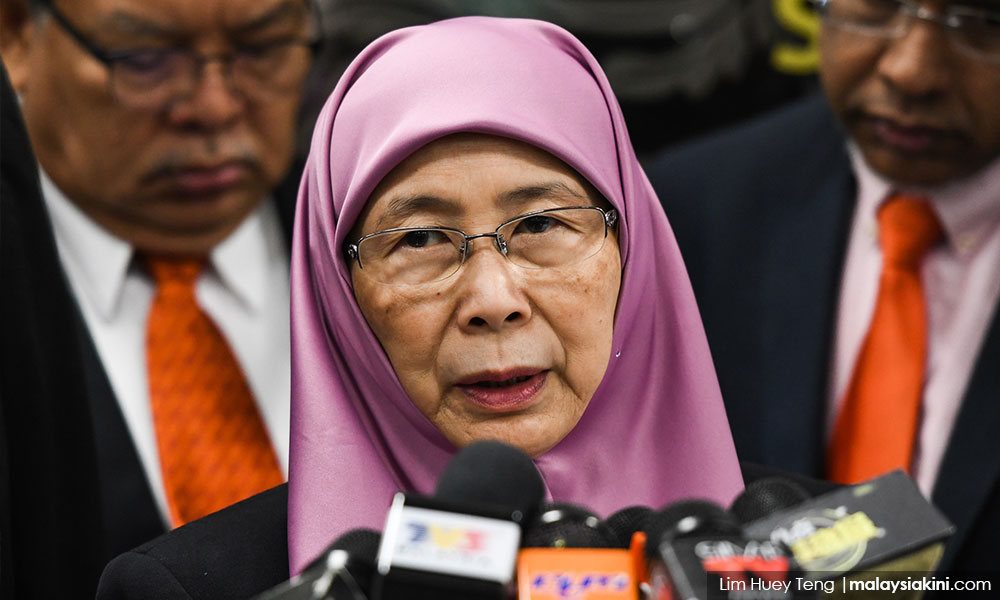
From the admittedly small selection of women politicians we’ve had in our history, they also seem more prepared to stand down after serving their country.
Their male counterparts, on the other hand, seem to insist on staying in power, even on their death bed. We have had sick and terminally-ill politicians still insisting on becoming candidates. Just count how many elected representatives had passed on and how many by-elections we’ve had in recent years.
None of those who died in office were women.
A good example of a woman politician willing to give up a safe seat for a party colleague is DAP’s Fong Po Kuan, the former Batu Gajah MP.
At the age of just 39, she retired after two terms in Parliament. Fong (photo), also known by her moniker “Cili Padi” for her vociferous debates in the august House, stepped down just before GE13, when things were going great for her.
Perhaps, Fong was able to think more rationally because she is a woman.
Perhaps, she was able to act less selfishly because she is a woman. Perhaps, Fong was able to let go of power and public status more easily because she is a woman. Perhaps, she was able to think that there is more to life than politics because she is a woman. I’d like to believe so.
Women seem to be more pragmatic, sensible and responsible. And because I can’t think of any male politician, from either BN or Harapan, who has voluntarily stepped down in recent years in his prime.
Gender differences are endlessly fascinating and insightful, but declaring one group better than the other at something should often be delivered with a certain degree of caution. And I believe I have been respectfully cautious.
I apologise to my fellow men in speaking up for the opposite sex in politics. But we have to give it to the women – from the small sample size we’ve seen so far, they do seem make better politicians than us men.
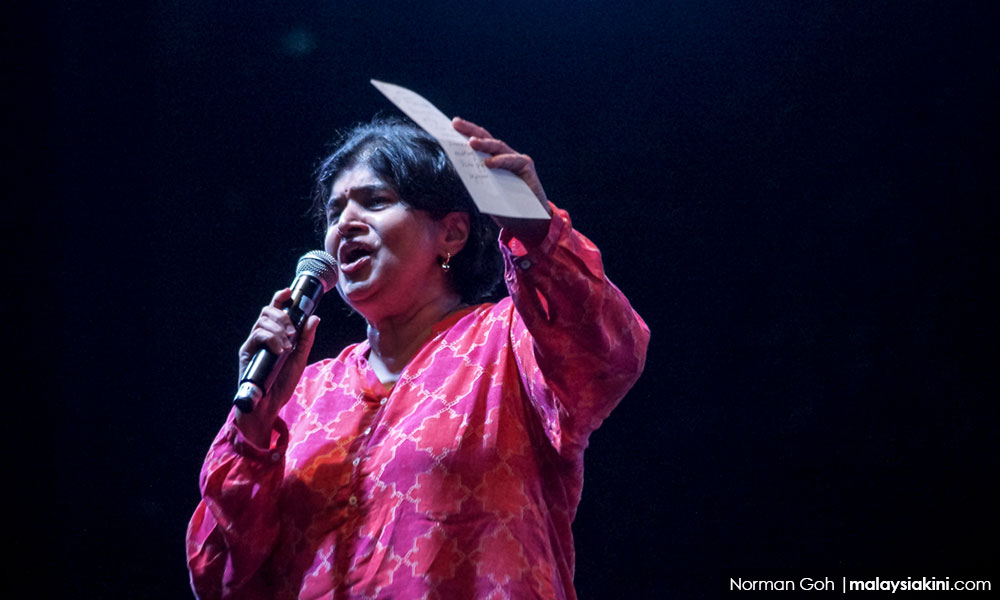
After all, how many would disagree with me if I say that former Bar Council chairperson Ambiga Sreenevasan (photo) - were she to enter politics – would make a better prime minister than Najib Abdul Razak?
I’m prepared to take my chances.
FRANCIS PAUL SIAH heads the Movement for Change, Sarawak (MoCS) and can be reached at sirsiah@gmail.com
The views expressed here are those of the author/contributor and do not necessarily represent the views of Malaysiakini.


Are you sure you want to delete this comment?
This action cannot be undone.