




Dr M's harkening to Japanese times redounds with biting irony
COMMENT | In late January 1989, there was a by-election for the newly created Ampang Jaya parliamentary seat in Selangor. It was forced by the resignation of the MCA incumbent Lim Ann Koon.
The resignation provided an opportunity for the opposition, led by Tengku Razaleigh Hamzah's newly formed Semangat 46, to test its popularity against the ruling BN.
Ku Li (photo), as he was popularly called, did not join Umno Baru which Umno president and Prime Minister Dr Mahathir Mohamad formed after Umno was declared illegal by the courts following a disputed party poll in April 1987 in which the Kelantan aristocrat narrowly lost to Dr M.

A concatenation of events was triggered by that underwhelming victory.
Its focal points were the detention of over 100 political and social activists under the Internal Security Act (ISA) in October 1987; the sacking and subsequent impeachment of the head of the judiciary Salleh Abas in May 1988; the successful protest candidature of Shahrir Samad - now unrecognisable as a former Umno rebel - for the parliamentary seat of Johor Bahru in August 1988; an Umno victory in a state by-election in Johor just after Shahrir's BN-subverting one.
All these events conspired to render the Ampang Jaya by-election of early 1989 a make-or-break affair for the opposition.
It was then that Tunku Abdul Rahman, feeble and ailing in his 86th year - in an interview with the Asian Wall Street Journal, he quipped that what was keeping him alive was his fight against “that doctor” (meaning Dr M) “and this” (a glass he raised - current religious sensitivities preclude revealing its contents) - weighed into the campaign debate by saying that the times were akin to the fear felt by people during the Japanese Occupation.
The Tunku's equation of the times, circa the late 1980s, under Mahathir with the Japanese Occupation touched off an impassioned debate.
Several were the voices that claimed the Tunku had gone overboard with the comparison, a view countered by others who argued that with the large number of ISA detentions and the extirpation of the top judge in the country, the times were indeed fraught with peril. Ditto, the Japanese Occupation.
Now Mahathir, current leader of the opposition, has compared present times under Prime Minister Najib Razak to the dread felt by people under the Japanese Occupation.
This comparison is bound to spark a round of debate, with the government's most prominent apologist, Salleh Said Keruak (photo), certain to weigh in.

His penchant for targeting Mahathir with the slings and arrows the latter had deployed against his adversaries during his long premiership is certain to be paraded.
Observers may well muse that the price for Mahathir of living a long life is the discovery that it is circular, not linear: What goes round does indeed come round.
The Tunku's use of the Japanese Occupation analogy to describe the times in Malaysia, circa the late 1980s, under Mahathir is now employed...
COMMENT | In late January 1989, there was a by-election for the newly created Ampang Jaya parliamentary seat in Selangor. It was forced by the resignation of the MCA incumbent Lim Ann Koon.
The resignation provided an opportunity for the opposition, led by Tengku Razaleigh Hamzah's newly formed Semangat 46, to test its popularity against the ruling BN.
Ku Li (photo), as he was popularly called, did not join Umno Baru which Umno president and Prime Minister Dr Mahathir Mohamad formed after Umno was declared illegal by the courts following a disputed party poll in April 1987 in which the Kelantan aristocrat narrowly lost to Dr M.
A concatenation of events was triggered by that underwhelming victory.
Its focal points were the detention of over 100 political and social activists under the Internal Security Act (ISA) in October 1987; the sacking and subsequent impeachment of the head of the judiciary Salleh Abas in May 1988; the successful protest candidature of Shahrir Samad - now unrecognisable as a former Umno rebel - for the parliamentary seat of Johor Bahru in August 1988; an Umno victory in a state by-election in Johor just after Shahrir's BN-subverting one.
All these events conspired to render the Ampang Jaya by-election of early 1989 a make-or-break affair for the opposition.
It was then that Tunku Abdul Rahman, feeble and ailing in his 86th year - in an interview with the Asian Wall Street Journal, he quipped that what was keeping him alive was his fight against “that doctor” (meaning Dr M) “and this” (a glass he raised - current religious sensitivities preclude revealing its contents) - weighed into the campaign debate by saying that the times were akin to the fear felt by people during the Japanese Occupation.
The Tunku's equation of the times, circa the late 1980s, under Mahathir with the Japanese Occupation touched off an impassioned debate.
Several were the voices that claimed the Tunku had gone overboard with the comparison, a view countered by others who argued that with the large number of ISA detentions and the extirpation of the top judge in the country, the times were indeed fraught with peril. Ditto, the Japanese Occupation.
Now Mahathir, current leader of the opposition, has compared current times under Prime Minister Najib Razak to the dread felt by people under the Japanese Occupation.
This comparison is bound to spark a round of debate, with the government's most prominent apologist, Salleh Said Keruak (photo), certain to weigh in.
His penchant for targeting Mahathir with the slings and arrows the latter had deployed against his adversaries during his long premiership is certain to be paraded.
Observers may well muse that the price for Mahathir of living a long life is the discovery that it is circular, not linear: What goes round does indeed come round.
The Tunku's use of the Japanese Occupation analogy to describe the times in Malaysia, circa the late 1980s, under Mahathir is now employed by the latter to describe present times in the country under Najib.
Hyperbolic exaggeration
To be sure, hyperbolic exaggeration is par for the course during intense political contests where the stakes, in Najib's case at least, are high. The PM may lose his personal liberty should he lose GE14.
But resorting to this device clouds more than clarifies the historical context, and that hinders rather than helps voters assess their choice.
It also commits the fallacy of presentism, which is the attempt to evaluate current times against conditions that obtained in a different era.
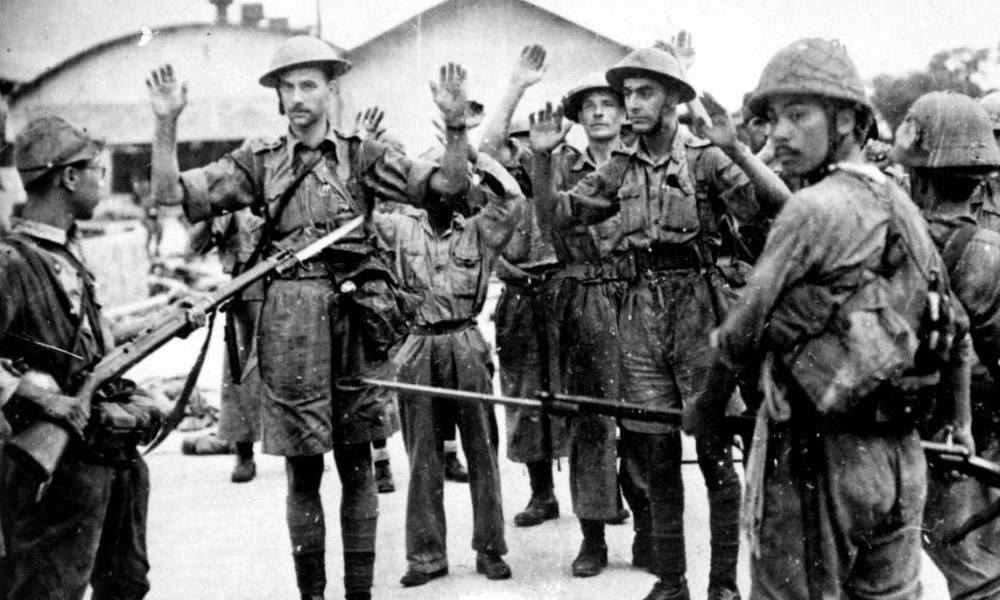
The Japanese Occupation occurred when the world was engulfed in war, and on that count alone, cannot be useful in assessing current times.
But the stakes are indeed high for Malaysians in GE14. There is plausible basis to believe that the prime minister has taken RM2.6 billion from the public kitty.
Najib has denied wrongdoing but in matters like this he has to be, like Caesar's wife, above suspicion. He is not and that is the festering problem.
We need not resort to the Japanese Occupation for perspective on current times in Malaysia.
We just need to look at the situation in South Africa. President Jacob Zuma has long been suspected to be corrupt and unbecoming of the office he holds.

His party, African National Congress, after a long deliberative evaluation of his conduct, has finally decided to ask Zuma (photo) to step down.
Zuma has accepted the decision which should spare the country trauma it can ill afford.
What is the situation in Malaysia?
Umno has abdicated its responsibility to step in and rescue the country from its suppurating wound of a PM who is not like Caesar's wife - above board.
Mahathir has had to step in to leave Umno and lead not only another party, but a coalition of his previous adversaries, in a campaign that may well turn out to be hugely salvific not only for the country but also for himself who has hitherto done much wrong.
History sometimes affords individuals on occasion to reclaim their legacy and have it defined not by their lapses and failures but by their accomplishments and valour.
The current times in Malaysia appear to be such a moment.
TERENCE NETTO has been a journalist for more than four decades. A sobering discovery has been that those who protest the loudest tend to replicate the faults they revile in others.
The views expressed here are those of the author/contributor and do not necessarily represent the views of Malaysiakini.


