


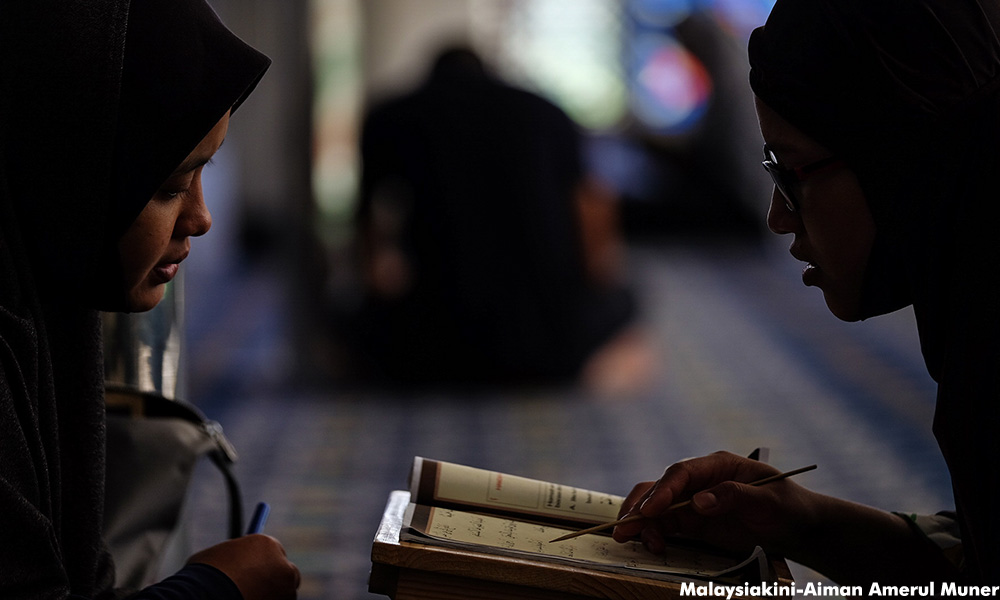

Why Muslim women in M’sia need to tell their stories
COMMENT | When women all over the world start telling their truths, people everywhere get a reality check.
The most recent examples of this are the #MeToo and #MosqueMeToo campaigns that resonated with women all over the world, because fighting the patriarchy has always been a global struggle.
What's often lacking in our conversations on women's issues is the perspective of actual, living, and breathing women.
I was not surprised that men were so shocked to hear how rampant sexual harassment and assault are for women. They even accuse us of lying, making up stories, and for Muslim women, we are often accused of deliberately trying to "make Islam look bad" in the eyes of non-Muslims.
Isn't it odd that almost every woman I know has experienced some kind of sexual violence, but most men say they don't know any man around them capable of violence against women?
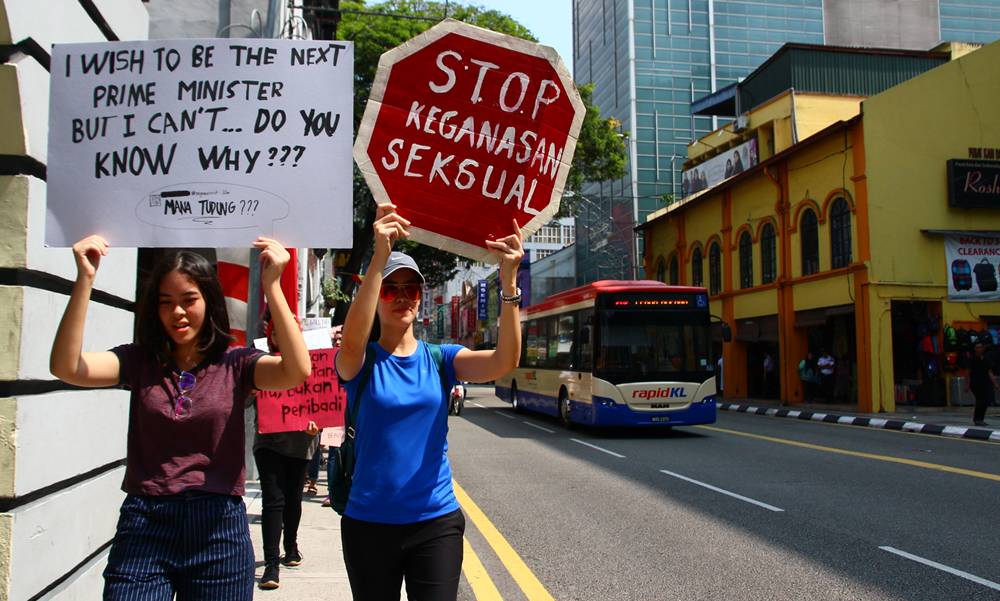
It's almost as if men and women live in completely different worlds, and they have zero idea what being a woman is really like. Because they never needed to know. The oppression(s) we face every day is not something that affects them in any substantial manner.
When it is something you don't have to think about, that's privilege. Boy, how much do we wish we don't have to think about avoiding sexual harassment, online gender-based violence, worrying about getting our message across without men “mansplaining” to us things we already know - how we wish!
Silencing voices
Every time women come out to tell their stories, there will be men coming in abundance to "correct" our own experiences, to be told from the perspective of those who have never been a woman...
COMMENT | When women all over the world start telling their truths, people everywhere get a reality check.
The most recent examples of this are the #MeToo and #MosqueMeToo campaigns that resonated with women all over the world, because fighting the patriarchy has always been a global struggle.
What's often lacking in our conversations on women's issues is the perspective of actual, living, and breathing women.
I was not surprised that men were so shocked to hear how rampant sexual harassment and assault are for women. They even accuse us of lying, making up stories, and for Muslim women, we are often accused of deliberately trying to "make Islam look bad" in the eyes of non-Muslims.
Isn't it odd that almost every woman I know has experienced some kind of sexual violence, but most men say they don't know any man around them capable of violence against women?
It's almost as if men and women live in completely different worlds, and they have zero idea what being a woman is really like. Because they never needed to know. The oppression(s) we face every day is not something that affects them in any substantial manner.
When it is something you don't have to think about, that's privilege. Boy, how much do we wish we don't have to think about avoiding sexual harassment, online gender-based violence, worrying about getting our message across without men “mansplaining” to us things we already know - how we wish!
Silencing voices
Every time women come out to tell their stories, there will be men coming in abundance to "correct" our own experiences, to be told from the perspective of those who have never been a woman.
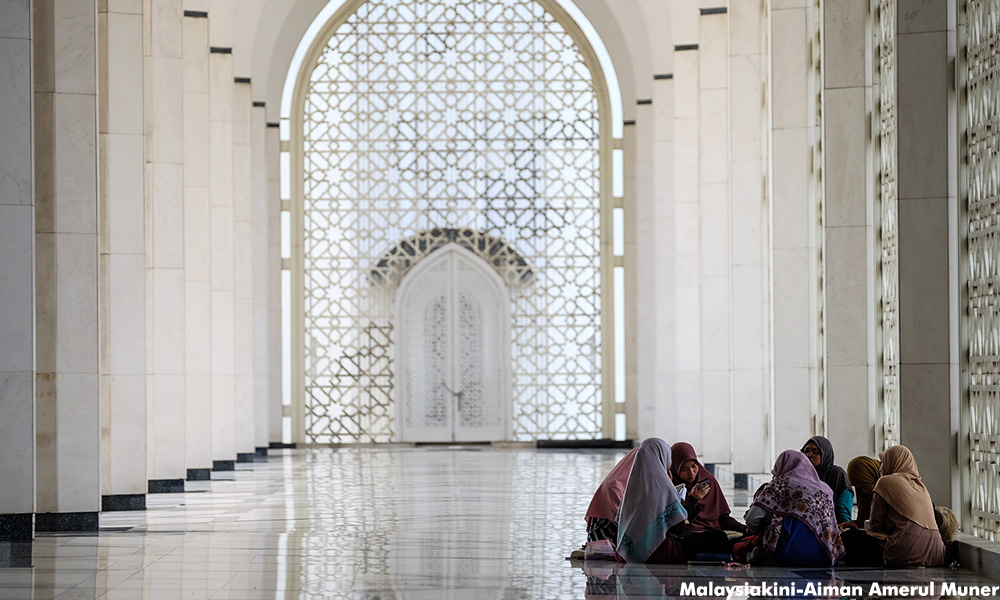
I experienced this myself so many times. I talked about the harassment I faced for eating in public during Ramadan; they say I made it up to seek unnecessary attention. I talked about invasive period checks in schools; they say I misunderstood the meaning of amar maaruf nahi mungkar.
I talked about being yelled at in mosques when I supposedly didn't wear the right clothes; they say I deserved it for not covering my aurah in the first place. I challenged the Hadith that said it is permissible to beat women for educational purposes; I was threatened with physical violence.
I called for equality of treatment and opportunities for women in public spaces; men came up to me with the stupidest question: "You want equality, do you want me to punch you as hard as I punch men?"
So many excuses, so much verbal and physical violence perpetuated to keep women in our "rightful place", to shut us up for simply telling our truths.
Why does this happen? It's because women's stories are rarely told. And when they are, patriarchy and misogyny kick into action to quickly dismiss our stories to protect the status quo, to protect men from seeing the harm they collectively inflict upon us.
The nuances of women’s lives
The discourse often turns a blind eye to the nuances and complexity of women's lives. When feminists criticise the behaviour of men, we are often mistaken as men-haters, and mistakenly perceived to be making the struggle to be about men versus women.
Nuances are important, because they inform us of the context of our individual stories. For example, the experiences of Muslim women with the hijab in the West are completely different from the experiences of Muslim women in Muslim-majority countries. Even though on the surface, it is about the same topic.
Since I am a Muslim woman, my struggles have always been within the context of an Islamic upbringing in Malaysia. But I am not only Muslim; I am a non-Arab, non-white, non-western, Muslim woman.
But the stories of women to be made into role models - the ones that have always been fed to me - looked nothing like me, spoke nothing like me, and certainly lived nothing like me.
No doubt that Khadijah and Aisyah were strong feminist figures of the Prophet's time. I have nothing against learning from the lives they lived, but there are great limitations in looking at these two figures as our only examples.
Muslim women in the Malay world need different figures for role models, not only because we do have them, but to validate the argument that our experiences with Islam do not necessarily have to be the same as Muslim women in other parts of the world.
The role models for Muslim women have to start including contemporary feminist scholars, and feature women who actually live in our time, not a time when there was no Internet or air travel. Women in our time who actually live in the age of social media, who have to struggle with online violence and misogyny every day.
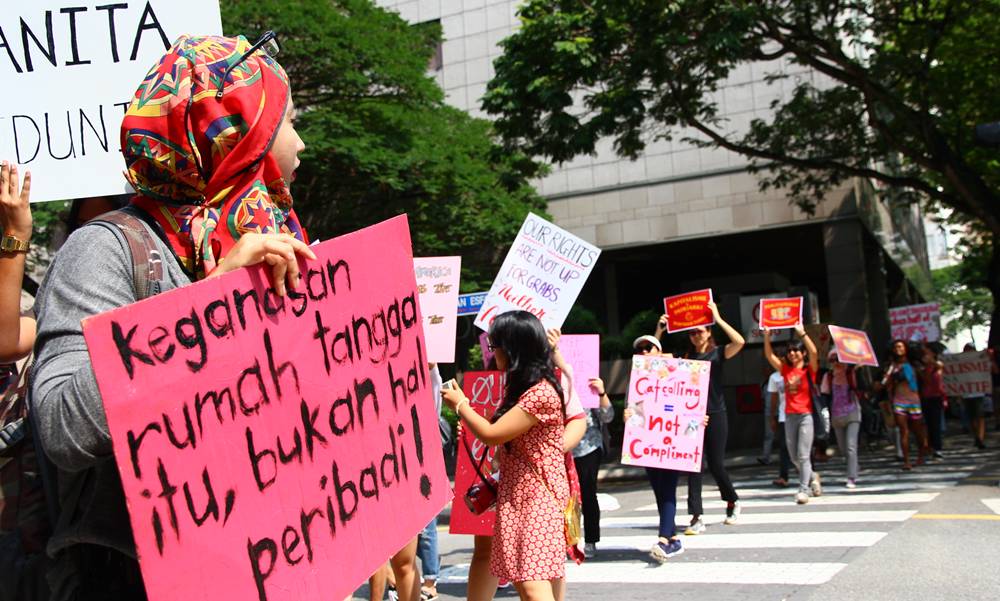
This is why it is important to recognise International Women's Day (IWD) and why we need to show international solidarity for the international feminist struggle.
For more than 100 years, the IWD has been a platform where women gather and exchanges stories and experiences, while persuading the public to be sympathetic to the specific struggles of women everywhere.
It is an important day, as we open our eyes and ears to struggles we probably never had to face, and see these women for ourselves - that they exist, that their struggles exist to fight the real oppression that they face.
Hopefully, this will lead to a day when women no longer need to be denied their own truths, just because some people refuse to listen.
Women's March Malaysia in conjunction with International Women's Day will be held on Mar 10, 2018, 10am, in front of Sogo, Kuala Lumpur.
MARYAM LEE is a writer with a chronic tendency to get into trouble. What she lacks in spelling when writing in English is made up for with her many writings in Bahasa Malaysia. She believes in conversations as the most valuable yet underrated cause of social change. She wants people to recognise silences and give them a voice, as she tries to bring people together through words.
The views expressed here are those of the author/contributor and do not necessarily represent the views of Malaysiakini.


