



The road we have travelled since 2008
COMMENT | This is our story.
In May 1969, the dark skies wrapped the city of Kuala Lumpur like an inky canopy. The Malays and the Chinese sharpened their weapons and swore to kill for the dignity of their races. And when the provocations reached a fever pitch, uncontrollable violence swept the capital, and blood infested every corner.
Since that day, the Malays and the Chinese never spoke about politics the same way.
In the minds of the Malays, it was the Chinese who were at fault for wanting more than their share, for being the bogeyman who wanted to make Malays strangers in their own land.
In the minds of the Chinese, it was the Malays who were uncompromising and inequitable in relegating the Chinese to second-class citizens.
Divided by politics, the Malays and Chinese had since taken separate paths. The good economic times make us forget some of the tensions, but we were unmistakably growing apart.
It was possible for a Chinese to grow up never having a Malay friend; it was possible for a Malay to grow up never seeing a Chinese man...
COMMENT | This is our story.
In May 1969, the dark skies wrapped the city of Kuala Lumpur like an inky canopy. The Malays and the Chinese sharpened their weapons and swore to kill for the dignity of their races. And when the provocations reached a fever pitch, uncontrollable violence swept the capital, and blood infested every corner.
Since that day, the Malays and the Chinese never spoke about politics the same way.
In the minds of the Malays, it was the Chinese who were at fault for wanting more than their share, for being the bogeyman who wanted to make Malays strangers in their own land.
In the minds of the Chinese, it was the Malays who were uncompromising and inequitable in relegating the Chinese to second-class citizens.
Divided by politics, the Malays and Chinese had since taken separate paths. The good economic times make us forget some of the tensions, but we were unmistakably growing apart.
It was possible for a Chinese to grow up never having a Malay friend; it was possible for a Malay to grow up never seeing a Chinese man.
The Reformasi movement
This was put to the test in 1998. A political earthquake erupted when Anwar Ibrahim (photo) was sacked as deputy prime minister.
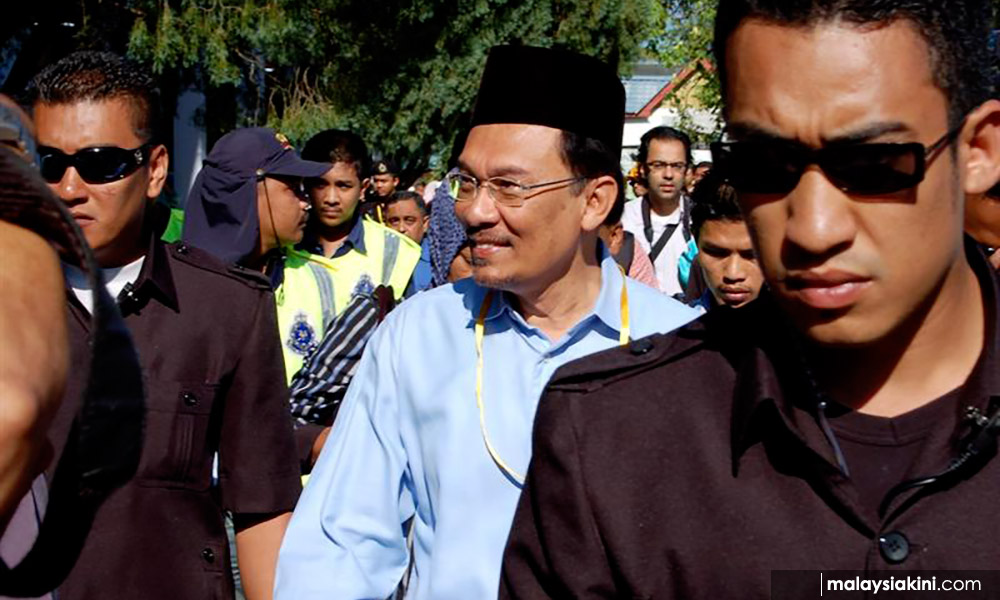
The Reformasi movement had all the trappings of a movement for justice - the siren sounding the alarm on a declining state. The Malays who attended Anwar’s rallies looked through the crowd and they saw not a shadow of the Chinese.
They would ask, “How could you allow this injustice to persist? Political persecution against a man of the people? Have you not a sense of right and wrong?”
The Chinese would say, “Anwar is not my hero.”
When the 1999 elections came along, the Reformasi movement saw many bright-eyed justice fighters finding PKR, and some joining PAS.
They went to push the Door of Change open. But only barely. The Chinese had collectively decided to stay with the government—to play it safe as it was the most pragmatic choice. They did not feel the calling of justice as did their Malay peers.
The Malays took a step forward to push the door, but the Chinese had taken a step back. The Door doesn’t open if they don’t push together.
2004 and the impossible
2004 was a trying election. The government was tremendously successful in retaining power by winning the largest majority in history. PKR was left with only one seat in Parliament.
Everyone was convinced that the Reformasi movement had officially ended as many Malays had grown weary and given up on the pursuit of justice. Only very few tried to push open the door, and no one gathered to watch the spectacle - the Door was tightly shut. The whisper around town was: “Change is impossible”.
The Malays had taken a step back.
In the short few years leading up to 2008, there was a great change of hearts but it all happened in silence.
The promises of Abdullah Ahmad Badawi were unfulfilled and numerous inefficiencies and indiscretions of the government fuelled dissatisfaction among many. But these dissatisfactions were voiced softly, while some people even remained silent.
The silent political tsunami of 2008
Many went to the polling booth to cast a protest vote in favour of the opposition. They weren’t even hoping for change; merely to teach the government a lesson. And in these small efforts, the Door of Change was pushed ajar along an unprecedented arc.
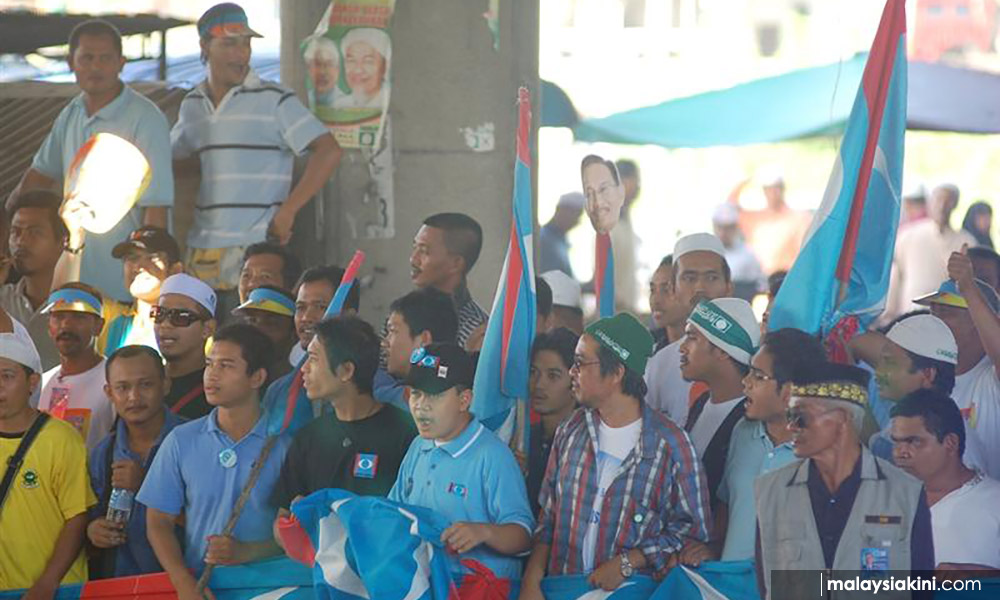
The government was denied a two-thirds majority for the first time in history, and the opposition had taken five states. For its surprise and magnitude in changing the political tide, many dubbed the 2008 election the “political tsunami”.
It sent an early message of what we could do collectively when our paths are in tandem.
2013 was the real test for whether the Malays and Chinese had reconciled in politics, whether their paths could finally be the same. The Internet had revealed a host of government scandals and incidents involving the executive overreaching into the liberties of opposition leaders and the common people.
Almost there in 2013
In the campaigns, the Malays and Chinese would sit together listening to speeches that they both agreed to. The sense of justice was now shared.
The Chinese would wear PKR shirts printed with Anwar Ibrahim’s face, and the Malays would wear the DAP shirt with a rocket symbol that was once the object of their hatred.
The cause of justice stirred up the spirits of Malays and Chinese in the same way.
The Malays no longer thought of the Chinese as disguised looters but as people who simply wanted a fair share in a country they considered equally theirs; the Chinese started to erase all preconceived stereotypes of a Malay when they started talking to one and appreciated their inherent sense of fair play.
And in the rousing speech of Anwar Ibrahim, the Malay would see Chinese gathered at the side - still quite shy to mix in. But they would exchange a smile. In their wordless conversation, the Malays would say, “I’m glad you’re here now.” And the Chinese would say, “Of course I’m here - Anwar is my hero.”
When the 2018 election finally comes, it would have been more than 10 years since the political tsunami that taught us that change was possible, and almost 50 years since that dark day in May 1969. This is our chance to walk together - on the same path - and bust open the Door of Change.
Divided by politics, united by justice - this is our story.
JAMES CHAI works at a law firm. His voyage in life is made less lonely with a family of deep love, friends of good humour and teachers of selfless giving. This affirms his conviction in the common goodness of people: the better angels of our nature. He tweets at @JamesJSChai.
The views expressed here are those of the author/contributor and do not necessarily represent the views of Malaysiakini.


Are you sure you want to delete this comment?
This action cannot be undone.