
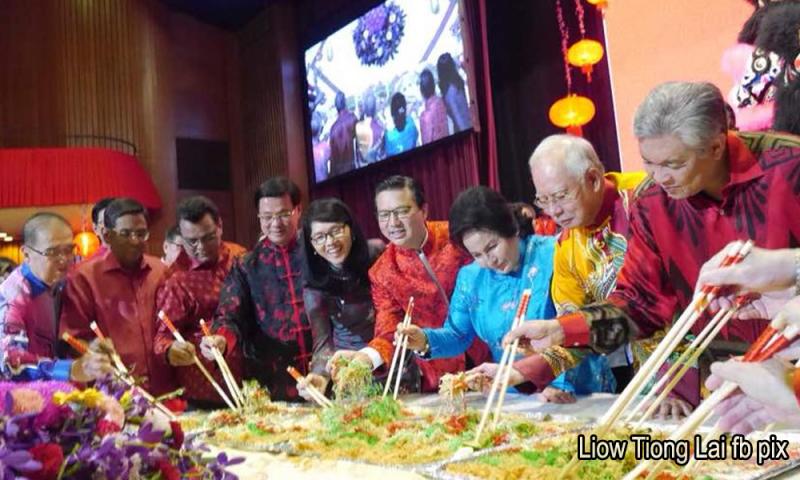
COMMENT | Last Friday, MCA President Liow Tiong Lai wrote a piece in The Star Online called “What it means to be Chinese”. Liow started with a moving recount of his family’s struggle to break out of the cycle of poverty, and how the history of Malaysian Chinese is one of pride and joy. The piece was sincere.

Despite the fact that “MCA” was only mentioned once in the 890-word article, Liow’s main takeaway was for us to think about what it means to be Chinese before voting in the 14th general election.

Hard work and independence

I agree with Liow when he said being Chinese means being hardworking and independent. While I don’t agree that these qualities are natural, I do agree that they form an intrinsic part of the Chinese cultural legacy.

But being Chinese is also about being aware of the reality that hard work and independence do not guarantee success. Circumstances around you, which the government has a role in shaping, are crucial as well. And these circumstances have deteriorated.

Most Chinese today are concerned with the rising prices of goods, pressures of life, and low wages. Talk on the ground is filled with abomination of the GST that has sliced profits and put many small and medium Chinese companies out of business. The weakening ringgit, unemployment, and underemployment have added insult to injury.

My parents share the same history as Liow of coming from dirt-poor backgrounds. And while we were lucky to break out of poverty, many of our relatives still struggle today. Economist Muhammad Abdul Khalid’s research has found that most Chinese are not rich as perceived. 70 percent of Chinese are wage earners, and half of those earn less than RM2,350 a month.

As Liow would attest, education occupies a special place in Chinese hearts because it carries a promise of moving upwards on the social ladder. But the inattention of the government to issues most central to Chinese education like funding, quality training, and recognition has resulted in many just baying at the elusive “final mile”.

Being Chinese means being hardworking and independent. But being Chinese also means recognising the unjust circumstances on the ground and boldly seeking political solutions.

Embracing diversity

Moreover, I also agree with Liow that being Chinese means embracing diversity and appreciating the truth that we are indeed stronger with our unique identities. We strive to progress under one umbrella where all race, religion, and creed are included.

But being Chinese also means recognising that we are regressing from that sacred goal. Since the prime minister attributed BN’s lacklustre performance in GE13 to the “Chinese tsunami”, BN had evidently shifted to the right when they realised they could do without Chinese votes.

The hudud chapter (RUU 355) in 2017 symbolised a creeping monopoly of religion in this country. Growing racial intolerance against non-Muslims and non-Malays can also be seen from the public threats by Malay extremist groups. BN had not only refused to denounce such acts, but instead publicly endorsed people like red shirts leader Jamal Md Yunos as well as working closely with PAS president Abdul Hadi Awang.

The recently-passed redelineation bill that effectively created supermajority Chinese and Malay seats is bound to exacerbate racial polarisation. When we are meant to move closer, politics has drawn us further apart. MCA and Gerakan MPs chose to toe the Umno line rather than vote with their conscience. The bill drew lines in the sand: a Chinese vote is now worth less, soon they will be worthless.

This proves that MCA, Gerakan, and other Chinese representatives of BN do not have equal standing with Umno at the negotiating table. UPM researcher Lee Yok Fee has stated that MCA used to hold important Cabinet positions and have an equal say in the government. These days are gone. All component parties are like “beggars compared to Umno”, as the late former Gerakan president Lim Keng Yaik once said.

UM researchers Lee Kam Hing and Thock Ker Pong also highlighted that Umno’s dominance could clearly be seen when MCA didn’t oppose policies that weakened the Chinese’s standing in business, education, employment, and culture. Today, the mere fact that Umno was allowed to speak ill of businessperson Robert Kuok without thinking twice proves that the Chinese’s influence in government is at best marginal, and at worst superficial.

Being a Chinese means embracing diversity. But being a Chinese also means being Malaysian - of being treated as an equal for all our worth.

Being proud of roots

Last but not least, Liow was right in saying that being Chinese means being proud of your ancestral roots and heritage. The Chinese have a firm appreciation of their own history and take pride in those who made their common heritage richer. They know that, being a minority in Malaysia with a shrinking population, they must make sure they do not fade into the background.

The Chinese are eager to put the best of their race as representatives. They want leaders who reflect their strong will, integrity, and diligence. But the current few who represent the Chinese in government do not inspire confidence as they did in the past.

Ridden with scandals the size of PKFZ and supporting a government that accommodates debacles like 1MDB, the people have been embarrassed and humiliated.

Gone are the days where the Chinese revere the diplomacy of a Tan Cheng Lock, the astuteness of a Tan Siew Sin, and the foresight of a Lim Chong Eu. It is no wonder that the young now turn to the other side for better representation: in search of the intelligence of a Tony Pua, the progressiveness of a Hannah Yeoh, and the bravery of a Liew Chin Tong.

Being Chinese means being proud of where you come from. But being Chinese also means looking for pride in who represents us.

GE14 will be a watershed moment in Malaysian history. Whichever way the Chinese will go, trust that they have fully appreciated what it means to be Chinese. When still waters start to rock the boat, we will grab onto a raft to keep ourselves afloat.


JAMES CHAI works at a law firm. His voyage in life is made less lonely with a family of deep love, friends of good humour and teachers of selfless giving. This affirms his conviction in the common goodness of people: the better angels of our nature. He tweets at @JamesJSChai.

The views expressed here are those of the author/contributor and do not necessarily represent the views of Malaysiakin.