


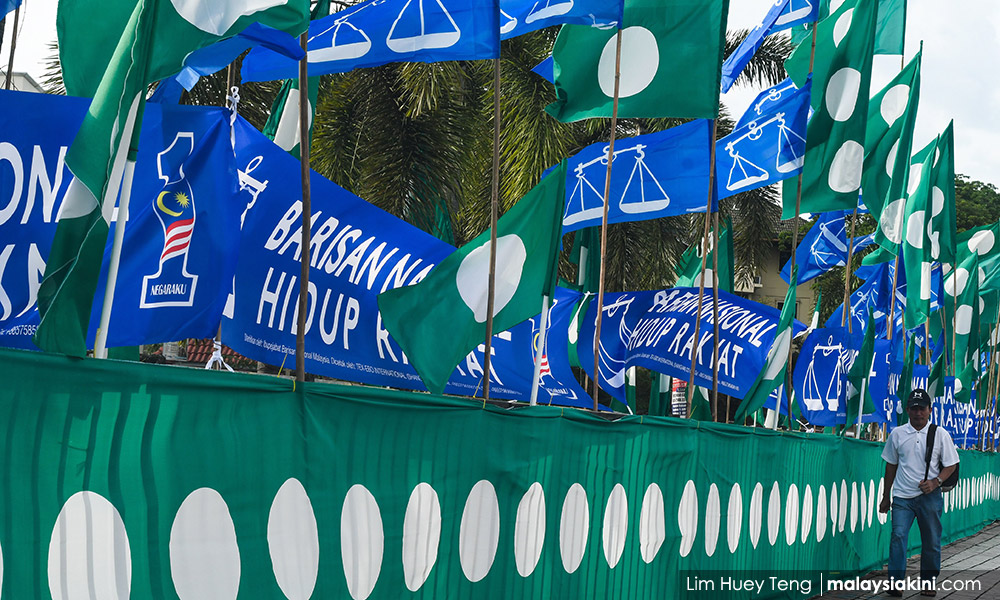

Why GE14 is the mother of all elections
COMMENT | This is the best time to be alive.
The caretaker prime minister has said it a couple of times: The 14th general election (GE14) will be the mother of all elections.
But what makes an election historic? It must have an earth-shattering consequence, it must carry strong symbolism, and it must usher in a larger meaning for its people.
These three indices make GE14 the mother of all elections.
1. End of the longest-ruling coalition in the democratic world
The most earth-shattering consequence of GE14 is that it could potentially spell the end of the longest-ruling coalition in the democratic world. BN (and its early form, the Alliance Party) and Umno have been in power for 60 years since the independence of Malaya. No opposition has since mounted a successful challenge against the steely clutch of BN.
But the waves are churning. GE14 will be the first election where we have a substantively competitive opposition coalition against BN. Opposition coalitions in the past of Gagasan Rakyat, Barisan Alternatif, and Pakatan Rakyat were merely ad-hoc electoral halfway-houses designed to ensure convenient straight fights with BN. They were not ideologically aligned, nor were they organised in the same formation.
Harapan today has a comprehensive manifesto in “Buku Harapan”, a prime-minister designate in Dr Mahathir Mohamad, a common logo in PKR’s eye, and an equitable power-sharing model in a leadership structure. If they had their way, Harapan would even have had their coalition and logo registered.
GE14 will be the first election where the opposition has the highest chance of winning. 2008 unleashed an urban swing towards the opposition, and 2013 greeted us with an unprecedented popular vote victory for the opposition. Think-tank Invoke’s data points show that the Malay votes in favour of Umno had declined drastically to only 28.5 percent as of February. All these points towards an unprecedented proximity the opposition stands to Putrajaya.
Apart from that, GE14 will also witness the stiffest competition between campaigning machinery. BN still has the usual monopoly of the media, finances, and governmental arms to enable effective campaigning. But the opposition is catching up. The establishment of Invoke, in targeting 103 marginal seats across Peninsular Malaysia with close to 25,000 volunteers, has diluted BN’s conventional monopoly. Vibrant online campaigning by the opposition has also given them a voice they would otherwise be deprived of in the mainstream media.
Given the vast inflow of information online provided by political candidates and the extensive coverage by journalists on the ground, voters in GE14 are likely to be the most well-informed in the history of the country.
Therefore, GE14 is the mother of all elections because this is the closest the country has ever been to the earth-shattering outcome of ending the longest-ruling coalition in the democratic world. This is historic by every measure...
COMMENT | This is the best time to be alive.
The caretaker prime minister has said it a couple of times: The 14th general election (GE14) will be the mother of all elections.
But what makes an election historic? It must have an earth-shattering consequence, it must carry strong symbolism, and it must usher in a larger meaning for its people.
These three indices make GE14 the mother of all elections.
1. End of the longest-ruling coalition in the democratic world
The most earth-shattering consequence of GE14 is that it could potentially spell the end of the longest-ruling coalition in the democratic world. BN (and its early form, the Alliance Party) and Umno have been in power for 60 years since the independence of Malaya. No opposition has since mounted a successful challenge against the steely clutch of BN.
But the waves are churning. GE14 will be the first election where we have a substantively competitive opposition coalition against BN. Opposition coalitions in the past of Gagasan Rakyat, Barisan Alternatif, and Pakatan Rakyat were merely ad-hoc electoral halfway-houses designed to ensure convenient straight fights with BN. They were not ideologically aligned, nor were they organised in the same formation.
Harapan today has a comprehensive manifesto in “Buku Harapan”, a prime-minister designate in Dr Mahathir Mohamad, a common logo in PKR’s eye, and an equitable power-sharing model in a leadership structure. If they had their way, Harapan would even have had their coalition and logo registered.
GE14 will be the first election where the opposition has the highest chance of winning. 2008 unleashed an urban swing towards the opposition, and 2013 greeted us with an unprecedented popular vote victory for the opposition. Think-tank Invoke’s data points show that the Malay votes in favour of Umno had declined drastically to only 28.5 percent as of February. All these points towards an unprecedented proximity the opposition stands to Putrajaya.
Apart from that, GE14 will also witness the stiffest competition between campaigning machinery. BN still has the usual monopoly of the media, finances, and governmental arms to enable effective campaigning. But the opposition is catching up. The establishment of Invoke, in targeting 103 marginal seats across Peninsular Malaysia with close to 25,000 volunteers, has diluted BN’s conventional monopoly. Vibrant online campaigning by the opposition has also given them a voice they would otherwise be deprived of in the mainstream media.
Given the vast inflow of information online provided by political candidates and the extensive coverage by journalists on the ground, voters in GE14 are likely to be the most well-informed in the history of the country.
Therefore, GE14 is the mother of all elections because this is the closest the country has ever been to the earth-shattering outcome of ending the longest-ruling coalition in the democratic world. This is historic by every measure.
2. Symbolic force
The second ingredient for a historic election is its symbolism.
Chief among all is the “eye” that would represent the opposition. After Anwar Ibrahim was sacked as deputy prime minister in 1998, he was charged with numerous offences and was even punched and slapped in captivity. When he faced the public with a black eye, his raised arm of solidarity gave birth to a new movement. An emotional tug connected the conscience of many, and the eye of blue and red became PKR’s flag that symbolises justice and “Reformasi”.
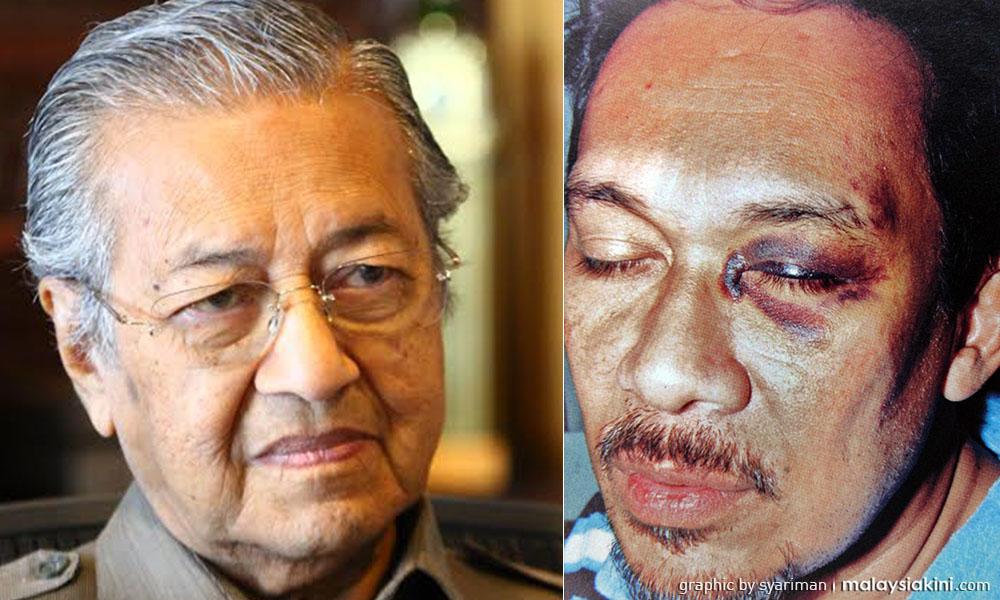
The man PKR was blaming then was Mahathir. Now Mahathir leads the opposition coalition as its chairperson. He apologised and sought the opposition’s trust; and in a grand gesture, he stands behind PKR’s flag. Those who didn’t see the injustices Anwar suffered then must now see it through his eye.
DAP also lowered its rocket in favour of the common PKR logo. This is the first time DAP will be contesting without its rocket that has found a resting place in the minds of many Chinese supporters. The rocket accompanied DAP in their toughest times when they were left with only 10 seats in 1999, and helped launch them to cloud nine in their triumphant 2013 performance. Now the rocket has to rest as we clear the Malaysian sky so it can fly again.
GE14 is also the election that may see an unprecedented shift in power at a federal and state level.
At the federal level, GE14 could spell the end of MCA and MIC - two prominent single-race parties that have been in government since 1957. As most people anticipate GE14 to be a battle for Malay votes, the demise of MCA and MIC are treated as foregone conclusions. Related to this is also Invoke’s prediction that PAS will be left without a seat in the august house. This could mean the political history of a religious-based party could be shortened significantly.
At the state level, the hottest contest will be in Johor. Current Johor caretaker menteri besar Mohamed Khaled Nordin has warned that Umno is not allowed to lose the state where it was born, or it could spell the end of the party.
Bersatu, with Mahathir and Muhyiddin Yassin’s influence, has spread widely in Johor since their departure from Umno; DAP has put their top generals to the battleground state: Liew Chin Tong, Yeo Bee Yin, Teo Nie Ching, Lim Kit Siang; while PKR and Amanah are wrestling semi-urban marginal seats.
If Invoke’s prediction is to materialise (Harapan taking the state with a six-seat majority), it could inflict a permanent psychological wound to the party of Onn Jaafar and its glorious past.
GE14 will also mark a point of unity between the Reformasi generation and tsunami generation. Youths between the ages of 21 and 35 today had lived through the 2008 and 2013 political tsunamis that had symbolised a yearning for democratic accountability and idealism. The potential for collective change is the only reality the tsunami generation knows.
GE14 will be a decade since the birth of the tsunami generation, and almost 20 years since for the Reformasi generation. The meeting point between these two generations is the hope for a fair, just, and equitable society that is free from corruption and abuse of power. GE14 will see the coming of age of tsunami generation, marching hand-in-hand with the wisdom of the Reformasi generation.
3. The democracy experiment
GE14 will also have a larger meaning for Malaysia’s democracy.
The election will act as a referendum on the democracy experiment: Can this old machine of the 1957 model called “democracy” still work in 2018? Can it still represent the will of the majority in choosing the government it desires?
Granted, numerous research initiatives like the Economist Intelligence Unit and Electoral Integrity Project have classified Malaysia’s electoral system as deeply flawed, with violations against democratic norms in areas of human rights, press freedom, and political participation. But if an overwhelming majority can still produce a change in government, it could mean that there are still vestiges of democracy left in our machine.
But more important than that, how able is our democratic machine in putting people out of power? The greatest strength of democracy is not in its ability to put people into power, but its ability to put people out of power. The constitutional nature of our democracy does its heavy lifting in limiting the power of those on top.
What The Economist says is true, that if Malaysia is a democracy with a “reasonable electoral system”, then the misappropriation of billions of ringgit linked to the top leadership should mean that “the coalition running Malaysia would not be in office in the first place.”
Other prominent international media houses like the New York Times, The Guardian, Wall Street Journal, and South China Morning Post have been similarly attentive to Malaysia’s developments like never before. GE14 will undoubtedly be the election with the most international spectators, eager to see if this democratic experiment of Malaysia has failed.
GE14 is the mother of all elections because it could put Malaysia either on the road to recovery, turning it into the star of the region like the roaring 90s, or see us rupture under a democratic machine that has broken down. If Malaysia achieves the once-impossible dream in GE14, its place in the history books of the world will forever be unquestioned.
This is the page in the history books that you don’t want to skip over. This is what people will think of when they mention Malaysia. This is History with a capital H.
This is the best time to be alive.
JAMES CHAI works at a law firm. His voyage in life is made less lonely with a family of deep love, friends of good humour and teachers of selfless giving. This affirms his conviction in the common goodness of people: the better angels of our nature. He tweets at @JamesJSChai.
The views expressed here are those of the author/contributor and do not necessarily represent the views of Malaysiakini.


Are you sure you want to delete this comment?
This action cannot be undone.