




Whose nuclear Pandoras Box?
Mohamed ElBaradei, born in Egypt, has since 1997 been working profusely as director-general of the International Atomic Energy Agency (IAEA) to diffuse any possible tension there is over nuclear energy.
Mohamed ElBaradei, born in Egypt, has since 1997 been working profusely as director-general of the International Atomic Energy Agency (IAEA) to diffuse any possible tension there is over nuclear energy.
In October 2003, ElBaradei found himself a persona non grata in Washington, having disrupted, albeit briefly, President Bush's campaign for a second term by questioning the 377 tonnes of missing explosives in Iraq.
Termed October Surprise, the incident confirmed the long-held anxiety that ElBaradei was too much a man of his own. The US government may relish in dictating others, but such propensity for independence from an 'irritating' international official was clearly profane.
In retaliation, the Bush administration sought to gather information concerning ElBaradei's dealing with Iran, hoping to produce evidence with which to accuse the IAEA head of condoning Tehran's effort to acquire nuclear technology, thereby jeopardising his chances of reappointment last June.
The recent conferment of the Nobel Peace Prize on ElBaradei is therefore a shot in the arm for the IAEA and for the man himself, who had come under enormous pressure from the US and the European Union to take a tougher stance vis vis Iran.
The prize itself symbolises international appreciation of the IAEA for its endeavour to resolve nuclear disputes throughout the world by peaceful and non-confrontational means. With such highly-acclaimed acknowledgement, any drastic measure by the West that could force Tehran up the wall will surely be closely and critically scrutinised.
 The episodes over the past few years, be it the disastrous consequences following the ill-orchestrated Iraq war or the Pentagon's increasingly hawkish security strategy in East Asia, have time and again demonstrated Bush's knack for isolationism in achieving diplomatic and strategic goals.
The international community was transfixed by Bush's State of the Union Address in January 2002, in which he identified Iraq, Iran and North Korea as the Axis of Evil. Just when one thought he could not have meant business and any aggressive military solution would have been halted by moderate forces within the administration, lo and behold, Saddam Hussein is now the tyrant of yesteryears, mocking the court while in the dock.
Wrong hand
It would seem that the continuing violence and insurgency in Iraq have not made the White House lose sight of Iran. North Korea is a 'problem' on an entirely different scale due to the intricate relations between the US, China, Russia, Japan and South Korea. Five decades on, a US president in his right mind will do his best to prevent a Korean War II from materialising.
To put the international community on greater alert, nothing is handier than playing up the fear of nuclear weaponry. Suffice it to say that US records in this respect have not been consistent. It would in fact not at all exaggerating and condescending to suggest that nuclear technology only poses a threat in the eyes of the Americans when its falls into a 'wrong hand'.
Israel aside, Japan, the closest ally of the US east of the Indian Ocean, is blessed with nuclear capabilities thanks to US connivance. A high profile Japanese politician Ichiro Ozawa once remarked that Japan could make nuclear weapons to check against China's growing influence, as "the plutonium of Japan's nuclear power plant can fully turn out more than 4,000 nuclear warheads"
Such shared nightmare of nuclearisation is never ruled out as an eventuality by Charles Krauthammer, a Bush's confidant.
World leaders would have held their breath and Washington filled with gibberish about pre-empting the menace to civilisation had the words been uttered by, say, Kim Jung Il.
 Looking at the
current tension
between Tehran and Washington from a wider perspective, a nuclear-capable Iran clearly contradicts the US design for a greater Middle East dominated by the Americans, pretty much as the hegemony imposed by the British and the French in that part of the world subsequent to the disintegration of the Ottoman Empire early last century.
Looking at the
current tension
between Tehran and Washington from a wider perspective, a nuclear-capable Iran clearly contradicts the US design for a greater Middle East dominated by the Americans, pretty much as the hegemony imposed by the British and the French in that part of the world subsequent to the disintegration of the Ottoman Empire early last century.
In short, a defiant Iran, armed with nuclear technology in the region, would appear like a cancer in the chest, set to spread all over the body and create more troubles than what the US could solve in the long run.
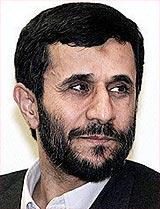
When the IAEA passed a resolution to refer the Iran Dossier to the United Nations Security Council should Tehran fail to stop its uranium enrichment activities, it was perhaps the best possible deal that ElBaradei could secure in order to rescue the diplomatic channel from being scuffled by potential saboteurs. Whether or not it can work will, of course, depend on the flexibility of the Iranian leadership under President Mahmoud Ahmedinejad.
Hawkish agenda
To what extent would Tehran be willing to play its part and avoid a showdown with Washington is unclear, but President Ahmedinejad must wise up to the fact that a recalcitrant posture would only lend a pretext to the Americans driving their hawkish agenda. Seen in this light, caution and circumspection on the part of the Iranian leadership are more than desirable, while a close cooperation with the IAEA will affirm Tehran's willingness to deal with the combustible issue by diplomatic means.
Beyond that, seeking the understanding of other major powers is a plus. Russia, with its extensive nuclear trade ties running into US$800 million with Iran, comes in handy.
Sergei Trepelkov, a Russian representative at the UN, reiterated Moscow's commitment to ensuring "Iran remains free of nuclear weapons We are the first interested in seeing that Iran will never get nuclear weapons."
Meanwhile, Tehran has shown its maturity by not cancelling its trade and energy agreements with New Delhi in the wake of the latter's failure to defend the former in the recent IAEA vote
Being an important member of the Non-Aligned Movement, a rapport with India and other developing countries will do much to counter the pressure from the US to punish Iran for its right to peaceful use of nuclear technology.
Since the nuclear Pandora's box was opened decades ago, the world has seen much hypocrisy and practice of double standards to honestly believe that the US is the sole guarantor of global peace and ultimate arbitrator of nuclear disputes. New tactics and imaginations are hence needed on the part of the world community in response to such pressure that often diverts global attention from core and real issues. And it should begin with Iran and the IAEA.


