



It’s crucial we help define the new opposition
COMMENT | We may have overlooked the fact that as Dr Mahathir Mohamed makes a historic return to power, he faces a political landscape that similarly defined his first stint as prime minister: a largely ineffectual opposition.
‘Ineffectual’ is here defined as unlikely to be a government in waiting.
The question I think we aren’t asking enough is: in this crucial, defining moment, what shape will the future opposition of Malaysia choose for itself, and how will this affect the country’s political paradigm in the years to come?
I think it is not an exaggeration or oversimplification to declare that the BN model is dead.
I think I wrote long ago that should BN ever lose power, its entire sixty year old model will almost invariably crumble.
The reason for this is simple, BN is – or rather was – held together not by any genuine shared core ideology; it was but a simple marriage of convenience.
This marriage worked as long as Umno was able to feed all the component parties enough to ensure their cooperation in maintaining the illusion of representing a cross section of Malaysia.
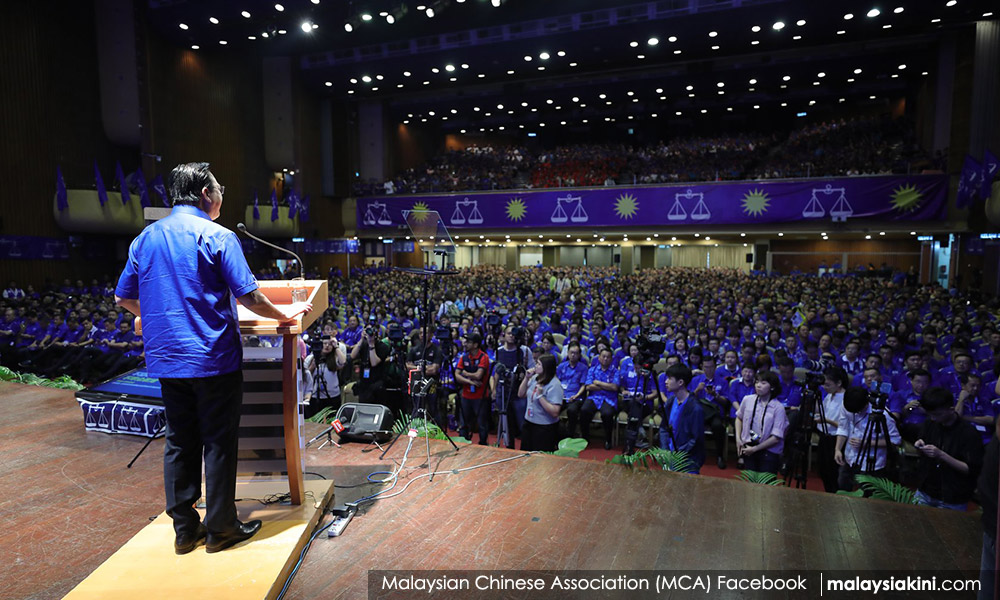
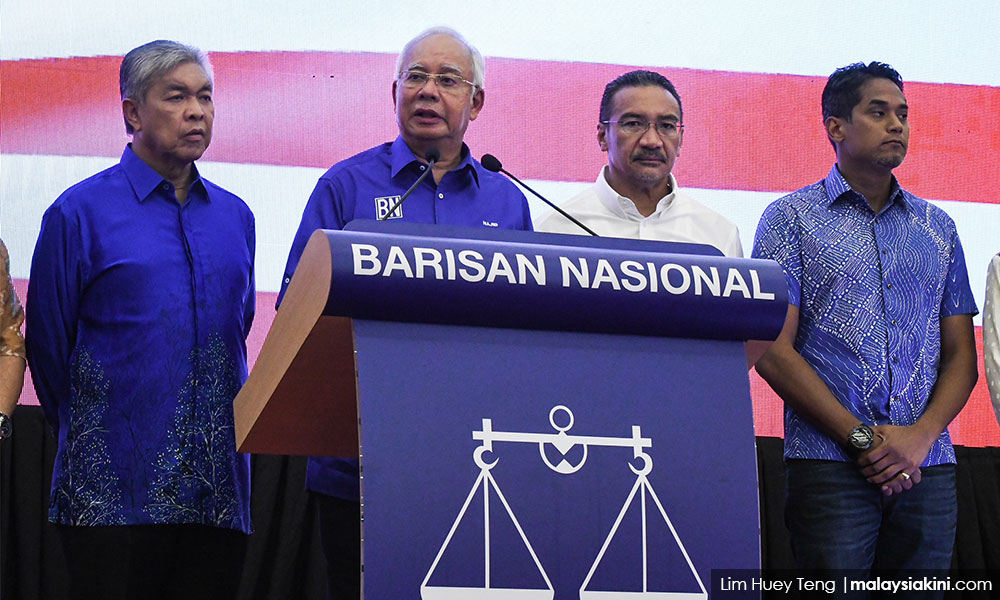
Soon after that disappeared, BN component parties started abandoning the sinking ship. East Malaysian parties have openly declared they are leaving BN, while parties like MCA have said they have begun reviewing their position in the coalition.
This should come as no surprise, as no loyalty would exist where there is no genuine friendship to begin with. It’s almost like someone leaving an abusive partner at long last.
Also, unless Harapan meets with catastrophic, monumental and early failure, everyone can see that there is no chance of BN coming back to power using the same formula.
If this is the end of race-based politics, then we should all indeed rejoice – I certainly will. That said though, in our euphoria, we should not forget to ask: Where does that leave Malaysia’s political spectrum...
COMMENT | We may have overlooked the fact that as Dr Mahathir Mohamed makes a historic return to power, he faces a political landscape that similarly defined his first stint as prime minister: a largely ineffectual opposition.
‘Ineffectual’ is here defined as unlikely to be a government in waiting.
The question I think we aren’t asking enough is: in this crucial, defining moment, what shape will the future opposition of Malaysia choose for itself, and how will this affect the country’s political paradigm in the years to come?
I think it is not an exaggeration or oversimplification to declare that the BN model is dead.
I think I wrote long ago that should BN ever lose power, its entire sixty year old model will almost invariably crumble.
The reason for this is simple, BN is – or rather was – held together not by any genuine shared core ideology; it was but a simple marriage of convenience.
This marriage worked as long as Umno was able to feed all the component parties enough to ensure their cooperation in maintaining the illusion of representing a cross section of Malaysia.
Soon after that disappeared, BN component parties started abandoning the sinking ship. East Malaysian parties have openly declared they are leaving BN, while parties like MCA have said they have begun reviewing their position in the coalition.
This should come as no surprise, as no loyalty would exist where there is no genuine friendship to begin with. It’s almost like someone leaving an abusive partner at long last.
Also, unless Harapan meets with catastrophic, monumental and early failure, everyone can see that there is no chance of BN coming back to power using the same formula.
If this is the end of race-based politics, then we should all indeed rejoice – I certainly will. That said though, in our euphoria, we should not forget to ask: Where does that leave Malaysia’s political spectrum?
'We need direction'
In the aftermath of Harapan’s victory, things are developing at breakneck speed. I imagine Malaysiakini’s page views are still among the highest they’ve ever been.
Among all this gripping news, I admit this one particular passage stood out to me about an incident at Putra World Trade Center:
“A scuffle erupted after Seputeh Umno Youth division member Mohamad Taqiuddin Halim told reporters that all Umno leaders above the age of 60 should make way for younger leaders to bring in reforms.
"We need directions... We need to know where we are heading," said Taqiuddin.
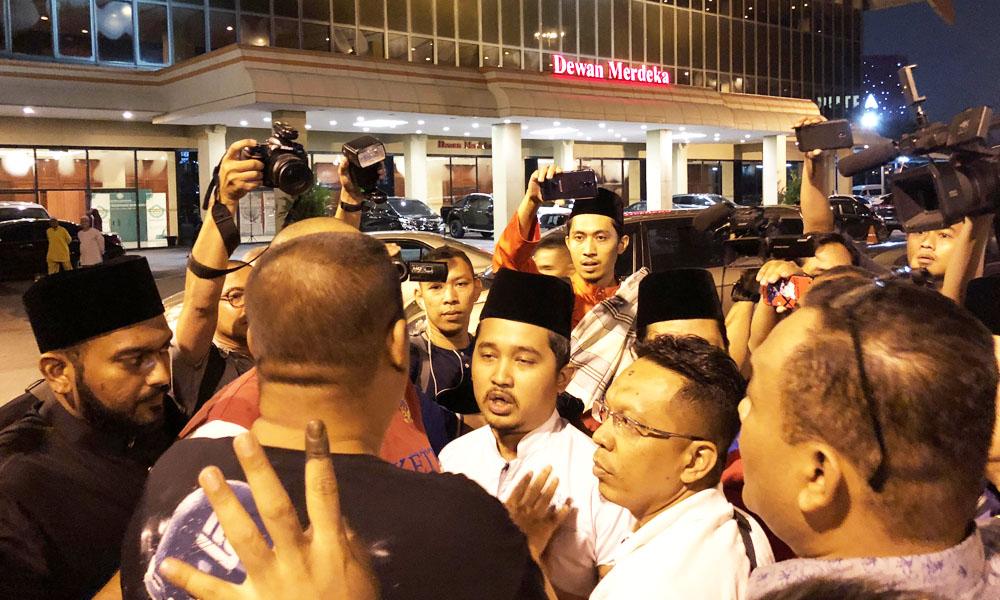
Some of us may instinctively gloat and laugh at the sight of a defeated Umno scurrying about in confusion and panic.
I believe that this would be a mistake.
Besides the obvious need to be magnanimous and gracious in victory, let us not forget that there were millions upon millions of Malaysians who voted for Umno and BN.
Of this number, x percent probably believed something like BN would be in power forever, and didn’t want to waste their vote elsewhere; while perhaps another y percent voted BN out of obligation for all they felt they had received.
That still leaves another z percent, who I believe voted BN in the genuine belief that Umno’s political ideology was truly the best way to safeguard their interests, and that of the nation as a whole.
Furthermore, there are another set of millions of Malaysians who chose the third option of PAS, with the desire to be led by a party that put religion as their foremost, defining this as its raison d’etre.
A monoethnic opposition?
The question is now: which way forward for the post-GE14 opposition is healthiest for the nation as a whole?
Certainly, it is all too easy to imagine the unhealthy option.
Umno and PAS are the only two significant parties in the opposition now, at least on the peninsular.
The obvious fact is that the base of these two parties is limited almost entirely to Malay-Muslims.
The implications of this fact for Malaysia’s future political paradigm cannot be understated.
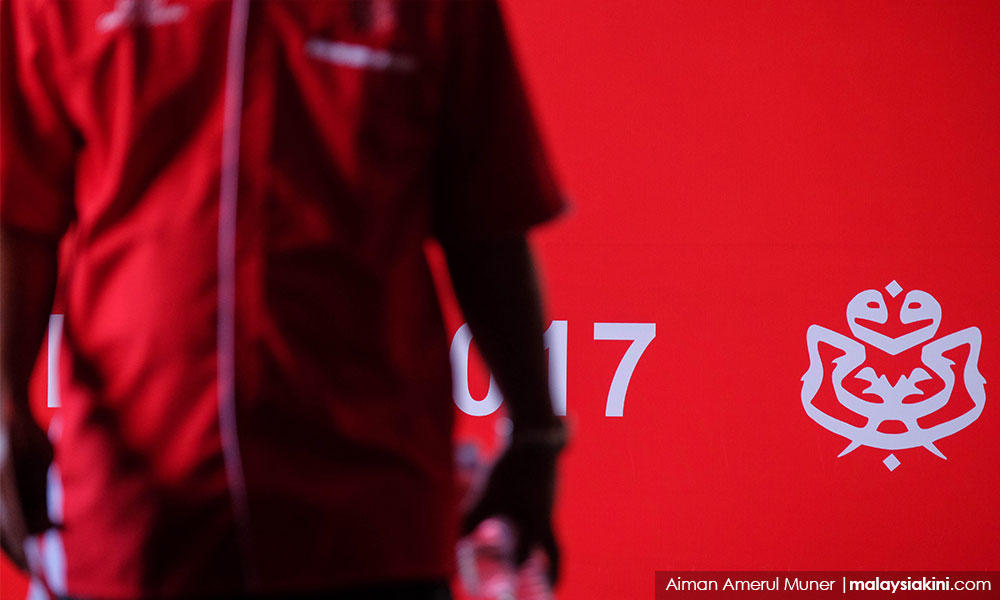
We would be facing a scenario where the government is on one hand essentially a (genuinely) multiracial, balanced coalition; while the opposition, on the other, is a largely monoethnic opposition composing primarily of a party based on race, and another on religion, both representing a similar demographic.
Worst case scenario
BN’s race-based model racialised politics, political discourse, and thus, society as a whole in Malaysia for decades, to the severe detriment of our country.
If Malaysia’s next opposition moves further to the right, and decides that their core political identity and platform to gain support should all be centred on race and religion, then we’re almost back to square one.
This would result in every issue raised by Umno and PAS to be couched in terms of race and religion.
One can already imagine the cries of how the native Malays are now being oppressed at the hands of a government manipulated by Chinese puppet masters.
If every single statement by the new opposition is a variation on this theme, the effects would be disastrous, and would retard a lot of the progress we have made towards national unity.
We don’t want the current government to ever respond to such a situation by turning turn to the old methods of suppressing freedom of speech or curtailing political freedoms either. That should be almost equally unthinkable.
What happens without a credible opposition?
We must remember that every healthy democracy must have a healthy political opposition.
A key defining feature of such an opposition is that it must be a viable government in waiting.
If it is not, then we will face what we did in the first Mahathir era – one where the government reigns largely supreme and unchecked, because it has no viable competition.
It is almost impossible for Umno or PAS to form the government alone, due to the lack of non-Malay support. This will be even more true if we reverse the BN – an era disproportionate gerrymandering, as we should.
This means we may be faced with a double whammy: firstly, no credible opposition to keep the government on its toes; secondly, an opposition that is obsessed about making everything a racial or religious issue.
What’s the healthy alternative?
I believe that there are a number of politicians previously from BN who still can have a positive role to play in the country.
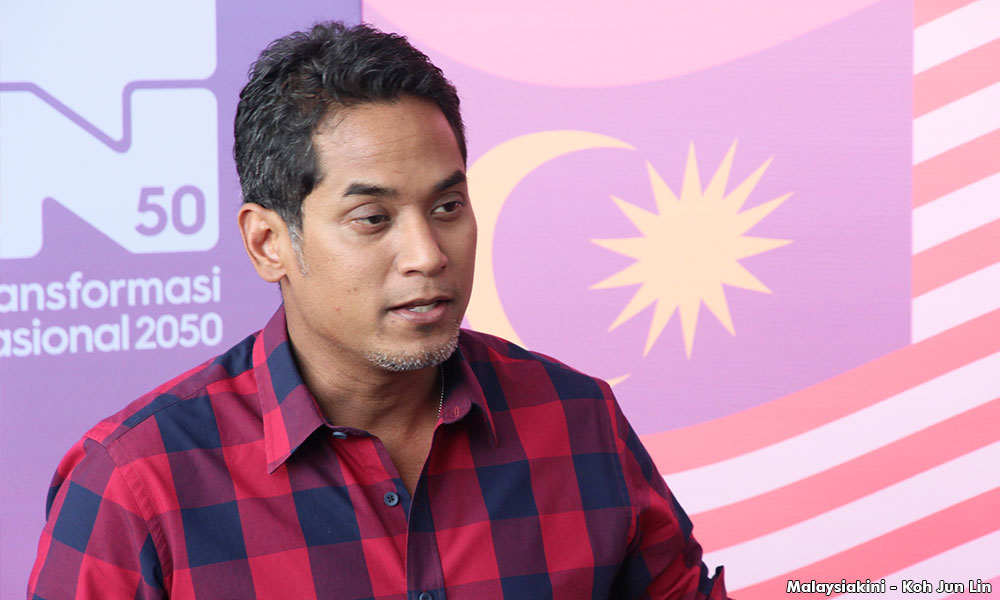
We can see the likes of Khairy Jamaluddin now manoeuvring to be part of a new leadership and direction for Umno.
If this means pushing out the more confrontational types like Ahmad Zahid Hamidi and Nazri Aziz, I’m all for it.
The question is, what should this new direction be?
The core question for Umno is how tightly they want to hold on to their ultra-Malay views.
Best case scenario
I believe that the more liberal leaning leaders like Khairy should ultimately lead the way in abandoning this ethnocentric model – if nothing else, for the simple reason that it will never lead the country again.
Sticking to an ultra-Malay ideology will produce short term gains, but lead ultimately to nothing but worse and worse discord, and an opposition that will never be taken seriously.
Exchanging that ideology for a multi-racial one will mean some rough roads for the near future, but will ultimately position such an opposition to one day be a credible government in waiting.
Thus, I believe the most patriotic thing for progressive BN members to do is to coalesce into a single non-racial party, bringing together the best talents and individuals from the former BN.
It may help to remember that there are almost no explicitly race-based political parties left in the world, and for good reason.
The bestselling point and platform for such a party in near future would be to provide credible, honest and racism-free checks and balances to the government of the day.
I honestly believe there is a good market for this (especially after our experience with weak oppositions), and that the long term prospects for survival are much more viable.
The position of PAS
With regards to PAS, they will continue to exist, and religion will continue to be the core defining ideology of the party.
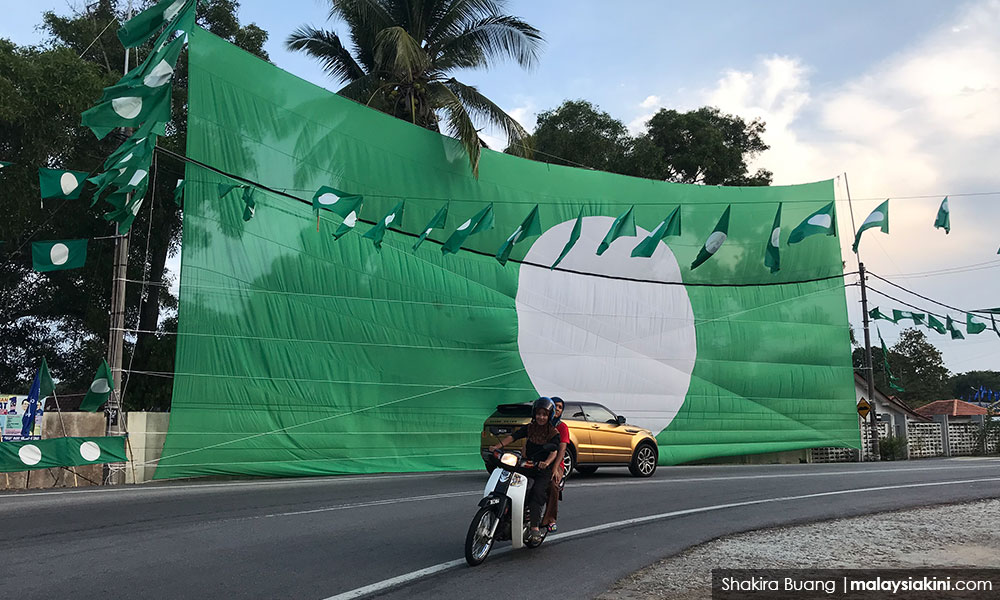
If that is alright with the people of Kelantan and Terengganu, I feel that that should be alright with the rest of us.
They should take the opportunity to use their leadership of those states as a showcase and example, and let the rest of Malaysia decide if that is the path they want to follow.
The case of Perak is interesting, and presents an opportunity.
The idea of a ‘no-opposition’ government is inherently deficient, but PAS’ proposal of a unity government in Perak is not entirely without merit, within the vacuum of Perak at least.
The benefits of such a unique accommodation may be that it could pave the way for greater cooperation between PAS and Harapan, which could benefit the country as a whole – especially as we look to avoid exacerbating the divide between the east and west coasts.
Appropriating conditions
It must be said however, that the conditions PAS has proposed for such a unity government in Perak are not appropriate.
The conditions that the menteri besar must be Muslim, and his or her exco be a Muslim majority one are distastefully outdated.
How many leaders who have been proven to be incredibly corrupt proclaim themselves Muslim? An indication on one’s MyKad is unfortunately no guarantee of integrity or honesty.
A much more palatable condition, for example, might be that the menteri besar and exco meet the standard of integrity required by Islam.
Besides, the likelihood of the menteri besar and the state exco being Muslims is practically a given, for most means and purposes, with 50 percent or more Muslims in the state.
Keeping everyone honest
This weekend is likely to continue being a frenzy of excitement: cabinet announcements, tracking the movements of the former prime minister, and so on.
Amidst all this, let us not forget that decades of having a weak, disunited opposition played a big role in creating the many problems we face today.
Every institution designed to provide check and balance is important, but ultimately, the thing that traditionally influences many politicians the most is the fear of being replaced by other politicians. This is the heart of democratic competition.
Much as we enjoy our victory over them, let us help to encourage BN politicians to make the right decisions in these crucial and defining moments.
The benefits of a two-party system are well known, but in these few days to come, we find ourselves defining exactly who that second party will be. It can go any number of ways, some a lot healthier for the country than others.
The new dawn Malaysians enjoy today is a result of the last few years of building a strong opposition.
Continuing to have a vibrant and viable opposition, albeit one that has evolved in keeping with global political trends, will help ensure that that dawn never turns back into nights of despair.
NATHANIEL TAN is eager to serve.
The views expressed here are those of the author/contributor and do not necessarily represent the views of Malaysiakini.


Report this comment
Are you sure you want to delete this comment?
This action cannot be undone.