



Of Perlis, princes and politics
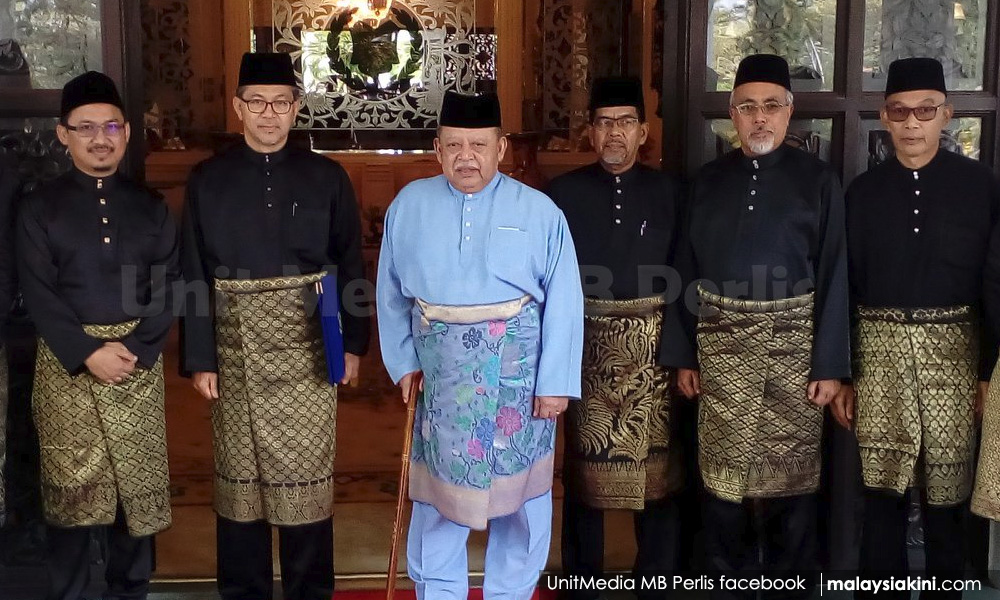
COMMENT | Perlis is probably not the top of people’s minds. I imagine some even look forward to the prospect of changes happening up there which result in some sort of Harapan-led or Harapan-friendly government.
Personal political preferences aside though, it may be good for us to remember: the equivalent of the Perlis political crisis would have been, for example, the Yang di-Pertuan Agong refusing to swear in Dr Mahathir Mohamed after GE 14, and insisting, say, on Mohamed Azmin Ali becoming prime minister instead, with only BN representatives attending his swearing-in.
There is a principle at stake here, and the right principle must be upheld, regardless of which side of the political divide it benefits.
The core of the issue comes down once again to the role of a constitutional monarch.
In short, in a modern constitutional monarchy, the institution is supposed to remain above politics and exist as a check and balance.
A constitutional monarch is not supposed to impose his or her own political preferences, or arbitrarily name an individual he or she likes to be head of state, especially if it runs counter to those democratically expressed by the people.
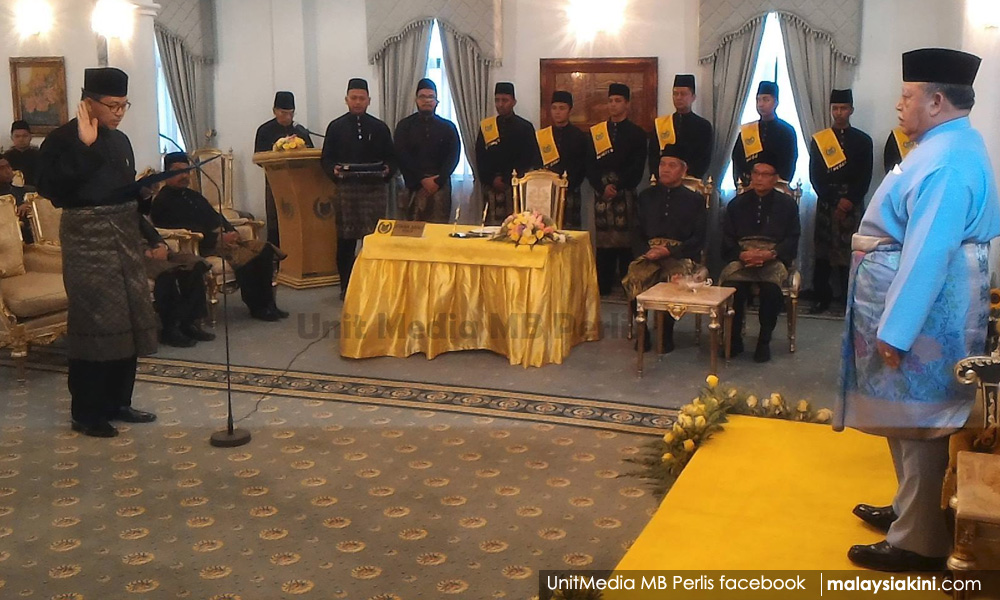
BN won the state of Perlis with an overwhelming majority of 10 to Harapan’s three, and there does not seem to have originally been any major discord within those ten representatives regarding who should have been menteri besar.
On what basis then, did the ruler of Perlis deny...
COMMENT | Perlis is probably not the top of people’s minds. I imagine some even look forward to the prospect of changes happening up there which result in some sort of Harapan-led or Harapan-friendly government.
Personal political preferences aside though, it may be good for us to remember: the equivalent of the Perlis political crisis would have been, for example, the Yang di-Pertuan Agong refusing to swear in Dr Mahathir Mohamed after GE 14, and insisting, say, on Mohamed Azmin Ali becoming prime minister instead, with only BN representatives attending his swearing-in.
There is a principle at stake here, and the right principle must be upheld, regardless of which side of the political divide it benefits.
The core of the issue comes down once again to the role of a constitutional monarch.
In short, in a modern constitutional monarchy, the institution is supposed to remain above politics and exist as a check and balance.
A constitutional monarch is not supposed to impose his or her own political preferences, or arbitrarily name an individual he or she likes to be head of state, especially if it runs counter to those democratically expressed by the people.
BN won the state of Perlis with an overwhelming majority of 10 to Harapan’s three, and there does not seem to have originally been any major discord within those ten representatives regarding who should have been menteri besar.
On what basis then, did the ruler of Perlis deny their candidate?
Political sensitivities vs political principles
One imagines that had BN won the federal government, there would be no crisis in Perlis whatsoever.
Perhaps then there is some concern regarding state and federal relationships, especially for a state as small as Perlis.
Alternatively, perhaps this is a result of some personal feelings on behalf of the ruler, regarding the current leadership of Umno in Perlis – mayhap due to past experience and so on.
Neither of these factors, however, would justify superseding the unambiguously demonstrated political will of the people of Perlis, and contravening the democratic process.
The issue is of course a sensitive one, as it involves the institution of Malay rulers, which many politicians remain careful not to offend – in no small part due to Umno’s many years of conflating any disagreement with the monarchy with a mortal insult to Malay dignity.
Were this not the case, one imagines that the protests from Umno and their supporters regarding what has happened would likely be considerably more vocal.
Umno’s internal crises
This goes some way in explaining the internal confusion within Umno regarding how to react to this crisis.
While there are some who are clearly taking a hard line, others – notably those at the federal level who have to think of the bigger picture – probably believe that it is more important not to appear like they are offending one of the Malay rulers.
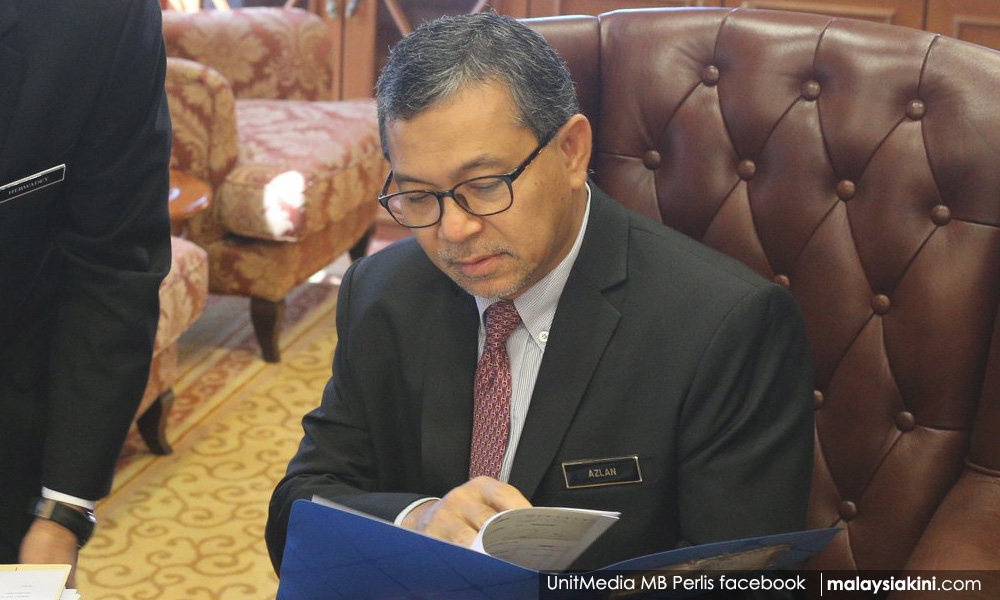
The gymnastics resulting from this fallout are almost amusing, with the latest being the contention that the Perlis Umno leadership were ‘unaware’ that the current MB was the choice of Umno’s central leadership for the post.
This rather unbelievable statement is perhaps merely an attempt to save some face, but with the Perlis chapter openly attacking the Umno national leadership and calling for the present MB to be sacked from the party – which apparently has not happened – the crisis does not seem headed for a quick resolution.
It appears, unsurprisingly, that Umno is not displaying enduring institutional strength and internal unity amidst their disastrous federal defeat.
Fresh polls?
Some have called for a dissolution of the state assembly as a means to resolve this crisis, with a number apparently believing that this may result in a change of government.
While this may indeed be the end result of fresh polls, I do not believe it sets a wise precedent.
Once again, the majority won by BN was an overwhelming one. They should at least be given a chance to form the state government. As one of only two states BN won, it would have been especially significant for the overall political competitiveness in the nation.
Should BN be allowed to install whoever they truly want to as MB, and that MB ultimately finds his position untenable and his ability to govern effectively compromised for whatever reason, then and only then would it be appropriate to have fresh polls.
This way, the people of Perlis would also have some real basis on which to make a new political choice, instead of being influenced only by the political situation at the federal level.
The sources of dignity
Some people thirst for a complete wipeout of anything BN, but we must ask ourselves whether this is ultimately good for us.
I for one would be happy to see the race-based BN model completely die out, while still having a new and credible opposition, founded in different ideological principles.
Either way, this should have no bearing on the proper procedures for the formation of a government.
The good of the nation as a whole would be best served by ensuring the proper functioning of constitutional monarchs.
The dignity of these institutions is not defined only by what people say about them, but ultimately in the degree to which their constitutional duties are properly discharged within a functioning democracy.
We must uphold what is right and proper, based on proper principles, and not based merely on our personal political preferences.
NATHANIEL TAN is eager to serve. He wonders if three years is a little too long to wait for local elections, and wonders what they have to do with economic stability.
The views expressed here are those of the author/contributor and do not necessarily represent the views of Malaysiakini.


