



Is Amanah ready to defend national interests?
COMMENT | Amanah is one of the most interesting parties to have emerged from the scene of Malaysian politics to date, potentially, the global Islamic world.
To begin with, Amanah emerged from the rejection of the dalliance of Umno and PAS in 2015. The closer the two became, the more Amanah wanted to break away, and it did, snaring six members of parliament (MPs); which Amanah increased to 11 MPs at the recent May 9 general election, almost an improvement of 100 percent.
Indeed, Liew Chin Tong, the former MP of Kluang, Johor, whose own BA thesis at the Australian National University focussed on the "progressive faction of PAS," once affirmed that as many as nine MPs were ready to bolt away from PAS in 2015. This was out of a total of 21 MPs in PAS, with another three in the offing by 2016.
While this scenario did not occur, it is interesting to note that what Amanah did not achieve through defection, it did so through open election, which again, suggests the internal strength of Amanah on the ground.
Had what Liew predicted came true, Amanah would have enjoyed an electoral preponderance of 12 over the remaining nine MPs of PAS in the national legislature, thus, delivering a mortal blow to the presidency of Abdul Hadi Awang in PAS by 2016-2017.
But Amanah did not induce all 12 MPs to cross over, as that would have destroyed PAS almost from the word get-go, only to invite Umno to attack Amanah even before it had the strength to regroup, indeed, to consolidate. A strategy of tactical attrition was adopted: first six, then more in the general election. This worked like a charm....
COMMENT | Amanah is one of the most interesting parties to have emerged from the scene of Malaysian politics to date, potentially, the global Islamic world.
To begin with, Amanah emerged from the rejection of the dalliance of Umno and PAS in 2015. The closer the two became, the more Amanah wanted to break away, and it did, snaring six members of parliament (MPs); which Amanah increased to 11 MPs at the recent May 9 general election, almost an improvement of 100 percent.
Indeed, Liew Chin Tong, the former MP of Kluang, Johor, whose own BA thesis at the Australian National University focussed on the "progressive faction of PAS," once affirmed that as many as nine MPs were ready to bolt away from PAS in 2015. This was out of a total of 21 MPs in PAS, with another three in the offing by 2016.
While this scenario did not occur, it is interesting to note that what Amanah did not achieve through defection, it did so through open election, which again, suggests the internal strength of Amanah on the ground.
Had what Liew predicted came true, Amanah would have enjoyed an electoral preponderance of 12 over the remaining nine MPs of PAS in the national legislature, thus, delivering a mortal blow to the presidency of Abdul Hadi Awang in PAS by 2016-2017.
But Amanah did not induce all 12 MPs to cross over, as that would have destroyed PAS almost from the word get-go, only to invite Umno to attack Amanah even before it had the strength to regroup, indeed, to consolidate. A strategy of tactical attrition was adopted: first six, then more in the general election. This worked like a charm.
The 14th general election proved the strategic judgement of Mohamad Sabu, now the defence minister, was right. Amanah could indeed do some serious damage to PAS, not through political betrayals but the politics of strong policy platforms.
By attacking corruption as one of the most heinous practices abjured by Islam - where the capital punishment could have been outright amputation, or death by beheading, in the earlier historical era when Islam first bloomed in the 7th century - Amanah helped Muslims to understand the gravity of 1MDB.
Invariably, Amanah was able to explain how the fiasco had corroded the economy, and still does, with a national debt amounting to RM1.09 trillion (roughly US$250.6 billion at current exchange rate).
Elsewhere, the likes of Mujahid Rawa, focussed on the appeal of Amanah as a multiracial party, one that was intent on helping Muslims and non-Muslims alike.
Through his close friendship with Nik Omar Nik Aziz, Amanah added another game changer into the fray - the son of the late Tok Guru Nik Aziz who believes in the politics of "fastabiqul khairat," where all races and religions could collectively pursue the common good of building the country and community.
Raja Kamarul Bahrin Shah, though unsuccessful in Kuala Terengganu in the recent general election, gave Amanah the common touch, invariably, royal grace too. Raja Bahrin's unstinting attacks on 1MDB, which was originally conceived as Terengganu Investment Authority (TIA), also highlighted the danger of walking into the financial trap set by Putrajaya during the tenure of Najib Razak.
But can Amanah defend Malaysia through the three portfolios it has been given by Prime Minister Dr Mahathir Mohamad?
Defence, agriculture, health
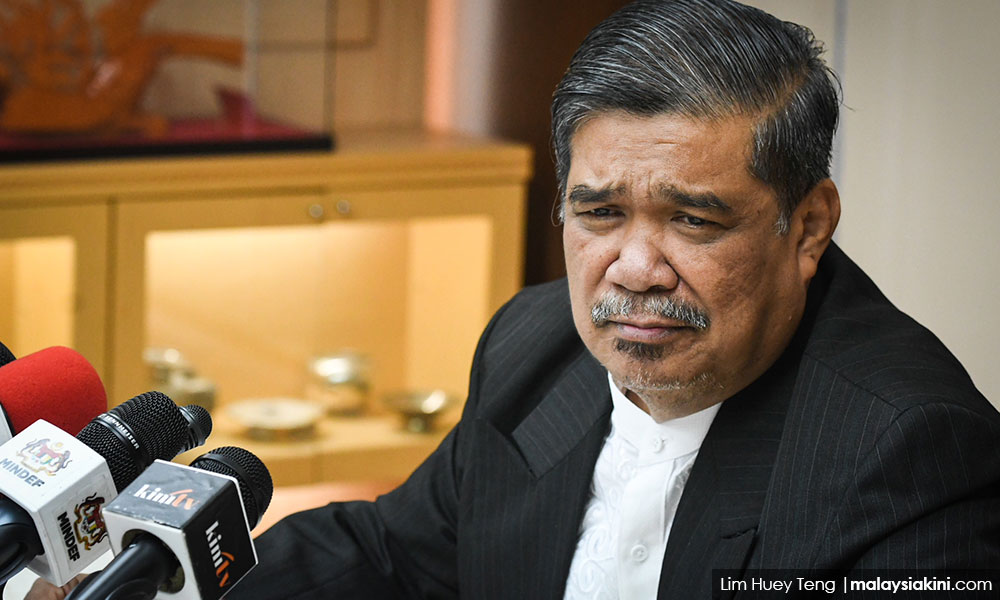
At the Defence Ministry, the Amanah president has since affirmed the importance of defending the welfare of the soldiers and veterans alike, an area that has been much neglected by the previous defence minister Hishammuddin Hussein.
Mohamad Sabu, otherwise popularly known as Mat Sabu, 63, has also seen the degradation of the defence assets and equipment of Malaysia. He has called for a thorough review of what needs to be bought and revamped, even as he takes on the endemic corruption that had seeped into the ministry to overcome the wastage.
While not a soldier, Mat Sabu has been known as a civil rights fighter, one who has no qualms about promoting the rights of the civil society, even sleeping in the streets to advance the democratic agenda of the country.
Sallahuddin Ayub, the agriculture minister, was one of the first politicians from the ranks of Amanah to embrace the southern assault of Johor. Johor was, of course, the fortress of BN and Umno. With the help of Mazlan Aliman, the president of Anak, an association that seeks to defend the rights of Felda, Sallahuddin was well-placed to serve the settlers in Felda that straddle across 54 parliamentary constituencies.
To the degree, Sallahuddin was able to enhance Malaysia's agricultural exports to China, India and the European Union (EU) in future, the livelihoods of the farmers can see an uptick; especially if Felda can avoid any entanglement with unsavoury entities like Eagle High Plantation of Peter Sondakh in Indonesia.
Dr Dzulkefly Razak, a well-trained toxicologist, indeed a medical doctor, is well aware of the lack of medical supplies across the public hospitals of Malaysia. The quality and quantity of the public hospitals in Malaysia would have to be expanded and enhanced. Corruption, as occasioned by the monopoly of some companies previously connected to Umno, would have to be tackled too.
Come what may, the route to achieving a corruption-free Malaysia may well include working closely with retired medical doctors in Japan - who admire the temerity of Mahathir - to increase the medical services of Malaysia, just as the British colonial administration used simple methods like inoculation and immunisation to win the hearts and minds of Malaysians. Free inoculation of pregnant women and babies, for instance, can go a long way to protecting the health of all.
In Malacca, Adli Zahari, 53, has also been made the chief minister of Malacca. While he is the only chief minister from Amanah, he has the perfect opportunity to expand the footprint of Amanah as a functional Islamic party. With the Malacca Gateway project already 45 percent completed in December 2017, more can be done to ensure that the future phases of the US$7 billion project can have the right trickle-down effects to benefit the local supply chain, contractors, and labourers in Malaysia.
Such efforts would be coordinated with Putrajaya too, especially the Human Resources Ministry under the leadership of M Kulasegaran, a top lawyer from DAP, and Anthony Loke, the transport minister who is also from DAP. To be sure, there are other inter-party and inter-agencies collaboration that can be attempted by Pakatan Harapan.
However, the key to good governance is one, and just one: honesty. Indeed, prior to being the Prophet of Islam, Rasullullah s.a.w. was known as "Al Amin" - the honest one among the various warring tribes in early Arabia. Amanah is a derivative of the concept of Al Amin, and it is ready to walk the talk. With 11 MPs in its fold, it cannot be taken lightly anymore.
As things are, how Amanah prevails further depends on the ability of Mat Sabu to consolidate his office. If the Defence Ministry can be whipped into shape, there is no reason why the rest of the ministers from Amanah cannot emulate the example of the party president.
PHAR KIM BENG is a Harvard/Cambridge Commonwealth Fellow, a former Monbusho scholar at the University of Tokyo and visiting scholar at Waseda University.
The views expressed here are those of the author/contributor and do not necessarily represent the views of Malaysiakini.


