



Folly of idolising the bogus Erdoğan model
COMMENT | Whatever has gotten into Rais Hussin? The Bersatu strategic director is usually the author of perceptive pieces on issues besetting the nation.
He has been a defender of democratic principles in politics, a free marketeer in economic matters, and an adversary of complacency in the face of the distress inflicted on the Malaysian nation by the kleptocratic policies and practices of the now-deposed prime minister Najib Abdul Razak.
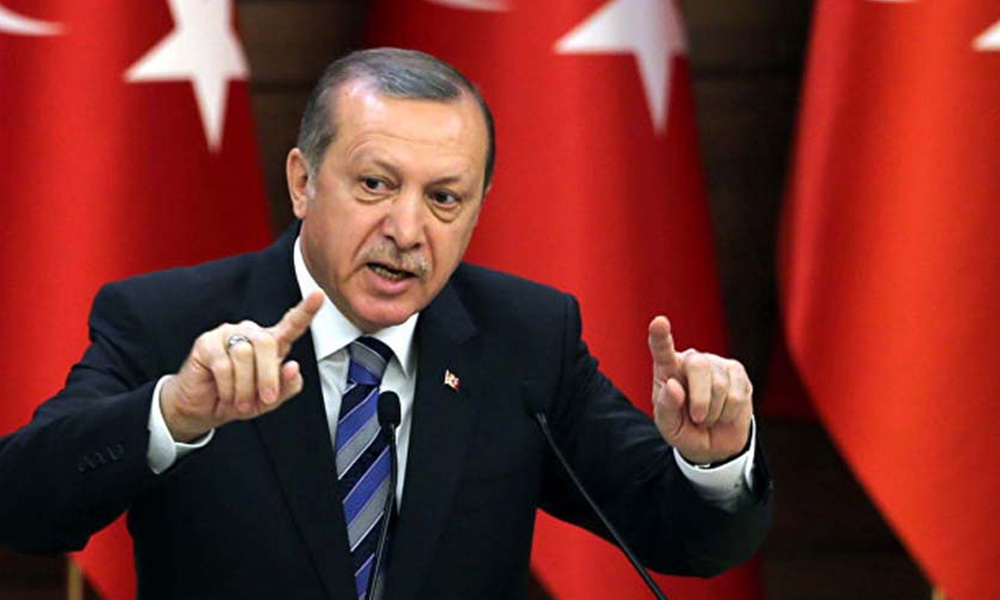
It came as a jarring surprise, then, to read Hussin's paean yesterday to Recep Tayyip Erdoğan, one of the bigger hoaxes to be foisted on Turkey's body politic.
Rais' piece could win the Walter Duranty prize for counterfactual reporting.
Duranty was the New York Times bureau chief in Moscow during the early years of the Bolshevik ascendancy in Russia who won the Pulitzer prize in 1932 for a series of reports about the Soviet Union.
His glowing pieces in 1931 on the progress of the Bolshevik experiment pulled wool over readers' eyes to the savagery of Stalin's collectivisation of farms and its costs in famine and deaths of millions of peasants, especially in the Ukraine.
Rais' obliviousness of the sinister side of Erdoğan's now 15-year rule over Turkey is not of comparable enormity to Duranty's whitewash of Stalinism.
But his rooting for an Erdoğan victory in the Turkish elections sits oddly with his enthusiasm for democratic reform in Malaysia in articles for this website over the last two years.
More troubling still, is his opinion that Erdoğan and the leader of Malaysia's just-begun democratic restoration, Dr Mahathir Mohamad, share the same vision, presumably that of leading vibrant national economies while adhering to...
COMMENT | Whatever has gotten into Rais Hussin? The Bersatu strategic director is usually the author of perceptive pieces on issues besetting the nation.
He has been a defender of democratic principles in politics, a free marketeer in economic matters, and an adversary of complacency in the face of the distress inflicted on the Malaysian nation by the kleptocratic policies and practices of the now-deposed prime minister Najib Abdul Razak.
It came as a jarring surprise, then, to read Hussin's paean yesterday to Recep Tayyip Erdoğan, one of the bigger hoaxes to be foisted on Turkey's body politic.
Rais' piece could win the Walter Duranty prize for counterfactual reporting.
Duranty was the New York Times bureau chief in Moscow during the early years of the Bolshevik ascendancy in Russia who won the Pulitzer prize in 1932 for a series of reports about the Soviet Union.
His glowing pieces in 1931 on the progress of the Bolshevik experiment pulled wool over readers' eyes to the savagery of Stalin's collectivisation of farms and its costs in famine and deaths of millions of peasants, especially in the Ukraine.
Rais' obliviousness of the sinister side of Erdoğan's now 15-year rule over Turkey is not of comparable enormity to Duranty's whitewash of Stalinism.
But his rooting for an Erdoğan victory in the Turkish elections sits oddly with his enthusiasm for democratic reform in Malaysia in articles for this website over the last two years.
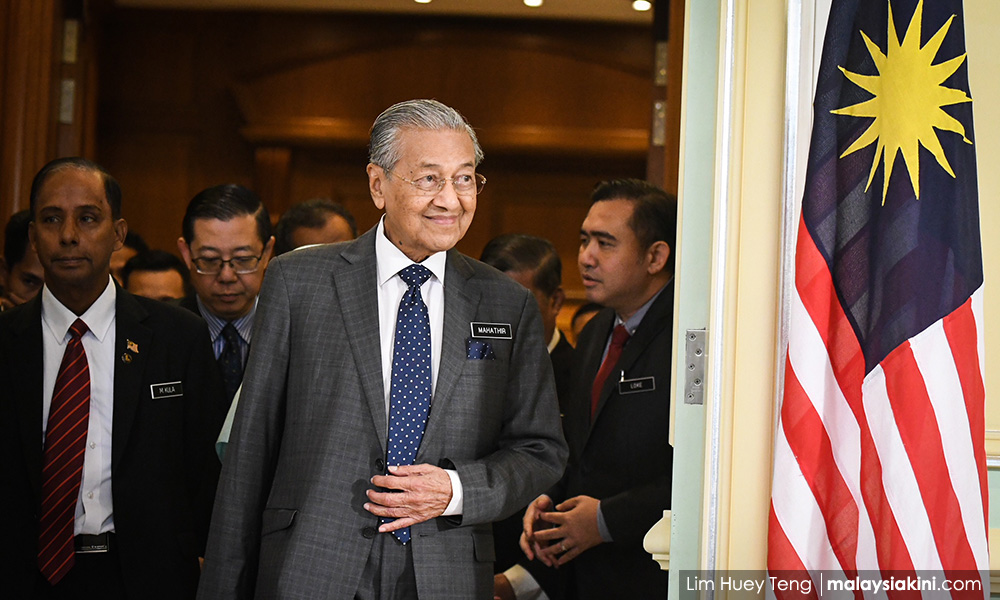
More troubling still, is his opinion that Erdoğan and the leader of Malaysia's just-begun democratic restoration, Dr Mahathir Mohamad, share the same vision, presumably that of leading vibrant national economies while adhering to democratic norms.
For over a decade, strongman Erdoğan has worked insidiously to destroy Turkey's once secular traditions.
Full blown autocracy
In July 2016, a coup ineptly staged by army officers gave Erdoğan the pretext to shift the country from the conditions of a pre-dictatorship to full-blown autocracy.
Branding the coup plotters as traitors and terrorists in the service of an ageing cleric in exile in the United States, Erdoğan ordered mass arrests.
Thousands of Turks were purged and thrown into jail. Intellectuals, journalists and academicians no longer had freedom of expression.
In April last year, Erdoğan held a referendum that sought constitutional changes, enabling a parliamentary government to be replaced by a presidential one.
The office of the prime minister was to be suppressed. The president could stay in office for as long as he wanted.
In a disconcerting parallel to voter behaviour in Malaysia, the ‘No’ vote to the changes decreed by the referendum came from cities and major towns; the ‘Yes’ vote stemmed from the countryside where voters are not as well informed and educated.
Muslim intellectuals tend to get starry-eyed when they encounter leaders who meld Islamic piety with supposed adherence to democratic norms, as Erdoğan affected to do in the early phase of his career.
Seen in this light, the ascent of Turkey's Justice and Development Party (AKP) and its leader, Erdoğan, was hailed – not only by these intellectuals but also by western commentators – as one of the success stories of this age.
But the truth is that Erdoğan's attitude towards democracy was purely instrumental: early in his political career, he famously said that “democracy is like a train; you get off once you have reached your destination.”
Democracy past shelf life
As recently as March 2016, Erdoğan said of democracy that “for us, these phrases have absolutely no value any longer.”
This contempt for democracy is manifest on the key taboos of Turkish nationalism – the Armenian genocide and the suppression of the Kurds. Erdogan and AKP are unabashed deniers of the former and remorseless enforcers of the latter.
Ankara's long-standing refusal to acknowledge the existence of a Kurdish nation within the Turkish Republic and the legitimacy of its demands for political freedom has kept the opposition People' Democratic Party (HDP), a majority Kurdish-supported vehicle, alive in the face of AKP's repressive tactics.
That, and the revival of a dormant left-wing current in Turkish politics have stood in recent times as the opposition to Erdoğan's attempt to establish an imperial presidency.
A HDP and leftist driven defeat for that attempt in Turkey's elections yesterday would thwart the neo-Ottomanish pretensions of the country's dictator, and leave his Malaysian supporters – like Anwar Ibrahim, just returned from a spot of AKP boosting – and admirers like Rais, standing mute.
TERENCE NETTO has been a journalist for more than four decades. A sobering discovery has been that those who protest the loudest tend to replicate the faults they revile in others.
The views expressed here are those of the author/contributor and do not necessarily represent the views of Malaysiakini.


