



The optic of TVET: Don't go all German yet
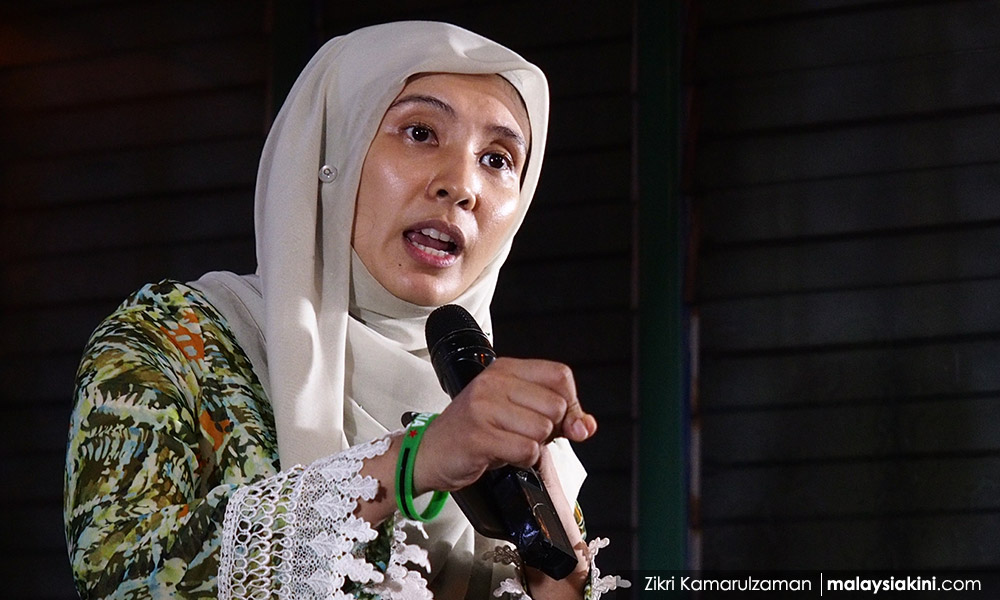
COMMENT | Nurul Izzah Anwar has the uncanny ability to zoom in on an issue. Barely two weeks after being made the chairperson of the Technical and Vocational Education and Training (TVET) , she has come out with impressive statements. And they drip with numbers and facts, which make her all the more believable.
"Five ministries, two Malaysian national plans and more than RM10 billion spent over a span of three years, from 2015 to 2017 - and where is technical and vocational education and training (TVET) today?
“Still plagued by stories of thousands of stranded, unqualified youths, awaiting placement and promises of a better future," she affirmed in a statement released on July 7 to the Bernama news agency.
Among others, Nurul proposed that all TVET credentials must be on par with at least an MA degree, without which their credentials would be discriminated in the market place. She is right.
But upping a TVET credential to MA standards need time. Yet, as the late John Maynard Keynes, the British economist is known to have said: "In the long run, we all dead." Policies, in other words, cannot be too slow to take effect since the lives and welfare that matter are immediate.
Invariably, she explained that Malaysia should be looking at the TVET apprenticeship system of Germany, where companies and industrial training can be matched very early on in the students’ career....
COMMENT | Nurul Izzah Anwar has the uncanny ability to zoom in on an issue. Barely two weeks after being made the chairperson of the Technical and Vocational Education and Training (TVET) , she has come out with impressive statements. And they drip with numbers and facts, which make her all the more believable.
"Five ministries, two Malaysian national plans and more than RM10 billion spent over a span of three years, from 2015 to 2017 - and where is technical and vocational education and training (TVET) today?
“Still plagued by stories of thousands of stranded, unqualified youths, awaiting placement and promises of a better future," she affirmed in a statement released on July 7 to the Bernama news agency.
Among others, Nurul proposed that all TVET credentials must be on par with at least an MA degree, without which their credentials would be discriminated in the market place. She is right.
But upping a TVET credential to MA standards need time. Yet, as the late John Maynard Keynes, the British economist is known to have said: "In the long run, we all dead." Policies, in other words, cannot be too slow to take effect since the lives and welfare that matter are immediate.
Invariably, she explained that Malaysia should be looking at the TVET apprenticeship system of Germany, where companies and industrial training can be matched very early on in the students’ career.
While the German model has always been the ultimate proposal on TVET at least since the 1980s, there is a serious kink if Malaysia wants to look at the German mode exclusively.
Only seven percent of students across Malaysia have taken up TVET after their Form Three education. In Germany, however, due to the industrial and job book between 1950s and 2000s, the need for TVET has been very consistent and regular.
Malaysia, however, is in the midst of a middle-income trap, that affects the university graduates too. The unemployment rate of the latter, especially those above the age of 25, is three times higher than the national average too. To get TVET acknowledged as on par or equivalent to a MA degree, while valid and good as an aspiration, cannot solve the job demand problem in Malaysia.
Thus even if the current TVET unemployables can be lassoed together, in order to emulate the German practice, there is no critical mass in the employment sector to absorb all or most of them.
If anything, any new programmes have to dig deep into their policy kits to retrain those unemployables who have had years of disjointed career trajectory too.
Barring the solution of solving the TVET problem, graduates of TVET will be enmeshed in more problems, which involve more frustrating long waits of employment. One hasn't gone into the issue of MA accreditation yet. To get the TVET recognised, the instructors and the syllabus must be on par with MA degrees.
Such a move would be somewhat akin to polytechnics in United Kingdom being converted into universities first.
But the whole process of seeing former polytechnics as the equivalent of new universities, once again involves arcane and prolonged process of reaccreditation. When all is done and completed, the markets have to acknowledge these credentials as equal or same as an MA degree.
The perception game would be long and difficult to remove overnight, since employers do not want to end up with the wrong kind of TVET graduates who have been reminted. When TVET are bumped up, in terms of accreditation and facilities, the cost can escalate too. TVET students would be hard fought to pay for more.
Middle solution
Thus, a middle solution that mimics what Nurul Izzah suggests might be a halfway solution for now. One can perhaps invite Germany to offer a candid assessment of TVET in Malaysia, perhaps through the sponsorship of Audi and BMW, who have already established their presence in the Malaysian market.
But one must not disregard the possibility of working with Japan Cooperation International Agency (Jica) or Chinese technical colleges in China that are training their students to join the job markers opened up by the One Belt, One Road (Obor) initiative which straddles across 68 countries.
When it comes to Japan, TVET may have to work with Chikyujin that specialises in placing language students in part-time jobs in Japanese factories that pay up to US$1,200-1,500 a month. In fact, the latest announcement coming from the Ministry of Labor in Japan is that Japan welcomes foreign labourers to plug their labour shortage in various sectors given sufficient command of basic Japanese first.
Korean International Cooperation Agency (Kica) and Turkish International Cooperation Agency (Tika) are also in need of Malaysian TVET graduates in refugee camps like Syria, potentially, North Korea in the area of Ranjn Sonbon that will be reopened in light of the thaw in relations between North and South.
More importantly, TVET has to understand that self-credentialisation is now all the rage in US, where students study online for specific robotic or technical skills from Massachusetts Institute of Technology (MIT). The cost is US$75 per course and does not cost a bomb if Malaysian TVET can work hand in hand with a reliable private sector.
One should also be ready to go fully digital as e-commerce can take up to 37 percent of the Malaysian GDP by 2030. Nurul Izzah has hit on all the key points on TVET in the years to come. What she needs is a solid partner from the private sector or international stage that can accommodate her strategic plan.
This is why working with Germany alone, while important, need not be the be all and end all. It must be one of the many choices she must use.
PHAR KIM BENG is a Harvard/Cambridge Commonwealth Fellow, a former Monbusho scholar at the University of Tokyo and visiting scholar at Waseda University.
The views expressed here are those of the author/contributor and do not necessarily represent the views of Malaysiakini.


Are you sure you want to delete this comment?
This action cannot be undone.