




Is the gov't serious about revoking the Sedition Act?
COMMENT | Malaysiakini reports: “Former student activist Asheeq Ali Sethi Alivi is being investigated under the Sedition Act 1948 for his speech last month which had allegedly insulted the Yang di Pertuan Agong Sultan Muhammad V.”
This is the latest in a set of worrying trends regarding continuing investigations under the Sedition Act and other draconian laws.
Asheeq himself is being investigated for his speech during a solidarity rally for activist Fadiah Nadwa Fikri that was held when she was called in for questioning - also under the Sedition Act.
I attended that rally, and I must say, this sedition inception is getting ridiculous.
In the Pakatan Harapan manifesto, page 61 details Promise 27 to ‘Abolish Oppressive Laws’. The Sedition Act is the very first law mentioned in a list of laws that Harapan promised to revoke should they come to power.
We are nearing the 100-day mark of this new administration, and instead of seeing this law revoked, we are seeing more and more investigations take place using this archaic, draconian legislation.
Why is this happening?
This is appalling and must be ascribed to one of the following possibilities.
Firstly, that Harapan has lied about their intention to revoke the Sedition Act.
Secondly, that the Harapan government has not made clear its intention to revoke the Sedition Act to the agencies under its control.
Thirdly, government agencies are ignoring directives of the Harapan government, and are pursuing their own agenda.
All of the possibilities above are disturbing.
There are many instances in which I have not jumped on the bandwagon of cynicism and self-righteous anger, but in this case, I do believe very strongly that the Harapan government owes it to the rakyat to demonstrate its commitment and honesty with regards to the abolishing of draconian laws that have been used to oppress Malaysians for far too long.
If legislation for GST and anti-fake news can be abolished by acts in Parliament, why not the Sedition Act?
Even if we say, for the sake of argument, that such a process takes time, surely a simple memorandum and statement of policy would suffice to give a clear signal to the police that they are not under any circumstances to continue pursuing cases under a law that the government should by now have clearly stated is unjust and to be removed at the first opportunity...
COMMENT | Malaysiakini reports: “Former student activist Asheeq Ali Sethi Alivi is being investigated under the Sedition Act 1948 for his speech last month which had allegedly insulted the Yang di Pertuan Agong Sultan Muhammad V.”
This is the latest in a set of worrying trends regarding continuing investigations under the Sedition Act and other draconian laws.
Asheeq himself is being investigated for his speech during a solidarity rally for activist Fadiah Nadwa Fikri that was held when she was called in for questioning - also under the Sedition Act.
I attended that rally, and I must say, this sedition inception is getting ridiculous.
In the Pakatan Harapan manifesto, page 61 details Promise 27 to ‘Abolish Oppressive Laws’. The Sedition Act is the very first law mentioned in a list of laws that Harapan promised to revoke should they come to power.
We are nearing the 100-day mark of this new administration, and instead of seeing this law revoked, we are seeing more and more investigations take place using this archaic, draconian legislation.
Why is this happening?
This is appalling and must be ascribed to one of the following possibilities.
Firstly, that Harapan has lied about their intention to revoke the Sedition Act.
Secondly, that the Harapan government has not made clear its intention to revoke the Sedition Act to the agencies under its control.
Thirdly, government agencies are ignoring directives of the Harapan government, and are pursuing their own agenda.
All of the possibilities above are disturbing.
There are many instances in which I have not jumped on the bandwagon of cynicism and self-righteous anger, but in this case, I do believe very strongly that the Harapan government owes it to the rakyat to demonstrate its commitment and honesty with regards to the abolishing of draconian laws that have been used to oppress Malaysians for far too long.
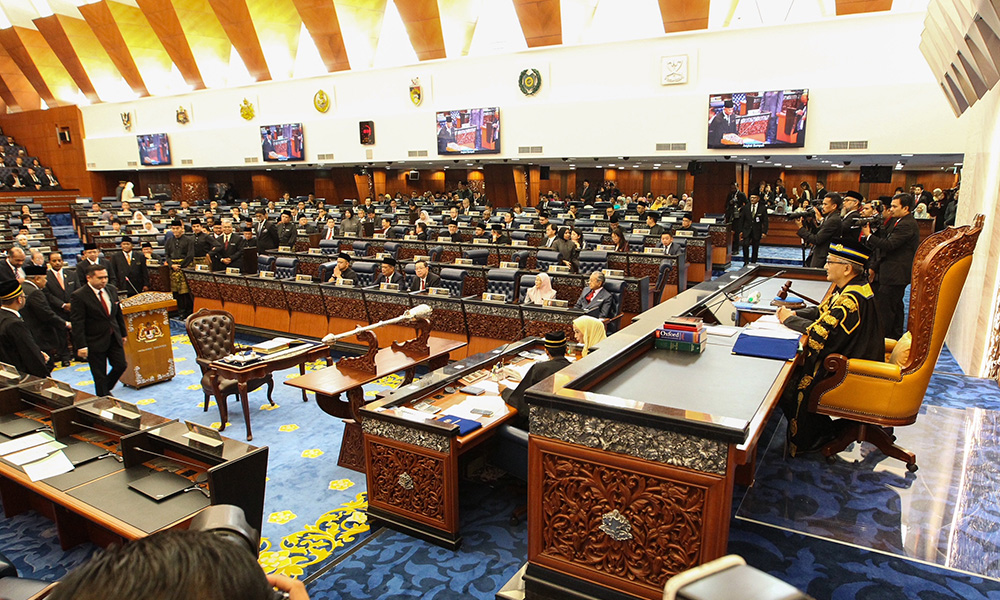
If legislation for GST and anti-fake news can be abolished by acts in Parliament, why not the Sedition Act?
Even if we say, for the sake of argument, that such a process takes time, surely a simple memorandum and statement of policy would suffice to give a clear signal to the police that they are not under any circumstances to continue pursuing cases under a law that the government should by now have clearly stated is unjust and to be removed at the first opportunity.
Police state?
If we take the alternative explanation that the police are acting of their own accord, then politicians must now prove to Malaysians whether we live in a constitutional democracy or a police state.
At the end of the day, who is in charge?
If this is a case of rogue elements in the police, then a failure to act swiftly and decisively against such elements will only demonstrate that the new government is a lame duck, and unable to control even the most basic and fundamental arms of the government.
Perhaps these are elements within the police force who are still loyal to the old regime and/or are acting using the same ideology of paranoia and bigotry that infected the previous government.
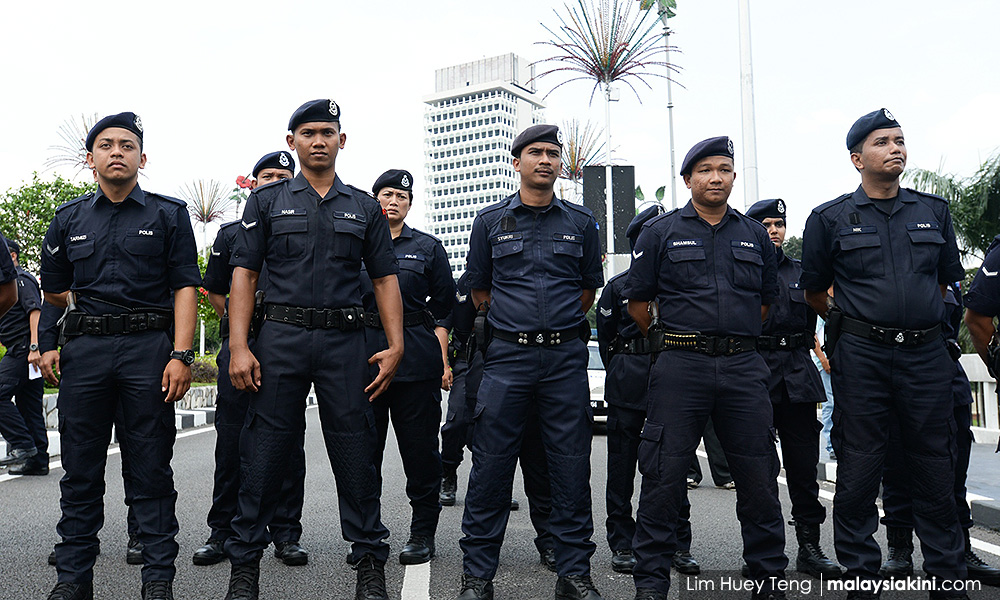
Maybe this action of calling “suspects” in for questioning even though a criminal charge is highly unlikely with the present attorney-general is a way for these elements to flex their muscles.
This is no longer an isolated case, but a clear and present trend of targeting patriotic Malaysians who believe in speaking truth to power.
Clamping down on such voices of dissent led to the removal of the past government. Doing the same in the present may result in the same outcome in the future.
The real way to defend dignity
Asheeq’s case involved comments regarding the Yang di Pertuan Agung.
The authorities seem to work on the assumption that should the peasants be allowed to criticise or (God forbid) mock the monarchy in any way, the dignity of royal institutions would be irreparably besmirched, and the whole show will come crashing down around us.
Only the weak ever think in this manner.
Those who are strong and firm in their principles and values - as I believe many of the Malay rulers are - fear no such criticism whatsoever because they know who they are inside.
People of such strength never need fear the words of others.
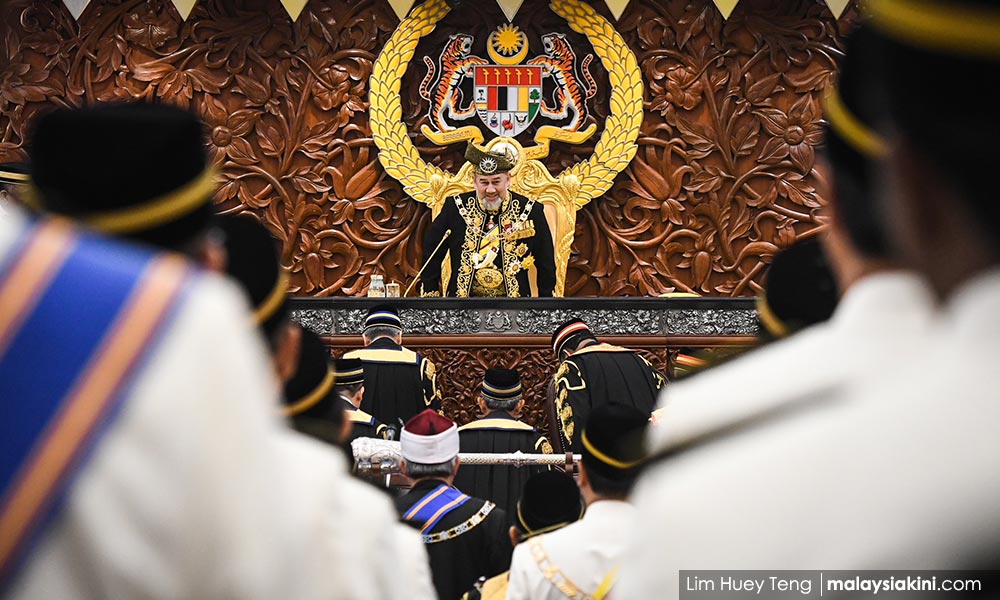
To make a simple comparison, surely any discussion of the world’s most prominent, established, and dignified monarchs will eventually mention the British.
Few could ever contest that theirs is a monarchy that has stood the test of time with their heads held relatively high.
Yet this is the country in which producers of film scenes like this do not even face an ounce of retribution or punishment from the law.
Is there something different or special about Malaysian monarchs that their dignity requires more punitive protection while others do not?
Prove sincerity
There are a number of possible explanations for why these investigations continue to happen.
Whatever the explanation, however, the course of action for the new government - should they be sincere about their intentions to reform and change - is clear.
The police must be told in no uncertain terms that these laws are destined for the rubbish bin and that they are no longer to be used to quash dissent or curtail constitutionally guaranteed freedom of speech.
This, of course, is only the temporary measure, and the final solution involves a simple commitment to fulfilling the promises of Harapan’s GE14 manifesto, and the immediate revocation of the Sedition Act altogether.
By all means, let us continue to defend the dignity of Malaysian monarchs who deserve it.
Threatening to lock up anyone who discusses them critically, however, will achieve the exact opposite effect.
NATHANIEL TAN fears the third Johnny English movie will be more like the first than the second.
The views expressed here are those of the author/contributor and do not necessarily represent the views of Malaysiakini.


Are you sure you want to delete this comment?
This action cannot be undone.