



Lessons from China’s penalty on Myitsone Dam
COMMENT | As I write this, Tabung Harapan is inching closer to one-fifth of a billion ringgit. That's nearly RM200 million ringgit. With National Day coming up, we may be even hit the figure by Aug 31.
Now, give or take a margin of difference of 5 percent, Tabung Harapan just might reach half-a-billion ringgit by the end of 2019.
A figure of RM500 million is not bad for a fund that was primarily started after the discovery of the missing billions in the Malaysian treasury, after the strategic electoral defeat of Umno and BN on May 9, 2018.
But what seems like a huge pool of funds parked invariably in Maybank, anything touching half a billion is very big, even if it is denominated in ringgit which is barely 25 percent of the US dollar. Malaysians have every reason to be proud of their commitment to democracy and fiscal probity.
However, when Tabung Harapan is measured or contrasted with the actual size of the national debt and liabilities of RM1.09 trillion, indeed the recent discovery of the missing RM32 billion in property gains tax; plus another missing RM16 billion in income tax returns; coupled with another missing RM19 billion in GST refunds – all of which were expended in three weeks prior to the run-up to the 14th general election – Malaysia's financial position is structurally weak.
What can half-a-billion ringgit by the end of 2019 do? One, it is enough to retire the High-Speed Railway (HSR) project between Singapore and Kuala Lumpur. Indeed, Malaysia probably has to bite the proverbial bullet if Singapore insists on pacta sunt servanda, whereby the contract, once signed, cannot be violated.
But that still leaves the 688km East Coast Rail Line (ECRL) project that extends from Port Klang to Kelantan – which Finance Minister Lim Guan Eng affirmed could reach RM81 billion if all elements, such as land acquisition, are taken into consideration – either pending, scrapped, or worst, penalised again.
If the latter happens, Malaysia cannot set up a Tabung Harapan II to decommission the ECRL project. This would be akin to asking the people to bail out the "historic stupidity" of the previous government, to borrow Mahathir’s words.
Besides, based on other precedents, it seems that the China Communications Construction Company (CCCC) will not let Malaysia get off easily. Why?
Take the Myitsone Dam project in Myanmar, for example. It was cancelled by the newly elected government in 2011...
COMMENT | As I write this, Tabung Harapan is inching closer to one-fifth of a billion ringgit. That's nearly RM200 million ringgit. With National Day coming up, we may be even hit the figure by Aug 31.
Now, give or take a margin of difference of 5 percent, Tabung Harapan just might reach half-a-billion ringgit by the end of 2019.
A figure of RM500 million is not bad for a fund that was primarily started after the discovery of the missing billions in the Malaysian treasury, after the strategic electoral defeat of Umno and BN on May 9, 2018.
But what seems like a huge pool of funds parked invariably in Maybank, anything touching half a billion is very big, even if it is denominated in ringgit which is barely 25 percent of the US dollar. Malaysians have every reason to be proud of their commitment to democracy and fiscal probity.
However, when Tabung Harapan is measured or contrasted with the actual size of the national debt and liabilities of RM1.09 trillion, indeed the recent discovery of the missing RM32 billion in property gains tax; plus another missing RM16 billion in income tax returns; coupled with another missing RM19 billion in GST refunds – all of which were expended in three weeks prior to the run-up to the 14th general election – Malaysia's financial position is structurally weak.
What can half-a-billion ringgit by the end of 2019 do? One, it is enough to retire the High-Speed Railway (HSR) project between Singapore and Kuala Lumpur. Indeed, Malaysia probably has to bite the proverbial bullet if Singapore insists on pacta sunt servanda, whereby the contract, once signed, cannot be violated.
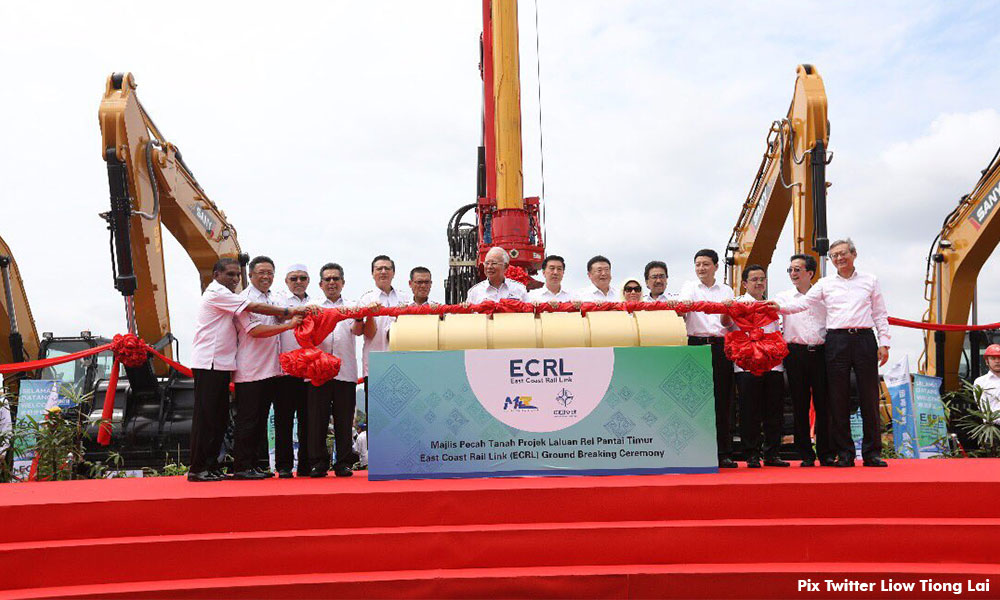
But that still leaves the 688km East Coast Rail Line (ECRL) project that extends from Port Klang to Kelantan – which Finance Minister Lim Guan Eng affirmed could reach RM81 billion if all elements, such as land acquisition, are taken into consideration – either pending, scrapped, or at worst, penalised again.
If the latter scenario happens, Malaysia cannot set up a Tabung Harapan II to decommission the ECRL project. This would be akin to asking the people to bail out the "historic stupidity" of the previous government, to borrow Mahathir’s words.
Myanmar cancels dam project
Besides, based on other precedents, it seems that the China Communications Construction Company (CCCC) will not let Malaysia get off easily. Why?
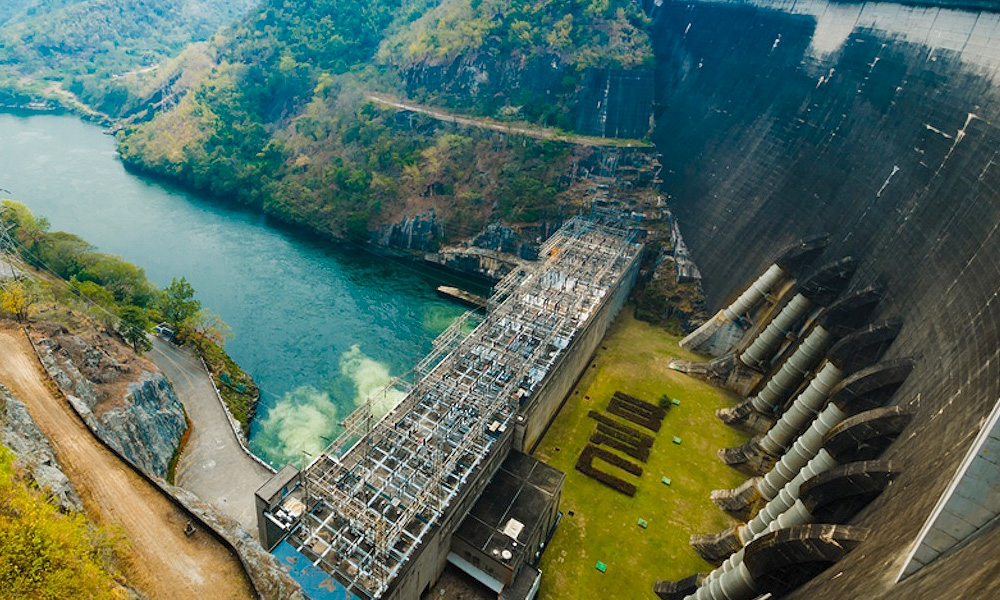
Take the Myitsone Dam (photo) project in Myanmar, for example. It was cancelled by the newly elected government in 2011 and later suspended.
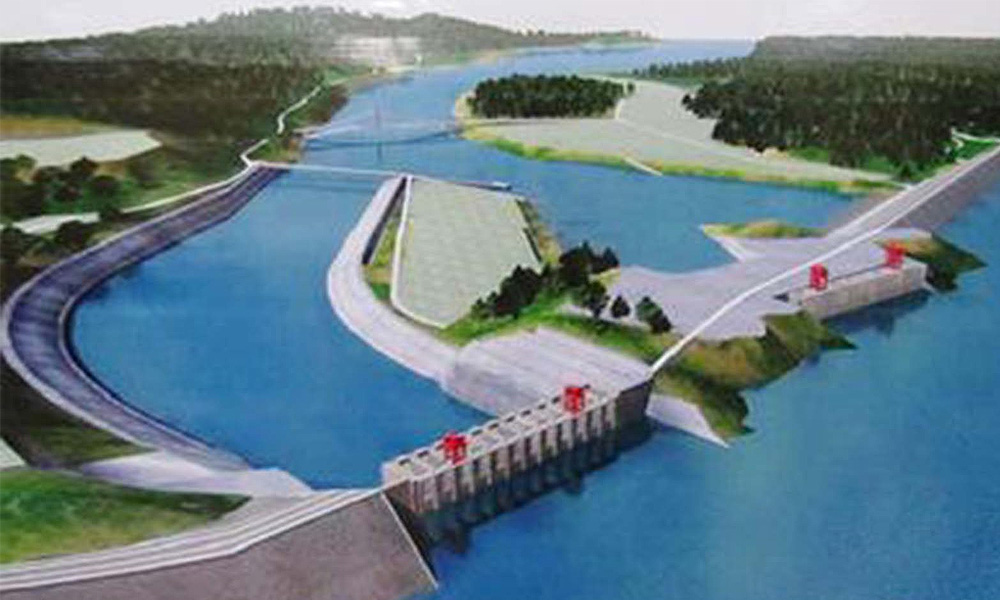
The dam was supposed to cost US$3.6 billion; which is roughly RM15 billion. But by cancelling it, various penalties of up to US$800 million (RM3.2 billion) were imposed by China state-owned company China Power Investment Corporation (CPI), which was tasked to build the dam. If the quantum of US$800 million is taken as a broad metric from a project of US$3.6 billion, this implies a penalty to the tune of nearly 3.5 times the original fee.
Of course, Malaysia can let the ECRL project proceed, on a double track too, which allows more cargo to be carried in the future, but this project would only be commercially viable from 2026 onwards, after enjoying a seven-year interest-free moratorium. But then, how do you transform the current 20 million tonnes of cargo a year to 200 million tonnes in eight years?
From 2026 onwards, the annual interest rate would be 3.5 percent, according to former premier Najib Razak, which he argued is low and would offset from any appreciation of the Chinese yuan in future as written in the contract. But a failure of a rail project is a failure.
As of 2018, China Railway Construction (CRC) company, for example, has a debt load of US$600 billion in China – all backed and protected and paid by Beijing. Somehow Beijing does not want CRC to fail, argued Sam Parker in his paper ‘Debtbook Diplomacy’, completed and published by the Belfer Centre of International Studies at Harvard University.
If CRC is holding so much debt, and assuming CCCC insists that it, too, must not be compelled to fail in any way, the penalty CCCC will insist upon will not be at a quantum less than what had been set for the Myitsone Dam in Myanmar. The team at the Treasury Department in Putrajaya can do the math. But if the figure is indeed RM81 billion in all, a penalty of 35 percent (that is, 3.5 times), if rounded up, is close to RM30 billion.
Assuming that Malaysians do not want the ECRL as a colossal failure since RM81 billion is too high to absorb, even if the interest rate of 3.5 percent only kicks in after 2026, Putrajaya must raise funds to retire the entire project.
One just can't walk away from the contract without all the recriminations from China. After all, CRC alone is already holding a debt of US$600 billion. And CCCC may insist that it doesn't want to be in the red, too.
Under such circumstances, Malaysia would have to raise RM30 billion from a Pakatan bond, ideally sourced from Japan or even European Union, where money is still cheap, to offset the cost accrued to China.
Will China give a discount?
But if Beijing allows Malaysia to split hairs to pay the debt, it would also mean that China has dealt with Malaysia as a Malaysia Incorporated – a company – not a strategic entity. There is no telling if President Xi Jinping and Prime Minister Li Keqiang can consider Malaysia a "strategic pivot" of the Belt and Road Initiative, invariably giving Malaysia a huge strategic discount in order to retain the goodwill of Malaysia.
But if this discount is given, it would set a precedent where Beijing's Belt and Road Initiative is one where some 68 countries can “cry uncle” when they are in trouble. President Xi (photo) would then have a major headache, as more Chinese lately have begun their murmurs of discontent that the BRI is too costly since it is pegged at close to US$1 trillion, which is one-third of the total reserves of China.
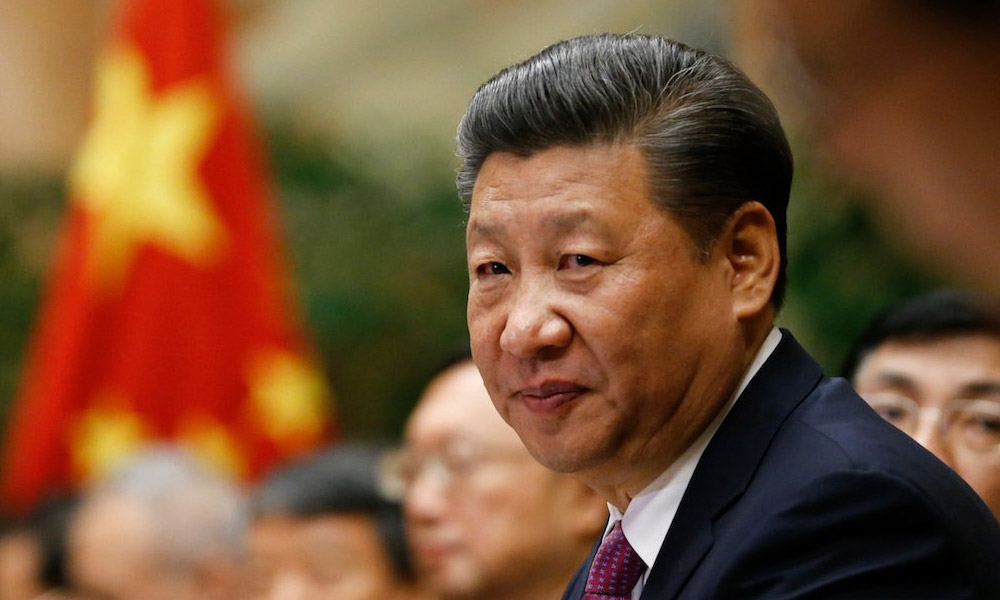
If there is a trade war with US, wouldn't it make more sense to spend the one-third of the reserves on the Chinese mainland first to stimulate the moribund economic growth that has gone from 10 to 11 percent of the Gross Domestic Product to 6.5 percent? The Chinese are entitled to begrudge their own domestic economic growth metrics.
But China, whether CCCC or CRC, must also understand that the previous Malaysian regime was kleptocratic to the core. All the contracts were signed with some elements of "mala fide," or bad faith; which may permit Malaysia to take the case to the International Arbitration Panel (IAP) of the World Trade Organisation (WTO). Come what may, Malaysia has to come up with a creative way to offset the cost and penalty concurrent to an IAP strategy.
This means the Ministry of Foreign Affairs and the Ministry of International Trade and Industry (MITI), as well as the Malaysian Special Envoy to China Tan Kok Wai would have to know what they are each doing. Even the Attorney General's Chambers must start the process of understanding what IAP entails since both Malaysia and China are members of WTO.
Of course, if the opposition parties keep insisting the project must go on, as they do right now, then the harshest penalties must be imposed on each parliamentarian who voted affirmatively for this railway project.
Once this is dusted off and done with, Malaysia must use the same inter-ministerial strategy to deal with the two trans gas pipeline projects in Malacca and Sabah that were based on timeline payments rather than milestones, creating a situation where 88 percent of the construction fees were already paid in China when 13 percent of the contracts were only completed in China.
PHAR KIM BENG was a multiple award-winning Head Teaching Fellow on China and Cultural Revolution in Harvard University.
The views expressed here are those of the author/contributor and do not necessarily represent the views of Malaysiakini.


