


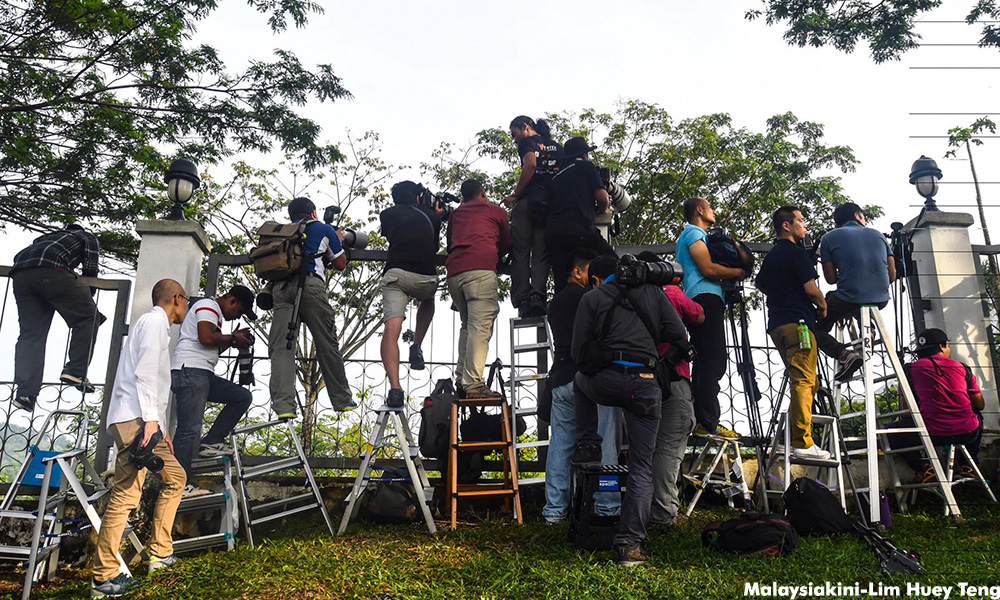

Can every citizen be a reporter?
COMMENT | The urban-based commercial media cannot possibly represent all the different voices of the people. More citizens are keeping an eye on what is going on in their communities, and passing on that information to news outlets to do follow-ups will, in the end, benefit the news-consuming public.
But how does one become a good citizen reporter? There are several successful models of citizen reporting, and some resources available online that can be adapted to the Malaysian context.
Citizen-generated content can, in theory, fill the gaps forged by decades of politically correct mainstream media reporting. In practice, however, “reporting by the people for the people” in the Malaysian context has to go beyond just being a channel to publicly shame deviant behaviour or announcing ribbon-cutting ceremonies.
It comes down to whose stories we trust more – those produced by the unpaid, untrained reporters or by experienced professionals.
Public trust in citizen-generated contents is determined by the quality of the reporting and depth of its contents. The reporter’s capacity for thorough research, fact-checking and verifying sourced opinions to confront the many falsehoods of the day will ultimately determine the quality of the stories. This applies to both the professional and the amateur journalist.
Citizen journalism has acquired numerous descriptors. It is touted as the alternative to traditional media. Views on its assumed ‘revolutionary’ impact on traditional journalism range from the optimistic to the less sanguine.
Over the years, I have followed numerous citizen journalism websites worthy of the name, such as the Independent Media Centre and The Global Voices. A Google search lists the many citizen journalism projects in countries where the plights of the grassroots are under-reported or ignored by the commercial media. The Citizen provides an example of how a citizen reporting initiative gave voice to India’s forgotten people – the Dalits and Adivasis.
COMMENT | The urban-based commercial media cannot possibly represent all the different voices of the people. More citizens are keeping an eye on what is going on in their communities, and passing on that information to news outlets to do follow-ups will, in the end, benefit the news-consuming public.
But how does one become a good citizen reporter? There are several successful models of citizen reporting, and some resources available online that can be adapted to the Malaysian context.
Citizen-generated content can, in theory, fill the gaps forged by decades of politically correct mainstream media reporting. In practice, however, “reporting by the people for the people” in the Malaysian context has to go beyond just being a channel to publicly shame deviant behaviour or announcing ribbon-cutting ceremonies.
It comes down to whose stories we trust more – those produced by the unpaid, untrained reporters or by experienced professionals.
Public trust in citizen-generated contents is determined by the quality of the reporting and depth of its contents. The reporter’s capacity for thorough research, fact-checking and verifying sourced opinions to confront the many falsehoods of the day will ultimately determine the quality of the stories. This applies to both the professional and the amateur journalist.
Citizen journalism has acquired numerous descriptors. It is touted as the alternative to traditional media. Views on its assumed ‘revolutionary’ impact on traditional journalism range from the optimistic to the less sanguine.
Over the years, I have followed numerous citizen journalism websites worthy of the name, such as the Independent Media Centre and The Global Voices. A Google search lists the many citizen journalism projects in countries where the plights of the grassroots are under-reported or ignored by the commercial media. The Citizen provides an example of how a citizen reporting initiative gave voice to India’s forgotten people – the Dalits and Adivasis.

Initiatives by news organisations such as CNN’s iReport and ProPublica’s Get Involved have for many years turned to the community for information and angles on community issues, particularly during a crisis. For instance, ProPublica sought the people’s help in locating the detention centres of children across the United States. These ventures usually have a core team of professionals to manage and vet the contents before they are published.
The collaborative gathering and analyses of online videos, social media accounts, photographs and copy by intuitive citizen journalists, unhindered by bureaucratic and political obstacles, have also exposed new angles into politically explosive issues, such as the missile attack on MH17 by pro-Russian rebels over Ukrainian territory in 2014.
Eliot Higgins, who initiated the investigative work, explained that “tiny details in photographs, such as a telegraph pole or a crack in the road, can help verify the location and context and provide a better picture of the facts when piecing together a story.”
All these cases point to the analytical skills that citizen journalists should develop to make an impact in their stories – to be fair, accurate and thorough in their research. An effective citizen journalist is skilled in reading spreadsheets and crunching large datasets with a healthy dose of scepticism, and to an extent an obsession for asking “How can I verify this?”
When I think of ‘journalism’, I still think of the Associated Press, Reuters, New York Times or Al Jazeera, for obvious reasons. This does not, however, diminish the potential that “every citizen is a reporter” – a quote from Oh Yeon Ho, founder of South Korea’s OhMyNews in 2000, one year after the Independent Media Centre was set up to provide “grassroots coverage” of protests against the World Trade Organisation in Seattle.
To be an unpaid citizen journalist takes a strong conviction that you can make a difference through your stories despite the odds, as OhMyNews reporter Sunah Kim noted in her blog: “Knowing how to ask the right question to the right person is a good start for a news reporter.”
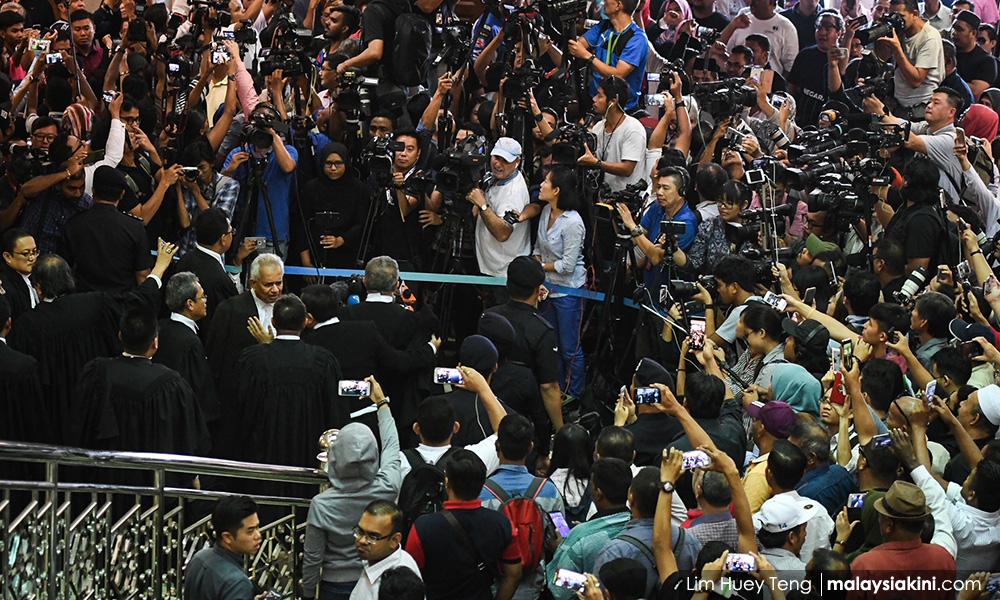
As I often remind my students, how you ask your question determines the quality of the answers. Asking what is two-thirds of half poses greater difficulty in getting a straight answer than asking what is half of two-thirds.
What is expected of citizen journalists is not significantly different from professional journalists who are shaped by their work environment and the risks they take to produce their stories. The professional skills and ethos of traditional journalism will always be relevant.
While citizen journalists will never displace the work of the professionals, the rise of citizen journalism ventures should push mainstream journalists to be better at their jobs.
Mainstream news organisations have certainly benefited from the unpaid stories submitted by citizen journalists, whose intangible reward is only the simple act of producing a story and seeing it published – and sometimes, if they are lucky, with their byline. Perhaps, citizen journalists are less driven by monetary rewards than motivated to tell the untold stories from within their community.
In an email conversation with a journalist friend, Syed Nazakat, who started the non-profit Centre for Investigative Journalism India, on his take on the changes in the journalism environment and the opportunities for self-driven citizen reporters, he said:
“Journalism is still the most rewarding, fulfilling and empowering profession. Despite the continued attention to the risks and threats facing the profession, the journalistic landscape offers a range of new opportunities to engage with your audience, to develop new storytelling formats and to build new business models.
“Now, as a media entrepreneur, I see more promising places for journalists as fact-checkers and storytelling. I strongly believe that people who are innovative, disciplined and passionate about the media can have more impact than ever before. And, they can do better financially as well than ever before.”
ERIC LOO is a senior fellow (journalism) at the School of the Arts, English & Media, Faculty of Law Humanities & Arts, University of Wollongong. He is also the founding editor of Asia Pacific Media Educator.
The views expressed here are those of the author/contributor and do not necessarily represent the views of Malaysiakini.


