


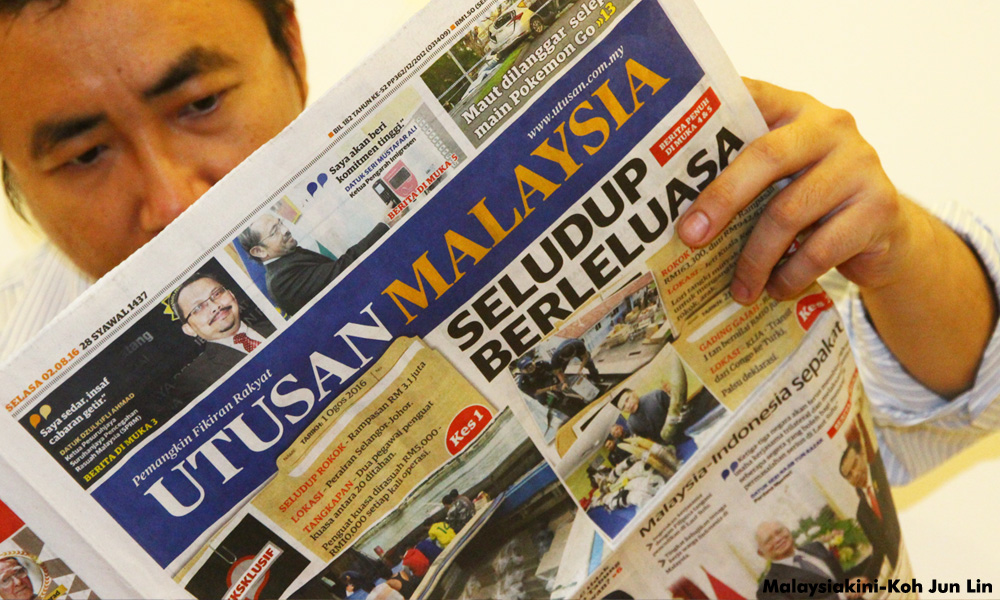

It matters who owns the media
COMMENT | Media owners try to project an image of non-interference in the news-making process. Editors try to preserve a public face of editorial independence. The reality, though, is quite different.
Ownership does influence editorial policies and content. After all, why own a media if you cannot use it to spread your views or fraternise with those in power for favours and profits? It does matter who owns the media.
The prime minister has at last admitted to this reality. It’s been a long time coming. But limiting political party ownership of the media to 10 percent will not significantly change the media culture after decades of uniform sycophantic reportage.
Political parties should, in fact, be barred from holding any media stake, with the exception of party-owned newspapers such as Harakah (PAS), The Rocket (DAP) and Suara Keadilan (PKR). We know they are party organs with specific political motives – to propagate their party agenda.
One may argue that if corporations can own the media, why not political parties? It comes down to differentiating between profit and propaganda. Profit drives corporations. Propaganda drives political parties.
While both forms of ownership do compromise public interest, it is clear which is the lesser evil. A political appointment to an executive editorial position, not least to a national news agency, therefore, will not augur well for fair and independent coverage of public affairs. It breaches the professional tenet of reporting with some modicum of impartiality.
To better understand how media institutions are structured to serve the political and economic interests of their owners, let’s look at a propaganda model developed by Edward S Herman and Noam Chomsky in the late 1980s.
The model suggests five filters that can influence media behaviour in a capitalist economy, and to an extent, manufacture public consent through its reportage. These are ownership, funding, sourcing, flak and ideology...
COMMENT | Media owners try to project an image of non-interference in the news-making process. Editors try to preserve a public face of editorial independence. The reality, though, is quite different.
Ownership does influence editorial policies and content. After all, why own a media if you cannot use it to spread your views or fraternise with those in power for favours and profits? It does matter who owns the media.
The prime minister has at last admitted to this reality. It’s been a long time coming. But limiting political party ownership of the media to 10 percent will not significantly change the media culture after decades of uniform sycophantic reportage.
Political parties should, in fact, be barred from holding any media stake, with the exception of party-owned newspapers such as Harakah (PAS), The Rocket (DAP) and Suara Keadilan (PKR). We know they are party organs with specific political motives – to propagate their party agenda.
One may argue that if corporations can own the media, why not political parties? It comes down to differentiating between profit and propaganda. Profit drives corporations. Propaganda drives political parties.
While both forms of ownership do compromise public interest, it is clear which is the lesser evil. A political appointment to an executive editorial position, not least to a national news agency, therefore, will not augur well for fair and independent coverage of public affairs. It breaches the professional tenet of reporting with some modicum of impartiality.
To better understand how media institutions are structured to serve the political and economic interests of their owners, let’s look at a propaganda model developed by Edward S Herman and Noam Chomsky in the late 1980s.
The model suggests five filters that can influence media behaviour in a capitalist economy, and to an extent, manufacture public consent through its reportage. These are ownership, funding, sourcing, flak and ideology.
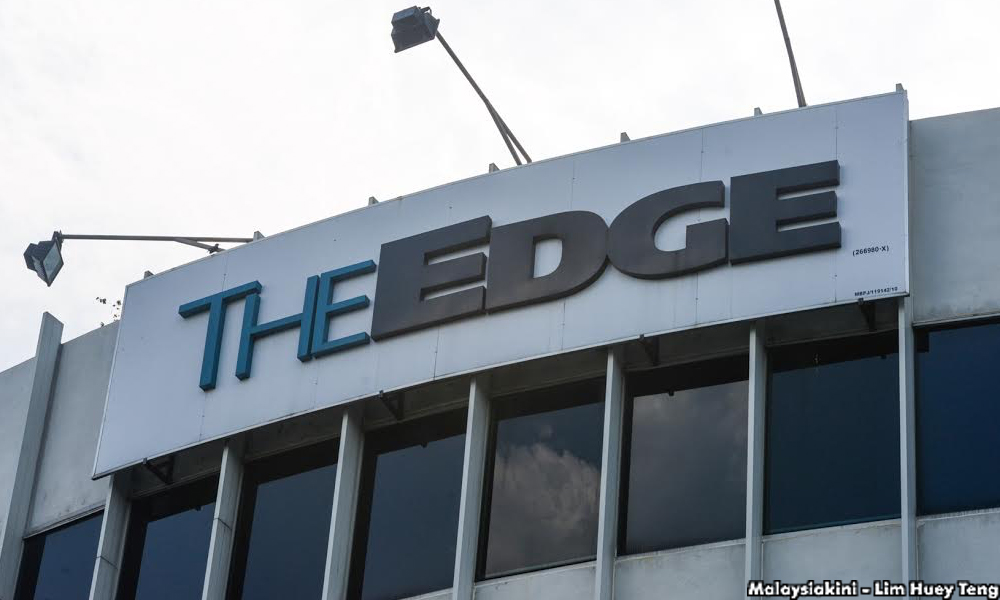
"Ownership" sets out to influence the news-making process to maintain a political and economic climate that is conducive to their profitability. Content that conflicts with the interests of the majority of stakeholders are re-framed or slanted and, in extreme cases, simply censored.
While proprietorial influence on news content is not as strongly deployed in the digital environment with the availability of ubiquitous alternative news sites, the state can wield its power to control the information flow by invoking the Communications and Multimedia Act (CMA) and denying online access to news portals, as in the case of the Sarawak Report and The Malaysian Insider in their coverage of the 1MDB scandal.
Suspended or closed down
"Funding" filter stems from the media’s reliance on advertising revenue to cover production costs. News becomes a commodity to serve the advertisers as evident in the abundant infotainment, sports and fun news in the daily papers. Corporations are more inclined to advertise in programmes and newspapers that align with their commercial interests.
They will rarely sponsor programmes that are critical of their activities and that impact on, for instance, the environment or their support of authoritarian states. The media will avoid antagonising their major advertisers at the expense of public interest.
And in some cases, news media have been pressured to close or suspend their operations after government orders to state-owned companies to stop advertising in their companies. Recent examples are The Malaysian Insider and The Edge.
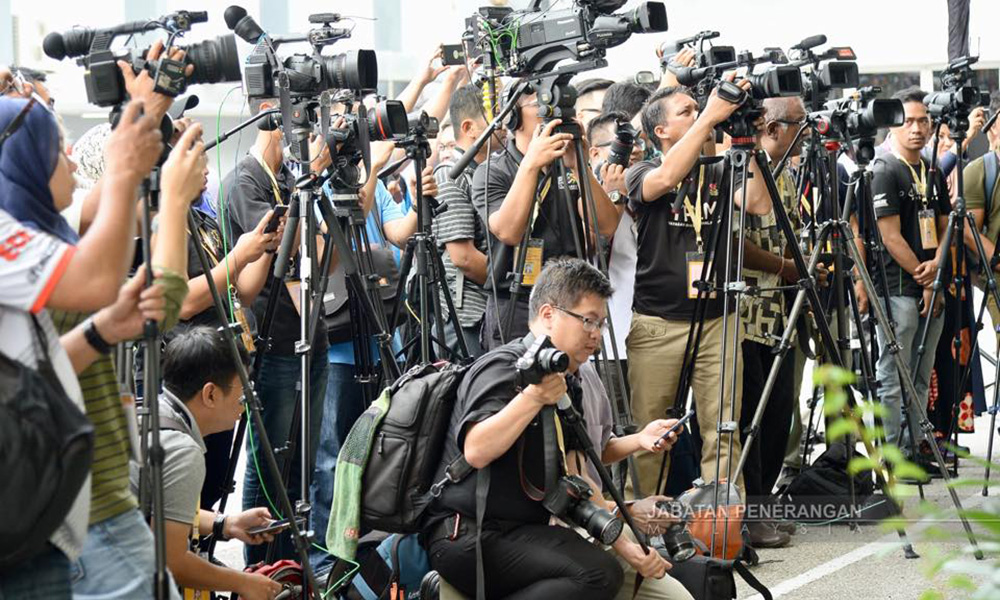
"Sourcing" acts as the filters for media content. Journalists form symbiotic relationships with powerful news sources out of necessity and mutual interests. Regular news bulletins from these sources fill the news demands, which then lead to the media’s growing dependence on the official line. Journalists rely on "official" and “expert” sources to avoid criticisms of bias and shallow reporting.
It also protects journalists from legal risks. In this way, mass media outlets need material that can be portrayed as being presumptively accurate to maintain some modicum of professionalism. Although “official” and “expert” sources may not have the same stranglehold on the news as they did before the Internet era, the dominant elites still have the power to influence how certain issues are reported and framed.
"Flak” involves the negative responses to media reporting. Flak may occur directly or indirectly. It takes the form of complaints, threats and sanctions from those in power. Flak includes the reporters’ fear of their editors or a telephone call from the Home Ministry to pull a story.
Using privileged voices to embarrass journalists who ask the "wrong" questions or adopt the "wrong" tone is a form of flak. While most manifestations of "flak" are non-physical threats, in some countries such as the Philippines and the Middle East, the flak can go beyond verbal abuse to physical threats, torture and even death.
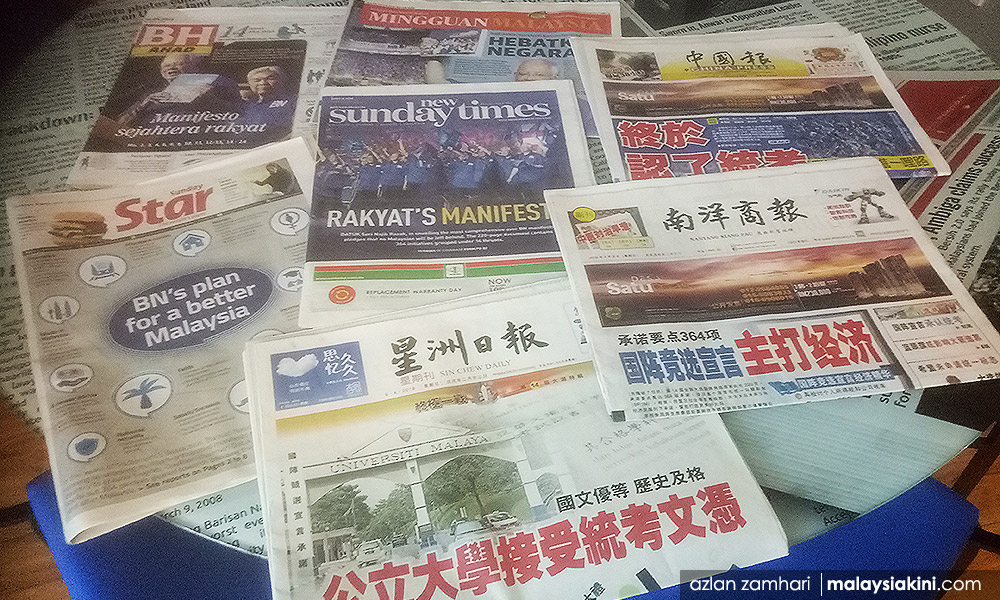
The spread of "ideology" by those in power and dominant elites of any nation through their control of mass media outlets is aimed at a single objective - to mobilise a sense of fear for "enemies" or those that threaten the status quo. Propaganda campaigns, for instance, are used to manipulate public opinion against the opposition that threatens their interests and autocratic control.
Pro-government commentariats and journalists routinely attack opposition leaders and protesters as was evident in the coverage of the recent general election, the Bersih protests and the reformasi movement.
The propaganda model suggests that in a capitalist economic system, we have access to three forms of media - those owned by corporations, political parties and ‘independent’ non-government organisations.
Ultimately each media form – and those who run it - will directly or indirectly use the content to serve their own special interests. It comes down to understanding the limits of “impartial” and “objective” journalism and deciding which media, in spite of its limitations and susceptibility to confirmation bias, will penetrate the workings of society and scrutinise the country’s politics to better serve the greater needs of the people rather than the narrow interests of those in power.
ERIC LOO is a senior fellow (Journalism) at the School of the Arts, English & Media, Faculty of Law Humanities & Arts, University of Wollongong. He is also the founding editor of Asia Pacific Media Educator.
The views expressed here are those of the author/contributor and do not necessarily represent the views of Malaysiakini.


Are you sure you want to delete this comment?
This action cannot be undone.