


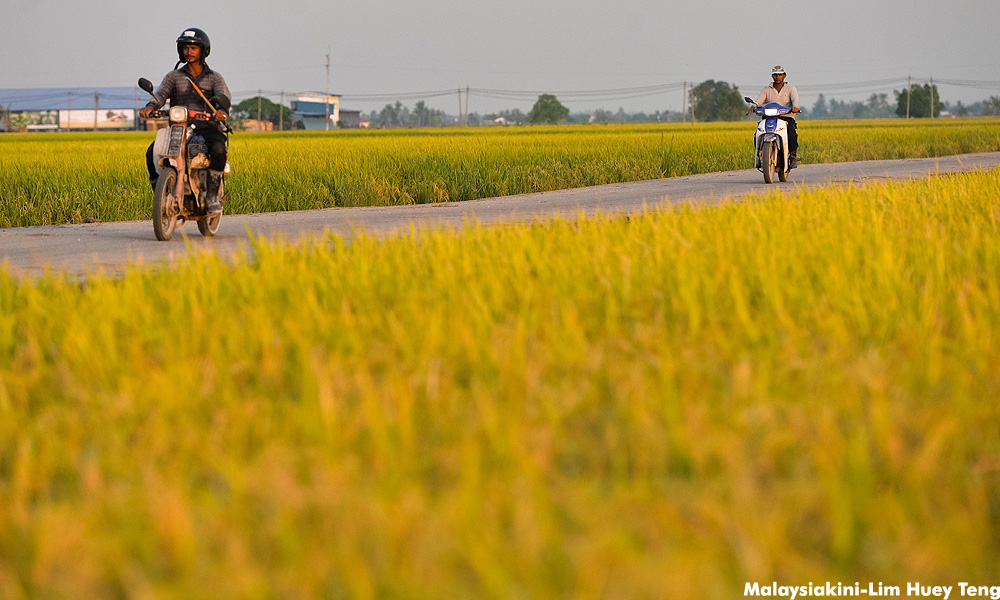

Ensuring food security should be part of the national economic plan
COMMENT | Ten years ago, the 2008 World Development Bank report indicated that rural migration to cities does not help put an end to rural poverty at all.
It merely serves to create the impression that rural poverty in the rural and sub-rural areas are gone, when in fact, poverty is transferred from rural zones to cities.
By 2050, 75 percent of Malaysians, indeed, Asians, will live in urban cities. If such migration continues, without a national agricultural plan, Malaysians will see poverty in urban and rural areas.
In other words, to end rural and sub-rural poverty, the national economy cannot be based on an industrial master plan alone. There needs to be an agricultural backbone to support the national economy...
COMMENT | Ten years ago, the 2008 World Development Bank report indicated that rural migration to cities does not help put an end to rural poverty at all.
It merely serves to create the impression that rural poverty in the rural and sub-rural areas are gone, when in fact, poverty is transferred from rural zones to cities.
By 2050, 75 percent of Malaysians, indeed, Asians, will live in urban cities. If such migration continues, without a national agricultural plan, Malaysians will see poverty in urban and rural areas.
In other words, to end rural and sub-rural poverty, the national economy cannot be based on an industrial master plan alone. There needs to be an agricultural backbone to support the national economy.
Indeed, the same World Bank Development report attested that when rural and sub-rural dwellers migrate to cities, they are exposed to the vagaries of life there and are often ill-equipped to cope.

These migrants often lack language skills and other skill sets such as networking in order to keep up with the demands of urban environments, unless they moved at a much younger age to be able to familiarise themselves with the demands of city life.
Rural migration is a poverty time bomb, transferred from one location to cities, can spawn extremism, when living standards begin to drop.
The rise in hyper conservative religions – some social scientists like Pippa Norris at Harvard University have speculated – is due to rural and urban migration. Cities boom on the back of cheap labour drawn from small rural peasants.
As the migrants’ frustrations in the cities grow, so do their angst, which make then susceptible to depression, anger, and extremism to end their misery through intense devotion that leads then to either an ascetic or extremist life.
A complete, and comprehensive eradication of poverty takes time, with or without the Millenial Development Goals set by the late secretary-general Kofi Annan for the United Nations.
To end relative and absolute poverty in Malaysia, especially Sabah and Sarawak, Malaysia has to learn from China and India. According to the World Bank’s Global Monitoring Report 2014, both countries lifted 232 million people out of poverty between 2008 to 2011. More can yet be done.

In the case of China, its agriculture industry was enhanced by strong global safety standards. China can sell its products to the world, but its food standards have to comply with those of the World Trade Organisation.
Chinese entrepreneurs who operate in the Pearl River delta, Shanghai and Ningbo focused on areas like branding, marketing, frozen food, processed meat, logistical connectivity and developing a strong, sustainable food supply chain.
Once China has mastered all of the above – to the degree that Chinese villagers are not left with short supply – wages can be managed through an abundance of labour, and the disruption of vital food supplies can be prevented.
In India, the emphasis was on the use of science and technology, especially on the variety of seeds, rice, sorghum, wheat and corns, for the breakthrough.
India also improved the education level of the students in rural areas, as well as the basic health conditions of the farmers and their families, to ensure a strong and sustainable level of food security.
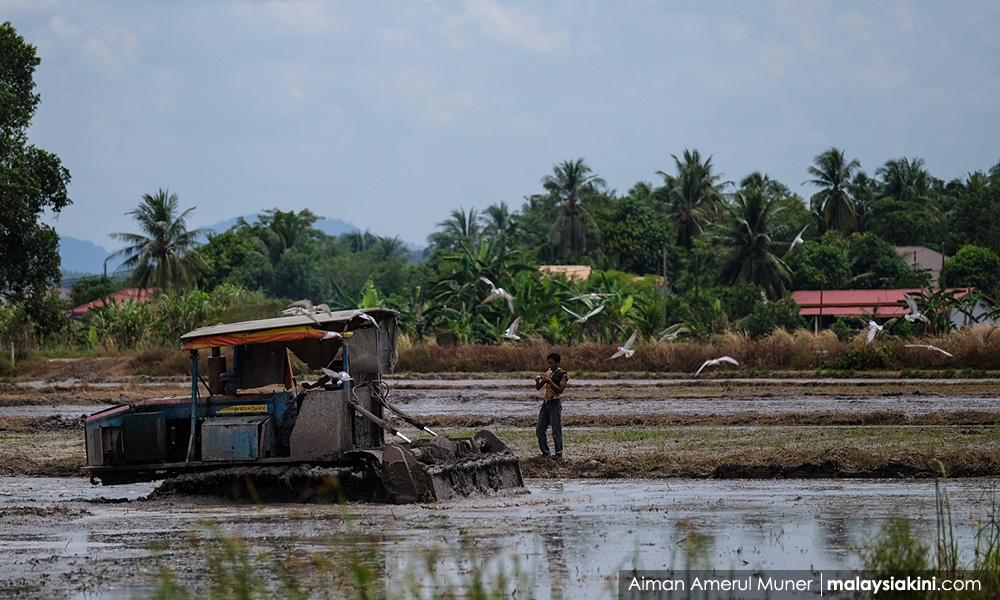
To have greater Malaysian agriculture and agro industries, the country needs to be capable of attaining high self sufficiency with a diversified range of food products.
The Agriculture and Agro-based Industry Ministry cannot revolutionise the Malaysian economy alone. It needs the help of other ministries, such as the Human Resources Ministry to ensure a stable supply of foreign workers who can work side by side with the local Malaysian population.
The Primary Industries Ministry has to help too, by converting disused plantation estates into areas where cows can roam.
Meanwhile, the Health Ministry also has to ensure the general health of the workers. When the health indices are up, the long-term benefits of the agriculture sector will accrue higher productivity.
But the first step to that journey involves a strong push for to make agriculture the top industry in the region, if not the world.
PHAR KIM BENG was a multiple award-winning head teaching fellow on China and the Cultural Revolution in Harvard University.
The views expressed here are those of the author/contributor and do not necessarily represent the views of Malaysiakini.


Report this comment
Are you sure you want to delete this comment?
This action cannot be undone.